
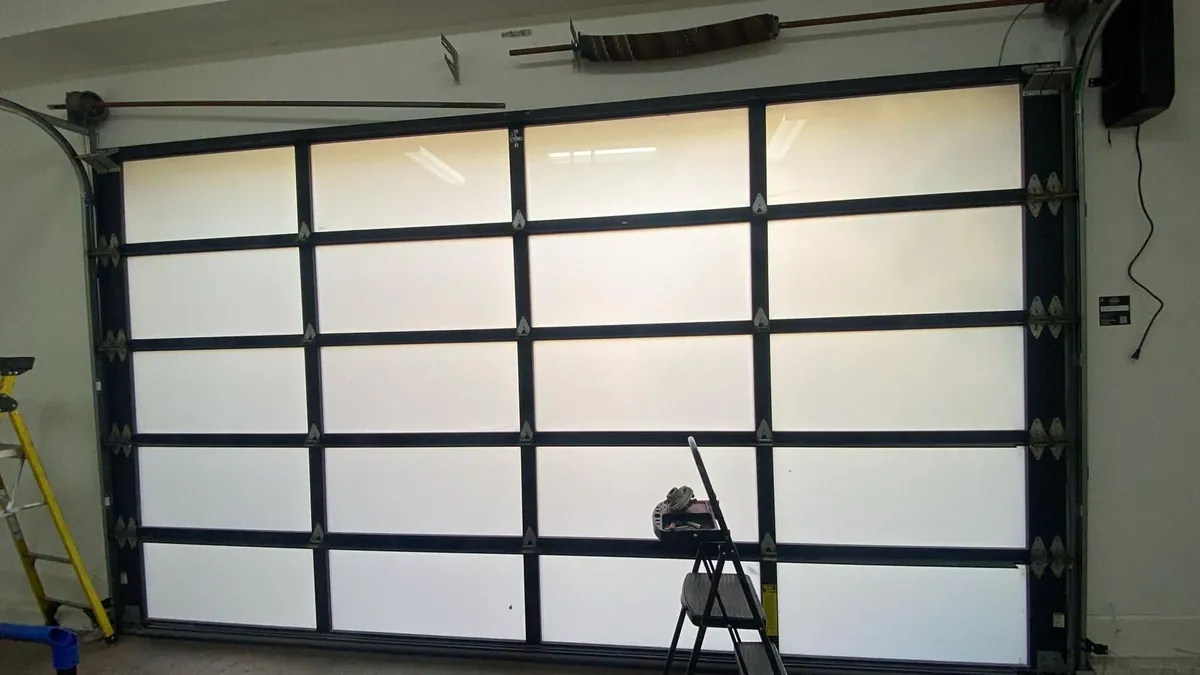
New doors for small garages by the harbour
A garage door that has rusted through at the bottom, lost a panel to a bumper, or swollen with years of damp eventually reaches the point where repairs stop making sense. New garage doors in East Boston are supplied and installed, and old ones replaced, for openings as different as a narrow single bay behind an Eagle Hill or Orient Heights triple-decker and a ground-floor garage in a newer Jeffries Point townhouse. Each door is measured for its own opening and set up with springs matched to its weight.
Three signs a door has gone past repair:
- The bottom section is rusted through or rotted along the floor line.
- More than one panel is cracked, split or bent beyond straightening.
- The door is so heavy, from water or old materials, that it will not stay balanced.
Choices for a new door
Steel sectional doors
The most common choice for a single-car garage. Sections hinge as they roll up into the garage, so the door needs no room in the driveway to open.
Insulated doors
A layer of insulation inside each section makes the door stiffer, quieter and better at holding warmth, which matters when there is a room over the garage.
Wood and wood-look finishes
For garages where the door should match older timber detailing on the house. Real wood needs more upkeep in damp, salty air.
Windows in the top section
Glazing across the uppermost section brings light into a windowless garage. For a door that is mostly glass, see full view glass garage doors.
Knowing when to replace
Plenty of garage doors that look tired are still worth repairing. A new spring, a set of cables or rollers, or a single replacement section can keep a sound door working for years, and that work is described under repairs in East Boston. Replacing the whole door is the right answer less often than people expect, but when it is, the signs are clear.
The first is the bottom section. It sits on the floor, catches every puddle and every scrape of slush, and near the harbour it sees salt in the air as well as salt carried in on tyres. Once the steel has rusted through along the floor line, or the wood has gone soft, the section cannot hold the bottom brackets that anchor the lift cables, and that is a safety problem as well as an appearance one.
The second is accumulated damage. A single dented panel is a repair. A door with several damaged sections, cracked hinges and a bent track is usually less trouble to replace than to rebuild piece by piece, especially as matching an old section can be difficult once the profile is no longer made.
The third is weight. Timber doors take on moisture year after year and gain weight, and a door that heavy strains its springs, cables and opener on every cycle. When no sensible spring can balance it, a new, lighter door is the answer.
A fourth reason is a door that no longer suits its garage. An old one-piece swing-up door needs room in front of it to tip out as it opens, which is awkward where the driveway is short and the car parks close to the garage. A sectional door that rolls straight up into the garage gives that space back.
When any of those apply, new garage doors in East Boston are worth weighing up against the repair, and you will be told plainly which makes more sense for your garage.
Measuring the small garages of Eagle Hill and Orient Heights
Garages out back of the triple-deckers are usually older, narrower and less regular than a modern build. That makes measuring the most important part of fitting a new garage door in East Boston. Four dimensions decide what will fit:
- The opening’s width and height, measured at several points, because openings in older garages are often not perfectly square.
- Headroom, the height available over the opening up to the ceiling or roof framing. Low headroom limits where the springs and tracks can go and may call for a low-headroom track arrangement.
- Side room, how much wall there is either side to take the upright tracks and their brackets. Shelving or storage along the walls may need to move.
- Backroom, the depth from the door back into the garage, so the door has somewhere to go when it is open, with space left for an opener if one is fitted.
Short driveways add a practical consideration of their own. Because a sectional door rolls straight up into the garage rather than swinging out, it does not need any room in front of it to open, so a car can be parked close to the door. That is one reason sectional doors are such a good fit for the garages up the hill.
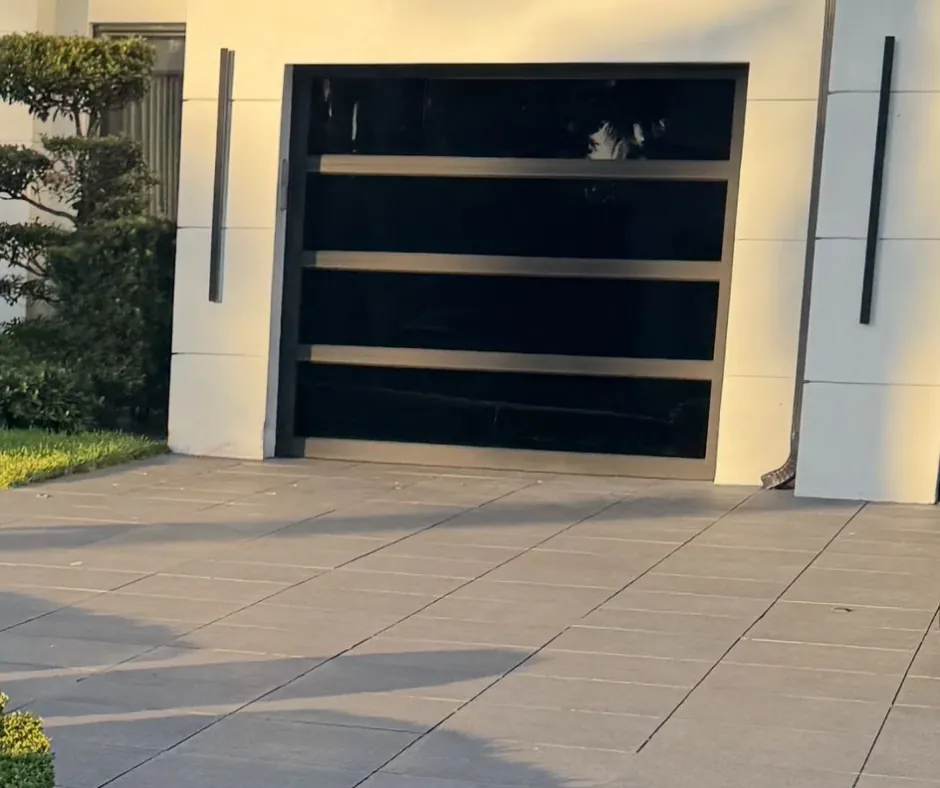
Townhouse garages at Jeffries Point
The newer townhouse garages at Jeffries Point usually sit within the ground floor, with rooms over or next to them. Two things matter more here than in a detached garage.
Insulation helps the rooms around the garage. An insulated door holds more warmth in winter, keeps out more of the harbour wind, and dampens the noise of the door itself. A door with insulated sections is also stiffer, so it runs more quietly in its tracks.
Quiet running matters for the same reason. A new door installed with fresh rollers and properly fixed tracks, and paired with a quiet opener, makes much less noise than an older door that has been patched over the years. If the opener is being replaced at the same time, the opener repair page for East Boston explains the options.
Where the garage faces the street at the front of the building, the door is one of the first things seen from the pavement, so its finish and colour deserve the same thought as its insulation. And even on a newer building the salt air takes its toll, which is a strong reason to think about corrosion when choosing new garage doors in East Boston, wherever the house sits.
Choosing a door that copes with salt air
A garage door near the harbour lives a harder life than one inland. When you are choosing a new door, these are the questions worth asking:
- What is the steel’s coating? Galvanised steel with a baked-on finish stands up to salty air far better than bare or thinly painted metal.
- What about the hardware? Hinges, brackets, rollers and fasteners rust before the panels do. Ask what they are made of and how they are finished.
- How is the bottom seal held? A good seal along the floor keeps water and salt slush off the bottom section, which is where doors fail first.
- Is wood the right material here? Wood looks right on many older houses, but it needs repainting or resealing more often in damp, salty air.
Whatever door you choose, lubricating the springs, hinges and rollers lightly twice a year, and a rinse of the bottom section after a salty winter, will help it last.
What a replacement involves
Replacing a door follows a set order, whatever the garage:
- The opening is measured and the new door is chosen, including size, material, insulation, colour, windows and track arrangement.
- The old door is taken down safely. The springs on the old door hold dangerous tension and are released first with the proper tools. Then the cables, sections, tracks and spring hardware come down, and the old door is taken away.
- The opening is prepared. The frame around the door is checked and any soft or damaged timber is pointed out.
- The new tracks and sections go in. The sections are stacked in the opening, hinged together, and given rollers that run in tracks set true.
- Springs go on and are tensioned to suit the new door’s weight, and the cables are attached and evened up.
- Final balance and test. Raised by hand, the new door must come up evenly and hold at the midpoint. Any opener is reconnected or replaced, adjusted to the new door, and its reversing proved.
You will be talked through what is being done at each stage and shown how to use the door before it is handed over.
Springs, tracks and hardware on a new door
Fitting a door means fitting everything that moves it, not just the panels. The springs, cables, drums, rollers, hinges, tracks and brackets all come with it, and they are matched to the new door’s weight and height. Reusing old springs or tracks on a new door gains very little and usually causes trouble: an old spring wound for a heavier wooden door will be too strong for a lighter steel one, and old tracks that have rusted or been bent will drag the new rollers.
The type of spring depends on the garage. Torsion springs mounted on a bar above the opening give the smoothest, most balanced lift and are the usual choice where there is room. In garages with very little headroom, the arrangement has to suit the space, and that is decided at the measuring stage rather than on the day.
The tracks are fixed to the walls and ceiling with brackets, and in older detached garages the timber they fix to is checked first. A track bracket screwed into soft or rotten framing will work loose, so any framing that needs attention is pointed out before the door goes up.
Colour, style and the look of the house
A garage door is a large part of the front of a small lot, and on a short driveway it is close to the street. The new door should look as if it belongs to the house. Plain panels, raised panels and flush designs all suit different buildings; a long panel design tends to suit a wider opening, while a short panel suits a narrow single door.
Colour is usually chosen to match or complement the trim on the house. Lighter colours show less fading in strong sun; darker colours show salt marks and dust more readily but can suit painted timber houses well. Windows in the top section add daylight and can echo the windows of the house above. It helps to look at the door opening from the street, with the house behind it, when choosing.
Pairing a new door with an opener
If the garage has an opener, the question is whether to keep it. An opener that is in good working order and suits the new door’s weight can be reconnected and its travel and force set up again for the new door. An older unit that was straining against a heavy old door may already be worn, and replacing it at the same time avoids a second visit.
New doors are usually lighter than the doors they replace, especially when an old wooden door comes out, and a lighter, properly balanced door is much easier on the opener. Either way, the safety sensors are checked and lined up, and the reversing function is proved before handover.
Seals and weatherstripping
The seals around a new door do a great deal of its work in a garage near the water. A bottom seal that meets the floor evenly keeps out rain, blown leaves and winter slush, and on an uneven garage floor, which is common in older detached garages, a seal with enough give to follow the dips makes a real difference. The seals between sections and around the frame keep out wind-driven rain and draughts.
On a garage built into the house, good seals matter for comfort as well as for the door. Draughts under and around the garage door find their way into the house through the internal door, and in winter they cool the rooms over the garage. Fresh seals on a new door, set to close evenly against the floor and the frame, cut that down considerably.
Seals are wear items. The bottom seal in particular flattens, splits and hardens over the years, especially where salt slush sits against it, and replacing it before it fails protects the bottom section.
What happens to the old door
Everything belonging to the old door, from springs to tracks and fittings, comes down in a set order, starting with the release of the spring tension. Before the old door comes out, it is worth emptying the area just inside the opening and along the side walls, so there is room to take the sections down and to stand the new ones up. On a short driveway, it also helps to move the car out of the way for the day so the new door’s sections can be laid out close to the opening.
Why the old door should come down professionally
A garage door looks like a simple panel, but on an old door the springs are still under heavy tension. A torsion spring holds dangerous tension, and taking the door apart without releasing it first can let that tension go suddenly, through a winding cone, a bracket or a cable. Removing an old door is not a DIY job for the same reason a spring repair is not. An old door with broken springs is also far heavier than it appears and must not be hand-lifted; see spring repair in East Boston for why.
If the old door has failed suddenly
Sometimes the decision to replace a door is made for you, when a door is knocked off its tracks or a section gives way at an awkward hour. Then making the door safe and locking up the garage comes first, and the new door is planned after. The emergency repair page for East Boston covers what to do when a door fails without warning.
More on new doors
Door supply and installation across Greater Boston is described on the main new garage doors page, and the East Boston page lists every local service.
Planning a new door
Every replacement begins by measuring the opening and going through the options together. Let us know whether the garage is freestanding or inside the house, what the current door is made of, what has gone wrong, and whether an opener is fitted. To get started on new garage doors in East Boston, measured and fitted, call us or book online.
Questions from East Boston
Can a new door fit an opening that is not quite square?
Usually, yes. Openings in older detached garages are often a little out of square, which is why each opening is measured at several points. The tracks and seals are set to close the gaps, and anything that needs attention in the frame is pointed out before the door goes in.
There is very little space above my garage door. Is a new sectional door possible?
In many cases. Low headroom limits how the springs and tracks are arranged, and a low-headroom setup can often be used. That height is checked on the measuring visit, and you hear which setups suit it.
Which kind of door lasts best near the harbour?
A door with a galvanised, factory-finished steel skin, rust-resistant hardware and a good bottom seal copes best with salt air. Wood can work too, but it needs more upkeep in damp, salty conditions.
Should I replace my opener at the same time?
Only if it needs it. An opener in good order that suits the new door’s weight can be reconnected and set up again. One that is old, noisy or worn from straining against a heavy door is usually worth swapping on the same visit.
Is my door worth repairing instead?
Often it is. A broken spring, worn cables or rollers, or one damaged section can usually be fixed. Replacement is only raised when the door is beyond help, such as a bottom section rusted clean through.