
Coils under strain, a short walk from the creek
Every lift of a garage door is paid for by its springs, and in the snug single-bay garages behind the two- and three-families off Broadway and around Bellingham Square those springs live in damp, salt-laden air with no heat to dry them out. That is why calls for garage door spring repair in Chelsea, MA come in so steadily. We replace broken torsion and extension springs, change worn ones before they fail, and rebalance the door afterwards so it floats instead of fighting you.
A spring that has failed usually announces itself in one of three ways:
- A report like a plank slapped onto concrete somewhere in the garage, yet nothing visibly out of place.
- A coil above the header split into two separate lengths, with daylight between them.
- An opener that strains, lifts the door a few inches, then stalls and reverses.
Spring hardware we deal with
Torsion springs
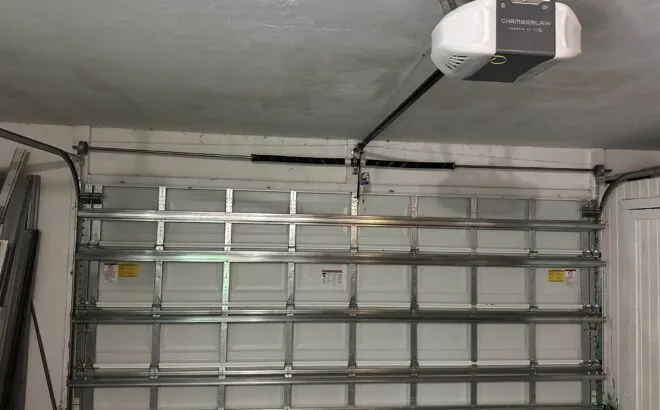
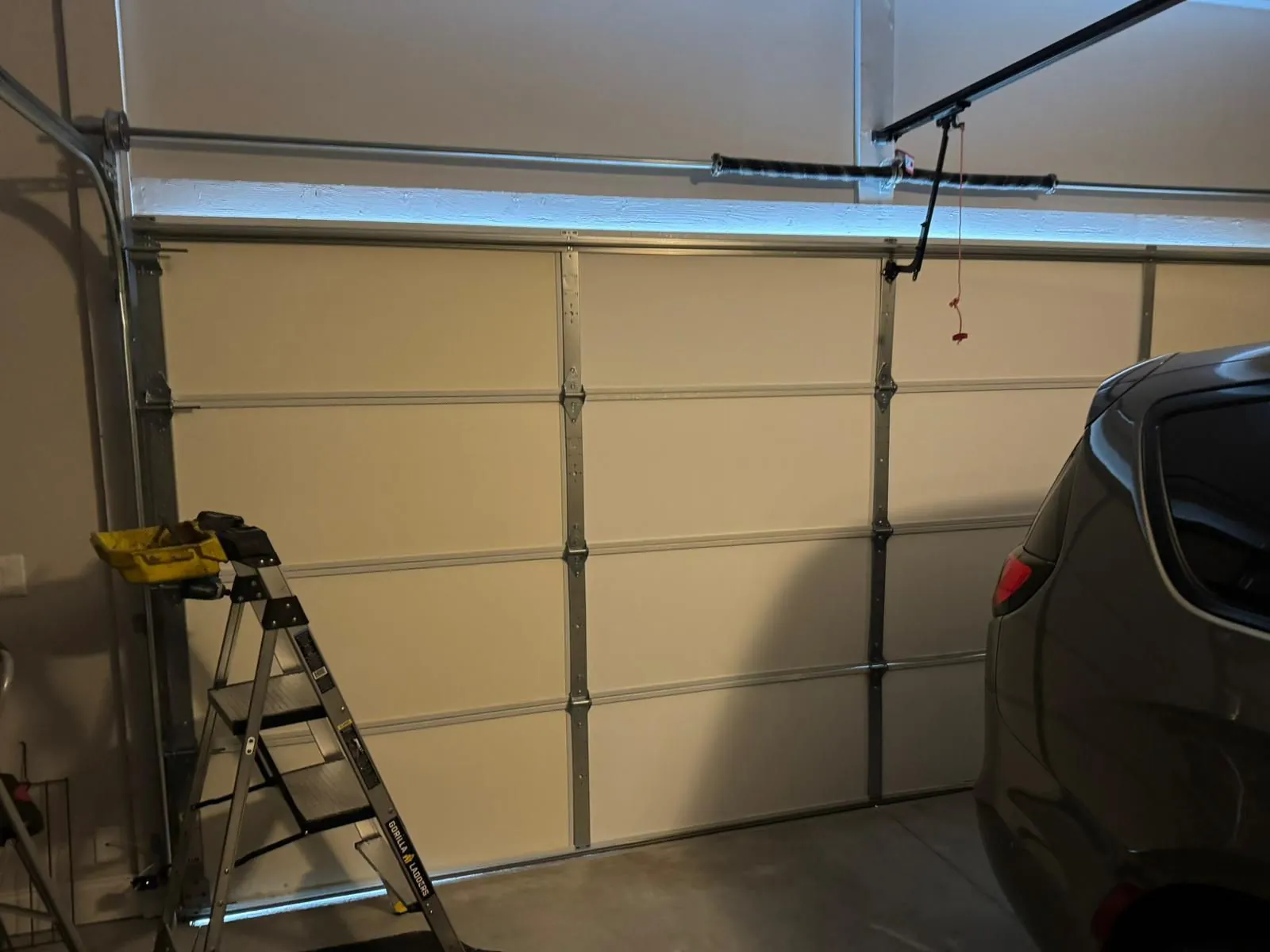
Tightly wound coils mounted on a steel tube above the opening. Turning drums at each end, they wind up as the door descends and unwind to help it rise.
Extension springs
Long coils that stretch out alongside each ceiling rail when the door shuts and contract to help haul it back up, working through pulleys and cables.
One spring or two
A light single-bay door may run on one torsion coil; a heavier door shares the load between two. Lose one of a pair and its partner is rarely far behind.
Containment cables
A thin cable threaded through the centre of each extension spring keeps it from whipping loose if it snaps. Doors that lack one should have it added.
Drums and end bearings
The grooved drums and the bearing plates at each end of the tube take the spring’s full torque, so they are checked whenever a coil is changed.
What a spring actually does
Picture the weight of a heavy armchair hanging in the doorway of your garage. A sectional door can be in that region, and nothing about the system expects a person, or the opener’s little motor, to haul it unaided. The spring is a battery of stored effort. On a torsion setup, lowering the door twists the coil ever tighter round its tube; as the door rises that twist pays itself back, spinning the drums so the two cables lift the bottom corners in step. On an extension setup, shutting the door stretches the coils along the ceiling rails, and their recoil does most of the opening.
Set correctly, the spring makes the door feel close to weightless, and it hovers at whatever height you leave it. That poise is the whole point. Rollers, hinges and opener all take it for granted.
Springs are built for a finite count of open-and-shut cycles. Each cycle bends the steel wire a fraction, and sooner or later the metal fatigues and cracks, most often near the clamped end. A rear garage serving a busy multi-unit house can rattle through those cycles fast, which is one reason garage door spring repair in Chelsea tends to come round sooner than owners expect.
Telling a broken spring from a tired one
A clean break is obvious once you know where to look. With a torsion setup, look for a clear space between two turns where the wire has parted, and one half may have spun along the tube. With an extension setup, one long coil dangles slack or has stretched out of shape, and the door sags on that side.
A spring that is intact but fading drops subtler hints:
- Raising the door by hand is a noticeably bigger effort than last year.
- Let go of it halfway and it sinks to the floor rather than staying put.
- The opener slows and groans toward the top of each run.
- A torsion coil looks scaly or crusted and creaks as it winds.
- An extension coil keeps open gaps between its turns even with the door fully up.
Dealing with a spring at that stage beats waiting for the bang. One that breaks while the door is raised can let it come down much harder than it should.
Briny air and metal fatigue near the creek
The breeze off the creek and the harbour carries salt into every unheated garage in Chelsea, and spring wire pays for it. Corrosion pocks the surface, and on a part loaded every hour of the day those pocks are where fatigue cracks are born. A coil that might give long service in a dry garage inland can fail well short of that beside the water.
Rust adds drag, too. The turns of a torsion coil rub one another as it winds and unwinds; when they rub on oxidised steel the spring labours, wears quicker and often groans or squeals in the process. Extension springs corrode worst at their hooked ends and at the pulleys they drive, where rust can lock the pulley wheel and chafe the cable that runs round it.
A smear of door lubricant along the coils, twice a year or so, slows the rust and hushes the creak. Wipe off whatever does not soak in, or it becomes a magnet for road grit.
Cold snaps, steel and the first frosts
Cold robs spring steel of its give, and a detached rear garage sits at the outdoor temperature all winter long. A coil already weakened by salt and by its cycle count is most likely to quit on one of the first genuinely bitter mornings, often at the moment the opener is asked to lift the door for the day. That explains why so much garage door spring repair in Chelsea lands in the colder months, and why a door that felt heavy through the autumn deserves a look before the frost arrives.
Springs in a small rear garage
The compact garages on Chelsea’s tight lots bring their own constraints. Headroom is often short, which limits the space over the opening for a torsion tube and its drums. Some of these garages run extension springs for that reason, or carry a low-headroom track arrangement that changes where the spring sits and how the cables are routed. There may be very little clearance between the rails and the side walls, which affects how extension springs and their pulleys can hang.
None of that rules out a good repair, but the replacement has to suit the room rather than a textbook layout. Each visit studies the existing arrangement first, then sizes the new spring to the door and to the space it has to work in.
A hands-off way to judge the balance
When the door still runs but something feels off, there is one check that needs no tools and never brings you near the coil. Only with the door shut, tug the red emergency handle hanging from the opener’s rail, which unhooks the door from the motor. Raise the door by hand until its bottom edge is roughly level with your hip, and ease your grip away. A door in good balance hangs there or sinks only slowly. A door that thumps down has springs no longer pulling their share; a door that climbs on its own has springs wound beyond what it needs.
Keep your hands clear of the joints between sections while you do this, and never attempt it if the door is already stuck, crooked or partway open, or if you can see a break in a coil or a slack cable. In those cases the spring has already failed and the door should simply stay shut until it is repaired. Lower it again afterwards and let the opener’s carriage re-engage the door on its next run, which it does with an audible click.
A door that fails the test does not always mean an immediate breakdown, but it does mean the opener is now making up the difference on every lift, which wears out its gears and motor sooner. That is the moment to change the spring, before the rest of the door starts paying for it.
Why a torsion spring is off limits
Plenty of calls open with the question of whether a homeowner could just swap the coil. Our answer is a firm no. A wound torsion spring holds dangerous tension, easily enough to fling a winding bar or a loosened set screw with real violence. That energy is present with the door shut, which is precisely when most people would start tinkering. The same coil loads the cables and the bottom corner brackets, so undoing any of them can set it loose.
Replacing one means unwinding the old coil in a controlled way, sliding coils off and onto the tube, then winding the new one a carefully counted number of turns for that particular door. It is not a DIY repair, and nor is cranking up the tension on a spring that feels weak. Extension springs carry hazards of their own while stretched, especially where containment cables are missing. Once a coil has broken, let the door rest on the floor, disconnect the motor’s power and resist any urge to heave it up.
Matching the spring to the door
No such thing as a standard garage door spring exists. Each one is chosen for the weight and height of a particular door, and a poor match shows at once: too feeble and the door stays heavy, too strong and it shoots upward and will not stay down. Wire thickness, the coil’s inside diameter and its length all alter how much it lifts and how long it lasts.
Doors in Chelsea’s rear garages vary widely. A plain steel single-bay door is light; an insulated one, a timber one, or a timber one that has drunk in rain season after season, can weigh far more than its size suggests. Any of those shifts the spring it needs. So every spring visit weighs the door in its present state, whatever it may have weighed on the day it went in.
One spring or both
Where a door hangs on two torsion coils, they normally went in together and have flexed through an identical tally of cycles. When the first snaps, the second is living on borrowed time. Renewing both together leaves the door lifting square and avoids a second call-out once the survivor gives up too. The same reasoning covers the twin extension springs either side of a door: renewed together, they pull alike and the door rises square.
On a single-coil door, moving to a two-coil arrangement can make sense when the door has put on weight or the original spring was undersized. That gets talked through on the visit, never presumed.
How a spring visit runs
- The door is clamped where it stands and the opener unhooked, so nothing can move unexpectedly.
- The failed coil, its partner if there is one, the cables, drums and bearing plates all get a close look.
- Height and weight are measured so the replacement can be matched to this door.
- The old coil is unloaded under control and taken off; the new one goes on and is wound for this door’s load.
- The cables are compared for matching tautness, then the door is lifted by hand to prove it now hovers.
- The opener is reattached, its force and limits retuned for the now-lighter door, and the auto-reverse is tried.
All the way through, you are told what turned up, including any cable fraying or roller wear that the break has brought to light.
Vibration and the spring’s mounting
Heavy truck traffic through Chelsea sends a constant fine shudder into garages near the road, and the fixings that hold a torsion spring are not immune. The centre bracket anchoring the coil, the end bearing plates and the set screws on each drum are all fastened into header and jamb timber. Over months that shaking can work them loose, and a drum that creeps on its tube leaves one cable slack while the other stays taut. A door that has begun to rise lopsided, or a knock from above the header as it travels, is worth having checked before it drags the door out of line.
Repair the spring or replace the door
One snapped coil is hardly ever grounds for a whole new door. Springs are consumables that wear out on a predictable curve, and replacing one restores a healthy door to full working order. A new door only enters the discussion when the spring is one fault among many: base sections corroded through, split panels, or timber so heavy with absorbed water that no sensible coil can balance it. Those conversations are covered on the new garage doors page. Most of the time, garage door spring repair in Chelsea means exactly what it sounds like: a fresh coil, a balanced door and a calm opener.
Knock-on damage from a spring failure
When a coil fails it rarely goes alone. Cables can unspool or hop off a drum the instant the coil lets go, and an opener that kept heaving against a dead weight may have stripped its gears. Those are dealt with on the same visit wherever possible. For other faults on the door, see garage door repair in Chelsea, and if the opener itself is misbehaving, our page on Chelsea openers covers motors, remotes and sensors. Our wider approach is set out on the spring repair page, and all our local work is gathered on the Chelsea page.
A spring that snaps after dark
Coils snap on their own timetable, and a car marooned behind a dead door at night is a genuine headache. Somebody picks up the phone at midnight just as at midday, Sundays included, so ring as soon as you find the damage. If the door is jammed open, or a vehicle is shut in, the page about urgent breakdowns in Chelsea explains what to do while you wait.
Book a spring replacement
On the phone, mention whether the door has a single coil above it or a spring along each rail, whether it is shut or hung up partway, and whether a car is inside. A photo of the spring, taken from well back, helps too. To arrange garage door spring repair in Chelsea, call us or book online.
Questions from Chelsea
There was a crack like a starting pistol and the door will not budge. Spring?
Very likely. A coil that snaps releases all its stored energy in an instant, and inside a small garage the report is startling. Let the door sit, cut the motor unit’s power at the socket, then from a sensible distance check the spring over the opening for two separated halves.
The car is inside. Can I lift the door to get it out?
Forcing it is a poor idea. With the spring gone the door is pure dead weight, and heaving on it by hand or with the motor can wreck the opener, strain the cables or let the door crash down. If a vehicle is shut in, explain that when you ring and the door will be handled properly.
Why do springs here seem to give out sooner?
Salty air off the creek corrodes the wire, and corrosion pits are where fatigue cracks start. Unheated rear garages also leave the coils exposed to hard frosts, which turn tired steel brittle. Together those shorten a spring’s working life compared with a dry garage away from the water.
Only one of my two springs broke. Do both need changing?
As a rule, changing the pair is wiser. Twin coils age in lockstep, so the one still intact is close to the end of its own run. Renewing both keeps the door rising evenly and heads off a second breakdown soon after.
How do I help a new spring last?
Give the coils a light smear of lubricant a couple of times a year and wipe off the surplus. Keep an eye out for the door feeling heavier or creeping down when left halfway, and get the balance looked at early instead of letting the opener quietly carry the difference.