
Why rear garages on Jamaica Plain’s sloped lots need repair work
Around the Pond and along Centre Street, the garage is rarely part of the house. It stands at the back of the lot, behind a Victorian or a triple-decker, and on a good many of these properties the driveway falls away from the street to reach it. Garage door repair Jamaica Plain MA homeowners ask about usually begins there: at a detached building on a sloped site, with a door that has to cope with the grade in front of it every time it opens.
A slope changes what a door goes through. Rain, meltwater and grit run downhill and collect at the threshold. Snow slides off the drive and banks against the bottom section. A door that freezes to a wet floor has to be torn loose by the springs and the opener together, and the approach from above means a car rolls toward the door instead of easing up to it. Put simply, a steep driveway works the springs harder than a flat approach does.
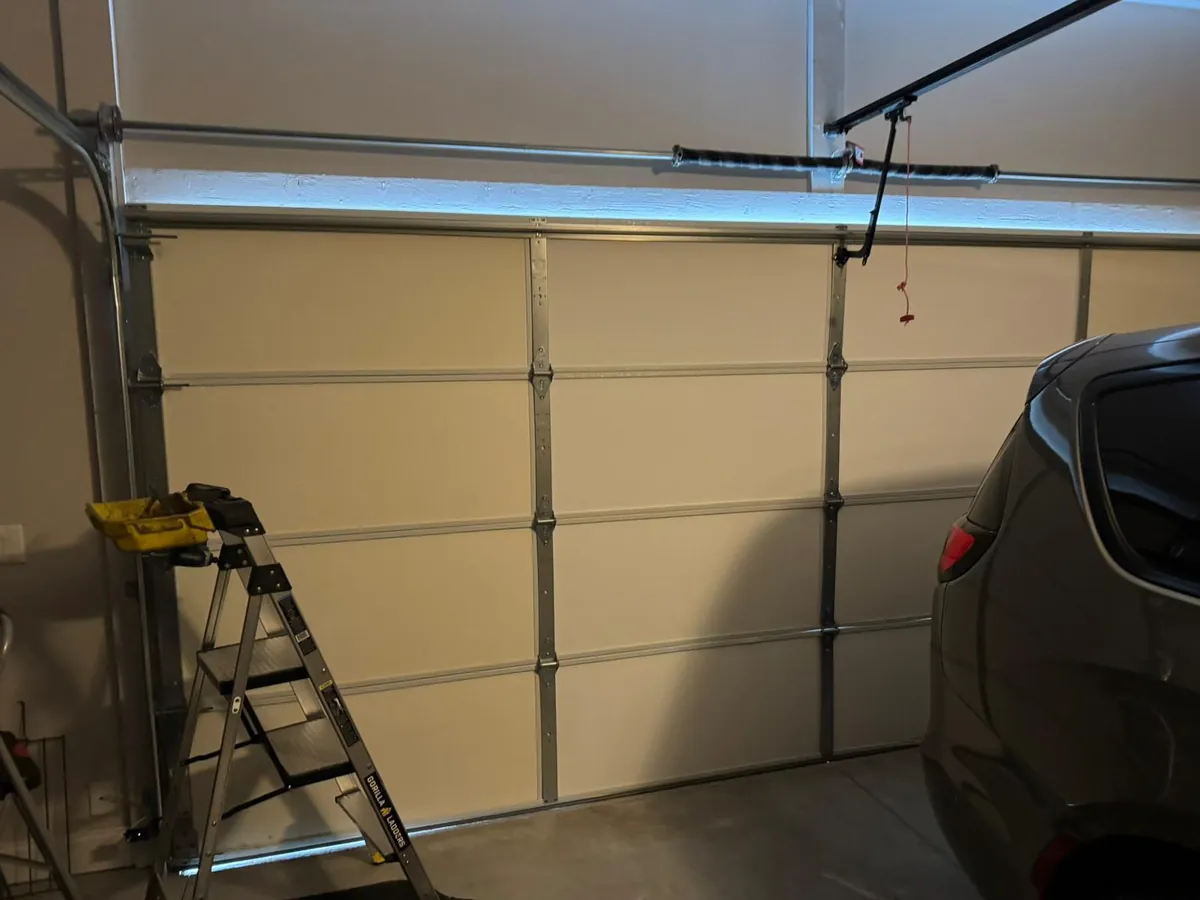
From a safe distance, before you call, have a look for three things:
- A split coil on the shaft over the opening, or a stretched, sagging extension spring along either rail.
- A lift cable hanging slack at one of the bottom corners.
- A bottom edge that sits higher on one side than the other where it meets the floor.
What a repair on a Jamaica Plain garage can cover
Springs, torsion and extension
The springs carry the weight so the opener does not have to. Lose one and the opener manages a short lurch upward before it quits. Spring work has its own page: Jamaica Plain spring repair.
Cables and their drums
A steel cable ties each lower corner of the door up to a drum at one end of the spring shaft. One that frays or unspools lets a corner drop, and the door binds crooked in the opening.
Panels and hinges
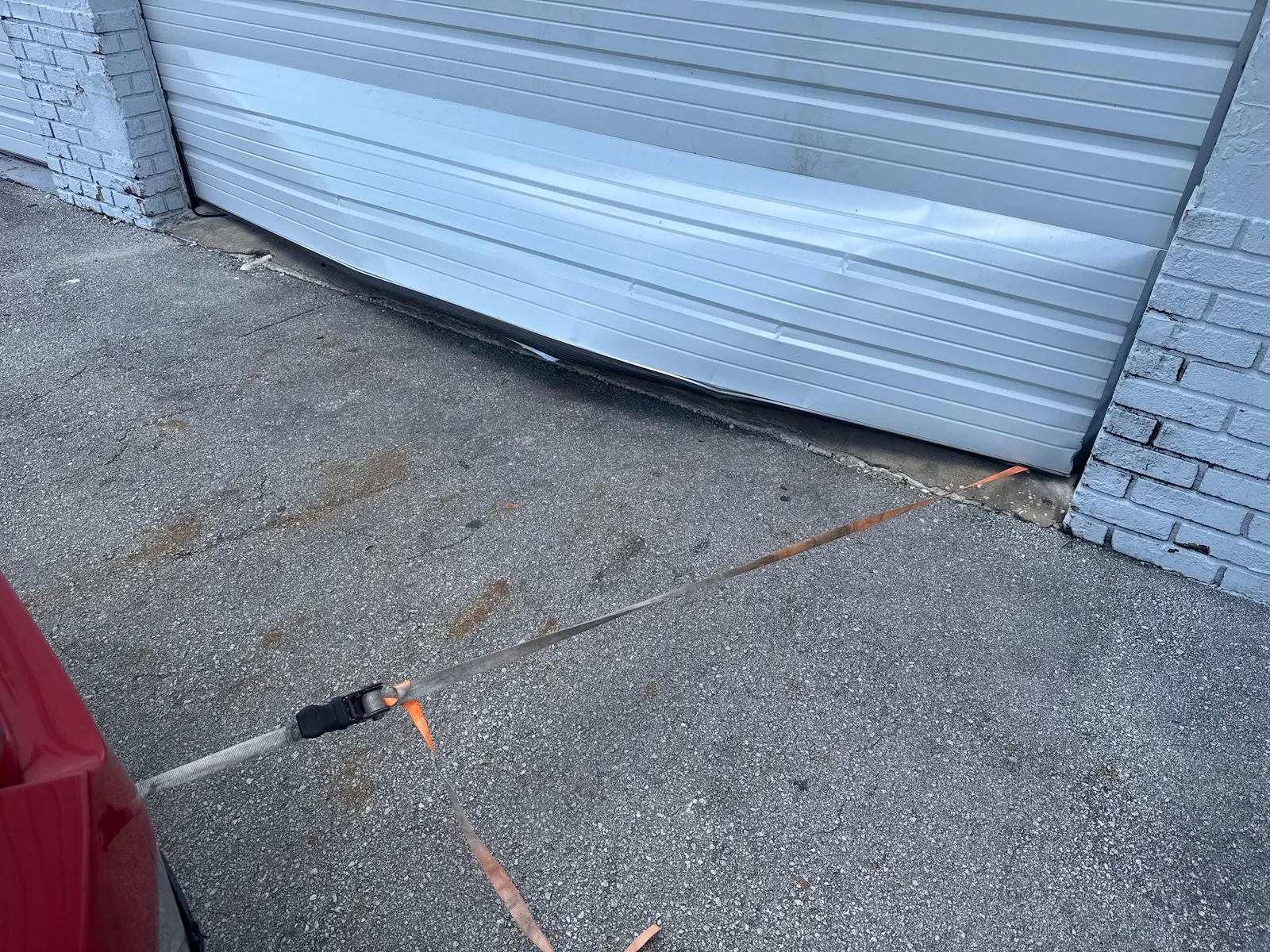
Sections take knocks from cars rolling down the drive and from snow pushed against them. Cracked panels and split hinges show up as a sag or a scrape.
Openers, remotes, wall buttons
A drive unit that whirs without lifting anything, a dead remote, a wall button that has stopped answering. More on the Jamaica Plain opener repair page.
Rails, rollers, derailed doors
Rollers worn flat, brackets working loose on old framing, a rail bent by a bumper, or a door hanging clear of its rails on one or both sides.
Photo-eye sensors
Two small lenses facing each other just above the slab, which stop and reverse a descending door. Water and grit at the bottom of a slope can foul them or knock them out of line.
The garage at the bottom of the drive
Picture the usual layout. The house fronts the street, the drive runs past its side, and somewhere along the way it tips downward until it levels out, more or less, in front of a garage door at the back of the lot. Some of these drives are gentle. A lot of them are not, and on the steeper ones a car is braking all the way down and climbing hard on the way out. Most garage door repair Jamaica Plain MA calls we hear about involve a garage set out like this.
That arrangement puts the garage in the low spot of the site, which is where water goes. After a heavy rain or a thaw, the apron in front of the door can stay wet long after the street has dried. Leaves and sand wash down and settle against the bottom seal. In winter the same spot collects whatever snow is shovelled or ploughed off the drive above it. A door in that position spends more of the year in contact with water, ice and debris than a door on level ground, and its bottom section, seal and lower hinges show it.
The grade also affects the floor itself. A slab poured on a sloping lot is not always dead level from side to side, and an older slab may have shifted. Where the concrete tilts, the door lands on its lower corner before the other. For a moment the opposite cable loses its tension as the door settles, and over many cycles that is enough to let a cable jump its drum or to wear a groove in the bottom section where it meets the concrete.
Why a steep approach is hard on springs and openers
On a level site, a door that is working well rises with little effort and comes down under control. Every pound of the door is balanced by the springs, and the opener only has to start and stop it. Take away that balance, or add load the springs were never set for, and the whole system starts to struggle.
A sloped approach adds load in several small ways. Ice welding the bottom seal to a wet threshold means the first few inches of every winter lift are spent breaking that bond. Packed snow against the outside face pushes back on the bottom section. A timber door that sits in the damp at the foot of the drive absorbs water and grows heavier than the weight its springs were wound for. Each of these on its own is minor. Together, on a door cycled several times a day, they wear a spring through its life faster, and they make an opener work harder on every trip.
The signs tend to come before the failure. A door that seems weightier each time you raise it yourself, a door that drifts down when stopped halfway, an opener that labours or reverses for no clear reason on cold mornings, and a door that slams the last foot instead of settling: all of these are worth a call before the spring gives way.
Telling which part has failed
The symptom usually points to the part, and a short description over the phone makes the visit quicker.
A sharp crack like a gunshot, and now nothing will go up. That is almost always a spring. A wound torsion spring lets go with real violence, and afterward the opener strains for a few inches and gives up. Leave it closed.
One side of the door hanging lower than the other. Look at the cables. A cable that has snapped, slipped off its drum or come away from the bottom bracket leaves that corner unsupported, and the door twists as it travels.
A grinding or juddering run, or a door that stops in the same place. Rollers and tracks. A seized roller drags in the rail; a dent in the track catches the same roller every time. On a garage reached down a steep drive, a bumper that has nudged the vertical track is a common culprit.
The opener hums, clicks or runs without moving the door. That is either a disconnected trolley, a stripped drive gear in the opener, or a door so far out of balance that the opener refuses the load. Pull the release cord only if the door is fully closed.
The door starts down, then reverses. Check the photo eyes first. At the low point of a sloped lot, splashback and grit build up on the lenses, and a bracket that has been kicked or hit with a shovel can tip one sensor off its partner.
What a visit involves
We begin by feeling how the door behaves, before any part is touched. With the trolley released, it is raised by hand to judge its weight. Stop a healthy door around waist level and it hangs there quietly; if it sinks or pushes back, the springs are not doing their share, whatever else may be wrong.
From there the inspection works through everything that carries or guides the door: the pair of springs, the cables and their drums, the corner brackets at floor level, every roller and every hinge, both rails along their whole run, plus the mounting points that tie those rails to the walls and joists. On a detached garage behind an older house, the screws holding those mounts get a close look, since timber that has gone soft or split will not hold a new part any better than the old one. The bottom section and seal are checked against the floor, and the opener, remotes, wall button and sensors are each tested.
Before any work starts, we explain the failed part, the likely cause and any other parts that look tired, and the decision is yours. Once the repair is done, spring tension is adjusted until the door balances again, the opener’s travel stops and force setting are reset for the lighter-running door, and its reversing safety is proved by bringing the door down onto a block placed under it.
What you can safely check while you wait
A few checks are safe for anyone and may even solve the problem:
- A door halted halfway that keeps retrying needs its power cut: unplug the opener at its ceiling outlet.
- Look at both photo eyes. Wipe the lenses with a dry cloth and clear anything leaning against them, such as a shovel, a bag of salt or a bin.
- When a single handset has quit and the wall button still drives the door, swap the battery in that handset before anything else.
- Check the threshold. On a cold morning, a door frozen to the floor may simply need the ice cleared from along the bottom seal before it is tried again.
Some parts must be left alone. Keep your hands off the wound spring over the opening, the cones at its ends with their set screws, both cables, and the fittings at floor level where each cable is hooked on. They hold stored energy in every position of the door, and freeing it in the wrong order with the wrong tools can throw a bar or a bracket across the garage. That is why springs and cables are a job for a technician with winding bars, never a weekend fix. And if a spring has broken, do not lift the door by hand or run it on the opener: there is nothing holding it up.
Garages behind older houses
The houses around the Pond and Centre Street include a good share of Victorians and triple-deckers, and the garages behind them were often built or altered separately from the house. In practice that means openings that are not quite square, jambs that have been packed out or patched, and framing that has held more than one set of track brackets over the years.
None of this rules out a good repair, but it shapes how one is done. A track that keeps working loose may need its bracket moved to fresh timber or fixed through a backing plate rather than just tightened. A door that rubs on one side may be fine; the jamb may have moved. Headroom matters too. A low garage limits where the spring can go and what opener will fit, and any replacement part has to suit the space the building really has.
Detached garages also tend to see less attention than the house. They are out of sight at the back of the lot, and small faults are left until the door stops. Catching a frayed cable or a cracked roller early is usually a simpler job than dealing with the bent track or snapped spring it leads to.
Panels, seals and the bottom of the door
Because these garages sit at the low end of a slope, the bottom of the door does a lot of hard work. The seal is the first line against water and leaves running down the drive. Once it splits or flattens, water gets under the door, the bottom section stays damp, and steel starts to rust along the lower edge while timber begins to soften.
When only one section has been creased or split, that section alone can usually be swapped, provided a match for its profile and finish is still available. The hinges between sections should be checked at the same time; a split hinge makes the door flex as it travels, and that shows as a bow across the middle or a knock at the same point in every run. Where the slab is uneven, the bottom seal and the cable tension are set together so the door seals along its whole width without one side taking the weight first.
For garage door repair Jamaica Plain MA owners need at the foot of a steep drive, replacing a worn seal and tightening up the lower hinges is often the most useful single job on the list.
Repair or replace
On most of these garages the honest answer is to repair. The moving hardware and the weatherstrip wear by design, and once they are renewed, a door with a solid skin keeps going for years. A door that has been hung and adjusted in an old, slightly out-of-square opening over the years is often a better fit for it than a new door would be on day one.
Replacement makes more sense when the door itself is failing: sections eaten through by rust at their lower edge, timber panels gone spongy or cracked in more than one spot, or a wooden door so waterlogged from years at the foot of the drive that no spring setting will hold it level. Every garage door repair Jamaica Plain MA properties need comes with a straight view of which case you are in. If it is time for a new door, the page on new garage doors in Jamaica Plain describes fitting a replacement into an opening like yours.
Booking a repair
Doors stop at awkward times: a car trapped inside on a winter morning, or a door that will not come down after dark. Someone picks up our line at any hour, weekends and holidays included, so a problem spotted late can be passed on at once. If the door is jammed open, has slipped off its rails or refuses to rise, read the Jamaica Plain emergency repair page for the steps that keep everyone safe meanwhile. The citywide view of this work sits on our garage door repair page, and the Jamaica Plain page brings together every service we offer in the neighbourhood.
Tell us how steep the drive is, how the door is behaving, anything you can see that has snapped or come loose, and whether a vehicle is stuck behind it. For garage door repair Jamaica Plain MA homes can rely on, have those answers in mind when you call us or book online.
Questions from Jamaica Plain
Why does a steep driveway matter to my garage door?
A garage at the foot of a slope gets more water, ice, grit and snow against its door than one on level ground, and those add load every time the door moves. Over time that wears the springs, the bottom seal and the lower hinges faster, and it makes the opener work harder.
My door froze to the floor overnight. What should I do?
Do not keep pressing the button, which strains the opener and the springs. Unplug the opener, clear the ice along the bottom seal, and try again gently. If the door still will not lift, or if something snapped while it was frozen, call.
One side of the door is lower than the other. Is it safe to use?
No. A door that hangs crooked usually has a cable that has slipped or snapped, and running it can pull it out of the tracks. Leave it where it is, keep people and cars clear, and call.
Our garage is behind the house at the end of the drive. Does that complicate a repair?
Not really. Ladders and parts come down the slope on foot, so parked cars on the drive and clutter just inside the opening slow things down. Mention the slope on the phone and we will plan for it.
Can a single damaged section be replaced, or does the whole door have to go?
Often a single section can be replaced, provided a matching one can be found. If the rest of the door is sound, that is usually the better choice. If several sections are rusted or rotted, a new door may make more sense.