
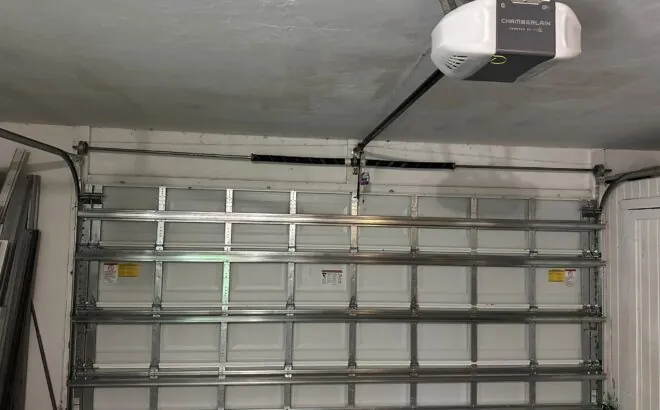
Few garages in the old streets, many modern doors beyond them, salt air over all of it
Two pictures of this city sit side by side. In the McIntire district, Federal and Victorian houses stand close together on tight lots, and garages are scarce: most of these houses were built for the street, not the driveway. Away from those blocks, newer houses come with modern openings, attached or close to the house, sized for today’s cars and fitted with insulated sectional doors and openers. The work behind garage doors Salem MA owners ask about comes mostly from that second group, with the occasional call from a rare older garage that has outlived several doors.
What both share is the air. Salt reaches every street in the city, and a garage door is a frame of bare springs, twisted cables, thin brackets and plated hinges, exactly the parts that suffer most when salty moisture settles on them. A door here rarely fails out of nowhere. It stiffens, then groans, then one day a spring or a cable gives way.
Look before you touch, and note:
- Any reddish crust where the lift cables loop onto the bottom corners of the door.
- Whether one end of the bottom edge meets the floor before the other.
- Whether the door still glides, or now jerks and pauses on its way up.
Garage door services in Salem
Repairs to the door itself
Corroded hinges, a dented panel, rollers that no longer spin and brackets working loose from the jambs. Our garage door repair work takes in all of it, whether the door is new-build steel or an older wooden one.
Spring replacement
In salt air, a spring’s coils pit and weaken quietly until one gives with a bang. Torsion and extension springs are both replaced; read about garage door springs before deciding anything.
Openers and accessories
Motor units fixed or renewed, LiftMaster among them, together with remotes, keypads, wall consoles and the paired photo eyes. Details sit on our opener services page.
Urgent problems
A door stuck halfway in an onshore gale, or one that refuses to shut when the house is about to be left empty. Ring whenever it happens; read more under emergency garage door repair.
Cable and drum work
Lift cables in coastal air lose strands from within before they show it outside. A frayed or parted cable is renewed with its partner. See cable repair.
Off-track and replacement doors
Doors forced out of their rails are rehung square through off-track repair. When the sections themselves have rusted out, new garage doors are brought in and hung to the exact opening.
Salt air and the hardware behind a door
Paint and a good finish protect the face of a door. The hardware behind it has no such luck. A torsion spring is raw wire under constant load. A lift cable is dozens of fine strands twisted together, with gaps between them that hold moisture like a wick. Rollers turn on small steel axles in steel tracks; hinges pivot on pins in holes that wear. Every one of those parts sits in the salty air that moves across the whole city, and every one of them slowly loses its smooth surface.
Once a surface has pitted, friction goes up. A door that once rose with a light push needs more effort from the springs and the opener. The opener works harder, its gears wear sooner, and its force limit is reached more often, so it reverses for reasons that are hard to see. A spring with pitted coils is not only weaker; it is more likely to snap at a pit, the way a scratched wire breaks at the scratch.
That is why a call about one part on a coastal door usually turns into a look at all of them. We are not looking for extra work, we are looking for the next failure, so that you can decide whether to deal with it now or later.
The McIntire district: old houses, few garages
The streets of the McIntire district were laid out long before anyone owned a car. Federal and Victorian houses fill the lots close to the sidewalk, and on most of them there is simply nowhere for a garage to go. Parking happens on the street or in a small yard.
Where a garage does exist on one of these lots, it tends to be a tight fit: a narrow opening, limited headroom, and framing that was not designed with an overhead sectional door and its hardware in mind. That changes how a repair is approached. A torsion spring needs space above the header, an opener needs a run of ceiling, and the tracks need sound wood to fix into. In a cramped older garage, any of those can be short, and the right part is the one that suits the space, not the one listed for a standard door.
Because these garages are rare, they also tend to be valued. Owners often want the door to sit well with the house in front of it. When a new door is needed for an older lot, it is measured to the opening that exists and chosen with that in mind.
Newer houses and their modern openings
Beyond the historic blocks, the picture changes. Newer houses have garages planned from the start, with modern openings, adequate headroom, steel tracks on solid framing and an opener on the ceiling. Most of the doors are insulated steel sections, heavier than they look, counterweighted by a pair of wound coils over the header.
These doors run well for years and then fail in fairly predictable ways. The springs reach the end of their cycles. A roller cracks. A cable frays at the bottom bracket, where salt water from wet tyres collects. The opener’s drive wears or its safety eyes drift out of line. Because the openings are built to a standard, parts are straightforward to match, and most repairs can be done in a single visit when the right parts are on the van.
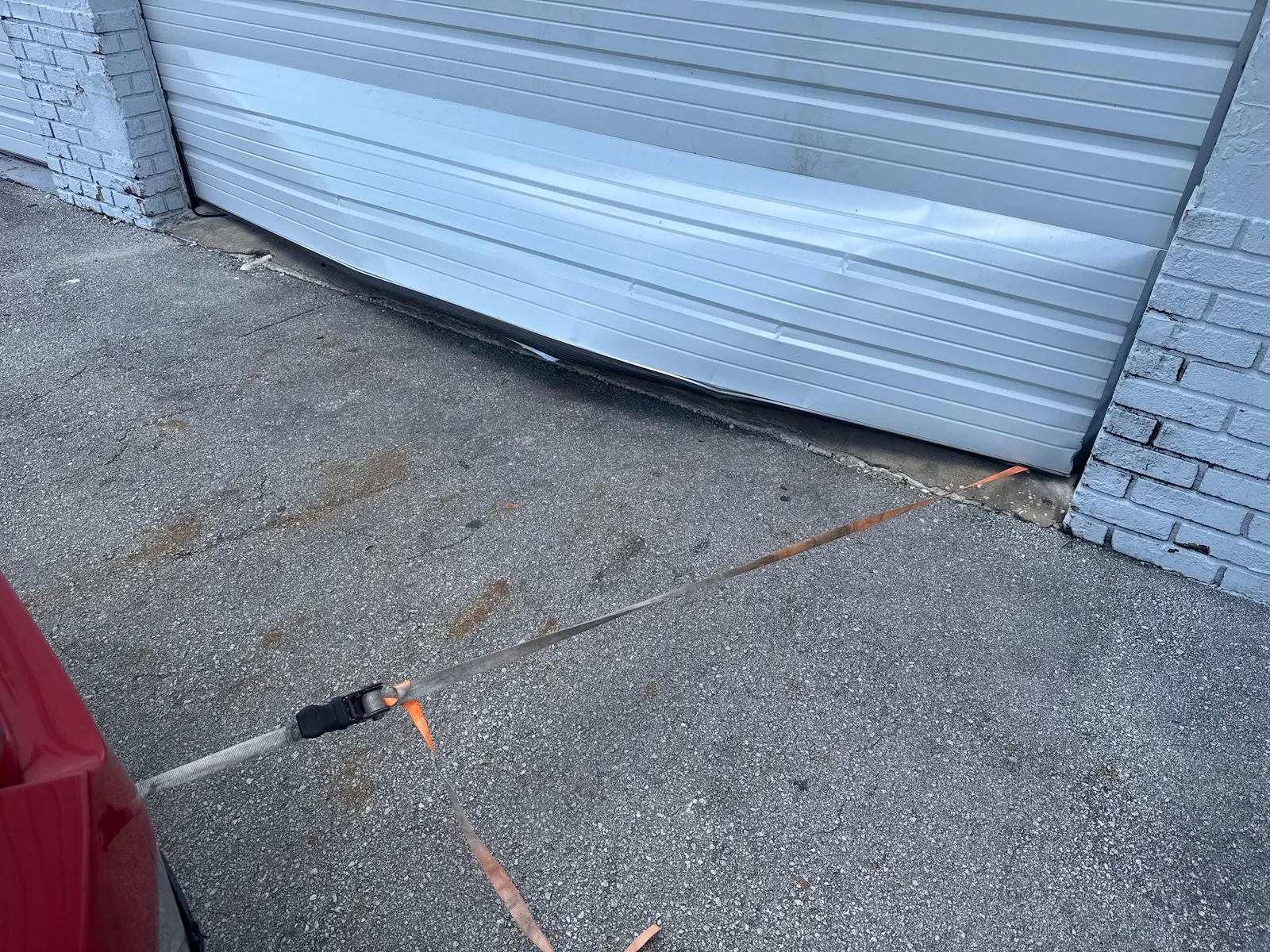
Modern garage doors Salem MA builders put on these houses are also the ones most often struck by cars, simply because they are used most. A bumper nudge on a door that has not fully opened can crease a section and push a track out of line, and the door may still seem to run until the next cycle drags it out of its rails.
Springs: why we will not let you adjust them
Whatever the age of the garage, the springs do the lifting. Torsion springs sit on the shaft over the opening; extension springs, found on some older or smaller garages, stretch alongside the overhead tracks.
A torsion spring carries dangerous tension. The only safe way to release or wind it is with the right winding bars and a firm method, because a slip sends the bar spinning with the full stored force of the spring behind it. Never treat this as a DIY repair, and that includes “just a quarter turn” to fix a door that will not stay up. Extension springs are loaded whenever the door is shut, and without a containment cable running through each one, a break throws metal across the garage.
Coil failure in a Salem garage tends to sound like a dropped plank echoing through the house; after it, the motor groans and the door barely stirs. If that happens, leave the door down, touch the red release cord only once the bottom edge is sitting on the concrete, and call. In salt air, springs on a two-spring door tend to wear out together, and we usually suggest renewing the pair. You decide on the day.
Cables and drums near the water
The cables on a door here have a hard life. They hang at the bottom corners, closest to the floor, where meltwater, road salt and sea air all gather. Corrosion starts inside the twisted strands, so a cable can look sound from a few feet away while it is losing strength.
When a cable snaps, the corner it was holding drops. Its partner carries on hauling, the door cants over, and the low side wedges itself in the rail, sometimes with an ugly screech. If you see a door hanging lopsided, with one cable loose or wrapped wrongly on its drum, do not run the opener and do not try to straighten the door by hand. New cables go on in twos, each given the same number of wraps, and the springs are re-tensioned until the door rises flat.
Openers, consoles and photo eyes
On a modern opening, an opener is part of the everyday routine. Motors are mended or swapped, LiftMaster units included, and set up handheld remotes, keypads and the wall console.
Before blaming the motor, we check the door. A motor hauling against a dead spring, a fraying cable or a sticky roller is living on borrowed time, and a new opener on a bad door will fail the same way. If the door is sound and balanced, opener problems usually come down to a worn drive gear, a failed logic board, a remote that has lost its pairing, or the safety eyes.
Those eyes deserve a mention. They are two small sensors, one each side of the opening and close to the floor, that look at each other across the gap. In a coastal garage their brackets and wiring corrode, their lenses fog with salt film, and they are easily nudged by a bin or a bicycle. A door that closes only while you keep a finger on the wall button is usually telling you the eyes cannot see each other.
When the door leaves its tracks
Rollers are forced out of their channels in a handful of ways in this city: a car clipping the door, a cable giving way, a corroded roller collapsing, or a track bracket pulling out of the wall. On a modern opening, a wide door can twist dramatically when that happens; on an older, narrower garage, the door may just jam at an angle.
In either case the door is still under spring tension, and it is not as stable as it looks. Stay clear, keep the car out of its path, and do not try to force rollers back into the rail. We take the tension off safely, straighten or replace the damaged track, renew rollers that have corroded or cracked, and rehang the door square. Read more under off-track garage door repair.
Night calls and wild weather
Not every one of the garage doors Salem MA properties have is in a sheltered spot, and the exposed ones tend to fail when the weather is at its worst.
Coastal storms do not wait for office hours, and neither do doors. A door stuck open as weather comes in leaves the garage exposed; a door that will not open traps a car that someone needs before dawn. We take calls whatever the hour, weekends included. We will not promise a time of arrival over the phone; we will tell you honestly what can be done and how to keep things safe until then.
While you wait, leave a broken door where it is. Do not haul down a door that is stuck open on a broken spring, and do not lever up a closed one. If the door is closed and resting on the floor, you can use the red release cord to disconnect it from the opener, but only then.
What happens when we arrive
We begin by looking at the whole door, inside and out. If it is safe, it is run once while we watch and listen. After that we work methodically from the coils over the header down to the rubber seal on the floor, and from the rails out to the motor and the two sensors. On a door near the water we pay extra attention to corrosion on parts that have not failed yet.
You get a clear account of what we found and what we would do, with the parts that can wait separated from those that cannot. Nothing is done until you agree. Before we pack up, the coils are tuned so the door floats when released by hand, the motor is taught its new top and bottom, an obstacle is placed in the beam to prove it reverses, and the door is cycled while you look on.
Repairing the door you have, or replacing it
If the panels are sound, fixing the hardware is nearly always the better call; coils, wire rope, wheels, hinges and motors are all made to be swapped.
A fresh door starts to make sense once the panels are what is failing: brown blisters breaking through the bottom section, wooden boards going soft where puddles sit, a crease from a reversing car, or a patchwork of past fixes that no longer holds together for long. We supply and install new doors, measured to the opening you have, whether that is a modern two-car bay or a narrow opening behind an older house. More on our new garage doors page.
When weighing a replacement for garage doors Salem MA salt air has worked on for years, the questions are how much of the door is still sound, and how much the hardware behind it has left. We will show you, so you can judge it yourself.
Looking after a door in coastal air
A few simple habits help any door in this city last longer:
- Hose down the lower sections and the bottom seal with fresh water after winter storms and salted roads.
- Keep the threshold clear so meltwater and grit do not sit against the bottom bracket.
- Notice new sounds, and where in the door’s travel they happen.
- A drop of light oil on roller axles and hinge pins is fine, with the door closed and the opener unplugged.
Springs, cables and the bottom brackets are not owner jobs. They are under tension and should be left to us.
Other towns around here
We work across the North Shore and beyond. If you have another property nearby, see our pages for Marblehead and Peabody, or every area we serve on the service areas page.
Report the fault, and we take it from there
Whether it is a rare garage on an old lot or a modern two-car door on a newer house, describe the noise, the point where it stopped, and whether your car is on the wrong side of it. The line is answered any time, any day. For garage doors Salem MA properties count on in all that salt air, call us or book online.
Questions from Salem
Our door is only a few years old but the hardware is already rusting. Is that normal here?
In coastal air it is common. The face of the door is protected by its finish, but springs, cables, hinges and roller axles are bare or lightly plated steel, and salt finds them quickly. Rinsing the lower part of the door after storms helps, and we can tell you which parts are just stained and which are actually weakened.
We have an older house with a small garage. Can a modern opener fit?
Often it can; what decides it is the gap above the raised door and how deep the ceiling runs back into the garage. We measure what is actually there and suggest an arrangement that fits, rather than forcing a standard one into a space that cannot take it.
The door made a loud bang and now will not open. What happened?
Most likely a spring has broken. Leave it shut where it sits, resist the urge to heave it up, and leave the bar and coils over the header strictly alone. Call us, and we will talk you through keeping it safe until it is repaired.
Our LiftMaster unit has started clicking without moving the door. Can you fix it?
Yes. LiftMaster openers are among those we repair or replace, and the clicking is often a sign the door is too heavy, so the door’s springs are checked as well as the unit itself.
How do we know when it is time for a whole new door?
Look at the panels, not the hardware. Rust breaking through, soft wood, a crease from a car or a history of patch after patch all point toward a new door. Worn coils, cables or a tired motor on solid panels point toward a repair. We point out on the day which of the two describes yours.