
Why the detached garages around Roslindale Village keep calling for repairs
Around Roslindale Village, the garage is usually its own small building. It sits at the back of the lot, where a long driveway runs out after passing a single- or two-family house, and most of these garages were framed in the 1920s and 1930s around a single-car opening. Much of the garage door repair Roslindale MA homeowners need begins with that combination: an opening sized for a car of its day, a modern overhead door fitted into it later, and a building that has been settling quietly on its own footing for close to a century.
None of that makes a door unreliable. It does mean the hardware is working in an opening that is rarely square, under a header with little room to spare, on framing that has dried, shrunk and been drilled more than once. Parts wear in a pattern that says as much about the building as about the door.
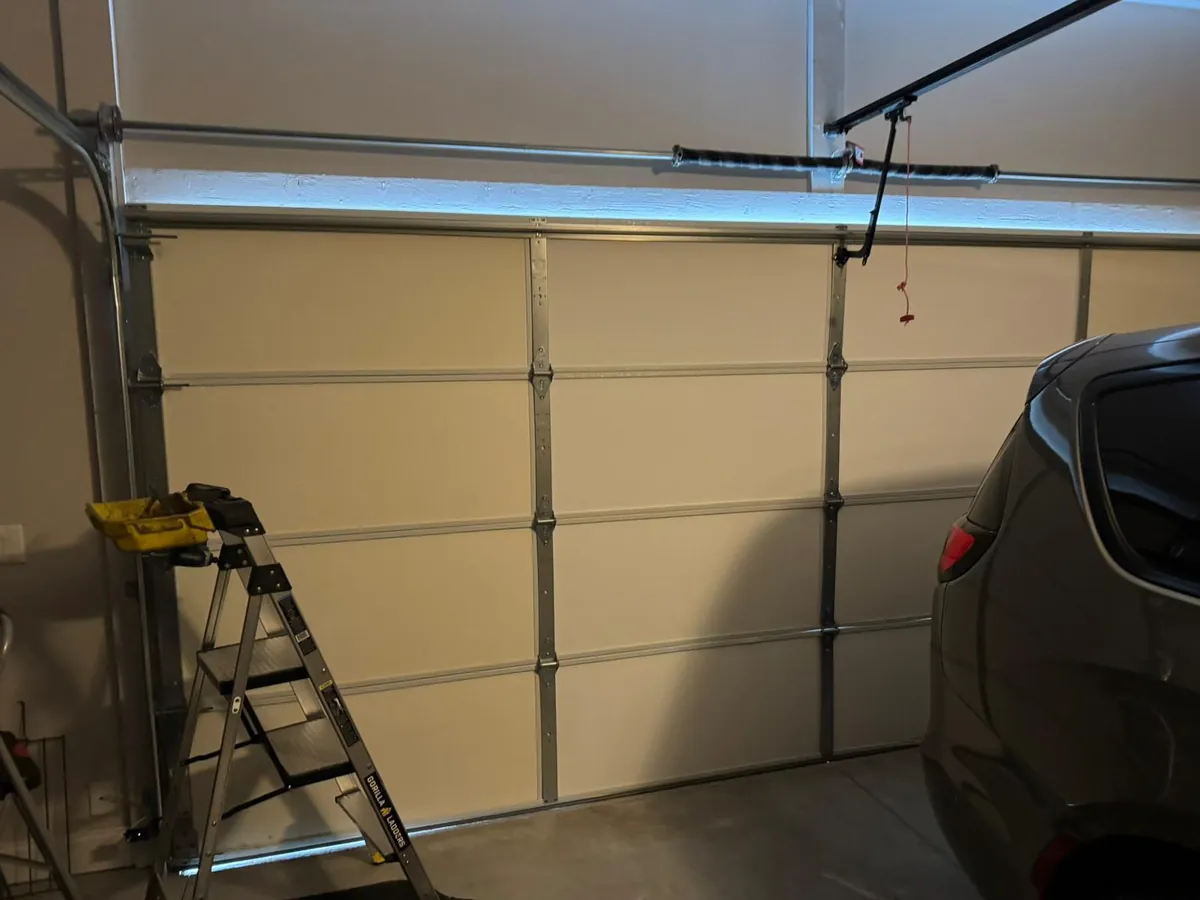
When something goes wrong, three quick looks, made without touching anything, tell us a lot before anyone arrives:
- Whether the spring over the door, or the spring along each track, shows a gap in its coils.
- Whether the bottom edge of the door meets the floor evenly or droops at one corner.
- Whether a lift cable hangs loose, or has unwound from the drum above the door.
What a repair on these garages can cover
Springs that have broken or tired
A torsion spring above the opening or a pair of extension springs beside the tracks does the lifting. When one fails, the door turns heavy and the opener stalls. The Roslindale spring repair page goes into it properly.
Lift cables and drums
Cables carry the spring’s effort down to the bottom brackets. A frayed or unwound cable leaves one side hanging and the door wedged at an angle.
Sections, hinges and seals
Dented sections from a bumper or a wheelbarrow, split hinges between sections, and a bottom seal worn flat against an uneven slab.
Openers, remotes and wall buttons
An opener whose motor whirs while the door stays put, a handset that only answers from a few steps away, or a button by the side door that has gone dead. The Roslindale opener repair page has the detail.
Tracks, rollers and brackets
Rollers that grind or seize, track brackets loosened in old framing, and doors that have jumped clear of the rails.
Safety sensors
A pair of small lenses facing each other across the doorway, a few inches up, that halt a descending door and send it upward if anything crosses between them. In a tight garage, a stored bike or a rake knocks them askew.
Single-car openings from the twenties and thirties
The garages in this part of the city were mostly put up when one car per household was the rule and that car was narrower and shorter than most of today’s. The opening is correspondingly modest, often with very little wall either side of the door and not much height left above the header before the rafters begin. Many began with hinged or sliding wooden doors. The sectional door now hanging there may be the second or third overhead door the building has carried.
Each change to the opening leaves traces: packing behind the jambs, a header built up to take a track bracket, old screw holes beside new ones. A repair has to take that into account. A track bracket that keeps working loose is often not a bracket problem at all but a fixing problem, with the screw turning in wood that no longer grips. The lasting repair is to move the fixing to solid timber or spread the load with a backing plate, not to tighten it again and hope.
Height matters just as much. Where the rafters or ceiling joists sit only a short way above the header, space is tight for a torsion spring, for the curve of the track where it turns from vertical to horizontal, and for an opener rail. Replacement parts are chosen to fit the room the garage actually has. Sometimes that means a low-headroom track layout; sometimes it means staying with extension springs where a torsion conversion would not fit cleanly.
A garage that stands on its own
A detached garage is exposed on every side. There is no warm house wall behind it, so the inside follows the outdoor temperature through the year. In deep cold, grease stiffens, rollers turn reluctantly, and a spring with few cycles left in it is more likely to give out on a freezing morning. Summer heat and humidity work on wood doors and wood framing in the opposite direction, and a door that ran freely in March can bind on its jamb by August.
The slab a detached garage stands on moves on its own as well, separately from the house. Over decades, frost and settlement leave many of these floors uneven, sometimes with a low corner by the door. A sectional door closes against that floor. Where the concrete dips or heaves, the opener’s down limit is set to suit one side, the other side leaves a gap, and the bottom seal wears unevenly. Rain and leaves blow in at the gap, and the bottom section sits in damp.
Power is another point. A detached garage may run off a single circuit fed from the house, and an opener on a long feed or a shared outlet can behave oddly when the supply is weak or the outlet is worn. That is worth ruling out before blaming the opener itself.
How the moving parts share the load
Every sectional door works the same way, whatever its age. The springs carry almost all of its weight. The cables hand that pull on to the lowest section at each side. The rollers and tracks guide the sections up and back. The opener merely nudges along a door the springs have made nearly weightless.
When the springs are right, the door can be lifted by hand with little effort and stays where it is left. When a spring weakens or breaks, the full weight lands on the cables, the opener and whoever lifts it. The opener has a force setting and stops when it meets more resistance than it expects, which is why a broken spring so often shows up first as an opener that lifts the door a short distance and quits.
Faults rarely stay in one part. A worn roller makes the door drag; the drag makes the opener work harder; the extra strain loosens a bracket; the loose bracket lets the track drift; the drifting track pinches the next roller. Good garage door repair Roslindale MA homes can rely on means finding the part that started the chain, not just the one that gave out last.
The usual garage door repair Roslindale MA calls
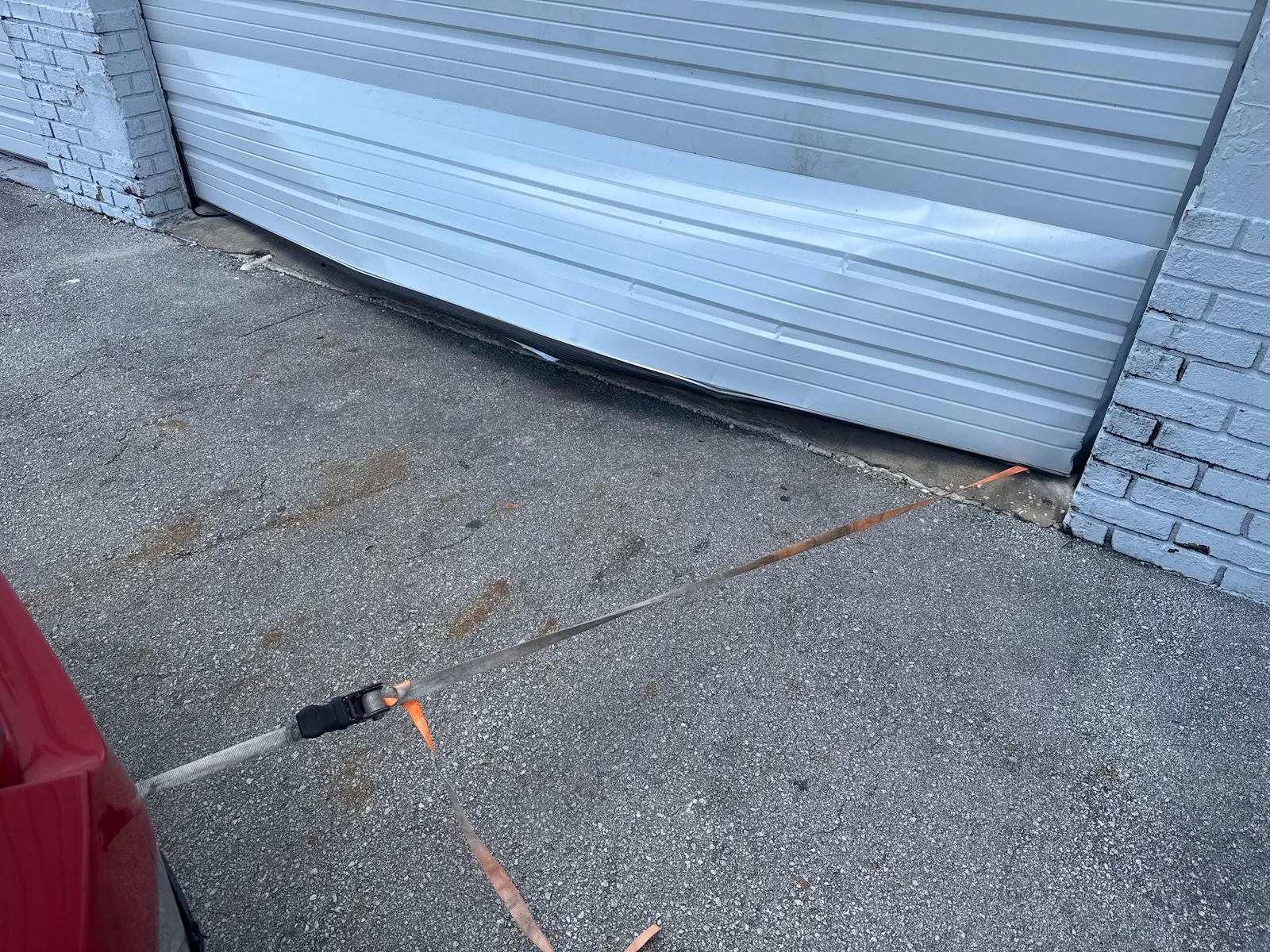
The same handful of complaints accounts for most calls from these garages. A door that lifts a little and stops usually means a broken spring. A door that sits lopsided, one corner well above the other, often means a cable has come off its drum or snapped. A sharp crack like a gunshot from an empty garage is almost always a torsion spring letting go. A grinding or juddering run points to rollers, hinges or a track out of line. A door that reverses just before it reaches the floor is often a sensor problem, or a slab that is higher on one side than the opener’s settings allow for.
Remote and button complaints show up too. Where the garage stands well back from the street, a handset that only works once you are almost at the door may have a weak battery, or the opener’s antenna may be hanging the wrong way or shielded by metal. A wall button that has stopped working may have a broken wire where it runs along a damp wall. Each has a straightforward cause once someone looks.
What happens when we arrive
The visit begins with the door itself, not the opener. The opener is released from the door, and one of our technicians lifts the door by hand to judge its balance: whether it holds at waist height, drops, or creeps upward. That single test says more about the springs than any amount of looking.
Then each part gets its own look: the springs, the cables where they wrap the drums, every hinge and every roller wheel, both tracks from floor to ceiling, and the brackets that fix the whole assembly to the framing. In a garage of this age, the fixings get as much attention as the parts, because a new part on a loose fixing does not stay right for long. Where the complaint involves the opener, the motor is tested with the door disconnected, each handset and the wall control are pressed in turn, and the photo eyes are sighted.
You are told plainly which part has given up, what made it give up, and which other parts are close behind, and the work goes ahead only once you agree. Once the new parts are in, the spring tension is adjusted until the door hangs balanced, the opener is adjusted to the door’s new weight and travel, and a short length of wood on the floor of the opening confirms the auto-reverse still does its job.
Safe checks before we get there
A few things can be done safely while you wait, and they sometimes solve the problem outright:
- If the door has stopped partway and the opener keeps trying, unplug the opener so it cannot make things worse.
- Check the two photo eyes low down beside the opening. If a bin, a bag of mulch or a bicycle has nudged one, the door will refuse to close. Clear the line and wipe the glass with a dry cloth.
- If one handset has failed while the button on the wall still drives the door, swap the handset’s battery before suspecting anything bigger.
- Check that nothing has fallen into either track, such as a garden tool or a piece of trim.
Hands off the springs, the cables, and the low corner brackets those cables hook into. All three hold a great deal of stored force, open or shut, and loosening the wrong fixing can throw a cable, a bracket or the winding bar with real force. That is why spring and cable repairs are not jobs for a homeowner. Once a spring has snapped, the door stays put: neither your arms nor the opener should be hauling up a door that nothing is counterbalancing.
When the door leaves its tracks
An off-track door is among the riskier faults, because the door is no longer properly supported. On a lone garage at the back of a long drive, the usual causes are a car clipping the bottom section while turning, a door struck while partly open, or an opener that kept driving after the door had jammed. Old track brackets in old framing make it easier for a track to be pushed out of line in the first place.
Once a roller has left its rail, the door can twist and hang by one cable. Setting it right starts with propping and clamping the door until its rollers carry no load, then working each roller back into place, straightening or replacing any bent track, resetting the fixings into sound wood, and confirming the two cables pull evenly before the door moves under power again. The off-track garage door repair page describes this work in more depth.
Panels, hinges and the bottom seal
Most damage to the sections of these doors comes from contact rather than age. Cars turn close to the opening where the drive ends, snow piles against the lowest section from December to March, and anything wheeled down the driveway passes close by. One damaged section can usually be swapped on its own, as long as a replacement with the same profile and finish is still made for that door.
Hinges are the quieter problem. Each section is joined to the next by hinges that flex on every trip, and on a door that has been running for years, a split hinge allows the sections to kink as they travel. You notice it as a sag in the middle when the door is half open or a scrape at the same point every time. Replacing the hinges and the worn rollers they carry together usually puts it right.
Of all the parts, the rubber strip along the bottom edge has the hardest time, pressed onto a floor that may be cracked and out of level. When it splits or goes flat, rain and blown leaves find their way into the garage, and the lowest section is soon rusting or rotting. On an uneven slab, a new seal is often the first and simplest improvement, and it protects the rest of the door.
Two households, one garage door
Where a two-family house shares a single garage, the door often does twice the work. Each floor may have its own remotes, one side may use the garage for parking and the other for storage, and the door may cycle from first light to late evening. That extra use wears rollers, hinges and springs faster, and it adds more remotes programmed to the opener.
A shared door is also more likely to keep being used after something has gone wrong, simply because nobody is sure who noticed first. The first odd sound or hesitation is the best moment to call, before a worn part takes another one with it. It helps if everyone knows where the opener plugs in, so the door can be stopped quickly, and if someone keeps track of which remotes are still in use.
Openers and sensors on a detached garage
An opener out in a standalone garage works in tougher conditions than one tucked inside an attached garage. It sits in cold air all winter, it may run on a long electrical feed, and it often moves a door that has been allowed to fall out of balance. When an opener starts to strain, the first job is to check the door it is moving; replacing the opener on an unbalanced door only means the new one strains too.
We repair and replace openers, including LiftMaster openers, and set up remotes, keypads and wall buttons. Sensors are realigned, rewired or replaced when they fail. When the opener is the real fault and not worth repairing, a replacement is sized for the door and for the headroom the garage actually has.
Repair or replace
For most of these garages, fixing the door is the right call. Springs, cables, rollers and hinges are consumable parts. Swap them out on a door with solid sections and it keeps earning its place for years. A door that has been adjusted to an out-of-square opening over the years is often worth keeping for that reason alone.
The decision shifts when the sections themselves are failing. Steel rotted through along its lowest edge, wood sections split or soft in several places, or a wooden door so heavy with damp that it can no longer be balanced, are the usual signs. Part of every garage door repair Roslindale MA owners ask for is an honest view of whether the door is worth more work. If replacement wins out, our new garage doors in Roslindale page shows how a replacement suits a garage of this age.
Booking a repair
Doors tend to fail at awkward times: on a cold morning before work, or with the car shut inside late at night. A real person answers our line whatever the hour, weekday or weekend, which means a fault found at midnight can be reported at midnight. For a door jammed open, one that refuses to rise, or one that has left its rails after dark, the Roslindale emergency repair page walks through the first steps to take. For the citywide picture, our garage door repair service page has it, while the Roslindale page brings together every service we offer locally.
For garage door repair Roslindale MA owners can book without fuss, jot down a few details first: how far back from the road the garage sits, how the door behaves on the button, any part you can see hanging or snapped, and whether the car is stuck in there. Then simply call us or book online and let us take it from there.
Questions from Roslindale
The garage is a long way from the street. Does that change anything?
Only the practical side. Parts, ladders and tools are carried up the driveway, so clearing the drive of cars where possible and leaving some floor space just inside the door makes the visit easier.
The door rises a few inches and then the opener gives up. What has gone wrong?
Usually a broken spring. Without the spring the opener meets far more weight than it is set for and stops. Unplug the opener and look, without touching, for a gap in the coils above or beside the door.
Our garage is from the 1920s and the opening is not quite square. Can the door still be put right?
Yes. Old openings are common here. The tracks and fixings are set to suit the opening as it is, and where screws no longer grip, they are moved into sound wood.
Two households use our garage. Should we stop using the door if it starts making noise?
It is best to. A new rattle or a sudden jerk generally points to a part on its way out, and running the door harder only spreads the damage. Ask everyone to leave it until it has been checked.
Can I put a door back on its tracks myself?
No. An off-track door can drop, and the springs and cables still hold their stored force. Leave the door alone, keep the car and everyone else well back, pull the opener’s plug and ring us.