
Why openers in Fenway’s under-building bays wear the way they do
Near the Fens, garages are few. The brownstones and apartment buildings mostly manage without one, leaving residents to park on the street or in a shared lot, and where a garage does exist it is generally a lone bay built into the base of the building. Inside, the bay is reached from a lobby or a service door. Most requests for garage door opener repair Fenway MA properties make concern a motor in one of those bays, working in a tight space under somebody’s living room.
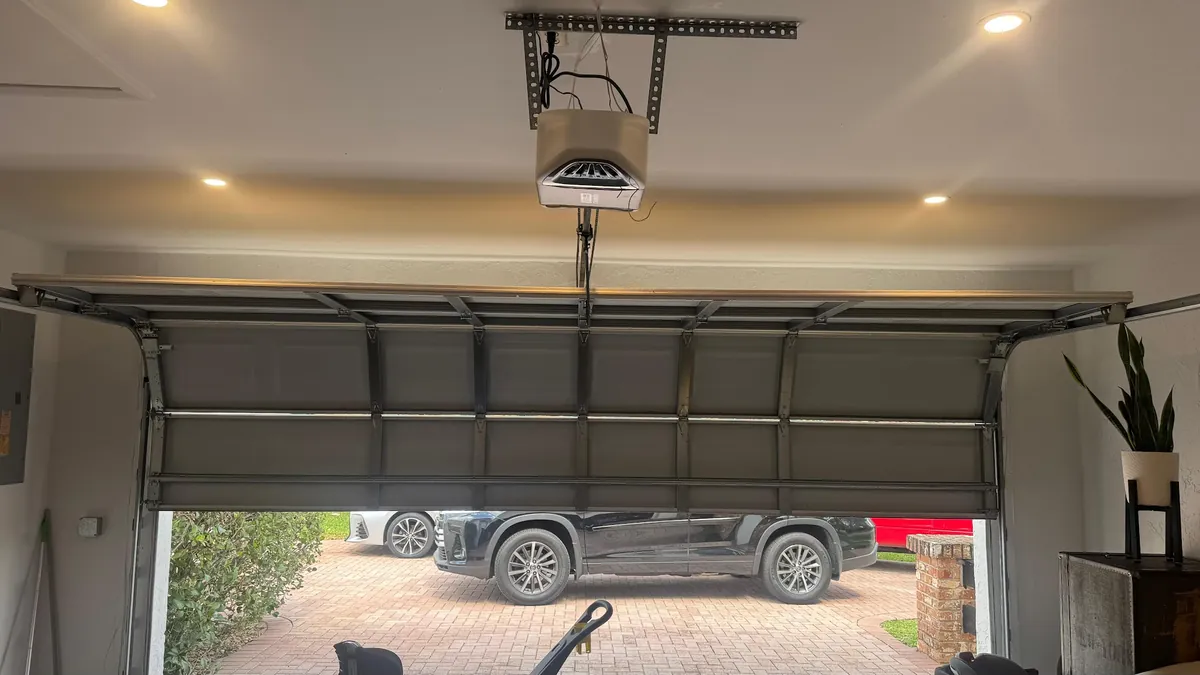
The motor unit hangs from the ceiling of the bay, and that ceiling is the floor of the flat or office above. The rail runs back from the head of the door under a slab or a set of joists, often with only a little clearance. In a shared bay the same motor answers several handsets and a push button by the inside door, and it may run many times between morning and midnight. All of that shapes how these openers fail and how they are put right.
Before calling, three quick checks narrow down the fault, and none of them involve touching the spring or cables:
- Whether the motor’s light comes on when the button is pressed, which tells you it has power.
- Whether the push button by the door works when a handset does not, or vice versa.
- With the door fully shut, whether pulling the red release cord leaves a door you can raise by hand without a struggle.
Opener faults we deal with in Fenway
Motors that hum and stay still
A motor that runs without moving the door can point to a stripped drive gear, a slipped belt or chain, or a badly unbalanced door the motor is unable to budge.
Handsets
A single handset that has stopped, several that have all gone quiet together, or a new handset that will not pair. In a shared bay, old handsets also need clearing from the motor’s memory.
Push buttons
The button by the service door is the one control that does not depend on a battery. When it goes dead, look to the button, the wire behind it, or the motor’s board.
Safety sensors
Two little lenses, one each side of the threshold, close to the floor. Knocked out of line in a narrow bay, they stop a door from closing at all.
New openers
When a motor is worn out or unsafe, a new opener can be fitted to suit the door, the headroom and the ceiling it has to hang from. That includes LiftMaster openers, which we repair and replace.
The motor, the door and how they depend on each other
An opener is a guide, not a hoist. The spring above the door carries its weight; the motor merely steers a door whose weight the spring has already taken. That division of labour is the key to most opener complaints. When a spring weakens, a cable frays or a roller seizes, the motor finds itself doing work it was never designed to do. Its gears wear, its drive slips, and its safety logic, which watches how hard it is working, begins to stop and reverse the door for no reason the owner can see.
So the first question with any failing opener is whether the door itself is sound. A new motor fitted to a door with a tired spring will start wearing out on its first day. Uncoupling the motor and moving the door by hand, with the door down and the spring intact, answers that question quickly: a door in good balance rises evenly and hangs halfway without creeping. If it does not, the spring or the hardware needs attention before the opener does, and the Fenway spring repair page explains that side of the job.
When the door is sound, the fault is in the opener system itself: the motor and its drive, the board that controls it, the handsets and the push button that tell it what to do, or the sensors that tell it when to stop.
A motor bolted under someone’s floor
In a garage under a building, the ceiling the motor hangs from belongs to the structure overhead. On a concrete slab, the motor’s hanging brackets are fixed with masonry anchors. On timber joists, they are screwed into the underside of the floor framing. Either way, every start and stop sends a little shock through those fixings and into the rooms above.
Over time, that matters. Anchors in an old slab can loosen, and a motor that has begun to sag or swing knocks against its brackets every cycle. The rail can drift out of line with the door, which makes the drive work harder and louder. On a timber ceiling, fixings that have worked loose let vibration carry further. Owners often call about a noisy opener because someone upstairs has noticed it first.
There is also the question of what the motor is fixed to. A slab that has been patched, a joist that has been notched for a pipe, or a ceiling board with nothing solid behind it are all poor places to hang a motor that starts and stops with a jolt many times a day. Part of any garage door opener repair Fenway MA bays receive is making sure the motor hangs from something that will hold it still, with its rail square to the door, so the drive pulls in a straight line and the fixings are not slowly worked loose again.
Much of that is simple to fix: tighten or renew the hanging brackets, set the rail back in line, adjust or renew a slack chain or belt, and check that the door’s own rollers and hinges are running smoothly. Where an old chain-drive motor is simply loud by nature, a quieter drive type may be worth considering when it comes time to replace it. In a bay with a very low ceiling, an opener that mounts on the wall beside the door, rather than overhead, can sometimes be an option. Which one suits a particular bay depends on the door, the headroom and the structure, and you hear the choices before anything is changed.
Handsets in a shared bay
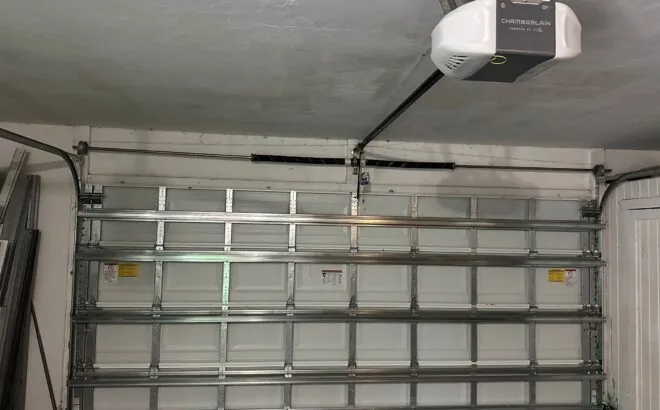
A bay shared between households is usually run by a collection of handsets. One belongs to each driver, a few more sit in kitchen drawers, and an old one or two may have left the building with people who moved away. Garage door opener repair in Fenway MA very often starts with a handset that has stopped working and grows into a question about who else can still open the door.
Most handset faults are straightforward. A flat cell is the most common cause, and a handset that works only from very close is often telling you its battery is fading. Handsets that all stop at once point to the motor’s receiver, its aerial or its board. A new handset that refuses to pair may simply be the wrong type for that motor.
The bigger issue in a shared bay is the motor’s memory. A handset that has gone missing, or one that left with a former resident, can still open the door until it is erased. Clearing the memory and pairing the handsets that are actually in use again is a quick job, and it closes a gap that matters a great deal when the bay opens into the building. If your bay has had changes of occupant and nobody is sure how many handsets exist, it is worth asking for at the next visit.
When handsets are replaced, it helps to give each household its own and to keep a short list of who holds which, along with a spare kept somewhere safe in the building rather than in a car parked on the street. A handset left in a car is a key to the bay, and in a garage that opens into a lobby or a corridor, the bay is a way into the building. A list makes the next clean-out of the motor’s memory a quick job instead of a guessing game.
The push button by the service door
In a bay reached from inside the building, the push button is usually on the wall by the service door or the door to the lobby. It is the control that works without a battery, and the one that people reach for when a handset fails. When it stops responding, three suspects cover nearly every case: the button itself, the thin wire running from the button to the motor, or the motor’s board.
That wire runs along walls and ceilings that may be shared with other services in the building, and in an older bay it may have been stapled up long ago, painted over or damaged by later work. A wire that has been crushed or cut sends no signal at all; one with a partial break works some days and not others. Testing the button, then the wire, then the board in turn usually finds the fault without guesswork.
Some push buttons also carry a lock or vacation switch that disables the handsets. If the handsets have all stopped but the button still works, check that this switch has not been set by accident.
Sensors in a narrow opening
The two photo eyes near the floor on each side of the opening stop a closing door from coming down on anything in its path. Down in a lone bay beneath flats, the side walls crowd in, cars park near them, and bins, bikes and boxes are stored along their length. That makes the sensors easy to knock.
Knock one lens a fraction off line and it loses sight of its twin, and the opener will refuse to close the door, or will close it only while the button is held down. The small lights on the sensors usually show whether they are aligned. Cleaning the lenses and making sure nothing is in the beam often solves it. A bracket that has been bent, a wire that has been pinched by a parked car or a sensor that has failed outright needs replacing.
Never unplug or bridge out the sensors just to make a stubborn door shut. Their whole job exists because a door coming down in a confined space can trap a person, a pet or a car. The garage door safety sensors explained guide goes into how they work.
How an opener call-out runs
The door is checked ahead of the motor. Once uncoupled, the door is worked through its travel by hand, which shows whether it balances and whether anything drags. If the door is the problem, that is dealt with first, because no opener will run reliably on a door that is fighting it.
After that comes the motor by itself, running with the door unhooked, so its drive, its limits and its sounds can be judged without the door’s load. Each handset is tried, the push button is tested, the wire is checked, and the sensors are tested for alignment and response. The hanging brackets and rail are inspected for movement against the ceiling.
You hear what the fault is and what the choices are: a part repaired, a part replaced, or, where the motor is worn out or unsafe, a new opener. Nothing is changed until you agree. Afterwards, the up and down stopping points are set so the door seals at the floor without squashing its rubber and opens to the right height for the bay, the closing force is adjusted, and the safety reverse is tested with an object on the floor in the path of the door.
Repair or a new opener
Most openers can be repaired. Drive gears, belts and chains, sensors, handsets and push buttons are all replaceable, and a motor whose body and board are sound can run well for a long time once they are. Much of the garage door opener repair Fenway MA owners need is exactly that: one worn part on an otherwise healthy machine.
A new opener starts to make sense when the motor’s board has failed and no replacement can be found, when the motor lacks the safety reverse and sensors that modern openers rely on, when repeated repairs keep coming back, or after a door swap leaves the old motor badly matched to its new load. In a bay under a building, a quieter drive or a different mounting can also be a reason to change. Work on LiftMaster units, both repair and replacement, has a page of its own: LiftMaster opener repair.
When a power cut stops the opener, the door can still be opened by hand with the release cord as long as its spring is intact and the door is closed. Afterwards, reconnecting the trolley returns it to normal. If the door will not move by hand, the spring or hardware is the issue rather than the motor.
Booking opener work
An opener tends to fail at the worst time: a car shut in before work, or a door that will not close behind you late in the evening, leaving the bay open to the street. Ring at any hour, weekday or weekend, and a person answers, so the fault can be logged the moment it shows itself. For a door jammed open or a car locked in, read Fenway emergency repair for the first steps. Our garage door opener repair and replacement page covers the service across the city; door faults beyond the opener are on the Fenway garage door repair page; and all our local services are gathered on the Fenway page.
To arrange garage door opener repair in Fenway MA, note how the motor reacts to a press, which controls have stopped, handsets, push button or both, and how the bay is reached from inside. Once you have jotted those, call us or book online.
Questions from Fenway
The motor whirs yet the door stays put. Is the opener broken?
Possibly, but check the door first. With the door down, pull the red cord and raise the door a little yourself. An easy lift points to the drive gear, belt or chain inside the opener. A door that will hardly move suggests a broken spring; let it be and phone us.
Several people share our bay and nobody knows how many handsets there are. What can be done?
We can wipe the motor’s stored codes and re-pair only the handsets still in use. Any handset that has gone missing, or left with someone who moved away, will then no longer open the door.
People upstairs hear the opener every time it runs. Can that be reduced?
Usually. Loose hanging brackets, a rail out of line, a slack chain or worn rollers on the door all add noise that carries through the ceiling. Fixing those often helps a great deal, and a quieter drive is an option when the motor is replaced.
The push button by our service door does nothing, but the handsets work. What is wrong?
The fault is in the button or the wire running from it to the motor. In older bays that wire may have been damaged by later work along the wall. Both can be tested and replaced.
The door will only close while I hold the button down. Why?
That usually means the safety sensors are not seeing each other. Clear anything sitting in the beam’s path and wipe both lenses. If the problem stays, a sensor may be out of line, its wire damaged or the sensor itself faulty.