
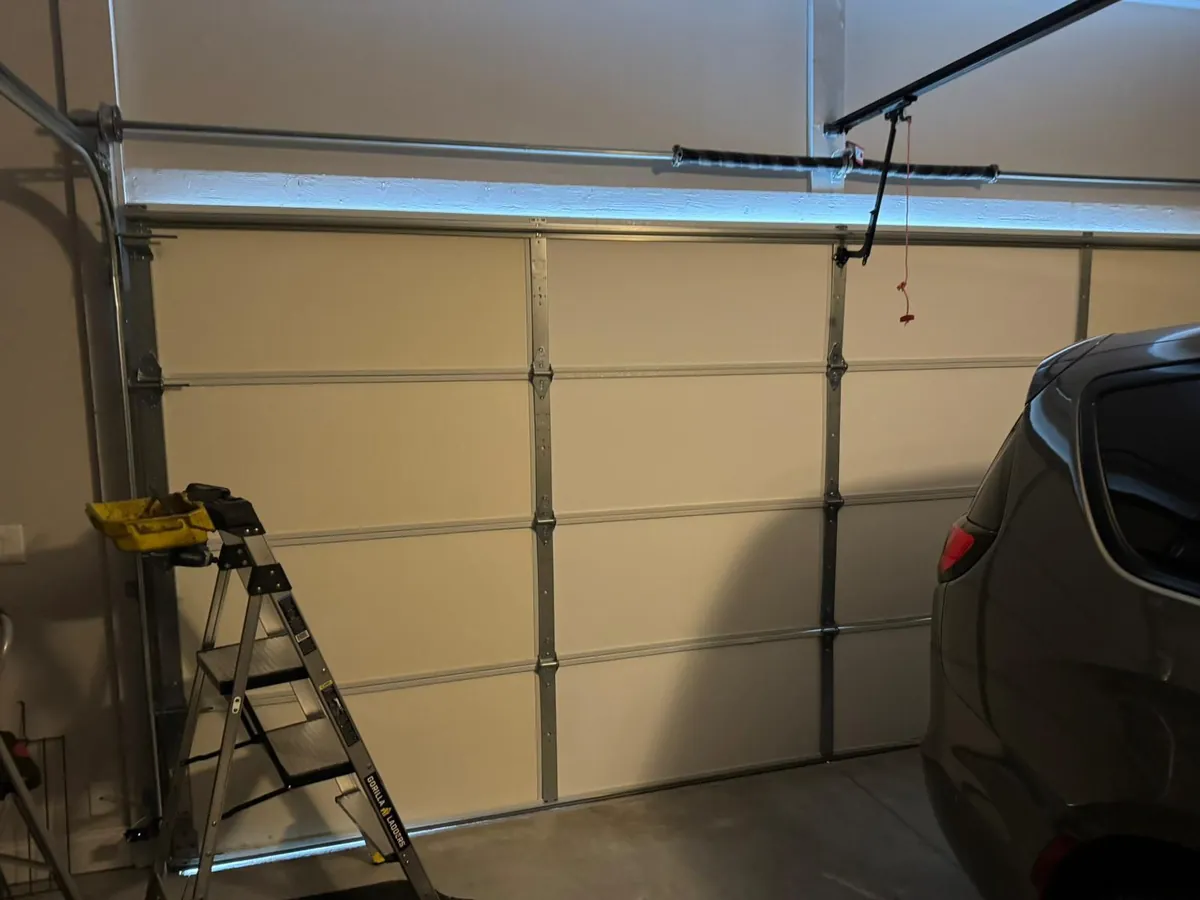
Old wood doors at the back of the lot
Walk down almost any driveway beside a triple-decker or a Victorian in Ashmont, Savin Hill or Codman Square and, at the far end, there is a good chance of a small detached garage with a single opening, much of it framed in the 1920s. Plenty of those openings still hold a wooden door. When people ask us about garage doors Dorchester MA properties have, it is that pairing we usually picture first: an ageing timber door hung in an old single-car building a long walk from the street.
Wood behaves differently from steel. It swells after a wet week, shrinks back in a dry spell, holds paint only as long as the paint holds out, and grows heavier as it takes on moisture. Every one of those changes lands on the springs, the rollers and the opener, all of which were tuned to a lighter, drier door long ago.
Before calling, note three things from a safe distance:
- Whether the bottom of the door is soft, split or darkened where it meets the slab.
- Whether the door now drops quickly when lowered by hand.
- Whether one of the coiled springs shows a gap between its coils.
Detached garages behind triple-deckers and Victorians
In this part of the city the garage is rarely attached to the house. It sits on its own at the back of the lot, often with a yard or a strip of lawn between it and the rear porches, and it is reached by a driveway that runs the full depth of the lot along one side of the house. Some of those driveways are shared between neighbouring buildings; many are narrow enough that the side mirrors come close to the clapboards.
That layout has practical effects. A detached garage has no heated wall on any side, so the door faces the full swing of the weather on every face. It is usually lit by a single bulb, if that, and its power supply may be an old circuit run out from the house. A garage door opener in a building like that can be sensitive to a supply that dips, and a sensor mounted on old, damp masonry or timber can drift out of line as the building moves through the seasons.
The distance from the street matters too. Every part, ladder and tool travels down the driveway on foot, and anyone working on the door needs the driveway reasonably clear. That is worth bearing in mind when booking, especially where several units share the space.
Wooden doors that have seen many winters
An ageing wood door is the defining feature of garage doors Dorchester MA owners bring to us. Some are original to the building; others are later sectional doors made of timber that have themselves now aged. Either way, the pattern of wear is familiar.
Rot almost always starts low. Water runs down the face of the door, collects on the bottom rail and sits there, and the slab in front of an old detached garage often slopes back toward the opening, which makes things worse. The bottom section softens, the joints open, and the hinges and roller brackets screwed into that section lose their grip.
Swelling causes binding. A timber door that ran smoothly through the summer can rub against its jambs or stop short in its track once autumn rain has soaked in. Paint that has cracked lets water in faster, and a door repainted coat upon coat over its life may carry a surprising amount of extra weight in paint alone.
Weight is the hidden problem. Springs are chosen to balance a door of a certain weight. As a wooden door absorbs water and gathers coats of paint, it becomes heavier than its springs were set for, the balance tips, and the opener begins to do lifting it was never designed to do. Eventually something gives, and it is usually a spring or the opener’s drive.
Garage door repair for timber and steel doors
Repair calls here often start with something that seems minor: a door that sticks halfway, a bang as it reaches the bottom, a noise that was not there last month. On a wooden door in an old opening, the cause can be the door, the hardware or the building itself.
Hinges and roller brackets are a frequent culprit. Screws lose their bite in softened timber, a hinge works loose, and the sections begin to flex against each other as the door travels. Tightening is not enough when the wood behind the screw has gone; the fitting needs moving to sound timber, or the section needs repair. Tracks fixed to the old framing can loosen in the same way, and a track that has moved even slightly will make the door bind and wear its rollers unevenly.
Steel doors that have replaced the original timber have their own issues, often around a bottom section that has rusted where the slab holds water. Whatever the door is made of, the repair starts by finding which part has failed and what the failure has done to the rest. Our Dorchester repair page sets out these faults in more depth, and the garage door repair page covers the service across Boston.
Springs on heavy doors
A wooden door is usually heavier than a steel door of the same size, and a heavy door is hard on springs. Torsion type wound over the header, or extension type stretched alongside each overhead rail, springs on a timber door earn their keep on every single trip. Springs wear out after a certain number of cycles, and a door used by several households in a shared garage reaches that number sooner.
When a spring breaks, the door becomes far too heavy for the opener. It might lift a short way and stop, or refuse to move at all. On an extension-spring door, the snapped spring can whip if there is no safety cable running through it, which is one reason those cables matter on older installations.
Torsion springs need a special warning. Their coils store dangerous tension at every stage of the door’s travel, and winding them takes steel bars used in a strict order. One slip and a bar flies out of the cone, which is how people end up in hospital. This is not a DIY repair, so the neighbour’s toolbox stays shut. Leave the door closed, disconnect the opener at the ceiling socket, then phone. How a spring gets sized for a waterlogged old door is described on the Dorchester spring repair page.
Single-car openings sized for older cars
The openings framed in the 1920s were sized for the cars of their day, and a modern car fits them with little to spare. That narrow margin explains a lot of the damage we see on garage doors Dorchester MA streets hide behind their houses: a door frame scraped by a mirror, a vertical track nudged by a bumper, a bottom section dented by a car that stopped a few inches late.
Headroom is often tight as well. The space above an old opening may be limited by the roof framing, which restricts where a torsion spring and an opener can go. Some of these garages need a low-headroom track arrangement, and a replacement part has to suit the building as built rather than a catalogue drawing. Width, height and headroom are all checked before any new door or opener is suggested, because a door ordered to a standard size will not sit properly in an opening that is not standard.
Old floors bring one more variable. A slab that has cracked, heaved or settled over the years leaves the door landing unevenly, and garage doors in Dorchester with a gap under one corner often owe it to the floor rather than to any fault in the door.
Openers in an old detached garage
An opener added to an older garage has to cope with a door it may not have been chosen for, mounted to framing that was never designed to carry it, and powered from a supply run out across the yard. Typical complaints: a motor that whirrs while the door sits still, a door that reverses just before it closes, a remote that works only close to the garage, and a wall button that has stopped responding.
The safety sensors deserve particular attention in these garages. Sitting at ankle height by each jamb, they are easily knocked by bins and bicycles stored in a tight single-car space, and on an old timber jamb the bracket can shift as the wood moves. Two eyes that no longer look straight at each other will stop a door closing time after time.
Where an opener needs replacing, a new one is matched to the door’s weight and the space inside the garage. LiftMaster openers are among the models we repair and replace. More on opener work is on the Dorchester opener repair page.
When it fails after dark
Standing in the dark at the back of the yard with a dead door is nobody’s idea of a good evening. A car shut in on the eve of an early shift, a door that will not close with tools and bikes inside, or a door stuck partly open in the rain are the usual reasons people call outside office hours.
We answer through every night and weekend, which means the fault can be passed on the moment it shows itself. Arrival times are never promised, as they hang on whatever jobs are already open, but telling us need not wait for daylight. Meanwhile pull the opener’s plug so the button upstairs or in the garage cannot set it going again, and give any snapped spring or dangling cable a wide berth. Further advice for the hours before we get there sits on the Dorchester emergency repair page.
What a visit involves
Work on a door at the back of a Dorchester lot begins by looking at the whole picture: the door, the opening, the slab and the building. The opener’s trolley is released and the door is raised by hand to see how well it balances. On a timber door, this test often reveals a door that has outgrown its springs.
Next comes a part-by-part inspection: springs and their fittings, the pair of lift cables with their drums or pulleys, each roller, each hinge, the rails, and every lag screw biting into the old studs. The bottom rail and the lower panels get a close look on a wooden door, because that is where rot hides behind paint. The opener and its sensors are tested separately from the door.
We point out the broken piece, the damage it has spread to and anything else close to giving up, and wait for your go-ahead before fitting a thing. When the repair is complete, the door is balanced to its true current weight, not the weight it had when it was new, and the opener is set for that door, with its reverse tested before we leave.
Repair, restore or replace
Not every old wooden door needs replacing. If the sections are mostly sound and the damage is confined to a few places, the hardware can be renewed, loose fittings moved to good timber, and the door rebalanced to suit its current weight. That can keep a door in service for a long time, and some owners prefer to keep a timber door that suits the look of the house.
There comes a point, though, where a wood door is costing more in repairs than it is worth. Rot creeping from one section into the next, joints pulling apart, a door that has simply become too much weight for any sensible spring, or a door that binds every wet season despite adjustment are all reasons to consider a new door. A lighter replacement also takes a good deal of strain off the springs and the opener.
New doors are supplied and installed to fit the opening as it is, including older openings that have settled out of square over the decades. The Dorchester door replacement page goes into what that involves, and the city-wide new garage door installation page explains the process.
Cables, tracks and doors that come off
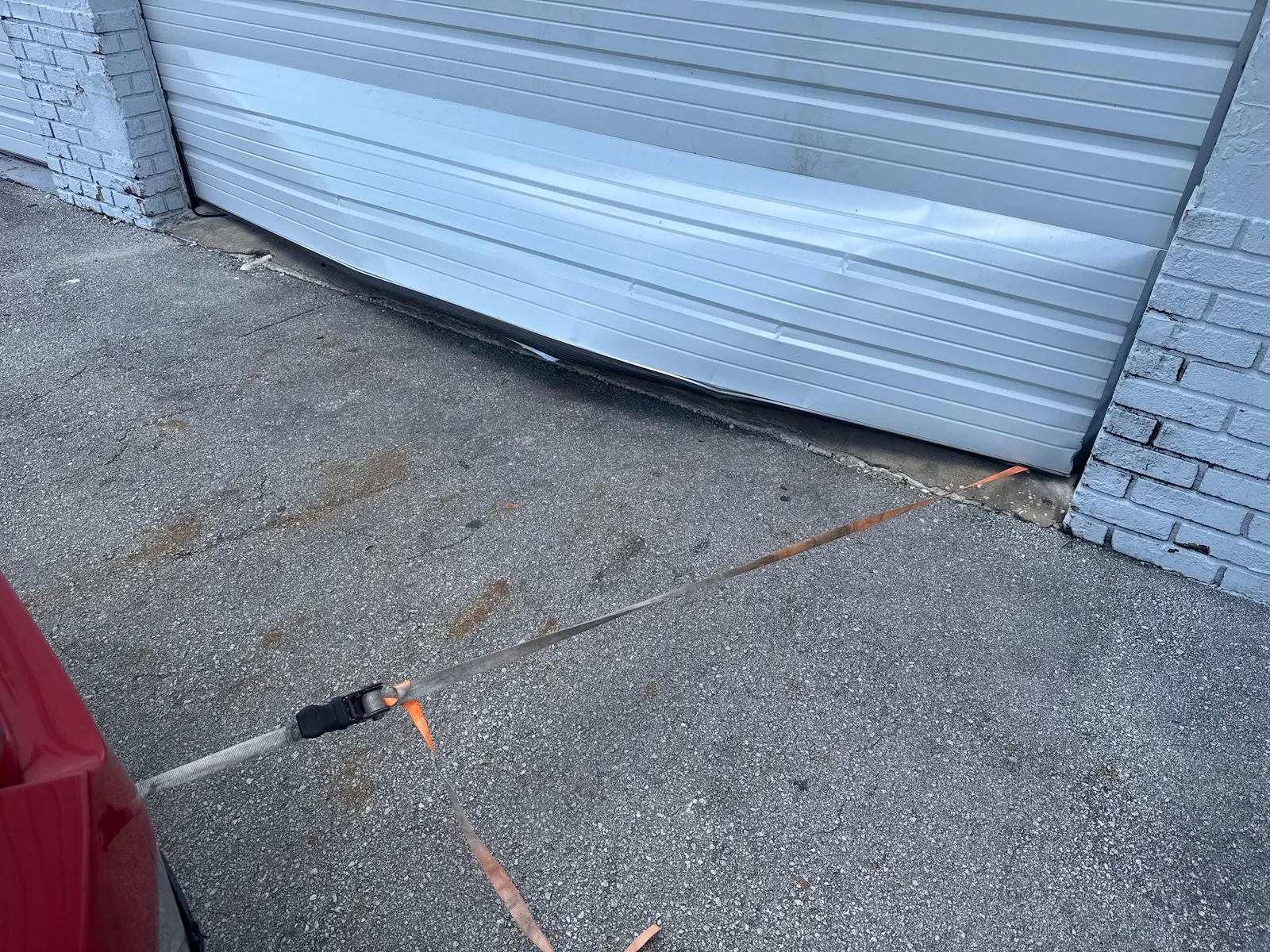
Long driveways mean cars backing a long way, and a single-car opening leaves little margin. A clipped bottom section, a door caught by the wind while half open, or an opener pushing against an obstruction can all knock a door out of its tracks or slacken a cable.
A door out of its track hangs crooked and can fall. A slack or broken cable leaves one side unsupported. Either way, halt everything: cut the opener’s power, keep people and the car out of the opening, and leave the door as it hangs. Its springs and cables are still loaded. Restoring the door means securing it, guiding the rollers back, replacing bent track and damaged cables, and setting both sides to equal tension. Read more on our off-track garage door repair and garage door cable repair pages.
Shared garages and seasonal habits
Where one garage serves a whole triple-decker, a few habits help. Agree who to call if the door starts to misbehave, keep the opener’s plug within reach, and ask everyone to stop using the door at the first sign of trouble rather than pressing on. Several people running a failing door is how a spring breakage becomes a bent track.
For timber doors, the seasons matter. Look over the paint and the bottom rail in autumn, before the wet months. Clear leaves and slush from the slab in front of the door so water does not pool against the bottom section. If the door binds after heavy rain, note it, because swelling that comes and goes is a sign the door and its hardware need attention before the winter. These are small steps, but they keep garage doors Dorchester MA homeowners depend on working for longer.
Getting the door looked at
When you get in touch, it helps to describe the building and the approach: how long the driveway is, whether it is shared, what the door is made of, what it is doing, anything visibly snapped or hanging loose, and whether a car is inside. That lets us plan the visit to the garage at the back of the lot, not just to the address. Neighbouring parts of the city we serve are listed on our service areas page.
Night or day, the call is answered, so even a fault found late on a Sunday can be reported then. For a stuck timber door, a snapped spring or a replacement for a door past saving, call us or book online.
Questions from Dorchester
Our wooden garage door sticks every time it rains. Can that be fixed?
Often it can. Swelling timber binds against the jambs or in the track, and the fix may be adjustment, repair of damaged wood or attention to the paint and seal. If the door binds badly every wet spell, it may be time to consider replacing it.
The opener struggles more than it used to. Is the opener failing?
Not necessarily. A wooden door can become heavier as it absorbs water and gathers paint, and if its springs no longer balance it, the opener carries the extra weight. Rebalancing the door often solves the problem.
Two other households share our driveway. Does that complicate the job?
Hardly at all. It helps to clear the driveway if you can, and to let the other households know a visit is coming, so parts and ladders can be carried down to the garage.
A spring has broken on our old door. Can I open it by hand?
Do not try. A wooden door with a snapped spring is a dead weight, and there is nothing left to stop it dropping. Leave it closed, unplug the opener and call.
Is it worth repairing a wooden door, or should it be replaced?
If most of the sections are sound, repair is usually worthwhile. Once rot reaches several sections, the joints give way or the springs can no longer carry the weight, a new door usually makes more sense.