
Choosing a door for a Charlestown opening
Replacing a garage door here is rarely a matter of picking a standard size from a brochure. The townhouses by the Navy Yard were built with garages, but their doors sit under living space and face a short, often steep apron. The handful of Federal-era houses by the Training Field or off Main Street that have a garage at all usually have an opening cut into old masonry, which is seldom a stock size or perfectly square. New garage doors in Charlestown are supplied and installed to suit those openings, and old doors are taken down and replaced.
Three questions shape the choice before anything else:
- What sits above the garage: bedrooms, a kitchen, or nothing at all.
- How much clear height the header leaves below the joists.
- How close a parked car comes to the bottom of the door.
What a replacement can include
Roll-up sectional doors under a house
The usual choice for a single bay under a house: panels that roll up and back along the ceiling, out of the way of a short driveway.
Insulated doors under living space
A door with an insulated core keeps a garage below bedrooms less cold in winter and cuts the noise that carries upstairs.
Doors for low-headroom bays
Track and spring arrangements that suit an opening with very little space above it, common in garages fitted into older buildings.
Full view glass doors
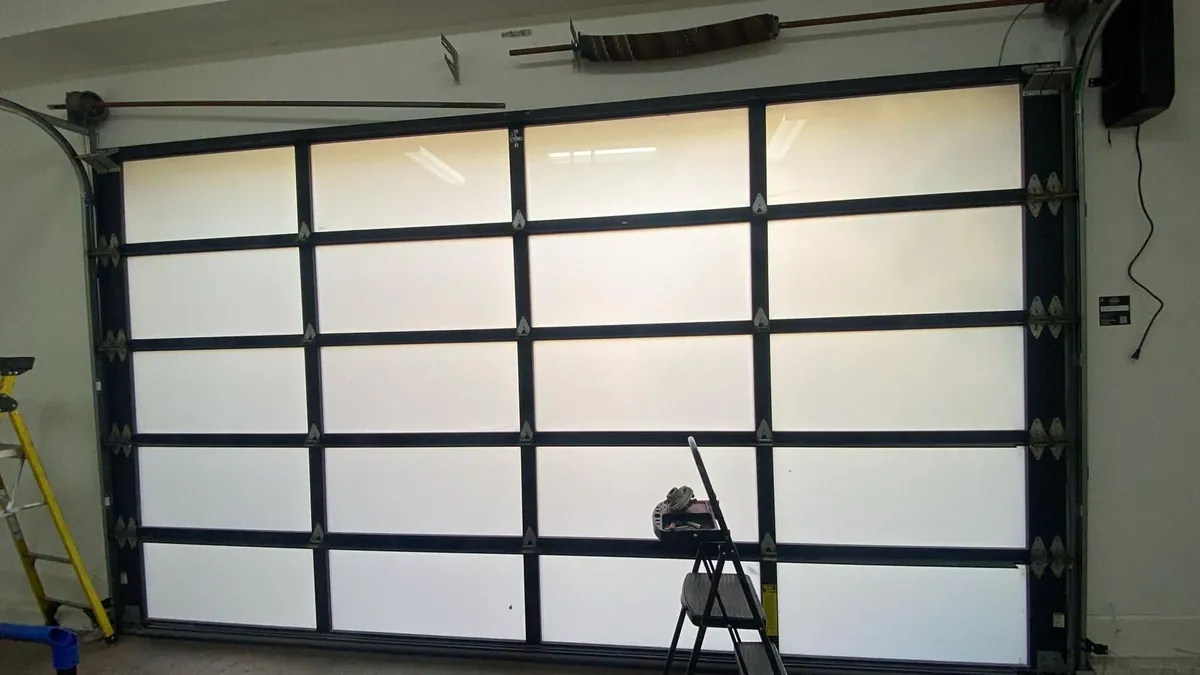
Aluminium-framed doors with glass panels, which bring daylight into a deep bay. See full view glass garage doors.
Replacement of tired doors
Old doors taken down, with new tracks, springs and hardware fitted for the new door rather than reused from the old one.
Signs a door has reached the end
Most faults on a garage door can be fixed, and a fair assessment says so up front. One snapped coil, a frayed lift wire or some cracked rollers are no reason to buy a whole door. The signs that point toward replacement are different. The bottom section has rusted through or rotted, usually where water running down a sloping driveway sits against it through the winter. Several sections are dented or cracked, often from a parked car on an apron with no room to spare. A timber door has drunk in enough rain to outweigh any spring that could reasonably balance it. Or the door is so worn that something new fails every few months.
There are also reasons that have nothing to do with damage. A townhouse bay sitting under bedrooms might have an uninsulated single-skin door that lets the cold straight into the floor above. A household might want a quieter door, or more daylight in the bay. Choosing new garage doors in Charlestown for comfort or appearance is just as valid as replacing a broken one, and the same care with measuring and fitting applies.
New garage doors Charlestown townhouses usually need
In the purpose-built Navy Yard townhouses, the garage door is among the biggest holes in the whole facade, and it sits directly below the living space. That position raises three priorities a standalone shed would never have.
Insulation comes first. A steel door with an insulated core, and good seals at the sides, top and bottom, makes a real difference to the temperature of the garage and the rooms above it. It also makes the door stiffer, which tends to make it quieter as it moves.
Noise comes next. A new door is an opportunity to fit quieter rollers, set the tracks carefully so nothing rubs, and make sure the door is properly balanced, so the opener is not straining against it. All of that reduces what is heard upstairs when the door runs late at night or early in the morning.
The bottom section is the third. On a short apron, the bottom of the door takes knocks that a door on a long driveway never sees. A sturdier bottom section and a good bottom seal, chosen with the slope in mind, hold up better and keep water out where the driveway falls toward the garage.
Doors for openings cut into older buildings
Where a garage has been made in one of the older row houses, the opening tends to be its own size. The masonry may have moved over many years, so the two sides of the opening are not quite plumb and the top not quite level. The headroom above the door is often limited by the floor above. And the side walls may sit close to the edges of the opening, leaving little room for vertical tracks.
Ordering for one of these bays begins with a tape measure and patience: width at the top, middle and bottom; height on both sides; the clear height above the header up to whatever pipe, beam or joist hangs lowest; the side room on each side; and the depth back into the garage. Those measurements decide the door size, the track arrangement and the spring system. They also reveal anything that has to be dealt with before a door can go in: a header that has sagged, a jamb that has softened, or old fixings in crumbling mortar that will not hold a track bracket. Sound fixing points matter, because the vertical tracks and the spring anchor carry the full working load of the door, and a bracket pulling out of old brick is a failure waiting to happen. Where the existing timber around the opening is poor, that is raised before the door is ordered, not discovered on the day. Low headroom may call for a low-headroom track kit, or for springs that run along the horizontal tracks. An out-of-square opening may need the jambs packed or the door set with care so it closes evenly. None of this is unusual, but it is the difference between a door that seals and one that lets the weather in down one side.
Materials and styles
The material of a new door affects its weight, its insulation, its maintenance, and how it looks against brick.
- Steel is the most common choice. It is strong, needs little upkeep, and is available insulated or uninsulated, smooth or with a panel pattern.
- Insulated steel adds a core between two steel skins, making the door warmer, quieter and more rigid.
- Wood suits older brick buildings and can be stained or painted, but it is heavy and needs regular finishing to keep water out, particularly at the bottom.
- Composite doors imitate the look of wood with less maintenance and less weight.
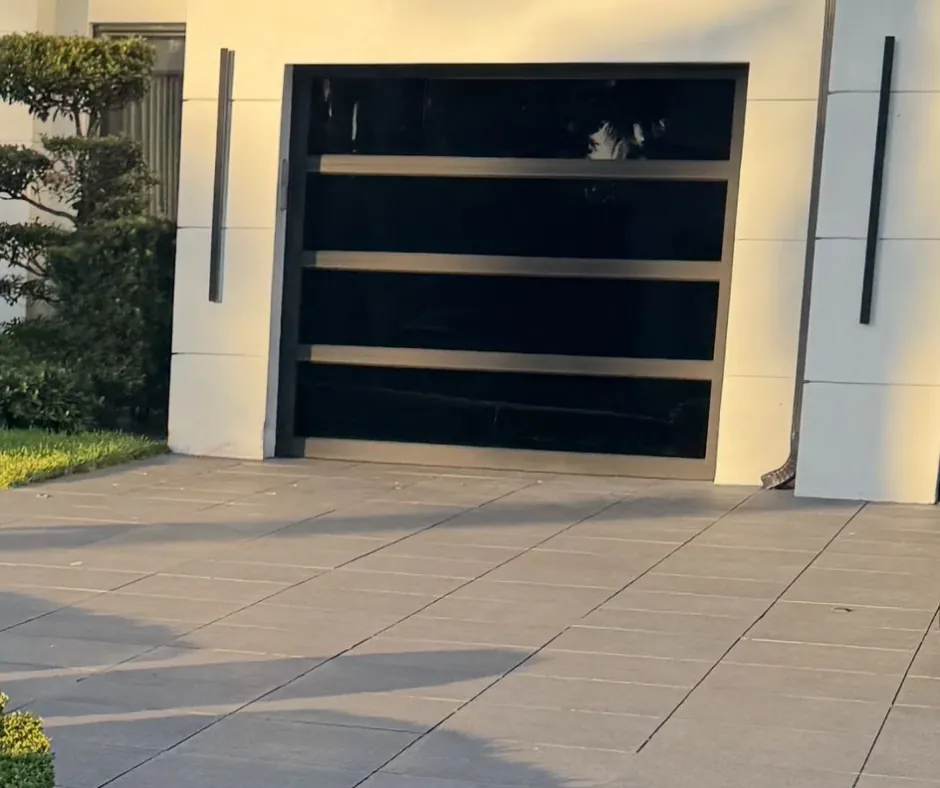
- Aluminium and glass full view doors let light into the garage and suit a more modern frontage. They are lighter than wood but less insulating than an insulated steel door.
Windows in the top section are another option on any of these, bringing some daylight into a deep bay without giving up the solid lower panels. Colour matters on a street of brick, and a door can be chosen to sit quietly beside the building rather than stand out from it. Plain flush panels tend to suit the cleaner lines of the newer townhouses, while a raised or recessed panel pattern can echo the doors and shutters of an older frontage. Bring a photo of the building, or let the installer see it on the measuring visit, and the options can be narrowed with the whole elevation in mind.
What installation involves
Installation starts with measuring, then choosing the door with you, so it suits the opening, the headroom and how the garage is used. On the day, the old door is taken down safely, which means unwinding the tension in its springs with the proper tools before any section is removed. The old tracks and hardware come out with it.
The new door is then built up in the opening section by section. The vertical and horizontal tracks are fixed and aligned, the rollers and hinges go on, and the springs are fitted and set for the weight of the new door, not the old one. The cables are attached and tensioned evenly on both sides. Weatherseals go on at the bottom, the sides and the top.
With every section hung, the spring tension is tuned until the door floats at waist height when let go. If there is an opener, it is connected to the new door, the travel limits and force are set, and the safety sensors are aligned and tested so the door reverses when something is in its path. On a sloping floor, the bottom seal and the close setting are adjusted so the door seals along its length. You are shown how the door works, including the manual release on the opener.
Keeping or changing the opener
While the old door is coming down, the opener deserves a hard look as well. An older opener may have been working too hard for years behind a heavy, badly balanced door, and its gear or motor may be near the end. A new, well-balanced door can extend an opener’s life, but an opener that is noisy, unreliable or missing safety sensors is worth replacing at the same time. In a garage under bedrooms, a quieter drive is often worth the change. The opener repair page for Charlestown covers repair and replacement of openers, including LiftMaster openers.
A secure door for a garage that opens into the house
Where the garage connects straight into the home, the garage door is effectively a front door, and its condition affects the security of the whole house. An old door with cracked panels, a bottom section that has rotted away from its bracket, or a gap at one side where the opening is out of square, is easier to force or pry than a sound, well-fitted door. A new sectional door, properly hung in tracks fixed to solid jambs, with the opener’s arm holding it closed, is a good deal harder to lift from outside. Good side and bottom seals also close the gaps that let a tool get purchase. If security is part of the reason for replacing a door, say so, so the door, the fixings and the opener are chosen with that in mind.
Exposure on a sloping street
A garage door at the bottom of a short, steep driveway lives a harder life than one set back from the road. Water from the street and the apron runs toward the door and sits along the threshold. Road salt and slush thrown up by passing cars land on the lowest panel and the bottom of the tracks through the winter. On exposed corners, wind presses on the face of the door and works at the seals.
All of that should shape the choice of door. A bottom section with a solid, well-finished edge resists corrosion better. A threshold seal set into the floor, or a deeper bottom seal on the door itself, keeps meltwater out where the slope pushes it in. Side and top seals stop wind-driven rain from creeping into the bay. A heavier-gauge steel skin, or an insulated door that is stiffer by construction, flexes less under wind and stays quieter as a result. None of these are exotic options; they are simply the details that suit this kind of setting.
The installation day on a tight street
Fitting a door on a narrow, sloping street takes some planning. The car needs to be out of the garage, and ideally parked somewhere other than the apron, because the old door comes down and the new sections go up from in front of the opening as well as inside it. The bay should be cleared back a few feet from the door on both sides, so the tracks can be fixed to the jambs and run back along the ceiling without obstruction. Anything hanging from the ceiling close to where the horizontal tracks will run, such as storage racks, bike hooks or lights, may need moving.
If the garage connects to the house, the inside door will be in use for much of the day, since the work needs access to the opener and to power. Plan on the garage being out of action for the duration of the installation. When the balance, the opener hookup and the reversing test are all done, your bikes, bins and shelving can go back.
Caring for a new door
Once fitted, the door asks for little attention, though a few habits keep it running well on a sloping, salt-splashed apron. Rinse the bottom panel and the base of the tracks after a run of salted roads. Keep the tracks clear of anything leaning against them, and keep the floor beneath the bottom seal clear of grit and ice so the door seals properly. Listen for any change in the sound of the door: a new scrape, bang or squeal is easier to deal with early. And test the reversing function now and then by closing the door on a soft object at floor level; it should stop and back off.
Repair or replace: getting the decision right
Plenty of worn-looking doors still have years in them. Where the panels themselves are solid and the fault lies with a coil, a lift wire, a roller or the motor unit, fixing it is the better spend, and our garage door repair in Charlestown page explains what that involves. A new door earns its keep when the panels are what is failing: rusted or rotted sections, repeated damage, a door too heavy to balance, or a door that no longer suits the house. If you are unsure, a visit to look at the door will give you a clear view of both options, and the reasons for each.
What to know before booking
To start the process for new garage doors Charlestown MA homeowners can book a visit online or call. Mention if the bay belongs to a recent townhouse or an older building, whether there is living space above it, and whether you know the approximate size of the opening. If the current door has failed and is stuck, spring or emergency help may be needed first: see spring repair in Charlestown or urgent help in Charlestown.
Arranging a new door
Every new door begins with a look at the opening and a conversation about how the garage is used. The main new garage doors page covers door supply and installation across Greater Boston, and the Charlestown page lists every service for the neighbourhood. When you are ready to talk about new garage doors in Charlestown, call us or book online and we can set up a look at the opening.
Questions from Charlestown
Our garage is below the bedrooms. Which door makes the most sense?
An insulated sectional door is usually the best fit. It keeps the garage, and the floor above it, warmer in winter, and it runs more quietly than a single-skin door. Quiet rollers and a well-balanced door help too.
Our opening is an odd size. Can a new door still be fitted?
Yes. Openings cut into older buildings are often non-standard. The opening is measured carefully, including headroom and side room, and the door and track arrangement are chosen to fit it.
Do the springs and tracks get replaced with a new door?
Yes. The springs are sized for the weight of the new door, and the tracks and hardware are fitted new so everything is matched and aligned.
Can the existing opener be used with the new door?
Often, if it is in good condition and has working safety sensors. An elderly, loud or temperamental unit is better swapped during the same visit.
Will the door look right against old brick?
Yes. Material, panel style, colour and windows can all be chosen so the door sits comfortably beside the brick of the building.