
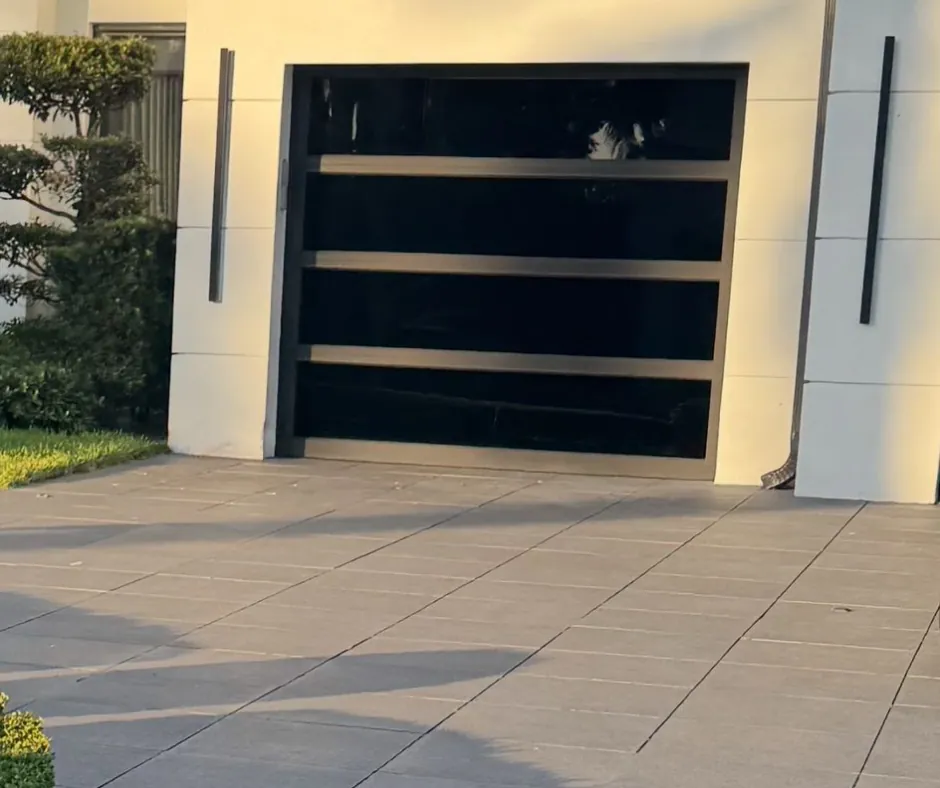
Brownstone bays and alley carriage houses
Walk Commonwealth Avenue, Marlborough or Newbury Street and you could pass a dozen front doors without seeing a single garage. Private parking here is scarce. Where it does exist, it takes one of two shapes: a lone bay carved into the ground floor of a brownstone, or a carriage house set at the rear of the lot, its door looking onto the lane that serves the block. The garage doors Back Bay MA owners call us about are almost always one or the other, and both come with their own set of constraints.
A bay cut into a ground floor was not part of the original plan for most of these buildings. Someone later opened up a masonry wall, spanned it with a lintel and hung a door inside the result. A carriage house is older in spirit, built to shelter a vehicle off the alley, but the overhead door in it now is a much later arrival. Either way, the door lives in a space that was not designed around it.
That leaves three pressure points that show up again and again on our calls here:
- Headroom and side room inside a masonry opening, which limit where springs, tracks and an opener can go.
- An alley that is narrow, shared and busy, which governs how and when anyone can work outside the door.
- Delivery of anything large, from a long torsion shaft to a full replacement door, which depends on the alley’s width and on the resident permit rules in force.
What we handle on these streets
Our full range of garage door work is available here, and each service has a dedicated Back Bay page. Doors that bind, scrape or hang unevenly fall under garage door repair in Back Bay. A snapped coil, which turns the lightest door into dead weight, is covered by Back Bay spring repair. Motor heads, remotes, keypads and wall buttons are handled through Back Bay opener repair and replacement. A door jammed open overnight, leaving a ground-floor room exposed to the alley, belongs with our Back Bay emergency service. And a door that has reached the end is replaced through our new garage doors in Back Bay service, supplied and installed.
The neighbouring hubs for Beacon Hill and Bay Village deal with similar row-house garages, and the full list of places we cover sits on the service areas page.
A door inside a masonry wall
Most of the garage doors Back Bay MA ground floors hold were fitted into an opening cut through brick or brownstone. Masonry does not flex the way a wood frame does, which is good news for track alignment: once a track is fixed properly to a solid wall, it tends to stay put. The trouble lies elsewhere.
Fixings into old masonry need care. An anchor set into soft mortar rather than sound brick will loosen with every cycle until the track bracket rattles and the door starts to wander. When we find a bracket working loose, the fix is often to reset it into firm material or onto a backing that spreads the load, not just to tighten what is there.
Space is the other limit. A bay let into a ground floor rarely has generous headroom, because the floor above sits directly over it. That squeezes the zone where a torsion spring would normally ride, and it can push the horizontal tracks so close to the ceiling that the door has almost no room to clear the top of the opening. A door that rubs at the head, or an opener rail that has been shimmed down to fit, is common in these garages, and each needs a repair that respects the room the building actually gives.
The carriage house on the service alley
A carriage house sits at the back, opening onto the alley that runs behind the brownstones. Its door faces straight into a lane used for deliveries, trash and access to the other houses on the block. Clearance outside can be thin, and the door is exposed to everything that comes down that lane.
The bottom section on an alley door takes knocks from passing vehicles and bins. The seal along the floor gets crushed or torn where the alley surface is uneven. Water runs along the alley in heavy rain and finds its way under a worn seal into the garage. And because the door opens directly onto a shared lane, a door stuck open is a security problem for the whole building, not just an inconvenience.
When we work on a carriage house door, part of the plan is how to work without blocking the alley for longer than necessary. Ladders, a spring bar and a box of hardware fit in a small footprint; a full door replacement does not, which is where the delivery question comes in.
Alley width, permits and timing
Here the alley decides a lot. A narrow lane may not take a vehicle carrying long door sections, and resident permit rules can limit when and where anything is unloaded. Those two facts set the timing of a new door far more than the installation itself does.
For a repair, that rarely matters. Springs, cables, rollers, hinges and opener parts all travel in a hand-carried kit. For a replacement door, the sections, tracks and shaft have to reach the garage, and the timing is agreed with you around what the alley and the permit rules allow. If you know of restrictions on your block, such as hours when the alley must stay clear or spots reserved for residents, mention them when you book.
Springs on a heavy, infrequently used door
Many garages here open far less often than a suburban garage does, and that has its own effect on springs. A door that sits closed for days loads its springs in one position; when it finally moves on a cold morning, a weakened coil is likely to let go. The result is the same as anywhere else: the door suddenly will not lift, or the opener strains and gives up after a few inches.
On these brownstone bays, as everywhere, the torsion spring holds dangerous tension, so the job of changing one is not a DIY repair for an owner with a ladder. The shaft, the winding cones and the set screws are all under load when the door is closed. Unwinding or winding it without the proper bars and the right sequence can send a part flying across a small garage with real force, and in a tight ground-floor bay there is nowhere to step back to.
Some older doors in these spaces still run on extension springs along the tracks, usually since the joists overhead never allowed a shaft to be hung. Those carry their own hazard if one fails without something to restrain it. Our spring guide explains how both types work.
Openers in a ground-floor bay
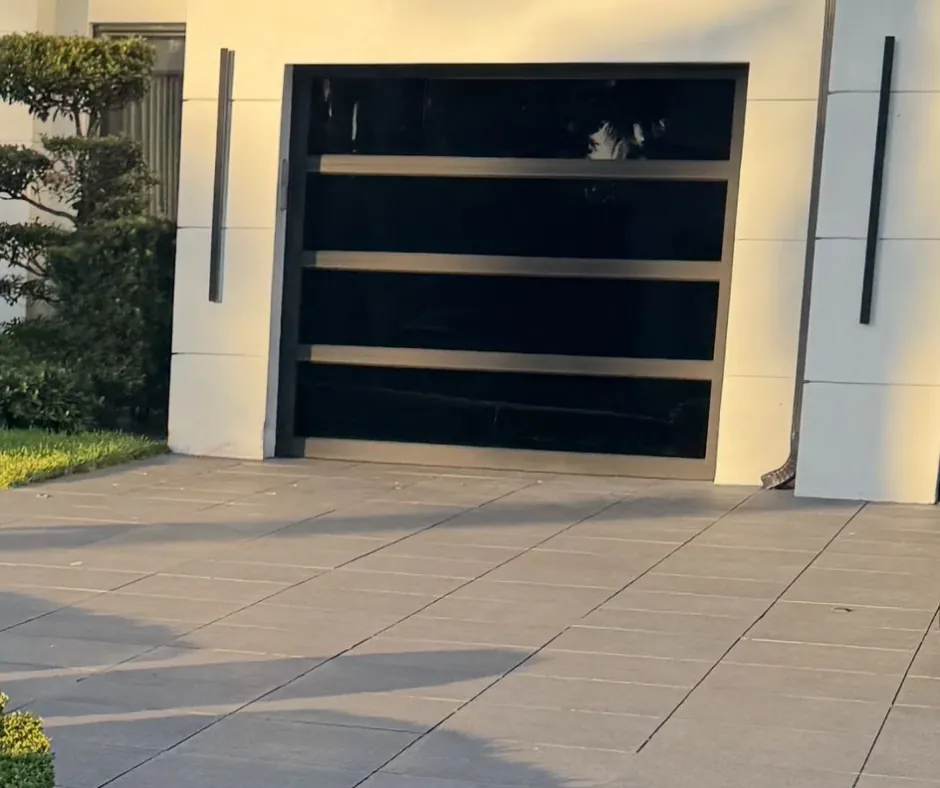
Above a brownstone’s ground-floor bay, the opener works in a confined space with little ceiling height. The rail may run close to joists or ductwork, and the motor head may hang only just clear of a car roof. That arrangement is fine as long as the door is balanced, but it leaves no slack: a door that drags makes the opener work harder in exactly the space where it has least room to breathe.
Typical opener complaints on these streets: a motor head that drones while the chain sits still, a door that turns back halfway down, a remote that has quietly stopped working and a wall button that no longer responds. Often the culprit is a photo eye nudged by a bicycle or a stored box; sometimes it is the motor’s drive wearing out after years of hauling an unbalanced door. LiftMaster is one of the opener lines we repair and replace.
Where a building has several residents sharing one bay, keeping track of remotes matters. If one goes missing, the opener’s memory can be cleared and only the remotes still in use paired again. For more, see our opener services page.
A door stuck open off the alley
The worst-timed fault here is a door that will not close. With a carriage house or ground-floor bay open to the alley, anything stored inside is on view and, in some buildings, there may be an interior door into the house beyond. Calls are taken at any hour, weekday or weekend, and nobody has to sit up wondering whether to ring.
We cannot promise when a technician will arrive, since that depends on the night. What we can do on the phone is help you work out why the door is not closing. A blocked sensor, a remote with a dead battery, or a door that has slipped partway out of its track each points to a different next step, and some of those you can check safely before anyone arrives.
Which checks are safe
A few things are safe to look at while you wait:
- Wipe both photo eye lenses and make sure nothing in the opening is breaking the beam.
- Press the wall button rather than the remote, to rule out a dead remote battery.
- Pull the opener’s plug if the door keeps reversing or straining, so it stops trying.
- Shine a torch up at the spring above the lintel for a parted coil, and at the lower corners for a cable hanging loose, keeping your hands off both.
Springs, lift cables and the bottom corner fittings are hands-off. They hold the door’s weight under heavy tension. Resist the urge to hoist a spring-broken door by its handle, even a hand’s width: there is nothing holding it up.
Noise and the rooms over the bay
A garage let into the ground floor has living space directly above it, which a detached garage never does. Every time the door runs, the sound and vibration travel up through the joists into the rooms overhead. A worn steel roller grinding along its track, a dry hinge squealing at each section joint, or a chain drive slapping on its rail can be heard well beyond the garage itself.
Most of the racket traces to worn hardware, which a visit can put right. Rollers with flat spots or seized bearings are replaced. Hinges and bearings are lubricated, and loose fasteners on the tracks and on the opener’s hanging brackets are tightened so the rail stops drumming against the ceiling. If the motor head is reaching retirement, ask about a quieter drive when you replace it, since the motor sits only a floor away from a bedroom or a study. For garage doors Back Bay MA owners keep beneath their living space, a door that glides without shaking the floorboards matters nearly as much as one that simply opens.
Cold, draughts and the floor above
The same closeness works on temperature. A ground-floor bay with a thin, uninsulated door and a worn seal lets cold alley air into the space under the house all winter, and the floor above feels it. A seal that no longer meets the ground, side weatherstrip that has pulled away from the jamb, or a gap at the head of the door can each be dealt with on a repair visit.
Where the door itself is the weak point, an insulated replacement is one of the options when it comes time for a new door. Many of the garage doors Back Bay MA bays hold were chosen to fit, not to insulate, and a replacement is a chance to change that within the same opening.
Panels and the alley face
On a carriage house, the outside face of the door is part of what the alley sees, and on a ground-floor bay it is part of the street front or the rear elevation of a brownstone. That gives panel damage a weight beyond function. A dent from a reversing van or a crack from a stray bin can often be dealt with by replacing that one section, provided a matching section can be found for the door.
At the same visit, the hinges between sections are checked. A split hinge lets the door flex as it travels and can start to throw the rollers out of line. The bottom seal is checked too, because an alley-facing door with a torn seal lets in water, leaves and cold on every windy night.
When a door comes off its track
In a narrow bay, a door can come off its track after a knock to the bottom section or after the opener keeps pushing against an obstruction. A derailed door hangs at an angle and can fall. Stop using it, keep people and cars clear, and unplug the opener.
The repair begins with clamping the door so the rollers carry nothing, then easing each roller home, then truing or renewing any kinked rail, and finally evening up the two lift cables before anyone runs it. In a masonry opening, we also check that the track fixings into the wall are still sound, since a jolt big enough to derail a door is often big enough to loosen an anchor.
Repair, or a new door for an old opening
In most cases here, repair makes sense. Springs, cables, rollers and hinges are made to wear and be renewed, and a door with sound sections keeps working long after they are replaced. Given what delivery involves on many of these alleys, keeping a sound door is also simply less disruptive.
A replacement earns its place when the sections are the problem: rust right through a steel bottom panel, split or rotted wood on a carriage house door, or a door so altered over the years that every fix creates another fault. When that is the case, we supply and fit a door made for the bay as it actually stands, with tracks and springs arranged for the headroom available. Read when to replace a garage door for what pushes the decision one way or the other.
How a replacement fits in a tight space
Taking out an old door and putting in a new one in a ground-floor bay is mostly about sequence. Panels from the old door come out one by one and leave by the route the new ones will take in. We sight the brick reveal for plumb and the sill for level, test each anchor point in the masonry, then stack the new sections in place, hang the counterbalance and wind it to suit what this particular door weighs, and the opener is reconnected and adjusted to the new travel limits.
Only the delivery depends on the alley and the permit rules. Once the materials are at the garage, the rest follows the same steps as any other installation.
Book a visit
Whatever your door is doing, tell us whether the garage is a ground-floor bay or an alley carriage house, how it is reached, and what you have noticed. For the garage doors Back Bay MA buildings still have, that short description shapes the whole visit. Bay or carriage house alike, call us or book online.
Questions from Back Bay
Our garage opens onto a shared service alley. Will a repair block it?
Most repairs need only a small working area and a ladder, and the alley is kept as clear as possible while the work goes on. A full door replacement needs more room for a while, and its timing is planned around the alley.
Can a new door be delivered down our alley?
That depends on the alley’s width and the resident permit rules in force. Tell us what you know about your block when you book, and the delivery is arranged around those limits.
The door rubs at the top of the opening. Why?
In a low ground-floor bay, the tracks may sit very close to the ceiling, or a track bracket may have loosened in the masonry and let the door drift. Both can be corrected without rebuilding the opening.
Our door is rarely used. Does it still need attention?
Yes. A door that sits closed for long spells loads its springs in one position, and a weakened spring often breaks the next time the door moves, especially in cold weather. Run the door now and then and listen for changes.
Is it safe to leave a broken spring until morning?
Yes, if the door is closed and you leave it alone. Unplug the motor head, keep everybody clear of the opening and let the door rest where it is. If it is stuck open, call at any hour and we will talk through securing the garage.