
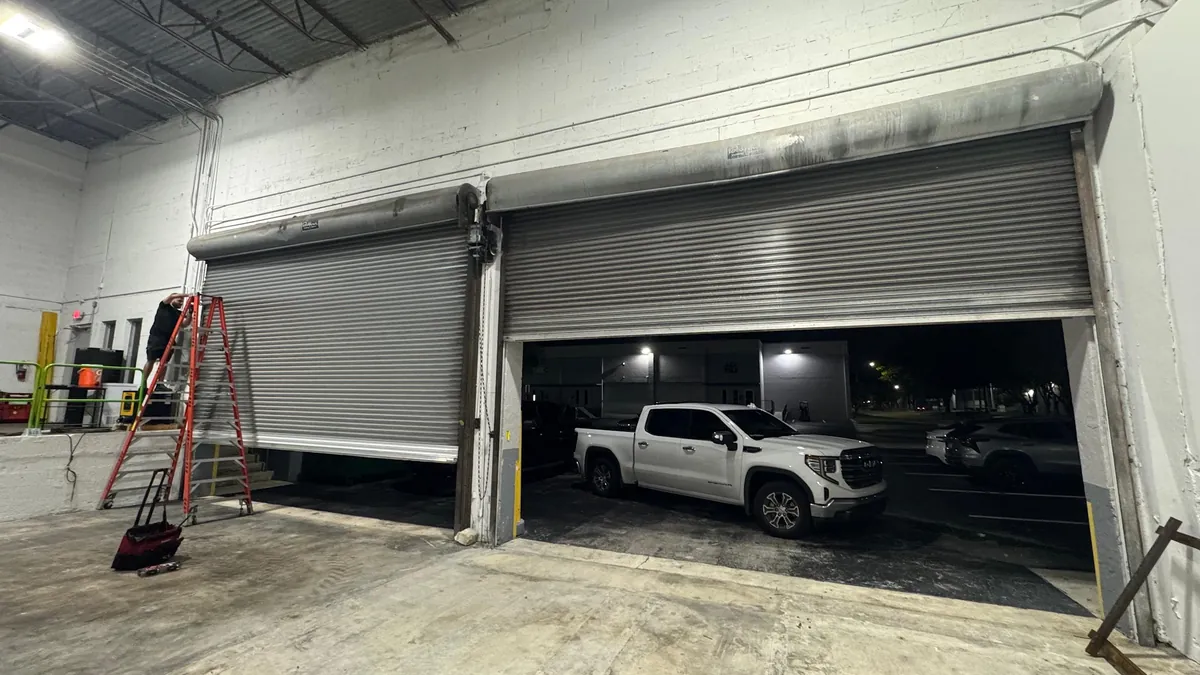
When a garage door fails onto a brick sidewalk at night
On the hill, a garage opens straight onto the brick sidewalk. There is no driveway between the door and the street, no yard behind a gate, nothing to hide a door that will not close. When one of the few private garages here fails, often a small, low bay sunk below the sidewalk at the foot of a Federal or Greek Revival row house, it fails in full view. Our emergency garage door repair in Beacon Hill, MA covers a door that will not open or close, a broken spring or an off-track door, at any hour.
The phone is answered day or night, every day of the week, so you can call the moment something goes wrong. What happens next depends on the situation, and you are told plainly what to expect.
First, three things to do right now:
- Stop pressing the button and unplug the opener, so it cannot drive a damaged door further.
- Keep everyone, and any pets, out from under the door and away from the springs above it.
- Note what you can see from a distance: a gap in a spring, a loose cable, a roller out of its track.
Breakdowns that count as urgent
Door stuck open
A garage left open to the street overnight, with the car and whatever else is stored inside on view.
Door will not open
The car is trapped in the bay and there is no driveway to park in instead.
Broken spring
The door will not lift, or lifts a few inches and stops. A torsion spring holds dangerous tension and is not a DIY repair. See spring repair in Beacon Hill.
Door off its track
The door hangs crooked with rollers out of the rail. It is unstable and can fall.
Snapped cable
One side of the door drops lower than the other, or the door sits twisted in the opening.
Why a failure feels worse here
In a neighbourhood of wide driveways, a broken garage door is an inconvenience: the car goes on the drive and the door gets fixed when convenient. On the hill, the local notes describe streets of row houses with no driveways at all, and private garages that are rare, small and often below the level of the sidewalk. That changes the stakes.
If the door is stuck open, the garage is open directly to a public sidewalk, with no buffer of any kind. If it is stuck shut, the car is trapped, and there may be nowhere to park nearby. If it has come off its track or broken a spring while half open, it may be hanging at an awkward height in a narrow opening right beside foot traffic. All of these are reasons people call for emergency garage door repair in Beacon Hill rather than waiting for a convenient day.
A door that will not close
This is the call that comes most often after dark. The door goes down partway and reverses, or will not start down at all, or comes down crooked and stops. The causes, roughly in order of how often they turn up:
- Safety sensors. A bin, a bag or a bicycle in the beam, a dirty lens, or a sensor knocked out of line. In a sunken bay, splashes and grit at floor level make this especially common. Wipe the lenses and check that both lights are steady.
- A broken spring. If the spring broke with the door open, the opener may not be able to lower it smoothly, and the door can be very heavy.
- A cable off its drum. The door tilts as it comes down and jams.
- A door off its track. Rollers outside the rail mean the door cannot travel.
- An opener fault. The motor or its board has failed.
If the sensors are the problem and cleaning them fixes it, you may be able to close the door yourself. If anything else on that list is the cause, do not try to force the door down. Lowering a door with a broken spring or a loose cable by hand is dangerous, because nothing is controlling its weight.
A door that will not open
A door that refuses to move with the car inside is the other common emergency. If the opener runs but the door barely lifts or stops after a few inches, a broken spring is the likely cause, and the door should stay down. If the opener is silent, check the power: is the unit’s light coming on, has a breaker tripped, is there an outage on the street? If there is a power cut and the springs are sound, the emergency release cord on the opener’s trolley frees the door so it can be lifted by hand. A balanced door should feel fairly light. If it feels very heavy, set it down and do not try again.
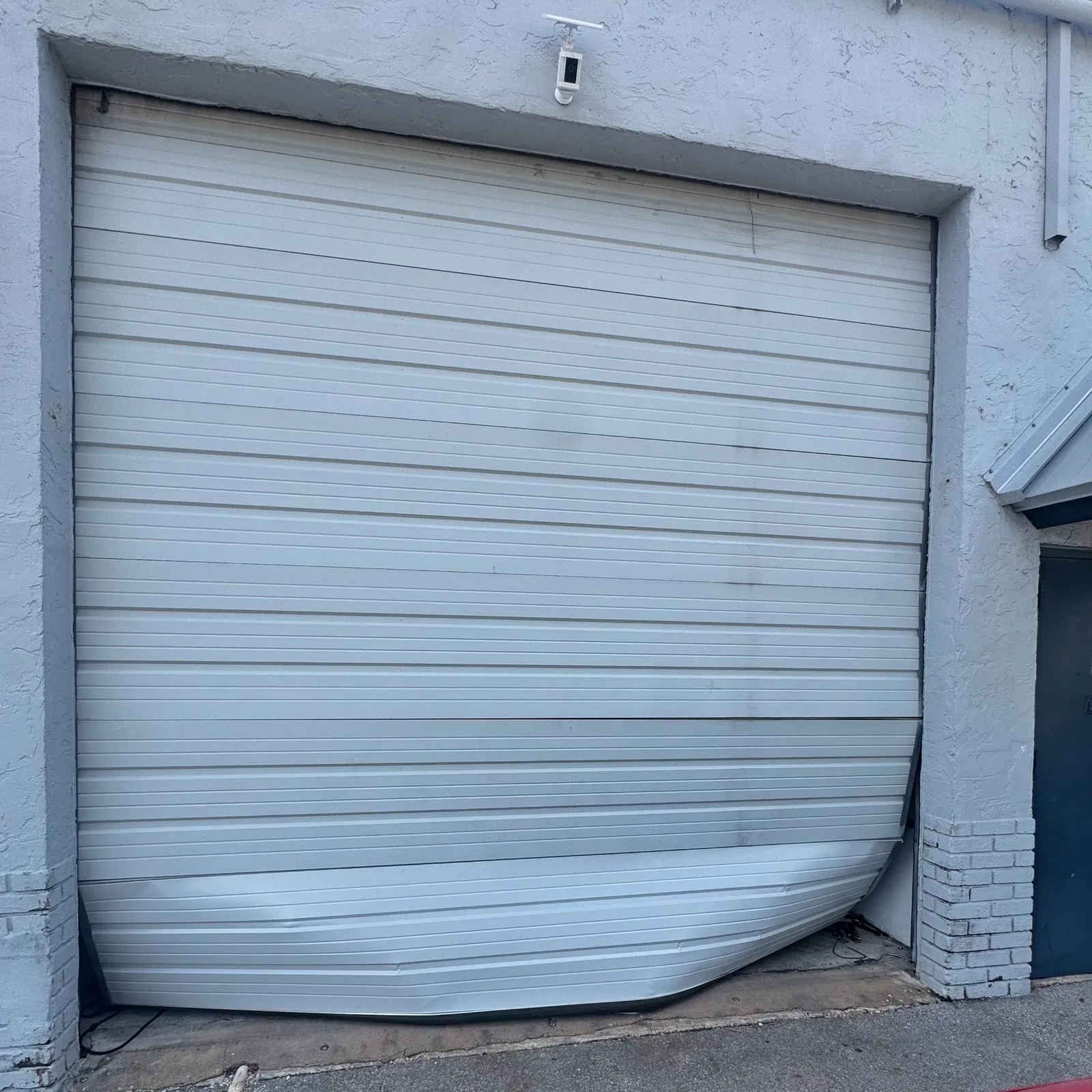
Off-track doors on a sloping threshold
Some of the hill’s garages sit below the sidewalk, reached by a short slope, and a door that has been knocked by a car on a tight approach can twist and leave its tracks. A cable snapping on one side, or an opener that kept pushing after the door had stopped, can do the same. An off-track door is one of the most dangerous situations in a garage, because the rails are no longer holding it in place and it can drop or swing out.
Leave it exactly where it is. Do not run the opener, do not try to push the rollers back in by hand, and do not stand under it. If it is hanging over the threshold and blocking the sidewalk, keep people away from it until it can be dealt with. Getting it back on track safely means taking the weight off it first.
What to do while you wait
Once you have called, a few steps keep things safe and make the repair easier:
- Leave the opener unplugged.
- Keep the area under and around the door clear of people.
- If the door is stuck open, move anything valuable that you can reach safely, without going under the door.
- Clear the floor just inside the opening, so the technician can work on the door without moving your belongings.
- If it is dark, leave the garage light on if you can.
Do not try to wind or release a spring, loosen a cable, or pry at a bracket. Those parts are under heavy load.
What an emergency visit involves
An emergency visit starts with making the door safe. The technician looks at the whole door before touching it, to see where the weight is and what is holding it. A door with a broken spring or a snapped cable is secured so it cannot move. An off-track door has its weight taken off before the rollers are freed. Once the door is stable, the fault is found, and you hear what has failed and what fixing it involves.
Many emergencies can be resolved on the first visit: a spring replaced, a cable re-wound, a door put back on its tracks, sensors realigned. Sometimes a part has to be ordered, especially on a door with an unusual low-headroom track set or springs sized for a heavy wooden door. In that case, the aim is to leave the door closed and secure until the part arrives, so the garage is not left open to the sidewalk.
The work usually happens with the door open, standing on the sidewalk or inside the bay, so the technician will take care with anyone passing.
What helps on the phone
A clear description over the phone makes a real difference, because it tells the technician which parts and which kind of track or spring to expect before arriving at a small, low garage. Useful details include:
- Whether the door is open, closed or stuck partway, and roughly how high.
- Whether the spring sits on a bar above the door or runs along the side rails, and whether you can see a break.
- Whether a cable is hanging loose or the door is tilted.
- Whether the door is wood or metal, and whether it is the original door or a newer one.
- Whether the garage is level with the sidewalk or down a slope below it.
- Whether a car is inside and when it is needed.
In a dark garage, a torch held from the doorway is enough to see most of these things; there is no need to step under the door or climb up toward the springs. None of this needs you to touch the door. When people call us for emergency garage door repair in Beacon Hill, these few answers usually tell us most of what has happened.
Cars, tight approaches and damaged sections
With no driveways and garages tucked into the base of row houses, getting a car into a small bay often means a tight turn off the street and a short, sometimes sloping approach. A misjudged turn can catch the edge of the door or the jamb, bending a section, cracking a hinge or knocking a roller out of its track. If the door was moving at the time, the opener may have kept driving it, making the damage worse.
After a knock like this, do not run the door to see if it still works. A bent section can jam the door in its tracks and a cracked hinge can let it fold as it travels. The section, hinges, rollers and track all need checking, and the door may need to be secured in place until a matching section is found.
Securing a historic door that cannot be fixed straight away
On the hill, a garage door is part of a historic facade, and many are wooden carriage-style doors or panelled sections made to suit the building. When one of these is badly damaged, a matching part may not be available on the spot. In that situation the priority is making the opening secure and safe, so the garage is not left open to the street and the door cannot fall. The door may be lowered and locked in place by hand once its weight is under control, and its opener left disconnected until the repair can be finished. You are told what has been done and what still needs to happen before the technician leaves.
Torsion springs and why to wait
A broken spring is the single most common urgent call. It is also the one where people are most tempted to try something themselves, because the cause seems obvious. A torsion spring holds dangerous tension even when the door is closed and the spring looks still. Winding or unwinding one needs the right tools and the right technique, and when it goes wrong the spring releases its energy all at once, through the winding cone and anything in its path. This is not a DIY repair, however urgent the situation feels. The same goes for the cables and the bottom brackets.
Damp, cold and the timing of breakdowns
Breakdowns on the hill tend to cluster around certain conditions. The first hard frost of winter brings a wave of broken springs, because cold steel is more brittle. Garages below the sidewalk collect rain and snowmelt, which rusts cables and bottom brackets until one gives way. Snow and ice can freeze the bottom seal to the floor, so the opener strains against a door that will not lift and trips its force limit, or tears the seal. If the door seems frozen in place, do not keep pressing the button. Carefully clearing ice from the seal line, without prying at the door, sometimes frees it.
Is it an emergency, or can it wait?
Not every fault needs a visit at night. A door that is closed and secure, with the car not needed until later, can often wait for a booked appointment. A remote that has stopped working while the wall button still works is a nuisance, not an emergency. A noisy door, a slow door or a worn seal can be booked in.
The things that should not wait are a door stuck open to the street, a car trapped when it is needed, an off-track or crooked door, and a broken spring with the door partly open. When you call, describe what you see and we will help you work out which it is. Emergency garage door repair in Beacon Hill is about making the right call, not always about the fastest one.
Other urgent problems and where to read more
A failed opener is a common cause of a door that will not move, and the opener repair page for Beacon Hill explains what can go wrong with remotes, wall buttons and sensors. For the full range of non-urgent work, the garage door repair page for Beacon Hill covers springs, cables, panels and tracks. The wider emergency garage door repair service page covers urgent calls across Greater Boston, and the hill’s neighbourhood page lists every service there.
After the emergency
Once the door is working again, it is worth thinking about what caused the failure. A spring that broke after years of use suggests the other spring is not far behind. A cable that rusted through in a damp bay suggests the bottom brackets and the seal need attention too. A door that has failed repeatedly, with rotted or rusted bottom sections, may be due for replacement. You will hear an honest view on that during the visit.
In a sunken bay, the threshold deserves a look once the crisis is over. Leaves, grit and meltwater gathering against the bottom of the door are behind many of the rusted cables and seized rollers that turn into night-time calls. Keeping that strip clear through the autumn and winter, and replacing a split bottom seal before it lets water pool against the door, removes one of the most common starting points for the next breakdown. If replacement is the sensible answer, the page on new garage doors in Beacon Hill covers choosing a door for a low, historic opening.
Calling now
If your door has just failed, unplug the opener, keep clear of the door and the springs, and call. Tell us what the door is doing, whether it is open or shut, whether a car is inside, and whether the garage sits below the sidewalk. Calls are taken at any hour, every day of the week. For emergency garage door repair in Beacon Hill, MA, call us or book online.
Questions from Beacon Hill
My garage door is stuck open to the sidewalk at night. What should I do?
Unplug the opener, keep people away from under the door and call. Check the sensors first, because a blocked or dirty sensor is the most common reason a door will not close, and cleaning the lenses sometimes fixes it on the spot. If a spring, cable or track is the problem, do not force the door down.
Can I lower a door with a broken spring by hand?
It is not safe. Without the spring, nothing is holding the door’s weight, and it can drop suddenly. Leave it where it is and call.
My car is trapped in the garage. Can I pull the emergency release?
Only if the springs and cables are intact. Pull the cord on the opener’s trolley and try lifting gently. If the door feels very heavy or will not stay up, a spring is broken and you should not lift it.
The door is hanging crooked out of its tracks. Is it dangerous?
Yes. An off-track door is unstable and can fall or swing out. Do not run the opener or try to push it back. Keep everyone clear until it is made safe.
Do you answer the phone at night and at weekends?
Yes. The phone is answered day or night, every day of the week, so you can report a breakdown as soon as it happens.