
Why South Boston’s small rear garages wear their doors hard
Behind many triple-deckers and row houses on the numbered streets, the garage is a small building at the rear of the lot, at the far end of a driveway barely wider than a car. Garage door repair in South Boston MA homes ask for usually starts there: an overhead door fitted into a tight opening, worked hard by whoever lives in the building, with very little room on either side of it for the tracks, springs and cables that keep it moving.
Alongside those older rear garages sit the newer townhouse garages near the waterfront. They are a different kind of building, often with a wider modern opening and an opener that runs every time someone comes or goes, but they share one thing with the older garages up the hill: there is rarely space to spare around the door.
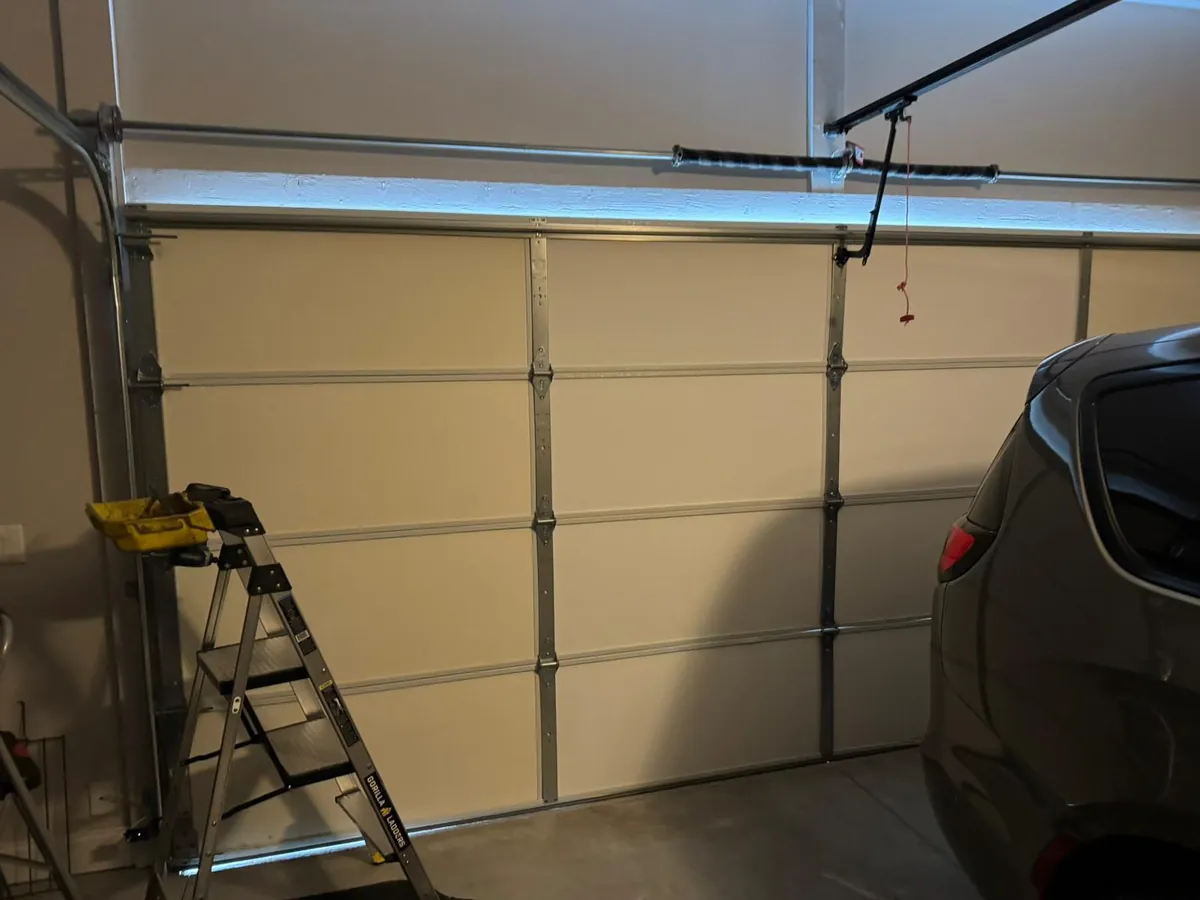
Before picking up the phone, stand well back from the door and look for three things:
- Whether the spring above the door, or one of the springs running alongside the tracks, shows a gap in its coils.
- Whether a lift cable hangs slack at either bottom corner.
- Whether the door sits square in the opening or has dropped on one side.
What we repair on South Boston garage doors
Springs
Torsion springs over the opening and extension springs beside the tracks do the lifting. A broken one leaves the door too heavy for the opener. The details are on spring repair in South Boston.
Cables and drums
Each lift cable is wrapped around a drum on the spring shaft. When one frays or snaps, a corner drops and the door twists in a narrow opening.
Panels and sections
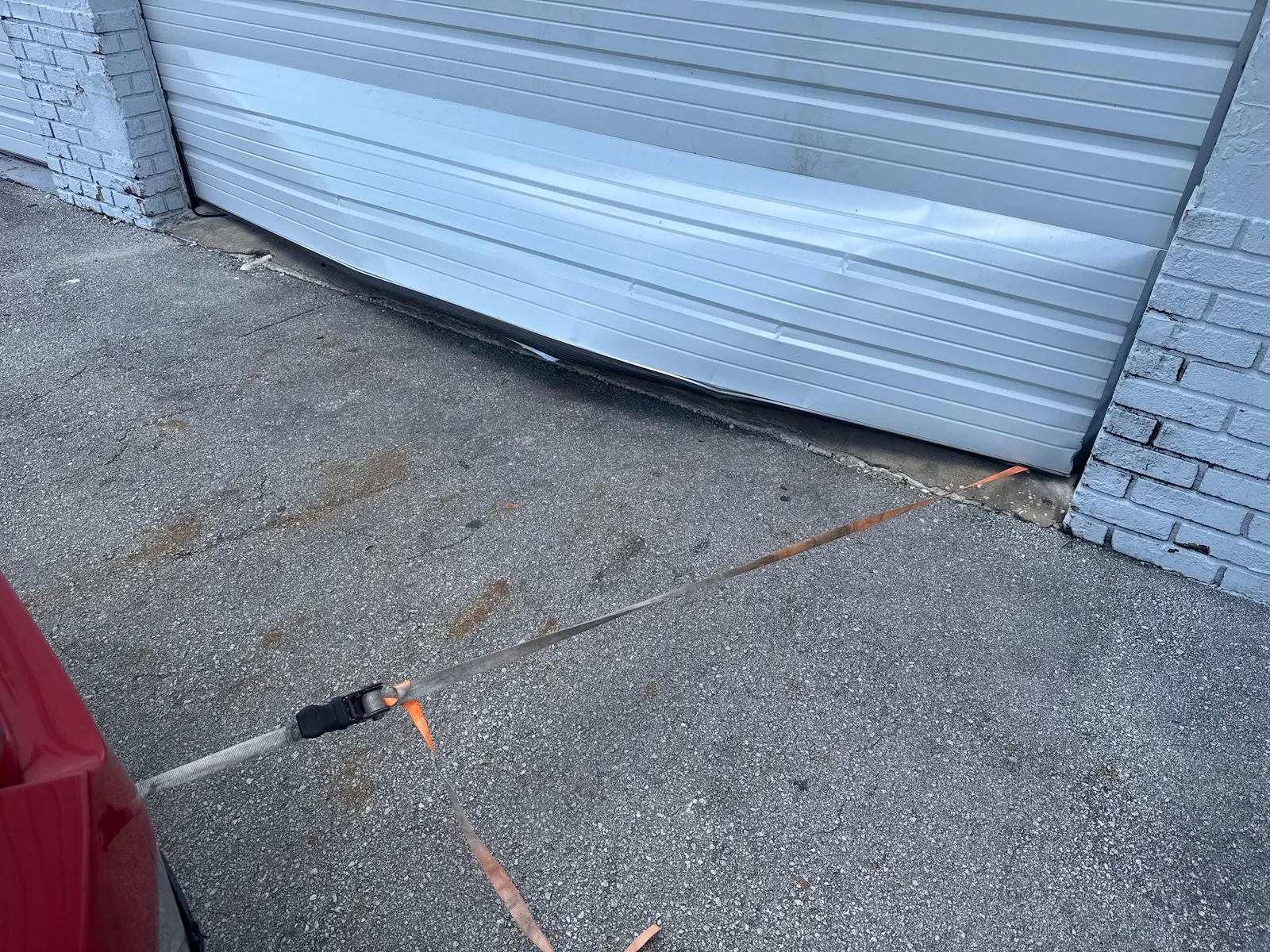
A car nosing into a short garage, or a bin rolled against the bottom section, can crack or fold a panel. Single sections can often be replaced.
Openers and controls
The motor whirs but the door stays put; a handset has gone dead; the wall control clicks and nothing happens. See opener repair in South Boston.
Tracks and rollers
Rollers wear flat, brackets work loose and a rail gets knocked out of line, sometimes far enough that the door leaves its track altogether.
Safety sensors
A pair of low-mounted photo eyes reverses a closing door when the beam between them is broken. In a cramped garage, they get bumped out of line easily.
Two kinds of garage, two patterns of wear
Most calls in this neighbourhood come from one of two places. The first is the small rear garage behind an older house. These are usually single-car buildings with a short ceiling and walls close to the door on both sides. The door in them may be the second or third one the opening has carried, and the framing around it has been drilled for brackets more than once. Problems there tend to be about fit: a track bracket pulling out of tired wood, a jamb that has moved so the door rubs, a spring crammed into the little headroom the building allows.
The second is the newer townhouse garage along the waterfront. Here the framing is newer and the opening is usually square, so the faults are less about the building and more about use. An opener cycling the door several times a day wears its gears and its drive. Rollers and hinges see the same heavy cycling. Doors close to the water also tend to see damp, salty air, which is hard on springs, cables and the fasteners that hold the tracks in place, and rust on those parts is worth watching for.
The two kinds of garage call for different questions when you ring. For an older rear garage, we want to know how the garage is reached and how much room there is around the door. For a townhouse garage, we want to know what the opener is doing and whether any rust is showing on the springs or cables.
How the moving parts fail
Every overhead door is a balance between a heavy door and the springs that offset its weight. The opener does not lift the door; it guides a door the springs have already made light. When that balance goes, everything else starts to suffer.
A spring wears a little with every trip, and after enough trips it breaks, usually with a loud bang from inside the garage. With the spring gone, the door is suddenly its full weight. An opener asked to lift it strains, shuts off after a short distance, or strips its own gear.
Cables fail more quietly. A strand frays where the cable meets the bottom bracket, then another, until one day the cable snaps and that corner of the door drops. In a narrow opening the door then jams against the jamb or the track, and pulling on it only makes the bind worse.
Rollers wear on their bearings and start to drag or wobble. Hinges between the sections crack along their bends. Brackets loosen as the door vibrates against them. None of these stops a door on its own, but each makes the next failure more likely, and a door that has started to shudder, bang or run unevenly is telling you which part is going.
Small garages, bigger cars
Many of the rear garages on the numbered streets were built around cars a good deal shorter and narrower than the ones that park in them now. That leaves very little margin. A bumper stops a hand’s width from the inside of the door, a mirror passes close to the jamb, and the bottom section is the first thing a car touches if the driver misjudges the turn from a narrow driveway.
That pattern shows up in the repairs. Bottom sections are dented or pushed in from outside. A vertical track gets clipped and bent at roughly bumper height. A door that closes onto the tail of a car parked too far back can bend its top section or pull the opener’s arm out of line. Where a car must sit close to the door, a reminder on the garage wall marking where to stop heads off most of this. Most garage door repair South Boston owners book after a knock like this comes down to a single section, a length of track and a check of the rollers and cables either side.
Signs a door needs attention soon
Not every fault announces itself with a bang. These are worth a call before they turn into a stuck door:
- The door has started to feel heavier, or slams down faster than it used to.
- A visible tilt as the door rises, or daylight showing under one corner when it is shut.
- A grinding, scraping or popping sound at the same point on every trip.
- Gaps appearing in the coils of a spring, or rust spreading along it.
- A cable that looks frayed, kinked or loose at the bottom bracket.
- The opener reversing for no clear reason, or needing several presses.
What a visit involves
Parking comes first on most visits here. The numbered streets fill up, driveways are narrow, and a van often cannot get close to a garage at the back of a lot. Mention on the phone where the van might stop, whether there is a shared driveway, and whether a car in front of the garage can be moved.
Once we are at the door, the visit runs in a set order:
- We look at the door before touching it: how it sits, which parts are broken, and whether anything is under tension that should not be.
- We release the opener and feel the door’s balance by hand, where that is safe.
- Springs, cables, drums, rollers, hinges, tracks and sensors are checked, not just the part that failed.
- Nothing is fitted until you have been told what failed and what we propose.
- The repair is made, the door is balanced, and it is run through several full cycles with the opener reconnected.
In a tight garage, that order matters. A door that has dropped on one side can be wedged against the wall, and the first job is often to support it safely before anything else is loosened.
Before help arrives: what is safe and what is not
Some things are fine for an owner to do while waiting. You can pull the opener’s plug at the ceiling so nobody presses the button again. You can keep cars, bikes and children away from the door. You can take a photo of the springs and cables from a distance to describe the problem when you call.
Other things are not safe. A torsion spring holds a great deal of tension, and adjusting, unwinding or removing one is not a DIY repair. The same goes for loosening the bottom brackets the cables attach to. Raising a spring-less door by muscle alone invites injury, and keep your hand off the red release cord while a half-raised door has lost a spring or cable: the door can fall the moment it is released. A door frozen in the raised position with the garage unlockable is worth a call straight away; tell us how it is hanging.
Tight openings and the clearance problem
In many small rear garages, the space between the edge of the door and the wall is narrow, and the space above the door is not much better. That decides a lot about a repair. A spring may need to be a particular type to fit in the headroom. A replacement track has to suit the clearance the opening actually has, not the clearance a catalogue door assumes. An opener has to fit in the gap above the raised door, below the joists.
On a row house garage where the door was swapped at some point without changing the track, the rails may not quite suit the door hanging in them, and rollers wear unevenly as a result. Spotting that kind of mismatch is part of the job, because fixing the symptom alone only brings the same fault back.
It also decides how the work is done. In a narrow garage, a ladder may only fit in one or two places. Long parts have to come in through the open door, not around the side. Anything stored along the walls near the tracks gets in the way and is safer moved before the visit. None of this prevents garage door repair in South Boston, but it is why we ask about the space when you call.
Off-track doors and bent rails
A door comes off its track when a roller leaves the rail, most often after a car clips the door, a cable snaps, or a bracket pulls loose. In a narrow garage, a car that brushes the edge of the opening is a common cause. Once a door is out of its track, it is unstable: it can twist, jam or fall, and the springs and cables are still loaded.
An off-track door stays as it is until we arrive. Keep the opener unplugged and resist the urge to force the rollers back into the rail. Getting it back into line means taking the tension off safely, straightening or replacing bent track, and checking that the rollers and cables were not damaged when it came out. Our off-track repair page goes into this in more detail.
Openers, remotes and sensors in a busy garage
A garage shared by several people in a triple-decker, or used every day in a townhouse, puts the opener through far more cycles than a garage used once a day. Remotes multiply, and one that goes missing is a reason to clear the opener’s memory and reprogram the ones still in use. Wall buttons wear out at the contacts. The safety sensors near the floor are knocked by bins and bikes and stop the door from closing, which is the system doing its job.
If the light on a sensor is off or blinking, look first at whether something is blocking the beam or whether one sensor has been nudged out of line. If the opener hums without moving the door, the problem may be the opener’s gear, or it may be a broken spring the opener cannot lift against. LiftMaster units are among the openers our visits cover, for repair or replacement.
Repair or replace
Repair wins in most of the garages we see in this part of the city. The parts that wear, from springs and cables to rollers, hinges and the opener, are made to be renewed, and once they are, the door itself can carry on for many more years. In an older garage where the opening has shifted over time, the door already hanging there has settled into the space, which is one more reason to keep it.
A new door makes more sense once the door’s skin gives out: bottom sections eaten through by rust, timber panels gone punky or cracked across, or timber so swollen with rain that the springs can no longer balance it. Where that is the case, we say so plainly, and new garage doors for South Boston explains how a new door is sized to a tight older opening. Any garage door repair South Boston MA owners book with us starts from an honest look at which case they are in.
Booking a repair
Doors do not break at convenient times. A car shut in at dawn, or a door that will not close late at night, is the usual reason someone calls. Someone picks up the phone at any time of night or day, Sundays too, so nobody has to sit on a fault until morning. For a door hanging open or out of its rails after dark, emergency repair in South Boston covers what to do next. For how this service works across Boston, see garage door repair, and for everything we do here, the South Boston page.
It saves time on the call if you can describe the route to the garage, the nearest spot a van could stop, the door’s symptoms and whether your own car is trapped in the garage. When those four points are scribbled on the back of an envelope, call us or book online.
Questions from South Boston
The door lifts a hand’s width, then quits. Why?
A snapped spring, most of the time. With nothing balancing it, the door is more than the motor can manage, so it stops. Unplug the motor unit, keep everyone clear of the opening, and look from a few steps back for a split in the coils above the opening.
We reach our garage down a narrow driveway behind the house. Is that a problem?
No. Everything goes in on foot from wherever the van stops. Let us know where a van can pull in and whether any cars in the driveway can be moved, and the visit is planned around it.
There is hardly any room between the door and the garage walls. Does that matter?
It affects which parts will fit and how the work is done, but it does not stop garage door repair in South Boston. Clearing anything stored near the tracks before the visit helps.
Our townhouse garage is near the water and the springs look rusty. Should we worry?
Rust on springs, cables or track fasteners is worth having looked at before something breaks. Damp, salty air speeds up wear on those parts, and a rusted spring or cable can fail without much warning.
Can I keep using a door that bangs or jerks?
It is better not to. A bang or a jerk usually means a spring, cable, roller or hinge is wearing out, and running the door strains the rest. If several households use the garage, put a note on the wall button until it has been seen.