
Shared garages beneath the towers
The West End is close to all towers now, and the garage doors West End MA drivers pass through are building doors, not house doors. The housing that went up after urban renewal is tall and dense, and private garages attached to a single home barely exist here. A car lives in a shared garage instead: a parking level under or beside the building, reached by a ramp, closed off by a heavy roll-up or sectional door and often a gate system as well.
That changes almost everything about a garage door call. The door belongs to the building, not to any one resident. It may cycle again and again between the morning rush and late evening. It is opened by fobs, remotes, loop detectors or a card reader rather than a button by a kitchen door. And every decision about it, from a small repair to a full replacement, goes through building management.
The faults that bring a tower door to a stop are usually these:
- A torsion spring inside the barrel or above the opening that has worn out from constant use.
- An operator that has burnt out, lost its limits or stopped responding to the residents’ remotes.
- Slats, guides or a bottom bar bent by a vehicle that misjudged the opening.
Work in the towers, arranged with management
These are commercial-grade doors in a residential setting, and the garage doors West End MA buildings rely on need a different kind of visit from a house garage. Each service has its own West End page. General faults, from a jammed guide to a bent bottom bar, are covered under West End garage door repair. A snapped counterbalance coil, which turns the curtain into a dead load, comes under spring repair in the West End. Operators, remotes, wall stations and safety edges are handled by West End opener repair and replacement. A ramp door frozen open over a parking level at night is exactly the kind of call our West End emergency line takes. When a tired door needs to go, West End replacement doors are supplied and installed. Our commercial garage doors page explains roll-up and sectional doors more generally.
Close by, the hubs for Beacon Hill, the North End and Downtown Boston cover their own streets, and every area we serve is on the service areas page.
Who calls, and who decides
In a tower, the person who notices the door is rarely the person who can approve the work. A resident finds the door stuck at the bottom of the ramp, tells the front desk or the concierge, and the message goes to the property manager or the building’s superintendent. We take calls from any of them, but the work itself is agreed with whoever manages the building.
That is worth knowing if you are the resident who found the problem. Your call is still useful: what the door was doing, whether it made a noise, whether a vehicle touched it. Passing that on to management, or asking them to call us, saves time once someone is on the ramp.
If you manage the building, it helps to have a few things to hand when you call: where the door is, how the garage is reached, whether there is a second exit, who can let someone into the operator room or the electrical panel, and whether the door is currently open, shut or stuck between.
A door that never rests
Think of a single-family door: up in the morning, down at night, perhaps once or twice between. A shared door under a tower runs every time anyone drives in or out, from early commuters to late arrivals, plus deliveries and service vans. That traffic is the root of most of the trouble.
Springs are rated for a set number of cycles, and a busy parking door uses them up quickly. Rollers and guides wear in the same way. An operator that would last for a long time on a single-family garage can run hot and wear its drive in a fraction of that time on a busy ramp. Poor balance compounds every one of those, since the operator ends up hoisting load that belongs to the springs.
For building managers, the useful habit is to treat noise and slowness as early warnings. A door that starts to grind, hesitate at the top or shudder on the way down is telling you something before it fails.
Roll-up doors and their springs
Many tower garages are closed by a rolling steel door: interlocking slats that coil around a barrel in a hood above the opening. Hidden in the barrel, a torsion assembly offsets the weight of the curtain. Others use a sectional door with a spring shaft across the head of the opening, much like a large house door.
Either way, the spring is the part under the most stress. When it breaks, the curtain or the sections become a dead weight the operator cannot raise, or can raise only with obvious strain.
Residents, superintendents and handy porters alike should know that a torsion spring holds dangerous tension; on a parking door just as on a house door, this is not a DIY repair. Adjusting or replacing it means working with stored energy that can injure seriously. If the door has stopped, leave it, keep vehicles and people away from the opening, and call.
Operators, fobs and safety devices
The operator on a parking door is usually a heavier unit than a home opener, mounted on the wall beside the door or on the hood, with its own controls. It may be triggered by residents’ remotes, by a fob reader, by a detector loop cut into the ramp surface, or by a wall station inside the garage.
When the door will not open for anyone, the problem may be the operator, its power, its limits, a tripped safety device or the spring. When it opens for some residents but not others, it is more likely a remote or credential issue. When it reverses on its way down, a photo eye or safety edge is often the cause.
We repair and replace openers and operators, including LiftMaster units, and adjust them to the door they drive. Setting limits and force correctly matters more than usual on a parking door, because people walk under these doors as well as drive through them.
When the ramp door will not shut
A parking door stuck open overnight leaves a whole building’s cars, bikes and storage reachable from the street, and in many towers it also leaves a route into the building’s lobbies and stairwells.
Calls are taken at any hour and on any day, so management, a doorman or a resident can report the fault the moment it shows itself. When you call, tell us whether the door is fully open, fully closed or hanging part way, whether it moved at all when someone tried the operator, and whether a vehicle has hit it. That shapes what can safely be done in the meantime.
Do not try to drop a stuck rolling door by hand or by forcing its chain hoist unless the building’s own procedure says to and the springs are intact. If the spring has failed, the curtain can come down far faster than expected.
Vehicle strikes and bent slats
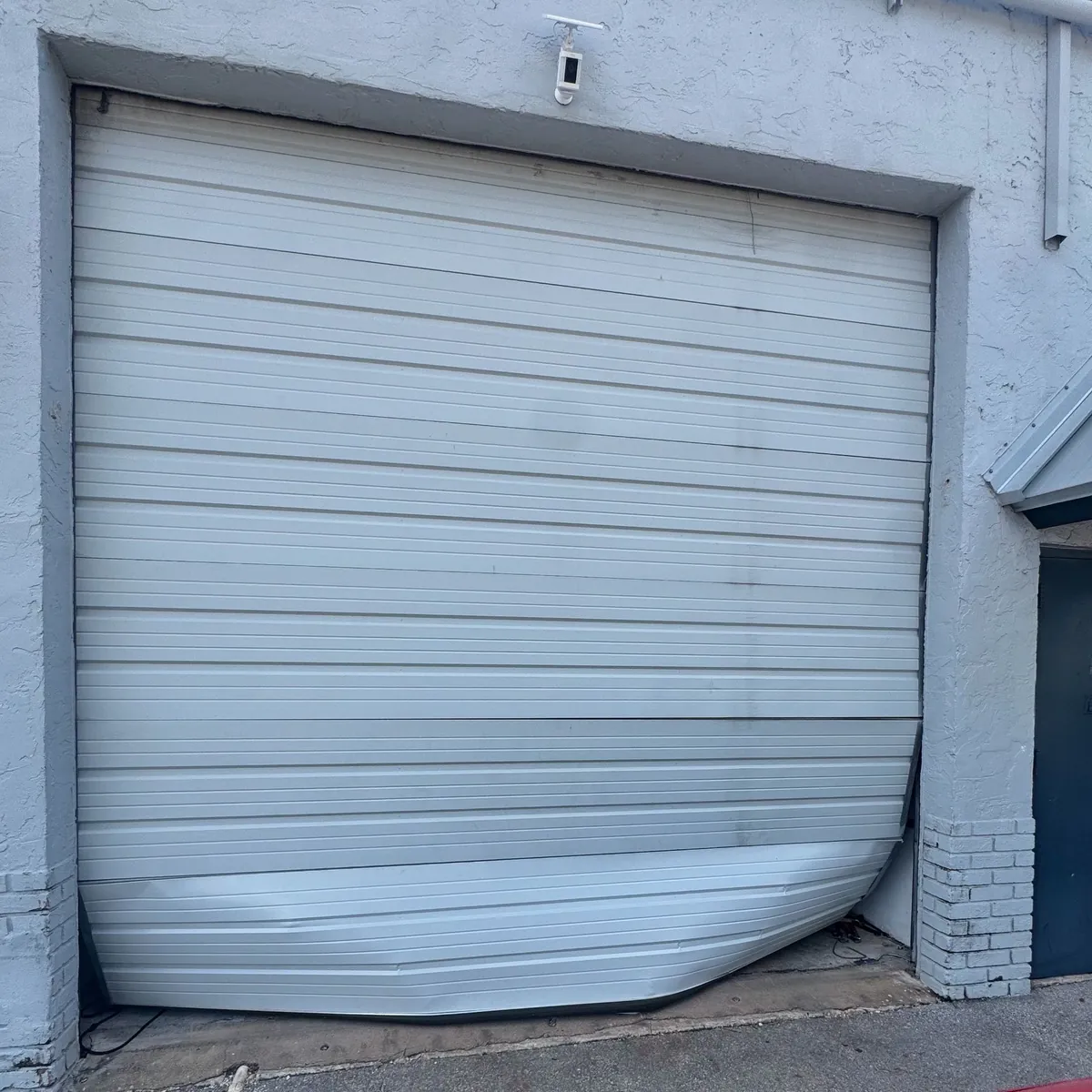
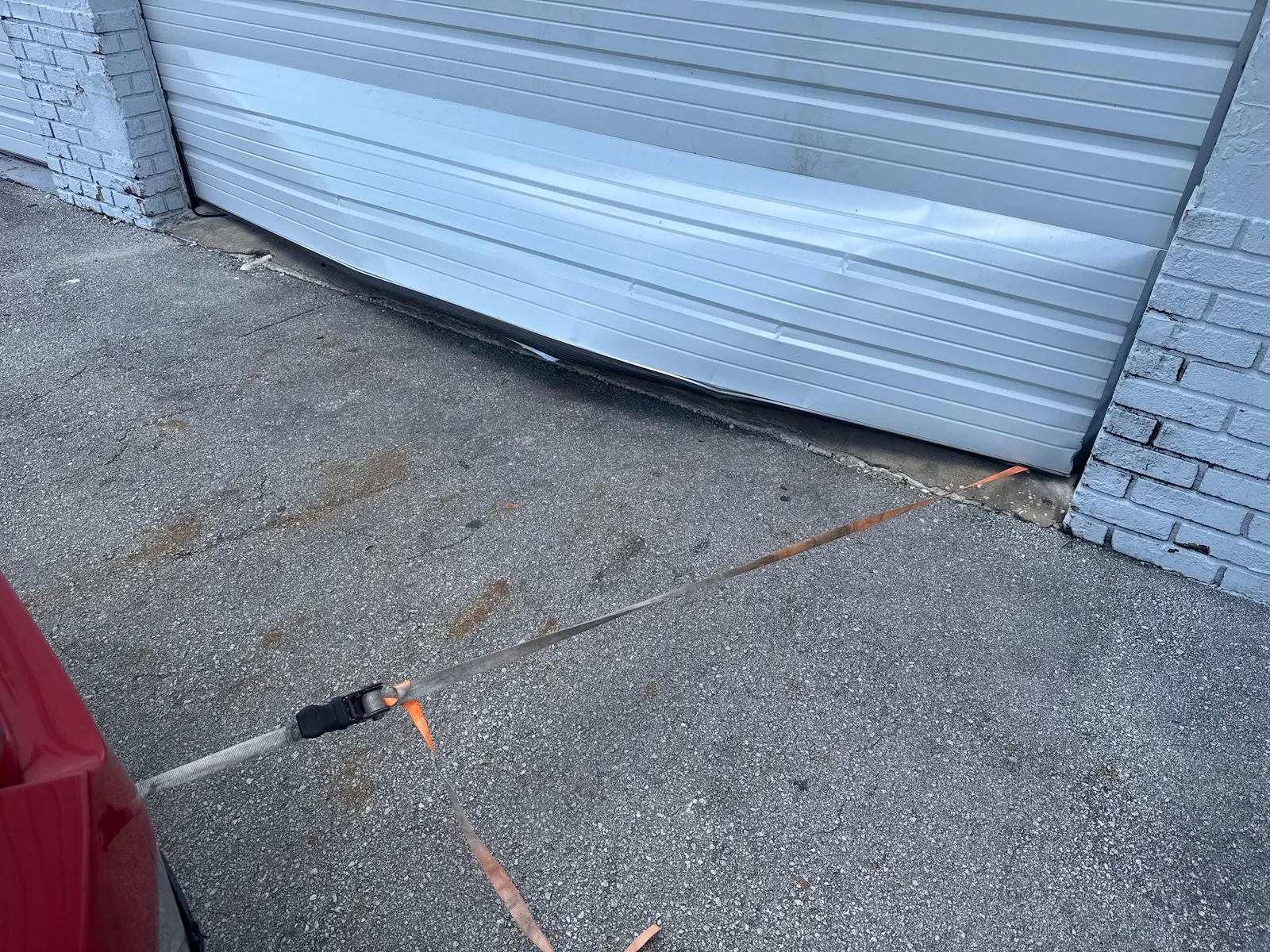
Ramps are tight, turns are sharp, and vehicles vary in height. Sooner or later a roof box, a van or a car that is reversing too close catches a door. The damage ranges from a single crimped slat to a curtain pushed out of its guides, or a bottom bar folded so the door can no longer seal.
One crimped slat does not condemn a rolling curtain; it can usually be slid out and a new slat fed in. Bent guides can be straightened or replaced. Where the curtain has popped out of its guides, leave it hanging as found until it can be eased down and re-seated under control; trying to run the operator with the curtain out of line can tear it further.
After a strike, it helps to note the vehicle’s height and where it hit, and to keep the door out of use until it has been checked.
Safe things for staff to check
A superintendent or member of staff can look at a few things without any risk:
- Make sure power to the operator is on, and that no emergency stop or lockout switch has been tripped.
- Check the photo eyes or safety edge for dirt, damage or anything blocking them, such as a cone or a bin left on the ramp.
- Try two or three different remotes or fobs, then the wall station inside, which separates a credential fault from a door fault.
- Look, from a safe distance, at the curtain, guides and bottom bar for obvious damage.
Anything to do with springs, the barrel, cables or the hood is for us.
Planning work around the residents
A tower’s garage cannot simply be closed for the day. Residents need to drive out to work and back home, and deliveries need a way in. Larger jobs are planned with building management so that the door is out of action as briefly as possible and residents are told in advance.
Most spring, operator and safety-device repairs are carried out with the door down or partly open and the ramp coned off. A full door replacement takes longer and needs space on the ramp for the new curtain or sections, the hood, the guides and a lift, so it is arranged around the building’s busiest hours.
Repair or replace a parking door
Commercial doors are built to be repaired, and a long working life can come from replacing springs, slats, guides and operators as they wear. But there are times when replacement makes more sense:
- Strike after strike has left creases in slats from the bottom bar to the hood.
- The guides and hood are corroded from winter after winter of road salt carried in on tyres.
- The operator and springs are both near the end at the same time.
- The door is too slow or too noisy for the traffic the building now has.
We supply and install new doors, sized and specified for the opening and the use. For the garage doors West End MA towers depend on, that means a door built for constant cycling, with an operator to match.
Cables, rollers and sectional parking doors
Not every tower uses a rolling curtain. Some parking levels are closed by a large sectional door, panels hinged together and running on rollers in tracks that turn back under the ceiling of the ramp. Their lift comes from two steel cables, one per side, reeled onto grooved drums on the shaft across the head.
On a busy sectional door, the cables and rollers carry the wear. A cable that frays through on one side lets that corner drop, and the door twists in its tracks; both cables are renewed together so the door lifts square. Rollers with flattened wheels or worn bearings grind and jump, and once a sectional parking door slips its rails it has to stay exactly where it stopped. Running the operator against a twisted door can buckle panels and bend the track sections beyond repair.
Sectional parking doors also carry long horizontal tracks hung from the ramp ceiling on brackets and angle iron. Those hangers loosen with vibration over time, and a sagging track throws the whole door out of line. Checking and re-fixing them is part of any thorough visit.
An opening set in concrete
The opening a tower’s parking door fills was cast in concrete when the building went up. It cannot be widened, raised or squared up the way a timber garage frame can be packed and shimmed. Any new door, any replacement hood and any new set of guides has to fit what is already there, along with the ductwork, sprinkler pipes, lighting and signage that usually crowd the space around a parking entrance.
That is why measuring matters on these jobs. Headroom above the opening decides how large a hood or how deep a spring shaft can be. Side room decides how the guides and the operator are mounted. Getting that right the first time keeps a replacement from becoming a fight with the building.
Salt, water and the ramp
Of all the garage doors West End MA buildings run, the ones at the foot of a sloped ramp suffer worst in winter. Parking ramps collect water, slush and road salt every year. It runs down to the bottom bar and the base of the guides, where it corrodes steel and freezes the door to the slab. A seized bottom bar can tear loose when the operator tries to lift it.
Keeping the threshold clear of ice and grit, and reporting a door that seems to stick at the bottom, both help. Swapping a flattened bottom astragal, and treating rust at the foot of the guides before it binds them, both spare the building a door that seizes on a bitter winter night.
A visit to a West End tower
The visit starts with whoever manages access: the front desk, the superintendent or the property manager. The door is looked at in full, from the hood and spring to the operator, guides, slats, bottom bar and safety devices. Management is told what has failed, what is close to failing and what the options are, and work goes ahead once they approve it.
When the repair is done, the door is cycled through its full travel, the operator’s limits and reversing are checked, and the building’s own staff are shown anything they need to know about the controls. For garage doors West End MA residents pass under all day, that final testing matters as much as the repair itself.
Afterwards, a short note to management on what was found and what to watch for, a worn spring that will need attention, a guide that took a knock, keeps the next failure from being a surprise. A shared door that is looked after on a plan rather than only when it breaks is far easier to live with for everyone who parks beneath the building.
Book a visit
If you manage a building, tell us whether it is a rolling curtain or sectional door, which street the ramp opens from, and what the door is up to now. If you are a resident, pass this on to management or call us yourself to describe the fault. Whether it is a broken spring, a dead operator or a door that is beyond repair, call us or book online.
Questions from the West End
I’m a resident, not the manager. Is it worth my calling?
You can call us to report what is happening, and that information helps. The door belongs to the building, though, so the work is agreed with building management before it goes ahead.
Can repairs be done without closing the garage for the day?
Most spring, operator and safety repairs need only part of the ramp coned off, and the door is back in service as soon as it has been tested. Larger work is planned with management around the building’s busiest hours.
The door opens for some remotes but not others. Is that a door problem?
Usually not. If the door works from the wall station and from some remotes, the fault is more likely in the remotes or credentials than in the door or operator. We can check both.
A van hit the door. Should we keep using it?
No. Park it shut, or leave it open with the ramp coned, until it has been inspected. A bent slat or a curtain pushed out of its guides can tear further if the operator keeps running it.
Do you replace the whole door or just the damaged parts?
Whichever makes sense. Single slats, guides, springs and operators can often be replaced on their own. When the door is worn out all over, a new door, supplied and installed, is the better option.