
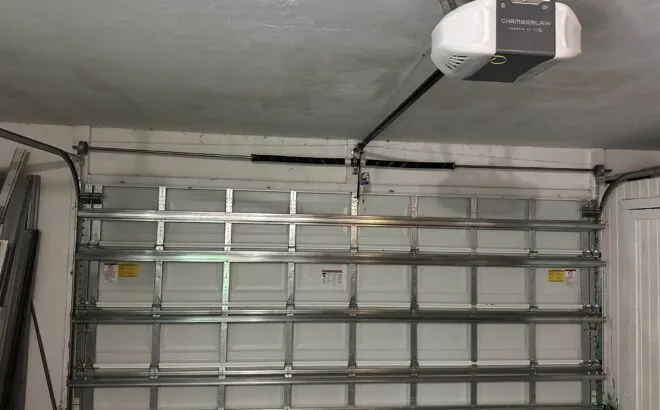
Why springs give out in the garage bays under Fenway’s buildings
Around the Fens, a garage is the exception rather than the rule. The apartment buildings and brownstones mostly have no parking of their own, so cars go on the street or into a shared lot, and the few garages that do exist tend to be a single bay let into the bottom of a building, reached from inside through a lobby or a service door. Almost every call for garage door spring repair Fenway MA buildings need comes from one of those bays, often after a loud crack that someone upstairs heard before anyone downstairs did.
The spring in a bay like that works in a cramped spot. It is squeezed into the thin strip above the lintel, just under the slab or joists that carry the rooms overhead, and in a shared bay it may turn many times a day. Steel coil wears out with use. Each opening and closing flexes it once, and sooner or later the metal tires and breaks.
Without going near the door, three signs point to a spring that has failed:
- A gap of a few inches somewhere along the coil above the opening, where the steel has parted.
- A long spring beside one of the overhead rails that hangs loose, stretched or in two pieces.
- A motor that labours, lifts the door a hand’s width and then gives up.
Spring faults we put right in Fenway bays
Torsion springs
A heavy coil on a bar across the head of the opening, which twists tighter as the door comes down. Most of the doors in these bays use one, or a pair.
Extension springs
Long coils that stretch out beside the overhead rails on older and lighter doors. A safety cable threaded through each one stops a broken spring from whipping across the bay.
Snapped springs
The usual emergency. The door will not rise, or rises a little and stops, and a car may be shut in until the spring is changed.
Spring replacement
Each new coil is sized for the particular door it will carry, set to its working tension, and the door’s balance is felt by hand before the motor goes back on.
What a spring actually does
Lift a well-sprung sectional door by hand and it feels almost light, though its panels, struts and hardware together are far too heavy for one person to raise unaided. That is the spring at work. Closing the door twists a torsion coil hard, banking energy in the steel. Opening it lets the coil relax and pay that energy out through the cables, leaving the motor with little more than a push to give. Extension springs reach the same result another way, lengthening as the door descends and pulling in again as it climbs.
Because the spring carries the weight, the motor is sized for guiding, not for lifting. Take the spring out of the picture and the motor finds itself trying to raise the whole door. Most will sense the strain and stop after a short distance; some will keep trying until a gear strips or a rail bends.
Each coil is rated for a finite count of open-and-close trips, and that count starts running down the moment it is installed. With one driver making a couple of trips daily, it lasts a long while. A door to a bay that several households share, opened for each car going out and coming back, uses them far faster. In a busy shared bay, a spring that was fitted with the door may simply reach the end of its life sooner than anyone expected.
Torsion and extension springs in a low bay
Headroom decides a great deal in a garage under a building. A torsion spring needs a strip of space above the opening for the bar, the coil and the drums at each end. Extension springs need room along the overhead rails, plus clearance for the pulleys and cables that run with them. In a bay where the ceiling is close to the top of the door, either arrangement can be a squeeze.
Some older bays still run on extension springs because that was what fitted when the door went in. They work, but they ask more care: each spring should have a containment cable running through its middle, so that if it breaks it stays on the cable instead of flying loose. A bay with extension springs and no safety cables is worth having looked at before anything snaps.
Where a door has been changed over the years, the springs fitted may not suit it. A heavier replacement door, an extra section, or a timber door that has soaked up moisture all change the weight the spring has to balance. A spring that is too light leaves the motor doing work it was never meant to; one that is overwound makes the door shoot up and refuse to stay shut. Matching the spring to the door as it is now is part of the job. Much of the garage door spring repair Fenway MA bays call for is really this kind of correction: a door that has been altered over time, still running on the spring that suited its earlier self.
Why owners should never touch the spring
Put simply, the coil of a torsion spring holds dangerous tension, and changing one is a job for a technician rather than an owner. The coil carries a heavy load and held only by set screws in a cone at its end. Letting that load off, or putting it back, takes purpose-made bars, a strict order of turns and practised hands that know which way things move when a bar slips. A screwdriver or a length of pipe pushed into a winding cone can be torn out of a hand and thrown hard enough to break bones.
Extension springs are not safe to handle either. Under tension, a stretched coil stores a great deal of energy, and an old one that lets go without a safety cable can fling hooks and fragments across a small space. In a bay under a building, where the walls are close and there is often a parked car alongside, there is very little room to get out of the way.
The cables and the bottom corner fittings share that tension. Loosening a cable or a bottom bracket on a sprung door is as risky as touching the spring itself. The safe course for an owner is to leave every part of the lifting system alone and call.
Warning signs from a tiring spring
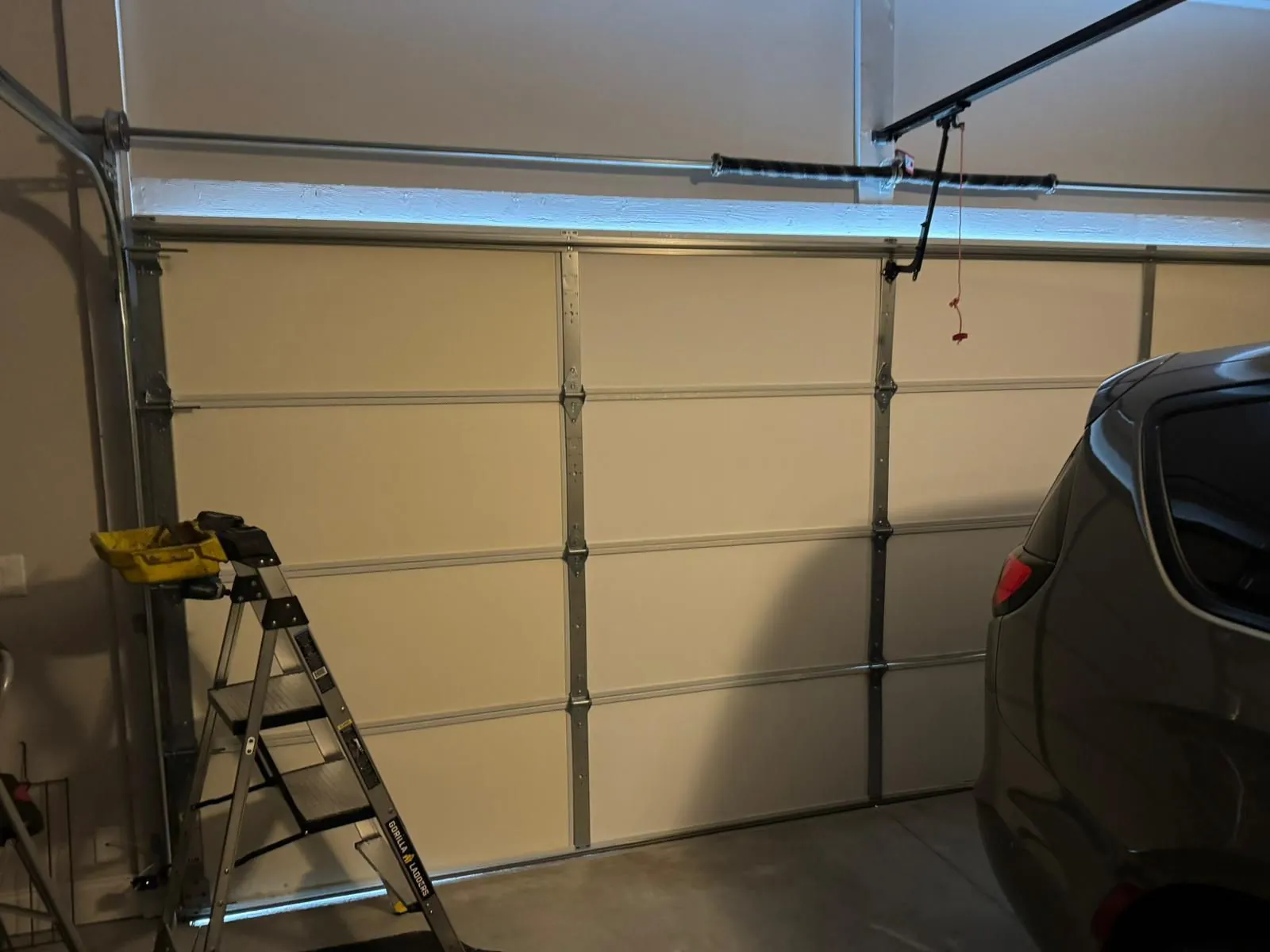
A failing coil usually gives some notice first. Some of the signs are easy to notice in a bay you use every day:
- The door feels heavier than it did when you lift it with the motor uncoupled.
- It no longer stays put halfway up, but drifts down, or creeps upward.
- The left and right sides leave the floor at different moments, so the door climbs crooked.
- The motor sounds as though it is straining, or stops and reverses for no clear reason.
- There is a visible gap, a stretched section or rust along the coil.
In a shared bay, the person who notices these signs may not be the one responsible for the door. If you share a garage under a building, tell whoever looks after it as soon as the door begins to feel different. A spring replaced before it breaks is a planned visit; one that snaps with a car inside is not.
Bringing a new spring in through the building
How a spring reaches the bay matters here more than in most places. Torsion springs, winding bars and lengths of shaft are long, rigid pieces of steel. Where the bay opens straight onto the street, they come in through the door itself, if the door can be raised. Where the door is stuck shut, which is exactly what a broken spring causes, they may have to come in another way: through a lobby, along a corridor and in by a service door.
It helps to say on the phone which way in is available. If the inside route needs a key, a code or a building manager to unlock it, arranging that before the visit saves time on the day. Clear space just inside the bay, especially under the spring and at both sides of the door, so ladders can stand where they need to.
When the spring is changed with the door down, a car parked in the bay can usually stay where it is, but there must be room to work on both sides of the opening. Moving bins, bikes and stored boxes away from the walls makes the job safer for everyone.
A shared bay adds one more step. Every household that keeps a car or a remote for that door should know the spring is being changed and that the door will be out of use while the work goes on. With garage door spring repair in Fenway MA so often taking place in a bay that serves a whole building, a short notice by the lobby or the service door spares people a wasted trip downstairs and keeps anyone from pressing a button while the spring is under load.
What a spring visit involves
Before anything new goes up, the door gets assessed. The motor is uncoupled, the door’s weight is felt by hand only if that is safe with the spring broken, and the whole lifting system is looked over: spring, bar, bearings, drums, both cables and the bottom fittings. A spring break often damages something else on the way, such as a cable jumping its drum or a bearing plate pulling loose from old masonry, and those need putting right at the same time.
The new spring is chosen to suit this door, by its weight, its height and how the drums are set up. On a two-spring door, it often makes sense to renew both together, since the second spring has done the same work and is likely close behind. You hear which part snapped, which others are tired, and which routes are open to you; nothing is done until you say so.
With the new spring fitted, it is wound or stretched to the right tension and the door is balanced by hand: it should rise smoothly, hold its position partway, and come down without dropping. Then the motor goes back on, its up and down stops and its force setting are tuned for the rebalanced door, and the safety reverse is proved by closing it onto an object left in the doorway. Garage door spring repair in Fenway MA is only finished when the door moves evenly on its own and the motor is doing no more than steering it.
When a spring breaks: what to do in the meantime
A spring usually breaks with the door closed, because that is when it is wound tightest. The sound is often a single loud bang, and in a bay under a building it may be heard on the floors above. After that, the door will barely move.
While you wait, a few steps keep everyone safe:
- Stop pressing the button. Each attempt strains the motor and can bend a rail or tear a cable.
- Unplug the motor from its ceiling socket so no one else in the building tries it.
- Do not pull the release cord on a door that is partway open. Without a spring, nothing holds it up, and it can fall.
- Keep people and pets out of the doorway, and leave a note on the door or by the service entrance if others share the bay.
- If a car is shut inside, leave it there. Trying to force the door up to get it out is how people are hurt.
Cold, damp and an unheated bay
Most garages under buildings are not heated, and many of them are damp. The spring sits in that air all year. Rust forms on a dry coil and roughens the surface, which makes the steel more likely to crack at a weak spot. Cold makes metal less forgiving, so an ageing coil tends to let go on a frosty morning more often than on a warm afternoon.
Wiping the coils with a thin film of the right oil, and checking the bearings at the end of each visit, helps the spring turn smoothly and holds rust off. It will not stop a spring from wearing out, but it keeps one from failing early because of the conditions it lives in. If your bay takes in water at the threshold, mention it; the damp that reaches the bottom of the door often reaches the hardware too.
When a broken spring points to more work
Most of the time a broken spring is just that, and a new one puts the door right. Sometimes the break shows up something bigger. Months of running on an under-strength coil may have worn the motor, stretched its cables or bent a rail. A timber door that has absorbed years of moisture may have grown too heavy for any spring that fits the space. A door with rusted-through sections may not be worth fitting a new spring to at all.
When that is the case, you hear it plainly, along with what each choice involves. Faults elsewhere on the door, such as worn rollers, split hinges or dented sections, are dealt with on the Fenway garage door repair page. Where a fresh door is the wiser spend, read about new garage doors in Fenway and what fitting one in an older opening involves. A spring that fails the moment the motor starts may also mean the motor itself needs attention, which the Fenway opener repair page explains.
Booking spring work
A broken spring rarely picks a good moment, and a bay under a building often holds cars that people need first thing in the morning. Calls are taken at any hour, including weekends, so a break heard after midnight can be phoned in there and then. When a car is trapped or the building has been left open at the bay, turn to Fenway emergency repair for the steps to take first. Spring work across Boston as a whole is described on our garage door spring repair page, and the full list of what we do locally sits on the Fenway page.
For garage door spring repair Fenway MA buildings can schedule without fuss, tell us whether the bay opens to the street or only from inside, describe the noise, and say if the door is shut or hung up midway. Once those points are noted, call us or book online.
Questions from Fenway
A loud crack came from the bay below our flat, and now the door stays shut. What happened?
Almost certainly a spring. Torsion coils tend to fail in one sharp report, and afterwards the door is too heavy for the motor to lift. Unplug the motor, keep everyone away from the door and call.
Can the spring be changed if the only way into the bay is through the building?
Yes. Springs, bars and tools can come in through a lobby or a service door. Let us know which way in is open and who can unlock it, and clear space inside the bay.
Our bay has a very low ceiling. Does that limit which spring can be fitted?
It can. The spring has to fit the strip of clearance over the lintel, and the right choice depends on that clearance and the door’s weight. The visit takes both into account.
Only the left-hand coil on our door has snapped. Should the right-hand one go too?
Usually that is the sensible course, because the second spring has done the same work and is likely near the end of its life too. You hear the options before any work starts.
Is it safe to wind a torsion spring myself with the right tools?
No. The coil stores enough force to hurl a winding bar or a fitting and badly injure whoever is holding it. Leave it to a technician with the right equipment.