
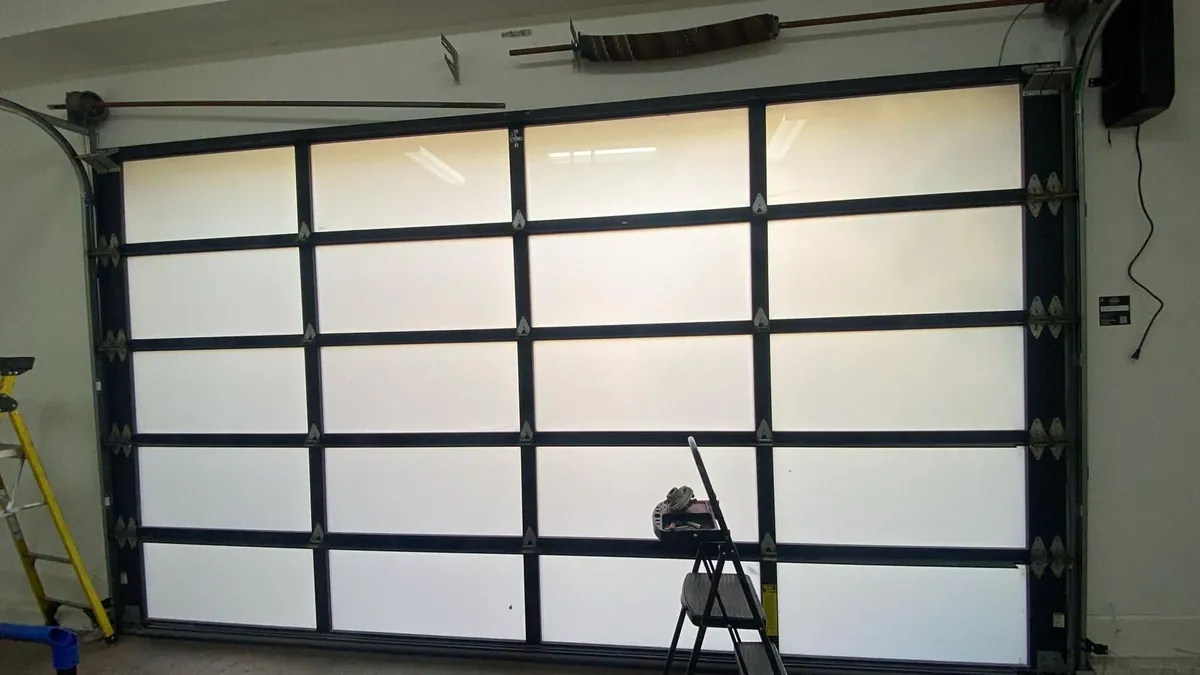
Replacing the door a whole building depends on
Downtown, a garage door is rarely one household’s door. It closes off the ramp into shared, below-grade parking under an office or residential tower, or it lowers across a back-street service doorway. New garage doors in Downtown Boston, MA are therefore a building project more than a home improvement: the existing door is removed and its successor fitted at an entrance that cars, deliveries and building staff rely on every day.
New doors are supplied and installed, and old doors are replaced, on both the sectional doors at tower parking entrances and the steel roll-up doors on the side streets. The job is planned with building management so that the garage keeps working as far as possible while the opening is changed over.
Three signs that a building’s door may be ready for replacement rather than another repair:
- The bottom sections are corroded through where water and road salt run down the ramp.
- Several sections are creased or split from vehicle strikes, not just one.
- The same faults keep coming back, visit after visit, on a door that has been patched many times.
Parts of a door replacement
Sectional doors for parking entrances
Steel sectional doors sized to the ramp opening, with springs and hardware suited to frequent use.
Roll-up doors for side streets
Steel roll-up doors for service entrances, loading areas and shopfronts, coiling into a hood above the opening.
Springs and hardware sized for the new door
Springs, cables, drums, tracks and rollers chosen for the new door’s weight and the way the building uses it.
Operators to match
A new operator where the old one does not suit the new door, set up with the building’s remotes, wall controls and safety sensors.
Taking out what is there
The existing door, springs and hardware dismantled safely, with the stored spring tension released properly before anything is unbolted.
Weather seals at the opening
Bottom, side and top seals to keep ramp water, grit and cold air out of the parking level.
When a building’s door has reached the end
Most garage doors can be repaired for a long time. Springs, cables, rollers and even single sections can be replaced, and a sound door kept going for years. But a door at a tower’s parking entrance lives a harder life than a house door, and eventually repair stops being the sensible choice.
The clearest sign is corrosion at the bottom. Water running down a ramp, carrying road salt in winter, pools against the bottom section and the lower ends of the tracks. Over time the steel rusts through from the inside, the bottom seal stops sealing, and the bottom brackets that hold the cables lose their grip on the door. Once that has happened, new springs and cables will lift the door but cannot make it sound again.
Repeated vehicle damage is the other common reason. A single creased section can often be replaced on its own, but a door that has been struck again and again may have bent hinges, twisted struts and sections that no longer meet squarely. New garage doors in Downtown Boston are also worth considering when an old door’s parts are hard to match, when the door is far heavier than the building’s operator can cope with, or when the building simply wants a door that suits how its garage is used now.
Choosing the right kind of door for the opening
Two kinds of door cover most of the openings downtown. A sectional door is made of horizontal panels hinged together; it rises up the wall and runs back along the ceiling of the garage on tracks. It suits ramp entrances where there is room inside for the door to travel back along the ceiling. A roll-up door is built from slim interlocking slats wound onto a barrel over the opening, so it takes up almost no space inside, which suits shallow delivery doorways, loading bays and shop fronts along the side streets where there is nowhere for a sectional door to go.
The choice depends on the opening more than anything else: how much headroom there is above it, how deep the space is behind it, where the walls and ceilings allow tracks and brackets to be fixed, and how often the door will run. Side room matters as much as headroom. The vertical tracks or guides need clear space on each side of the opening, and a column, a pipe run or a neighbouring doorway close to the jamb can rule out one arrangement and favour another. A ramp that turns as it reaches the door can also limit how a vehicle meets the opening, which affects where sensors and controls are best placed. Those measurements are taken on site, along with the details of the building’s existing operator and controls, before a door is recommended.
Doors built for heavy use
A tower’s parking door may open and close many times an hour at the busy times of day, so the springs and hardware on a new door need to be chosen for that. A spring sized only for a household’s use would wear out quickly on a shared door. The weight of the door, the size of the opening and the expected number of cycles all feed into the choice of springs, drums and cables, and into whether the building’s current operator is suited to the new door or should be replaced at the same time.
Rollers, hinges and track brackets take the same punishment, and so do the seals at the bottom of a ramp door. Getting these right at installation saves the building from a run of repairs later.
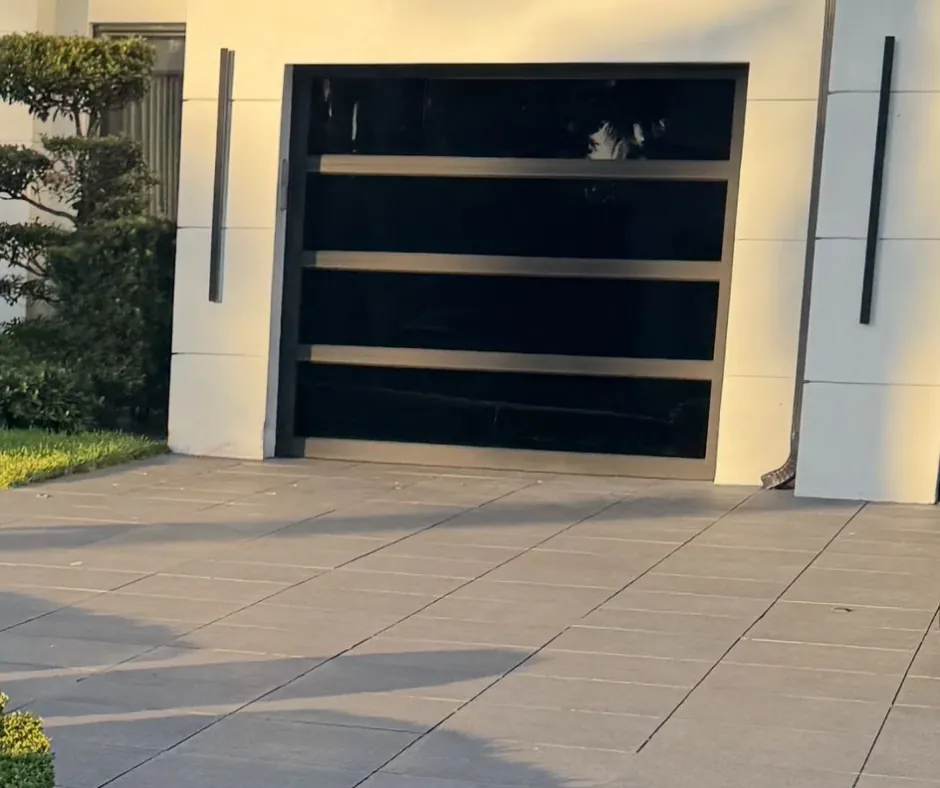
Planning the work with building management
New doors downtown are arranged with building management rather than an individual owner. That usually means a property manager or facilities contact, and the planning covers more than the door itself. Which entrance is being changed, and whether the building has another one that cars can use while the work is done. Where a work van can park to unload the new door. Who gives access to the operator room or panel. And any building rules about when noisy work or deliveries can happen.
For a garage with only one entrance, the timing matters most. The work is planned so that the opening is out of use for as short a time as practical, and management can tell users in advance. On the side streets, a roll-up door over a shop or service entrance is planned around the business that uses it.
If you are a resident or tenant who thinks the garage door needs replacing, the right step is to raise it with building management, who can then arrange a visit.
What an installation involves
Installing new garage doors in Downtown Boston follows the same order every time, whatever the door. First the opening is measured and checked: the width and height, the headroom above, the space behind, and the condition of the walls and jambs the new door will fix to. The old door is then taken down safely. Its spring tension is released properly before any brackets are loosened, because a wound spring on an old door is just as dangerous as one on a new door.
The new door is assembled in the opening, section by section or as a coiled curtain, and its tracks or guides are aligned true. Springs go on and are wound to counter the door’s weight, the cables are evened up, and the door is tried by hand to confirm it rests where it is left. The operator, whether existing or new, is connected and set for the new door’s travel and force. Remotes, wall controls and sensors are each tried, and the door is made to reverse against an obstacle. Building management is shown how the door works, including how to release it from the operator by hand if it is ever needed.
Taking the old door down safely
Removing an old garage door is not simply a matter of unbolting it. The springs on an old sectional door are still wound and still hold dangerous tension, even if the door has not run for weeks, with the cables and bottom brackets loaded as well. The tension is released in a controlled way before any bracket or cable is touched. An old roll-up door’s barrel spring is wound too, and is let down the same way.
The old tracks, brackets and hardware are then removed, and the opening is checked again once it is clear. Corroded fixings, damaged jambs or crumbling concrete at the bottom of the opening are often only visible at this stage, and they are put right before the new door goes in so it has something sound to fix to.
Seals, the threshold and ramp water
The bottom of a new ramp door has to seal against a floor that often slopes and is rarely perfectly level from side to side. A bottom seal that touches only at one end leaves a gap for water, grit, leaves and cold air to get into the parking level, and the bottom section then sits in whatever gets through. The seal is chosen and fitted to close against the actual floor at the threshold, and side and top seals are added where the opening allows.
On roll-up doors on the side streets, the bottom bar’s seal does the same job against the pavement or the edge of the loading area. Getting it right at installation keeps the new door’s bottom from corroding the way the old one did.
Openings in older and newer buildings
Downtown has buildings of many ages, and the opening a new door has to fill is not always a neat rectangle. Older openings may have been altered over time, with jambs that are out of square or uneven concrete at the bottom. Ramps leave the floor sloping at the threshold, so the bottom seal has to cope with a slope rather than a flat floor. Newer buildings may have tight clearances above the opening because of ducts, pipes or sprinkler lines in the garage ceiling. Each of these affects the choice of door, track and spring arrangement, and they are found when the opening is measured, not guessed from a photograph.
Tracks, headroom and the garage ceiling
A sectional door needs room above the opening for its springs, shaft and the curve of the tracks, and room behind it for the horizontal tracks to run back along the ceiling. In a parking garage, that ceiling is often crowded. Ducts, pipes, cable trays, lighting and sprinkler lines may all run close to the entrance, and a new door’s tracks have to fit around them without interfering. Where headroom is short, lower-headroom track arrangements or a roll-up door may suit the opening better. These are worked out at the measuring visit, with building management, so the new door does not clash with anything the building needs.
The door as part of the building’s street front
A garage door on a tower’s ramp or a roll-up door on a side street is part of how the building looks from the pavement. A dented, rusted or mismatched door stands out on a street front that is otherwise well kept, and the replacement is a chance to put that right. How the new door should look alongside the building is talked through on the visit, together with the practical questions about the opening and how the door will be used.
Repair first, if repair makes sense
Replacement is not always the answer. When the door is solid and the fault is a spring, a cable or a tired operator, repairing it is usually the better use of the building’s budget. Garage door repair for Downtown Boston buildings deals with those faults, the spring repair downtown page covers the most common breakdown, and the opener repair downtown page covers operators, remotes and sensors. Building management hears plainly whether a door is worth repairing or ready to be replaced.
Roll-up doors for side-street entrances
The steel roll-up doors on the side streets protect service entrances, loading areas and shopfronts. When one is replaced, the new curtain, barrel, spring and guides are sized to the opening, and the hood above is fitted to keep weather off the coiled curtain. A motorised door gets an operator suited to its weight; a manual one is balanced so it can be lifted without strain. For more on commercial doors see commercial garage doors; replacements across Greater Boston are described under new garage doors.
What to have ready for the first visit
A little preparation makes the first visit quicker and the recommendation more accurate. It helps if building management can say how often the door runs at busy times, what has gone wrong with the old door in recent repairs, and whether the operator and remotes are to be kept or replaced. Photographs of the opening from inside and outside, taken from the floor, help in planning. And it is worth knowing who can give access to the garage, the operator room and any part of the ceiling where the tracks will run.
Caring for the door once it is in
Even a new door needs watching, especially on a busy ramp. Keeping the safety sensor lenses clean, keeping the threshold clear of grit and ice, and reporting any new noise, any change in how the door moves, or any vehicle strike as soon as it happens all help a new door stay in good order. Small faults found early are simpler to fix than ones left to grow on a door that runs all day.
Starting a replacement
The first step is normally a site visit to measure the opening and look at the existing door, operator and controls. Calls are taken at any hour, and building management can ring or book a visit whenever it suits them. For new garage doors in Downtown Boston, a property manager may call us or book online and tell us the entrance, the door type, sectional or roll-up, and the person who can open up on site. Should the old door fail completely and block the garage, start with emergency repair downtown, and browse our Downtown Boston hub for everything else nearby.
Questions from Downtown Boston
How do we know whether to repair or replace our garage door?
A sound door with a failed spring, cable, roller or operator is normally worth fixing. A door rusted through at the base, damaged across several sections, or breaking the same way again and again is a candidate for replacement. Management gets an honest view before any new garage doors in Downtown Boston are ordered.
Can the garage stay in use while the door is replaced?
That depends on whether the building has another entrance. Where there is only one, the work is planned with management so the opening is out of use for as short a time as practical, and users can be told in advance.
Will our existing operator work with a new door?
Sometimes. The operator is checked against the new door’s weight and size and against how often the door runs. If it is too light, worn out or unsuited to the new door, a new operator is recommended and installed with the door.
Do you supply roll-up doors for shop and service entrances?
Yes. New steel roll-ups are supplied and fitted for shop fronts, loading bays and delivery doors, as well as sectional doors for tower parking entrances.
Which brands of door do you install?
The door is chosen to suit the opening, the building’s use and its operator rather than by name. Ask about the options for your opening when the measurement visit is arranged.