
Why so many Dorchester garages are ready for a new door
Follow a side drive past almost any triple-decker or Victorian in Savin Hill, Ashmont or Codman Square and it ends at a modest one-car garage, more often than not put up in the 1920s. A remarkable number still close with an ageing wooden door, repainted many times, soft along the bottom and heavier every year. There comes a point where repairing that door again is no longer the sensible answer. New garage doors in Dorchester, MA are supplied and installed by us, and the old door, its springs and its hardware are taken out as part of the job.
Three things suggest an old door may be nearing the end:
- The bottom section is soft, split or crumbling where it meets the concrete.
- The door has needed several repairs in a short time: springs, cables, rollers, hinges.
- The door is so heavy, or so warped, that it no longer opens smoothly even after repair.
What a new door replaces
Rotting wooden sections
Bottom rails and stiles that have sat in standing water at the foot of the driveway until the wood has gone soft.
Overloaded springs
Springs that have had to grow larger every time they were replaced, because a waterlogged door keeps getting heavier.
Tired hardware
Hinges and brackets screwed into wood that no longer holds a screw, and rollers worn into tracks that have been patched more than once.
Drafts and water
Gaps around a warped door and a bottom seal that no longer meets the slab, letting rain, leaves and snow into the garage.
When repair stops making sense
Most garage doors are worth repairing, and the first answer to a broken spring or a frayed cable is usually a new spring or a new cable. Those everyday fixes are described under garage door repair in Dorchester. But old wooden doors reach a stage where each repair buys less time than the last.
The signs build up gradually. The bottom rail softens, so the bottom brackets that hold the cables start to pull through the wood. The sections warp, so the door binds in the tracks and the opener strains. Water soaks in through cracked paint, so the door grows heavier and the springs have to be made larger to balance it. Hinges loosen as screws lose their grip. One repair leads to the next, and a door that once needed attention every few years needs it every few months.
At that point, replacing the door is often the better use of effort. A new door brings a fresh set of springs, cables, rollers, hinges and tracks along with new sections, so the whole system starts again from the same point.
Fitting a new door to a 1920s opening
Garages built in the 1920s were not designed around today’s standard door sizes. Their single-car openings vary in width and height, and decades of settling, frost and patching mean an opening is rarely perfectly square. A new door has to be sized to the actual opening, measured at several points, not to a nominal figure on an old order sheet.
The jambs and header matter too. On a detached garage, the wood around the opening has been exposed to the same weather as the old door. Before a new door is hung, the framing is checked: whether the jambs are sound enough to hold the track brackets, whether the header is level, and whether the bottom of the jambs has rotted where they meet the slab. A new door hung on soft framing will not stay true.
The slab is the third piece. At the end of a long driveway, the concrete at the threshold is often worn, cracked or uneven, and water tends to pool there. The bottom seal of the new door is chosen to meet that surface as well as it can, so that the gap under the door is closed without the door having to be forced down.
Headroom, tracks and springs in an old garage
Inside a 1920s garage, the space above the opening is often limited. Rafters or joists can hang just above the head of the opening, and older garages frequently have collar ties or a beam across the bay. That affects how the new door’s tracks are arranged and where its springs can go.
Where there is room, a torsion spring mounted on a shaft above the door is usually the preferred arrangement. Where there is not, a low-headroom track layout or a different spring arrangement may be needed. The choice is made after measuring the garage, so the new door opens fully without hitting anything on the way up and the springs are matched to the new door’s weight.
A fresh door asks far less of its springs than a sodden old one. Because the springs are sized for the new door’s actual weight from day one, the door should feel light by hand and stay put halfway up when it is released.
Choosing a door for a triple-decker or a Victorian
A garage standing behind the house is usually on view from the road and from the house, and many owners want the new door to suit the building in front of it. The style of the sections, whether the door has a row of windows, and the colour are all part of the decision. A plain door may suit a simple shingled garage behind a triple-decker; a door with more detail in its panels may sit better behind a Victorian.
Practical questions matter as much as looks. How the garage is used, as a place to park a car, to store bikes and tools, or as a workshop, affects how much light and insulation make sense. A door that faces the weather down a long open driveway may need a good seal more than one tucked between buildings. A garage that sits close to a neighbour’s windows may call for a quieter door and opener.
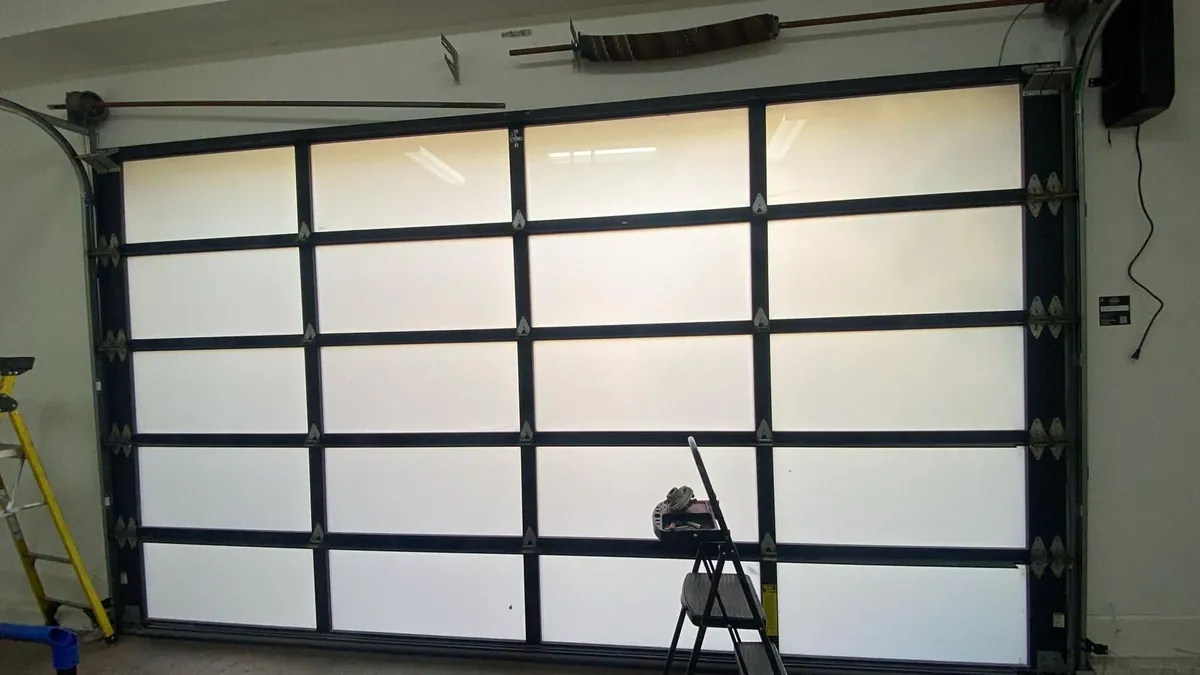
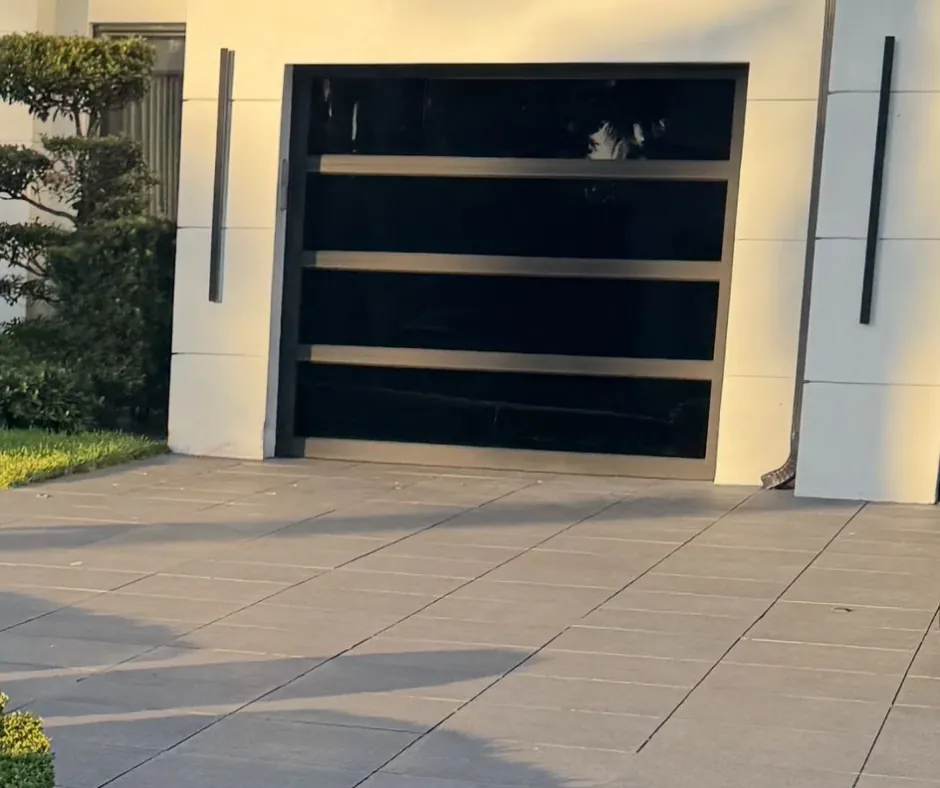
Some owners choose a full view door with large glass panels, which brings a lot of light into a small garage. Those are described under full view glass garage doors.
Light, storage and how the garage is used
Many single-car garages in the neighbourhood do more than shelter a car. They hold bikes, garden tools, a workbench, or the overflow from a triple-decker’s limited storage. That affects the new door in practical ways. A garage that doubles as a workshop benefits from a row of windows in the door, since many older garages have little natural light. A garage used mainly for storage may care more about a tight seal against damp, so tools and boxes stay dry. And if the space is used daily, a door that opens and closes quietly and smoothly matters more than one that is opened only now and then.
It also affects the layout inside. Shelving along the side walls and items hung from the ceiling need to stay clear of the new tracks and the opener rail. Planning where the tracks will run before the door is installed avoids having to rearrange the garage afterwards.
What a new door installation involves
Everything begins on site with a tape measure across the opening, look at the framing, the headroom and the slab, and talk through what the door needs to do. Once the door has been chosen, the installation itself follows a set order.
First, the old door comes out. That is the most dangerous part of the job, because the old springs hold dangerous tension and have to be let down safely before anything else is touched, with purpose-made bars, one controlled quarter turn after another. Nobody should attempt that at home. After that, sections, rails, springs and every bracket come down and leave with us.
Next, the framing is put right where needed, and the new tracks are fixed to sound wood. The new sections are hung one at a time, the hinges and rollers are fitted, and springs, cables and drums go in, wound to suit what the new door weighs. The door is balanced by hand and adjusted until it runs smoothly and stays where it is left.
Finally, the opener is connected, or a new opener is fitted if the old one is not suited to the new door. Its travel and force settings are adjusted, and the safety reverse is tested. The new garage doors in Dorchester that we install are run several times before the job is finished, so you can see the door working.
Getting a new door up a long driveway
With the garage well back from the road, the new door’s sections, tracks and springs are carried up the drive, and the old door’s sections are carried back down. It helps if the driveway is clear of cars on the day, and if the garage itself has been emptied enough for there to be room to work around the opening and along the walls where the tracks run. Bikes, bins, shelving and anything hanging from the ceiling near the opener rail are best moved before the installation starts.
Weather at the back of the lot
An outbuilding at the back of the lot takes the weather differently from one tucked into the side of a house. Wind runs straight down the driveway and into the face of the door. Snow cleared from the drive often ends up banked against the bottom section. Meltwater runs downhill towards the garage and collects at the threshold, which is exactly why so many old wooden doors in the neighbourhood have rotted from the bottom up.
Those conditions shape the choice of door and its fittings. A bottom gasket shaped to an irregular slab, weatherstripping along the jambs and header, and a door surface that will not soak up water all help a new door last longer in that position. Where the threshold holds water, it is worth discussing whether anything can be done about the slab itself before the new door goes in, so the new bottom section is not sitting in the same puddle as the old one.
Sun matters too. A south-facing door at the end of an open driveway gets the full summer sun, which fades paint and dries out wood, then freezes in winter. A door that will be painted should be finished properly on all its faces, including the edges, and kept painted so water cannot get in.
Keeping a new door in good shape
A new door needs very little from its owner, but a few habits help it last. Keep snow and ice cleared from the bottom edge in winter, so the door is never asked to tear itself loose from the slab. Wipe the lenses of the safety sensors now and then, and keep stored items away from the tracks and the beam. Listen to the door: a new squeal, a grind or a bang is worth a call before it becomes a breakdown.
Do not adjust the springs, cables or bottom brackets yourself, however simple it looks. Brand-new springs are wound just as dangerously tight as old ones. Should the door grow heavy to lift, sink when stopped midway, or sit unevenly in the opening, have it checked.
Removing a door that has seen decades of use
Taking out an old wooden door from a 1920s garage often reveals what years of repairs have left behind: extra brackets, mismatched springs, track sections from different doors, and screws driven into wood that has been patched several times. Some older doors still have a manual lock bar or slide bolt fitted before any opener was added. All of that comes out with the door, so the new installation starts on clean, sound framing rather than on the remains of earlier fixes.
Where an old door runs on extension springs without safety cables, it is treated with extra care during removal, because a spring that breaks under tension without a safety cable can whip across the garage. Getting the old door down safely is as much a part of the job as putting the new one up.
Whether the old opener stays
A fresh door prompts a look at the motor overhead. One that has spent years pulling a heavy wooden door may be worn, and an older unit may not suit a lighter door or the safety features expected today. Where the current unit still runs well, it is hooked back up and tuned for the new door. Otherwise a replacement unit goes in during the same visit. The opener repair in Dorchester page covers opener work in more detail, and we repair and replace LiftMaster units among others.
Repair or replace
Not every old door needs replacing. Where the panels are solid and only a spring, cable or roller has failed, repairing it is correct, and you will be told so. A new door earns its place when the sections themselves have failed: rot in the sections, a door too heavy to balance sensibly, warping that keeps it binding, or a run of repairs with no end in sight. A frank verdict on which way your door leans comes with every visit, whether it began as a repair call or as a request for a new door.
If a door has failed suddenly and the car is shut in, the first step is usually a repair to get the garage working. Our emergency garage door repair in Dorchester service exists for exactly that, and the most frequent culprit is explained under spring repair in Dorchester. A new door can then be planned without the pressure of a car trapped inside.
Looking into new garage doors in Dorchester
When you are weighing up new garage doors in Dorchester, the first conversation is a short one. To start, tell us roughly how wide and tall the opening is, whether the current door is wood or steel, how the garage is used, and whether you want to keep the existing opener. Photographs of the outside of the garage and of the space above the door are a great help. The new garage doors service page covers installations across Greater Boston, and our Dorchester page gathers every kind of work we do there. To arrange a visit for new garage doors in Dorchester, MA, call us or book online.
Questions from Dorchester
Can a new door fit an old garage opening that is not a standard size?
Usually, yes. The opening is measured at several points, and the door is sized to the opening as it actually is. If the jambs or header need work before a new door can be hung, that is explained when the opening is measured.
Where does the old door go?
It is taken down and removed as part of the installation, including the old springs, tracks and hardware. Before that, its springs are unwound under control, since they hold dangerous tension right up to the moment they are released.
Will the opener have to be replaced too?
Not necessarily. A healthy opener that matches the new door simply gets reattached and reprogrammed. If it is worn out from years of pulling a heavy wooden door, fitting a fresh one alongside the new door saves a second disruption later.
Will a new door be lighter than my old wooden one?
In many cases, yes, particularly when the old door has absorbed water over the years. The new door’s springs are sized to its actual weight, so it should feel light to lift by hand and put far less strain on the opener.
My garage has very little room above the door. Can a new door still be fitted?
In most cases, yes. Low-headroom track and spring arrangements are designed for exactly that situation. The space above the opening is measured before the door is chosen, so the layout suits the garage.