
Springs on doors that never get a rest
Downtown’s office and residential towers park their cars on shared levels below the street, so the garage door at the ramp is not one household’s door but the whole building’s. So garage door spring repair in Downtown Boston, MA tops the list of calls from building managers: the spring is the part that lifts the door, every car in and out winds and unwinds it, and a spring that has been flexed over and over eventually snaps.
When it goes, the door does not simply get stiff. It becomes a dead weight that the operator cannot lift safely, so cars are trapped below or left unable to get in, and a door that hangs open leaves the garage exposed. A spring failure on a shared door affects everyone who parks there at the same moment.
From a safe distance, building staff can usually tell whether a spring is the problem:
- A loud bang from above the door, often heard when the door was closed and nobody touched it.
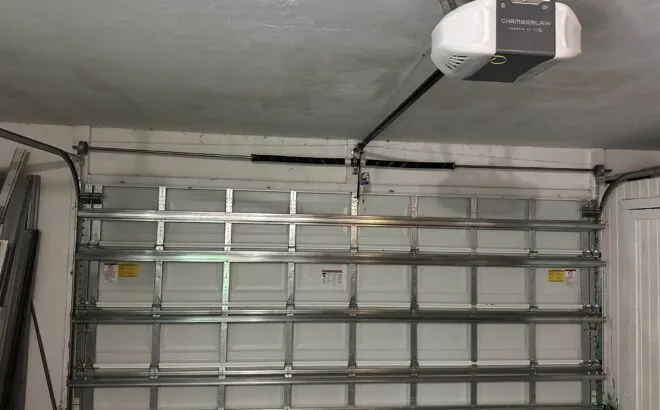
- A visible gap between the coils of a torsion spring on the shaft over the opening.
- The door lifting a few inches and stopping, or the operator humming while the door stays put.
The springs this service covers
Torsion springs
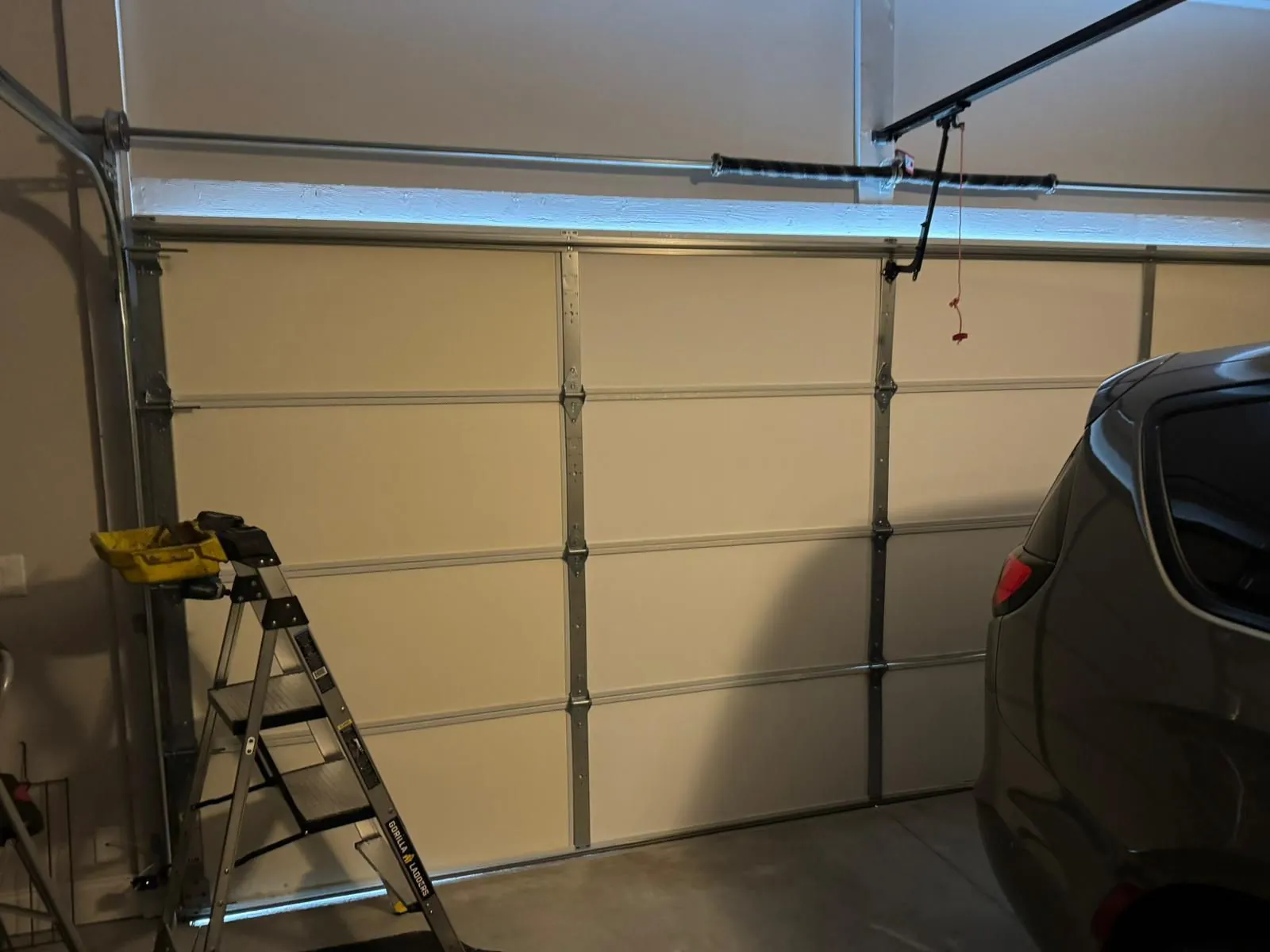
Wound coils on a shaft above the door, turning the drums that lift it. Most tower garage doors and many larger doors use them, often more than one on the same shaft.
Extension springs
Long springs stretched alongside the horizontal tracks, pulling on the door through pulleys and cables. Found on some smaller and older doors.
Roll-up door springs
The counterbalance spring inside or beside the barrel of a roll-up door, the kind that closes off service entrances and shopfronts on the side streets.
Broken springs
A spring that has snapped, leaving the door too heavy to move and the opening blocked or unsecured.
Tired springs
A spring gone weak: the door feels heavy, sinks when stopped midway, or makes the operator strain on every lift.
Spring replacement
New springs sized to the door’s weight and height, fitted with the cables and drums checked, and the door balanced again afterwards.
Why springs break sooner under a tower
Every spring is made to survive a certain number of open-and-close cycles. Each cycle twists a torsion spring tight and lets it out again, and after enough of them the steel fatigues and a coil cracks. On a single house’s door, those cycles build up slowly. On the ramp door of a residential or office tower, they build up all day: the door rises for each car arriving and each car leaving, and on a busy building that can mean more cycles in a week than a household door sees in months.
So the spring on a shared door reaches the end of its life far sooner than people expect, and garage door spring repair in Downtown Boston is mostly about doors that have simply been used very hard. Damp and cold add to it. Below-grade levels can be humid, and a spring that rusts on its surface wears faster at the points where the coils rub. Steel is also less forgiving in hard cold, which is why the first freezing mornings of winter bring a run of snapped springs.
A door with more than one spring on its shaft has another wrinkle. If one spring breaks, the others are left carrying the load and are close to the same age, so replacing them together usually makes more sense than replacing only the broken one.
Torsion springs hold dangerous tension
A torsion spring holds dangerous tension, closed door or not, operator on or off. That stored energy is what lifts a heavy door, and it is released violently if the spring, its winding cone or the set screws that hold it are disturbed. Its load runs on through the cables into the brackets at the door’s lower corners. Winding or unwinding a spring takes proper winding bars, a known procedure and the right replacement spring for the door’s weight. It is not a DIY repair, nor a task for a building’s general maintenance crew.
Extension springs carry another kind of risk: if one snaps without a safety cable running through it, the broken end can whip across the garage. Roll-up door springs inside the barrel are wound under tension too, and should be left alone for the same reasons.
The safe things to do are simple. Stop pressing the control. Cut the operator’s power if its switch is safe to reach. Keep vehicles and people out from under the door. Leave the door down rather than hauling on it; once the spring has gone, its full weight is unsupported.
Shared parking levels and the people who run them
Downtown, the call usually comes from building management rather than from the person whose car is stuck. A property manager, a superintendent or the front desk reports the fault, and the work is scheduled with them. That shapes the visit in useful ways. Management knows which entrance the failed door serves, who holds the key to the operator room, where a work van can pull in close to the ramp, and whether there is a second way in and out of the garage while one door is out of use.
It also helps to tell us what kind of door it is: a sectional door that climbs the wall and runs back overhead, or a roll-up door coiling into a hood above the opening. A wide or tall door needs larger springs, and knowing that before arrival makes the visit simpler. Photographs of the spring area, taken from the floor without touching anything, are useful too.
For residents and tenants, the right step is to tell the building’s management that the door has failed. They can then book the spring work for the building.
How spring replacement is carried out
Every garage door spring repair in Downtown Boston begins by making the door safe. The operator is unhooked, the door is clamped in place, and the springs, cables, drums and bearings are inspected together, because a broken spring often damages the parts around it. A cable that jumped its drum when the spring let go, a bent bottom bracket, or a worn centre bearing on the shaft all need to be found before the new spring goes on.
The replacement springs are matched to the door: its weight, its height, the size of the drums and the number of springs on the shaft. Each spring is fitted and given the correct winding for the door, the cables are tensioned evenly on both drums, and a hand test confirms the door holds still at mid-height. The operator then goes back on, with its force and travel adjusted to the rebalanced door and its reversing safety tried against an obstruction. Building management hears what was found, including anything else that is close to failing, before the job is closed.
Torsion or extension: what your building has
Most doors at tower garage entrances use torsion springs, because they suit heavy and frequently used doors and they keep the springs on a single shaft above the opening. You can usually see them from the floor: one or more thick coils on a bar running across the top of the door. Extension springs, which stretch along the tracks on each side, are more often found on lighter or older doors and on smaller service garages. Roll-up doors keep their spring hidden inside the barrel or the hood above the opening.
Knowing which you have helps when you call, but it is not essential. The garage door spring repair page explains both types in more depth, and on a visit the type is confirmed before any parts are chosen.
Cables, drums and bearings around the spring
A spring never works alone. On a torsion system, the spring turns a steel shaft, the shaft turns a grooved drum at each end, and each drum carries a lift cable that drops to the lowest corner bracket on its side. Bearings at the ends and the centre of the shaft carry it as it turns. When a spring snaps, the sudden loss of tension can let a cable slacken and jump out of its drum groove, and if the operator then tries to lift the door, the slack cable can tangle or fray. A shaft that has run for a long time on worn bearings may wobble, which wears the spring and the drums unevenly.
That is why a spring visit looks at the whole assembly. New springs on worn drums or frayed cables would only move the next failure to a different part, and on a shared door that runs all day the next failure would not be far away.
Balance after the new springs go on
A garage door is balanced when the spring tension matches its weight closely enough that the door stays where it is put, partway up, without drifting up or sliding down. Getting that balance right is the most important part of a spring replacement. Too little tension and the operator ends up lifting part of the weight on every cycle, which shortens its life. Too much and the door tends to fly up and will not stay closed properly, which puts strain on the cables and the top section.
On a building’s door, balance matters even more, because any small error is repeated every time a car comes in or goes out. After the springs are wound, the door is lifted by hand to several heights and let go, and the tension is adjusted until it holds. Only then is the operator reconnected and its settings checked against the door.
A door left stuck open by a broken spring
Sometimes a spring breaks with the door up. The door may stay open, held only by the operator or by friction in the tracks, and the garage is left unsecured. It is tempting to pull the door down by hand or to close it with the operator, but with no spring behind it the door may drop much faster and harder than anyone expects. Keep vehicles and people out from under it, leave the control alone and report it. The door can be secured safely before the springs are replaced.
Warning signs of a tired spring
Most springs give some notice before they fail. These are the signs worth reporting to building management before the door stops altogether:
- The door feels heavy if it is ever moved by hand, or slides down when stopped halfway.
- The operator sounds laboured on the way up, or the door rises unevenly.
- A spring shows rust, or the coils look stretched apart in one spot.
- The door rises more slowly than it used to, or stops short of fully open.
None of these should be fixed by adjusting the spring yourself. They are reasons to book a visit, so that a tired spring is replaced on a planned day rather than snapping with the garage full.
Rust, damp and the life of a spring below grade
Springs in a parking level breathe the garage’s air, and below grade that air is often damp. A thin coat of surface rust on a spring looks harmless, but it roughens the coils where they rub against each other as the spring winds and unwinds, and that friction wears the steel and adds to the fatigue. A spring near a dripping ceiling or a wet wall rusts faster than one in a dry spot. Rust on the coils, a dry, gritty sound as the door moves, or flakes on the floor under the shaft are all worth reporting, because they suggest the spring is wearing faster than its cycles alone would explain.
Doors on the side streets
Out on the side streets, the roll-ups guarding delivery doors, loading bays and shop fronts depend on spring tension as well. When their spring loses strength, the curtain turns heavy in the hand, a chain hoist needs much more effort, or the operator struggles and trips out. A snapped spring can leave the curtain dropping on its own weight, which is dangerous at a busy doorway. Springs on these commercial doors are replaced too; see commercial garage doors for the wider picture.
When a broken spring means more than a spring
Sometimes a spring break is the start of a larger job. If the door came down hard when the spring went, the bottom section, the bottom brackets or the cables may be damaged. If the operator kept trying to lift the door, its gears or drive may have suffered. If the door was already corroded at the bottom from water running down the ramp, the new springs will lift it but will not fix what the salt has done. Those findings are reported plainly, with the choice left to the building. Broader faults are covered on the garage door repair for Downtown Boston buildings page, and an operator that was strained by a weak spring is covered on the opener repair page.
When the door itself is past saving, replacing it may be the better plan, and the new garage doors page for the neighbourhood explains how that works.
Reporting a broken spring
Springs break at awkward moments, often first thing in the morning or late at night when the garage is busiest or quietest. Because calls are taken through the night and at weekends, management can ring in a broken spring the moment it is found and plan the visit with us. For garage door spring repair in Downtown Boston, MA, call us or book online, tell us which door is affected, whether vehicles are trapped, and who will give access to the garage and the operator. If the door is stuck open or blocking the only way out, the emergency repair page for Downtown Boston sets out the first steps, and our Downtown Boston page lists the rest of our local work.
Questions from Downtown Boston
The garage door went bang and now will not open. Is it the spring?
Very likely. When a torsion spring snaps it tends to crack like a shot, leaving the door too heavy for the operator, so it lifts a few inches and stops or does not move at all. Stop pressing the control, keep everyone clear and report it to building management for a garage door spring repair in Downtown Boston.
Can the building’s maintenance staff change the spring?
It is not recommended. A torsion spring holds dangerous tension, and winding one needs proper bars, the correct spring for the door’s weight and a known procedure. A mistake can release that tension in an instant. It is safer to leave the spring alone and book the repair.
Should every spring on the shaft be replaced if only one broke?
Usually, yes. Springs sharing a shaft have worked every cycle together, so when one fails the others are close behind and are now carrying extra load. Renewing the set at once keeps the balance true and heads off a second break.
Can cars get out while the spring is broken?
Not through that door. With a spring gone, the door must stay put; neither hands nor the operator should raise it. If the garage has another entrance, management can direct vehicles there until the spring has been replaced.
Do you replace springs on roll-up doors too?
Yes. The counterbalance springs inside the barrel of a roll-up door on a service entrance or shopfront are replaced as well, along with the springs on sectional doors at tower garage entrances.