
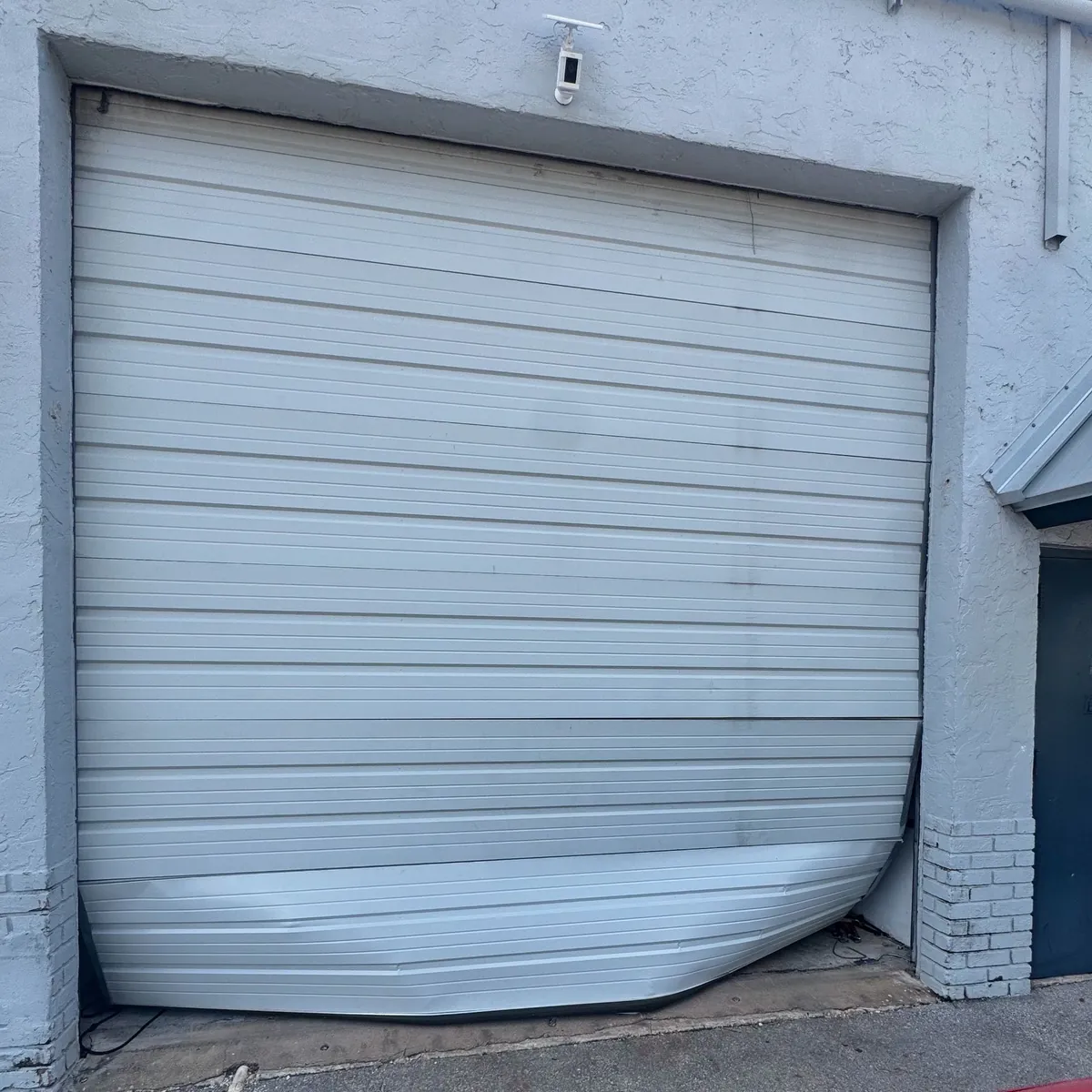
Small garages, short drives and air full of salt
Nahant is a small rock island, and its older houses stand close together with very little ground to spare. The garages reflect that. Most are tiny by modern standards, many sit only a car’s length back from the road, and nearly all of them breathe the most exposed salt air anywhere in the region. Any honest account of garage doors Nahant MA homeowners own has to begin with that air, because it works on every piece of metal in and around the door, all year.
Salt does its damage slowly and out of sight. A fine, damp film settles on springs, cables, roller axles and track bolts. It draws in moisture, and the steel underneath pits and flakes. Coils that might serve for many seasons on a sheltered inland street are eaten into here well ahead of time. A cable that looks fine from the floor can be rusting from the inside where the strands touch. The door goes on working, right up until one of those parts lets go.
The size of the garage adds its own pressures. A tiny garage leaves little headroom, very little side room, and a door that is close to the road and to whatever is parked in front of it. Before you call, it is worth noting three things from a safe distance:
- Orange or brown streaks on the spring, the cables or the bottom corner brackets.
- A door that has become noisy, stiff or slow over the past few weeks.
- Anything parked so close to the door that it could be struck when the door moves.
Garage door services in Nahant
Each card climbs up to a fuller service page, and all of them are jobs we take on across the island. Most problems with garage doors Nahant MA houses have will land under one of these headings.
Salt-worn hardware and general repair
Seized hinges, rollers with corroded bearings, track bolts rusted to the frame, a bottom section blistering at its edge. The wider garage door repair page sets out what that covers.
Springs weakened by corrosion
Pits in the coil grow into a crack, and one morning the spring is in two pieces. Whether the door hangs on a torsion coil or on stretched side springs, the new ones are matched to its weight; see garage door springs.
Openers in a damp garage
Salt and moisture reach the opener’s rail, chain or belt, and the circuit board. We repair and replace openers, LiftMaster ones included; details on the opener services page.
Storm nights and stuck doors
A door that jams in an onshore gale, or a car caught inside before an early start. We answer the phone through the night; read emergency garage door repair for the first steps.
Rusted lift cables
Cables corrode from the inside out and can snap with little warning. Both are usually renewed together; the cable repair page explains why.
Doors knocked out of track
A short drive puts bumpers and bins close to the door, and one hard knock can lift a roller clear of its rail. See off-track garage door repair before trying anything.
New doors for an exposed site
When the skin of the door itself has rusted or rotted through, we supply a replacement and hang it in the opening you already have. Read about new garage door installation.
How sea air attacks the hardware
Everything that moves a garage door is steel, and almost all of it is under load. That is a bad combination near the sea.
Springs suffer first. A torsion spring is a coil of hardened steel wound under great tension, and once rust pocks its surface, every pock is a place for a fracture to begin. The spring may also bind as rust builds between its coils, so it loses some of its lift and the door starts to feel heavier. Extension springs on older doors corrode the same way and stretch less evenly.
Cables come next. A lift cable is made of many fine strands twisted together, and salt works into the gaps between them. The outside may look grey and sound while the core rusts. Broken strands at the bottom bracket, a cable that looks fuzzy or bristly, or a cable that has started to kink are all signs it should be replaced.
Rollers and hinges seize. Once a roller’s bearing rusts solid, the wheel no longer spins; it slides along the rail, wearing a flat on its wheel and a groove in the track. Hinge pins rust in their knuckles, so the sections stop folding cleanly as they round the bend into the ceiling rails. A judder at that bend nearly always means a seized knuckle or wheel.
Fasteners loosen and fail. Bolts holding the track brackets, the spring anchor and the opener mounting rust where they meet the wood or masonry, and the timber around them stays damp and softens. A bracket that looks secure can pull out under load.
None of this is unusual in a house this close to the water. It just means the hardware needs attention sooner and more often than it would inland, and that a part replaced here should be one suited to wet, salty conditions.
A tiny garage, a short drive
The garages here were built for a time when cars were smaller and nobody pictured a motorised sectional door folding up under their rafters. Space is the constant constraint.
Low headroom is common. A standard torsion spring needs a certain clearance above the opening, and where there is not enough, the door may be balanced by extension springs instead, or hung on a low-clearance track kit. The opener needs room for its rail too, and in some garages there is barely enough. When a part is replaced, it has to fit the garage as it is, so the choice of spring layout, track and opener is made on site.
Side room is often minimal as well. If the garage wall sits tight against the vertical track, a hand barely fits between the masonry and the rail, let alone a wrench and a person. That shapes how a repair is done, sometimes with the door secured partway open so the work can be reached from inside.
Older garages on the island were rarely built to a standard size, either. Openings that look alike from the road can differ in width, height and squareness, and a frame that has stood in wet salt air for decades may have twisted or softened at the foot of the jambs. Fitting new parts to the garage doors Nahant MA houses already have often means checking the frame first: whether the side framing will still grip a lag screw for a track bracket, whether the header can carry a spring anchor, and whether the opening is still square enough for a door to seal against it.
The very short driveway brings the door close to whatever is in front of it. A car parked nose-in can end up within a hand’s width of the bottom section. Someone pulling in a little too far, or a recycling bin blown into the bottom panel by an easterly gust, is enough to crease a section or shift a roller. If the drive is shared with the road, the work area for a repair is right on the edge of traffic, so it helps to keep that space clear on the day.
Springs and the risk of a sudden break
On an island garage, a broken spring is often the end point of corrosion that has been building for some time. It still arrives without warning: a crack like a gunshot behind the kitchen wall, then a door that shudders upward a little way and settles back onto the concrete.
Rust does nothing to relieve the dangerous tension a torsion spring stores; a pitted, flaking spring is, if anything, harder to predict. Touching one yourself is not a DIY repair, rusted or bright. The winding cones and set screws, the shaft and the bottom brackets all carry stored energy that can be released violently if the wrong part is loosened.
If you think a spring has broken, touch nothing. Take the opener’s plug out of its socket, keep the household and the car well back, and phone us. Lifting the door by hand with a broken spring means taking its full weight yourself, and the opener is not built to do that either.
When the new spring goes in, it is matched to the actual weight of the door, and the bar it turns on, the drums and the end bearings get inspected for rust in the same visit. On an exposed garage, a spring with a protective finish, and cables and fasteners chosen for damp conditions, give the new parts a better chance against the salt.
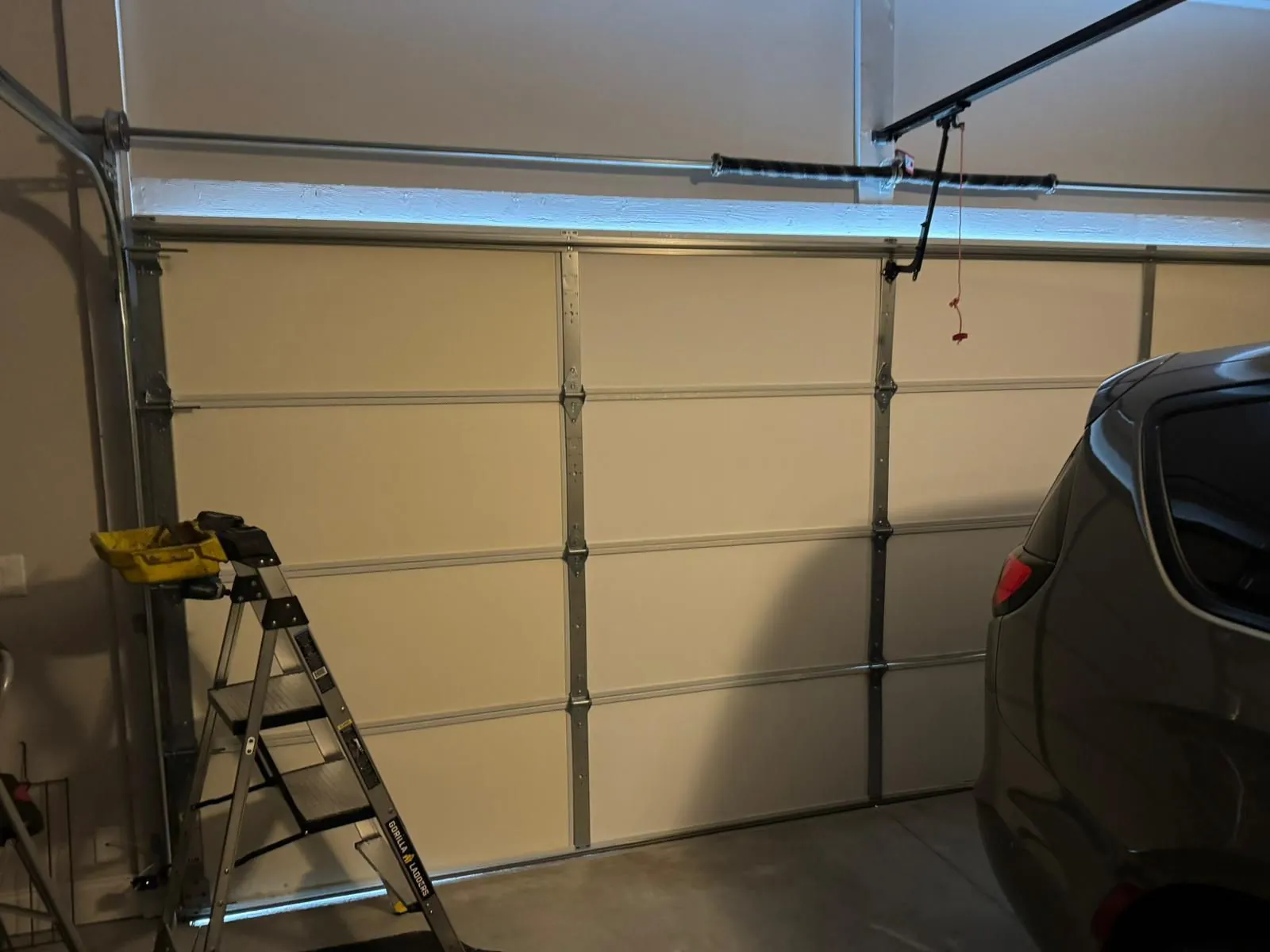
Openers near the shore
Openers suffer in a damp, salty garage in ways that are easy to miss. Moisture condenses on the rail and the chain or belt, and the drive gear and trolley corrode. Salt can get onto the circuit board through vents and cause erratic behaviour: a door that starts and stops, a remote that obeys on Tuesday and ignores you on Wednesday, a bulb that flickers.
The safety sensors at the foot of the door are especially exposed. They sit low, close to the bottom of the door where water and spray collect, and their brackets rust and droop. A sensor that has sagged out of line will stop the door closing, or send it back up as it nears the floor. Cleaning the lenses and checking that both sensors face each other squarely solves many of these calls.
Every opener repair begins with the door. We unhook the trolley and try the door by hand to feel how easily it moves and whether the springs still carry it. An opener struggling against a corroded, heavy door will fail again however well it is fixed, so the door’s springs, rollers and hinges are put right first. Then the opener is adjusted, its safety reverse is tested, and the remotes and wall button are checked. An opener with a rotted gear or a salt-damaged board is replaced outright, and that includes LiftMaster openers.
Cables, tracks and off-track doors
A rusted cable that snaps leaves one side of the door unsupported. That corner sinks, the door racks across the opening and can slip out of its rail. Should that happen, leave the opener off and the door untouched; the surviving cable and spring still hold enormous load, and a racked door can come down.
Corroded tracks cause their own trouble. Rust roughens the inside of the track, the rollers drag, and the door can catch and jump. A track whose mounting bolts have rusted loose can shift out of line, so the door hesitates at the same spot each time it moves. Putting an off-track door right means securing it, taking the load off the rollers, coaxing every roller home, swapping out any length of rail that is bent or rusted thin, and evening up the two cables before the door is run.
On the day of the visit
First, the door gets judged without its motor. Freed from the trolley and lifted to mid-height, it either hangs there, which says the springs are right, sinks, which says they are tired, or drifts up, which says they are wound too far.
After that comes a slow, rust-hunting inspection of each spring, each cable and its corner bracket, the drums and bearings, each hinge and roller, the tracks and every bolt holding them, the bottom section and its seal. In a tiny garage, we also look at clearances above and beside the door. Sensors, remotes, wall button and motor are each put through their paces apart from the door.
You then hear which part failed, which others the salt has quietly weakened, and what that means for the coming winter. No work starts without your go-ahead. Once it is finished, spring tension is matched to the door, the opener learns its new stops, and we lower the door onto a piece of timber to prove it backs off.
Repair or replace on an exposed site
Many doors here are worth repairing even after a lot of corrosion, because the springs, cables, rollers, hinges and bolts are all replaceable on their own. If the sections are sound, renewing the hardware is usually the best spend.
Replacement comes into its own when the panels are giving up as well as the hardware. On a steel door, look for rust coming through the paint along the bottom edge and around the hinges; on a wooden door, for paint that will not hold and timber that has gone soft. A door carrying patch upon patch, or one grown so heavy with corrosion that it no longer balances, is also a candidate. When it is time to replace garage doors Nahant MA houses have had for years, the new door can be chosen for the conditions: finishes and materials that stand up to salt, and hardware to match. Aluminium and glass full-view doors are one option on some houses, and our full view glass garage doors page describes them.
Simple care between visits
A few habits help any garage door near the sea last longer, and none of them involve the dangerous parts:
- Hose the salt off the outside face of the door every so often, and always after an onshore blow.
- Brush blown sand off the threshold so the bottom rubber lands evenly.
- Wipe the sensor lenses and keep anything from leaning on their brackets.
- Watch and listen. A door that has started to squeal, shudder or slow is usually telling you a roller, hinge or spring is going.
The springs, cables, drums and corner brackets are our job, not yours. Corroded or not, they are holding up the whole door.
Getting help on the island
A door that fails in this setting often fails at the worst time, in the middle of a storm or late at night. Our phone line is open at any hour, any day, so you can report a broken spring or a jammed door as soon as it happens. To see every town we cover, visit the service areas page; the neighbouring Lynn and Swampscott pages cover the mainland side.
A call about garage doors Nahant MA homes rely on goes quicker if you can say how close the door is to the road, what it is doing, whether the spring or cables look orange from the floor, and whether a car is stuck inside. Then call us or book online.
Questions from Nahant
Why do the springs on our door seem to break more often than they should?
Salt air is the likely cause. Corrosion pits the surface of a spring, each pit becomes a starting point for a crack, and the spring fails earlier than it would inland. A spring with a protective finish, sized to the door, gives the replacement a better chance.
Our cables look a bit rusty but the door still works. Should we wait?
It is better not to. Cables rust from the inside, between the strands, so they can be weaker than they look. A snapped cable lets the door drop on one side and can pull it out of its track. We can check them and replace them as a pair.
Our garage is very small with little space above the door. Can it still have an opener?
In most cases, yes. The spring layout, track and opener are chosen to suit the headroom that is actually there. We look at the clearance on site before recommending anything.
Just short of the concrete, our door turns round and goes back up. Why?
Quite often one of the floor-level photo eyes has rusted on its bracket and drooped out of line, or its lens is covered in salt film or grime. Wipe both lenses and look at whether they face each other squarely. Should the door still refuse, the eyes themselves or the opener’s settings need a look on a visit.
Is rinsing the door with water really worth doing?
Yes. A rinse with fresh water removes salt from the outside of the door and the lower hardware you can safely reach, which slows corrosion. Do not spray water into the opener or onto its circuit board, and leave the springs and cables alone.