
Heavy wood doors and the springs that carry them
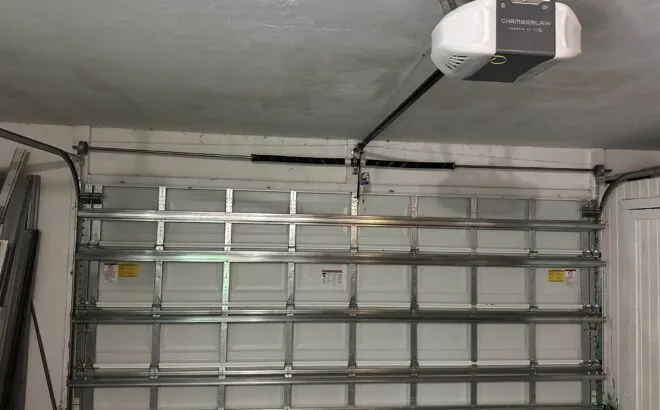
Behind many of the single-families and two-families off Mount Auburn Street, the garage stands alone at the end of a long driveway and still closes with the timber door it was built around in the Nineteen-twenties. A door like that leans hard on its springs. Wood is heavier than a hollow steel section, and it keeps gaining weight as it takes on moisture, so the coils carrying it work closer to their limit on every lift. That is why so much of the garage door spring repair Watertown MA homeowners ring about involves an old wood door and a spring that finally gave up.
When a spring breaks, the door does not become a little harder to open. It becomes a load the motor has no hope of raising and that nobody should try to raise by hand.
Signs to look for from inside the garage, keeping clear of the door itself:
- A clean split somewhere along the torsion coil above the header, often with the two halves pushed apart.
- On an older setup, an extension spring beside one horizontal track hanging slack or dangling from its safety cable.
- The opener running for a moment, lifting the door a few inches, then stopping or reversing.
Springs and spring problems covered
Torsion springs
One or two coils threaded on a bar over the doorway, turning a cable drum at either end. The usual setup on doors fitted or re-hung in later years.
Extension springs
Stretched coils mounted next to each ceiling rail, hauling the door upward by way of pulleys and cables. Usual on older garages and on doors that were converted from swing-out styles.
Snapped springs
A coil that has fractured outright, usually with a loud report that nobody in the house hears when the garage is a long way back.
Tired springs
Coils that have lost tension over time, leaving a heavy wood door that sinks when released halfway or feels like it is fighting the opener.
Spring replacement and conversion
Replacement coils matched to what the door weighs now, and, where the space allows, an extension setup changed over to torsion.
Why springs work so hard on these doors
A spring is chosen for a door by weight and height. Get the weight right and the door floats: lift it to the middle of the opening and it stays there, with the opener only nudging it up and down. The trouble with an original timber door is that its weight does not stay put. A few winters of rain and meltwater soaking into the bottom rail, several coats of paint on top of one another and the odd repair with heavier boards can add a surprising amount to a door that was light when it was first hung.
Every bit of added weight has to be carried by the same coils. A spring that once balanced the door with room to spare ends up working near its limit, and steel springs are rated in cycles: each full open and close uses one. The heavier the load in relation to what the spring was wound for, the faster those cycles run out. On a garage used several times a day by both households of a two-family, a spring can reach the end of its useful life well before a homeowner expects it to.
There is also the matter of what was fitted before. Many doors on these lots have been re-hung or re-sprung at least once, sometimes with whatever spring was to hand rather than one matched to the door. Finding out what the door weighs today, rather than trusting the label on the old spring, is the first step in a proper replacement.
Torsion or extension: which is on your door
Knowing which system you have makes the phone call easier and helps explain what the visit will involve.
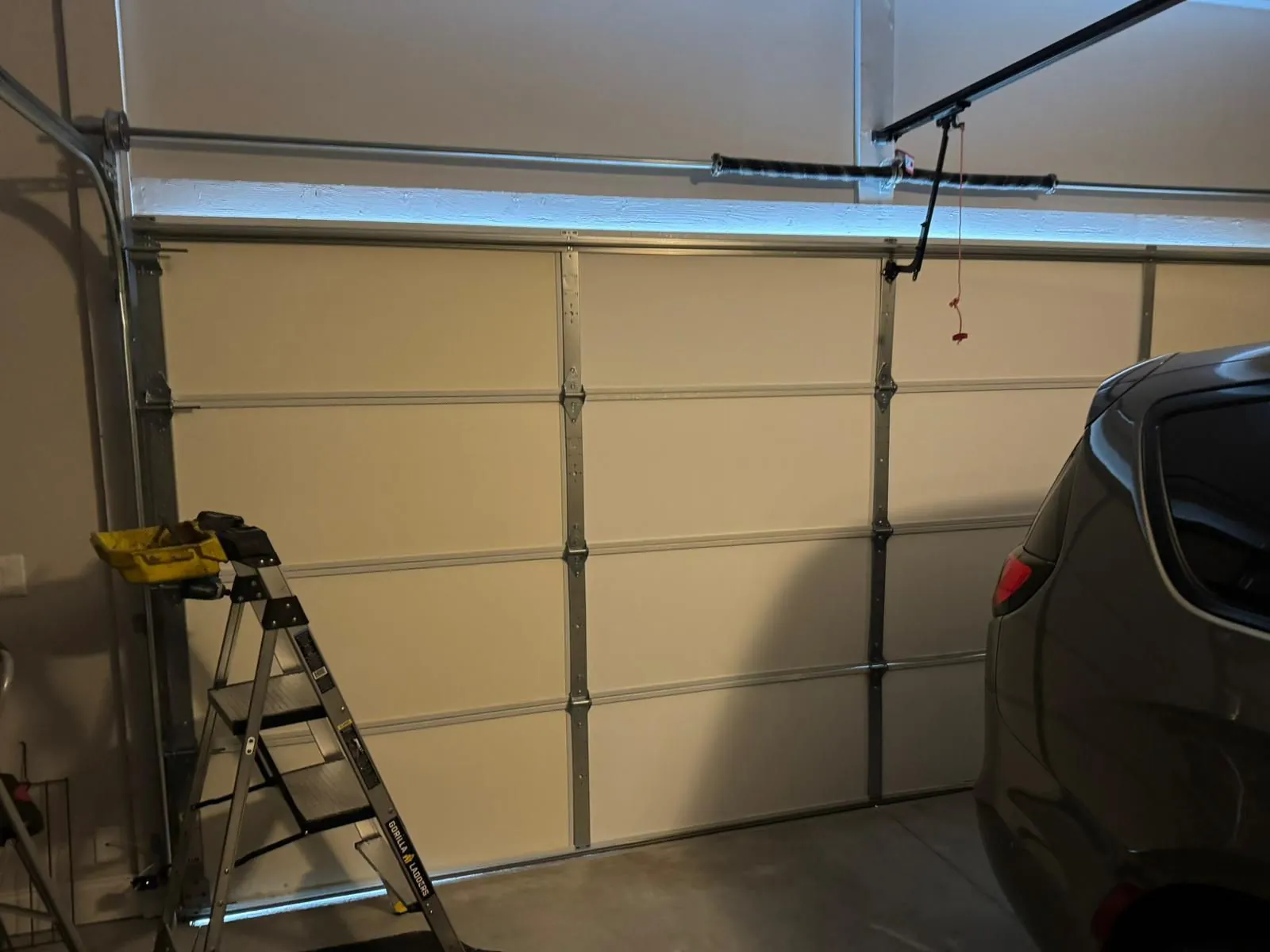
Torsion springs are threaded onto a bar fixed over the header, right above the shut door. As the door lowers, cable pays out from a drum at either end and the coil twists tighter, banking energy. As it rises, the coil relaxes, spins those drums and winds the cable back on. Most doors have one or two torsion springs. With one of a pair gone, the other takes the full weight alone, and it has aged at an identical rate.
Extension springs lie alongside the overhead rails, a coil per side, stretching as the door closes and contracting as it opens. Each one acts through a pulley at its front end, with a cable dropping from there to the door’s lower corner. On older garages they are the more common setup. Threaded through each of these coils there should be a containment cable, so a snapped coil stays threaded and harmless rather than whipping through the bay. Some older installations are missing those cables, and fitting them is part of a proper spring repair.
Converting an extension system to torsion is possible on many garages where the headroom allows a shaft above the door. It gives smoother, more even lifting on a heavy wood door, and it removes two long stretched springs from the space beside the tracks.
Why spring work stays with a technician
Once wound, any torsion spring holds dangerous tension; the risk peaks the instant someone begins adjusting it. Winding one means pushing steel rods into a cone at its end and turning against everything the coil has stored, a fraction of a turn at a time, while your hands hold that force back. Should a rod slip, or the wrong screw come loose, the cone spins and the rod lashes round at whoever is gripping it. Online clips make it look easy; it is not a DIY repair.
Rail-side springs are hazardous in their own way. Stretched out, such a coil holds plenty of energy, and one that snaps or is unhooked carelessly can whip loose. Lacking a containment cable, its fragments can cross the whole bay.
Sensible steps until help arrives:
- Stop using the opener so it does not keep straining against a door it cannot lift.
- Leave the door where it is. A broken spring means nothing is holding the door’s weight; a door raised by hand can fall the moment it is let go.
- Keep everyone, animals included, away from the doorway, and leave the car where it is.
- If the door is open and must be closed, call first rather than pulling it down, because a door with no spring support drops hard.
What a spring visit involves
Each garage door spring repair Watertown MA visit starts with confirming that the spring really is the fault. A broken coil is usually obvious, but a door that will not lift can also have a snapped cable, a seized bearing or an opener problem, and the remedy is different for each. A pull on the release cord takes the motor out of the picture, so the door can be handled with care.
Next the door itself is assessed. On an original wood door that means checking how heavy it actually is today, how sound the bottom rail and the joints are, and whether the hinges and roller brackets are still fixed into good timber. A new spring wound for a door that is about to need replacement would be a poor spend, and you will hear about it if the door is in that state.
Once the door is clamped, the broken coil gives up its remaining energy in a controlled way and comes off the bar. Cables and drums get a close look, because a cable that has hung lopsided for a while is often frayed and due for renewal too. The new spring, chosen for the door’s real weight and height, goes on and is wound to its proper count, and each cable is brought to matching tension. A hand test follows: the door should hover partway up when released. After that the opener is hooked up to the trolley once more, its stops and force trimmed, before the auto-reverse gets its trial.
When both springs should be replaced together
Where a door runs on twin coils, overhead or along the rails, both have lifted it exactly as often. After one snaps, the remaining spring carries matching wear and seldom lasts much longer. Replacing just the broken one leaves the door with a new spring and an old one pulling against each other at different strengths, which can make the door lift unevenly and put extra strain on the cables.
For that reason, replacing both springs at once is usually recommended. It is a recommendation, not a rule, and the decision is yours. You will be told what the remaining spring looks like and why it matters before anything is changed.
Detached garages, distance and late discoveries
A spring breaking makes a real bang, yet from a garage way back past the house it rarely reaches anyone indoors. Usually it comes to light at breakfast: the opener drones, the door creeps up a little and quits, with your car stuck behind it. Sometimes the opener has already been run several times before anyone realises what is wrong, which can strip the gear in the opener or pull a cable off its drum.
If your door has behaved strangely and you find the spring broken, tell us how many times the opener has been tried since. It helps to know whether the cables and the opener need checking too. A garage door spring repair in Watertown MA on a door that has been forced with a broken spring often turns into a cable or opener repair as well. More on opener problems is on the garage door opener repair page for Watertown.
One garage, two households
On a two-family lot the single garage at the end of the drive often serves both units, or one unit parks while the other stores bikes and tools and opens the door to get at them. Either way, the door makes more trips than a garage serving one household, and each trip spends one of the spring’s cycles. A coil that might last many years on a lightly used door can wear out noticeably sooner when the door is going up and down from morning to night.
That pattern also makes a failing spring harder to spot. When several people use the door, each of them sees it only now and then, and a slow change, such as a door that sinks a little when released or an opener that grunts on the way up, gets put down to the cold or the age of the garage. Somebody responsible for the property might usefully cast an eye at the springs from time to time and asks the others whether the door has started to feel different.
When the spring does go, a garage door spring repair Watertown MA call from a two-family is often about two cars, or about a door that one unit needs open and the other needs shut. Say so when you ring, so the visit can be arranged around whoever needs the garage first.
Cold mornings and spring breaks
Frost brings a spike in breaks. Chilled steel loses some of its give, and an unheated detached garage sits at whatever the night has brought. A spring that has been close to its limit through the autumn often fails on the first really cold morning, when someone presses the button on the way to work.
Those breaks can leave the car trapped and the morning plans in pieces. We take calls at whatever hour the trouble starts, and a snapped coil holding a car hostage is just what the emergency repair page for Watertown is written for. Calling in a spring that looks worn before winter is a lot easier than dealing with one that has broken in the dark.
Signs a spring is nearing the end:
- The door sinks back down when you let go of it halfway up.
- The opener sounds strained on the way up but easy on the way down.
- On a torsion spring, the coils look stretched apart or have rust patches along their length.
- On an extension spring, the coils no longer close up tightly when the door is open.
Rust, damp and noisy coils
Back-lot garages with no heating tend to stay damp. Condensation forms on cold steel, rain finds its way through an old roof, and the springs sit in that moist air year round. Rust pits the surface of a coil, and each pit can seed a crack. Any spring which squeals or grinds as the door moves, or shows orange patches between its coils, is wearing faster than it should.
Wiping a thin film of door-spring oil along the coils, applied with the door closed and without touching any fittings, helps keep rust and noise down. It does not bring a tired spring back, but it can slow the damage on one that is still sound.
Spring, door or both
A spring replacement is usually the right answer: a sound door with a new, correctly sized spring will go on working. On these older timber doors, though, a spring break is also a good moment to look at the door as a whole. A rotten bottom rail, panels rattling in their frames, or boards that have soaked up so much damp that the door outweighs any sensible spring are all reasons to think about a replacement instead. Garage door spring repair Watertown MA homes need should come with that conversation when it applies, rather than fresh coils hung on timber that is giving way. Faults beyond the spring belong under garage door repair in Watertown. Our garage door spring repair service explains this work for Greater Boston as a whole, and the Watertown hub gathers all our local work.
Getting a spring replaced
Let us know what the door is made of, where its springs sit, whether it is stuck up or down, and whether your car is shut in. Jot those down, then call us or book online.
Questions from Watertown
How can I tell if the spring on our old wood door has broken?
Stand well back and glance up toward the bar over the header. A broken torsion spring shows a clear gap between two coils. On a door with springs along the tracks, one will hang loose or sit on its safety cable. The door will also feel extremely heavy and the opener will lift it only a few inches.
The spring broke but the door is up. Can we pull it down?
Please do not. A door with a dead spring has no counterweight left, so once it moves it can come crashing down. Keep people and cars out from underneath it and call. It can be lowered under control once the weight is managed.
Why did the spring on our door break when it is not used much?
Springs wear out from cycles, but also from load and corrosion. A heavy wood door, a spring that was never sized for it, or rust from years in a damp unheated garage can all shorten a spring’s life even on a door that is opened only a few times a day.
Our garage has springs beside the tracks. Can they be changed to the kind above the door?
Often, yes, if there is enough headroom above the opening for a shaft and drums. It gives smoother lifting on a heavy door. Whether your garage has the space is checked on the visit.
One spring of our pair snapped. Do both need changing?
Usually that is the advice, because both have done the same work and the remaining one is likely close to failing. You will be told how the remaining spring looks and the choice is yours.