
Why a garage under a row house needs careful repair
Bay Village is a small grid of Federal row houses just south of the Common, and the garages here are not the detached double bays of a suburb. Where a house has one at all, it is usually a single bay built into the ground floor, under the rooms above, with the door facing straight onto a narrow street and no driveway in front of it. Garage door repair in Bay Village, MA starts from that fact: the door is part of the building, the street is the only working space, and every spring, panel and length of track has to be carried in by hand.
That shapes how a fault shows itself, too. A bay under a house has a ceiling that is somebody’s floor, side walls that carry the building, and a door that is the street face of the home at ground level. When something goes wrong with the door, it rattles the rooms above, it leaves the house open to the sidewalk, or it shuts in a car with nowhere else to park.
Before you call, stand clear of the door and glance at three places:
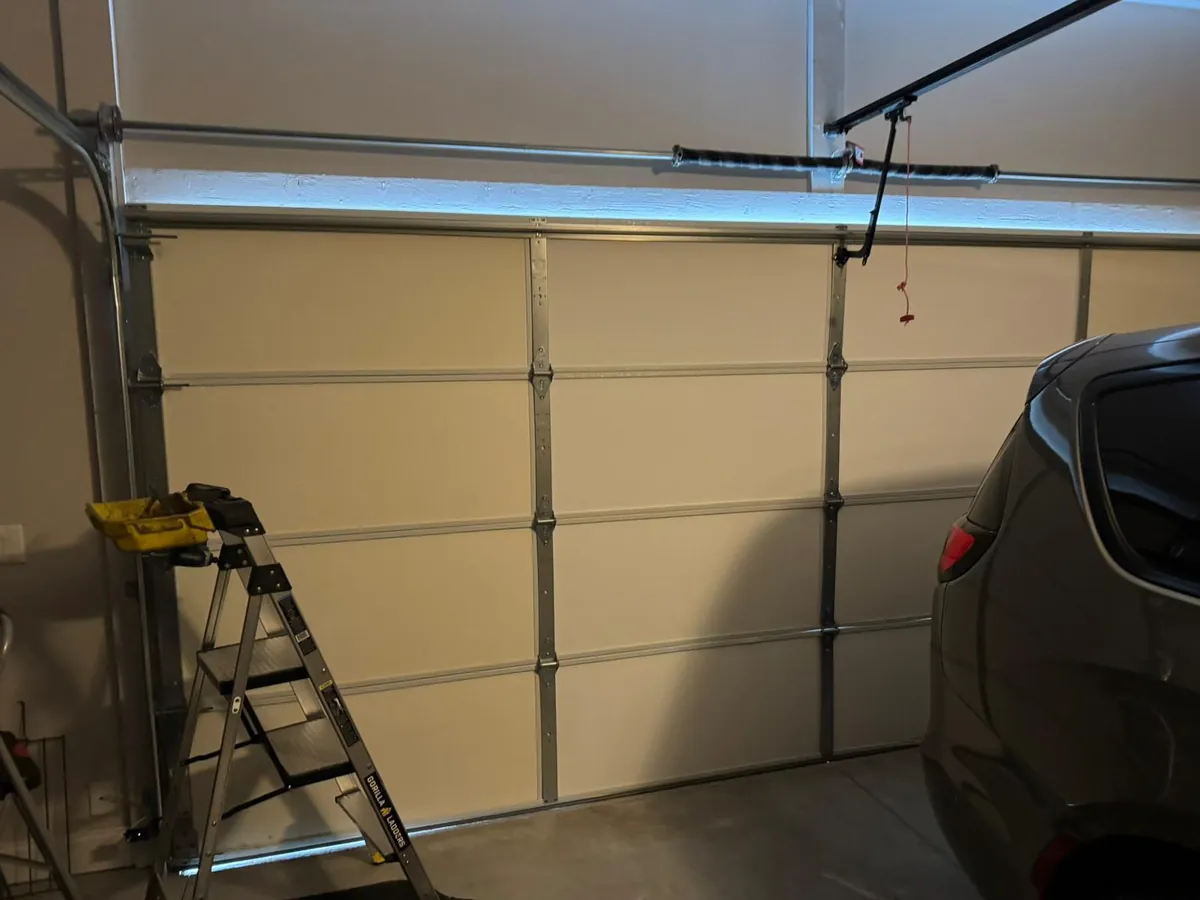
- Overhead, the coiled spring across the opening: if its coils have parted somewhere along its length, it has snapped.
- Low down at each side, the steel lift cables: if one dangles loose, the door has lost its even pull.
- Along the side rails, the small wheels: if one has popped out of its channel, the door is off track.
What we fix on these doors
Springs
Torsion coils on the shaft across the opening, or stretched extension coils running beside the ceiling rails. A snapped spring leaves the door too heavy to rise. See spring repair in this neighbourhood.
Lift cables and drums
Cables fray where they meet the bottom brackets, or unwind off their drums and leave the door hanging crooked in the opening.
Panels and sections
A section pushed in by a swinging car door or a rolled bin, split hinges at the folds, and a weatherstrip chewed up where the door lands at the curb line.
Openers and remotes
Motors that buzz with no movement, handsets that go dead, a button by the inner door that no longer responds. See opener repair in Bay Village.
Tracks and rollers
Rails pushed out of true, rattling mounting brackets, rollers that have seized or split, and doors that have jumped their channels.
Safety sensors
Two small lenses fixed near the floor at the edges of the doorway, which tell the opener to back off if anything crosses between them.
Reading the fault from the way the door behaves
Most callers describe a symptom, not a part, and the symptom narrows things down a long way before anyone arrives. A door that stays planted on the floor while the motor labours and clicks almost always has a snapped spring, since an opener is designed only to steer a door, never to haul its whole dead weight. A door that rises crooked, with one side higher than the other, usually has a cable that has frayed through or slipped off its drum. A door that climbs smoothly yet bounces back up the moment it lands often has a sensor lens nudged off its aim, or a downward-force setting that has drifted out of step with the door.
Noise is a clue as well. A grinding or squealing rhythm as the door travels tends to come from dry or worn rollers. A sharp crack from the bay when nobody was using the door usually means the wound coil overhead has given way. A loud thump at the bottom of travel can mean the door is no longer balanced and is falling the last part of the way. In a garage tucked under living space, these sounds travel up through the floor, which is often how a fault is first noticed.
When you ring, describe the movement or the silence, say how far it got before it stopped, and mention any vehicle parked in the bay. That tells us which parts to bring, which matters more here than almost anywhere else, as the next section explains.
Garage door repair in Bay Village starts at the curb
There are no driveways in Bay Village and nowhere to stage a door or a set of parts. Any work on a garage here is set up from the street: the van stops where it can, and springs, cables, rollers, track sections and replacement panels are carried in by hand, piece by piece, through the opening or through the house. That is quite different from a suburban job, where a technician can lay a door out on a driveway and walk around it.
In practice this means planning the visit before it starts. From what you describe on the phone, the likely parts are chosen and brought in together, so the bay is not left half-open while someone walks back and forth to the street. Long track sections and full door panels are the awkward pieces; they come in one at a time and are fitted inside the bay. On a narrow street, the opening itself is the front edge of the work area, so tools stay inside the garage rather than spreading onto the sidewalk.
It also means the door is rarely left open for long. A bay set into a row house faces the pavement with nothing in between, so wherever possible the door is worked on from the inside with the opening closed or nearly closed. If a repair cannot be finished in one visit, the door is left shut and secure rather than standing open to the neighbourhood.
Springs, cables and the weight above your head
Every repair on a sectional door comes back to balance. The springs carry nearly all of the door’s weight, the cables transfer that lift to the bottom corners, and the opener simply guides a door that should already feel light. On a torsion system, the spring sits on a bar across the top of the opening and turns a drum at each end; on an extension system, a spring along each horizontal track stretches and pulls through a set of pulleys.
When the balance goes, everything else suffers. A tired spring makes the opener strain on every cycle until a gear or a circuit board gives up. A cable that has frayed on one side tips the door so its rollers bind in the tracks. A door that is heavy at the top of travel can drift down unexpectedly when the opener is released.
The torsion coil is wound tight whether the door sits up or down, and that stored force runs down the cables into the steel plates at the foot of each side. Backing off a single screw on the winding collar, or levering at a corner plate, lets it all go at once, and that is how people get hurt. Leave springs to a technician; they are not a do-it-yourself job. For a closer look at broken springs, see our garage door spring repair page.
Tracks, rollers and a tight bay
Single bays built into old row houses are often a snug fit for a modern overhead door. The horizontal tracks may run close to the ceiling joists, the side room beside each vertical track can be tight against the brick, and the back of the bay may stop just past the end of the rails. Every part of the track system has to be exactly in line for the door to run in a space like that.
A rail that takes a tap from a bumper or a handlebar only has to kink slightly before a wheel snags on it. A loose bracket lets the track shift a fraction each time the door runs, until the door binds. Rollers that have dried out, cracked or lost their bearings drag instead of turning, and eventually one climbs out of its rail. Once a door is off its track, it should not be run again until it has been set back properly, because the next cycle can twist the sections or snap a cable.
Repair here means truing the tracks, tightening or replacing the brackets, swapping worn rollers, and checking that the door runs smoothly under hand power before the opener is hooked back up.
Panels, seals and the sidewalk edge
Because the door of a Bay Village garage meets the sidewalk directly, its bottom section takes more wear than most. There is no apron of driveway in front of it, so rain, slush and winter salt run right up to the doorway and soak into the rubber strip along the lowest edge. Over time that seal hardens, splits and lets water and leaves into the bay, and the lowest section starts to rust or swell along its bottom edge.
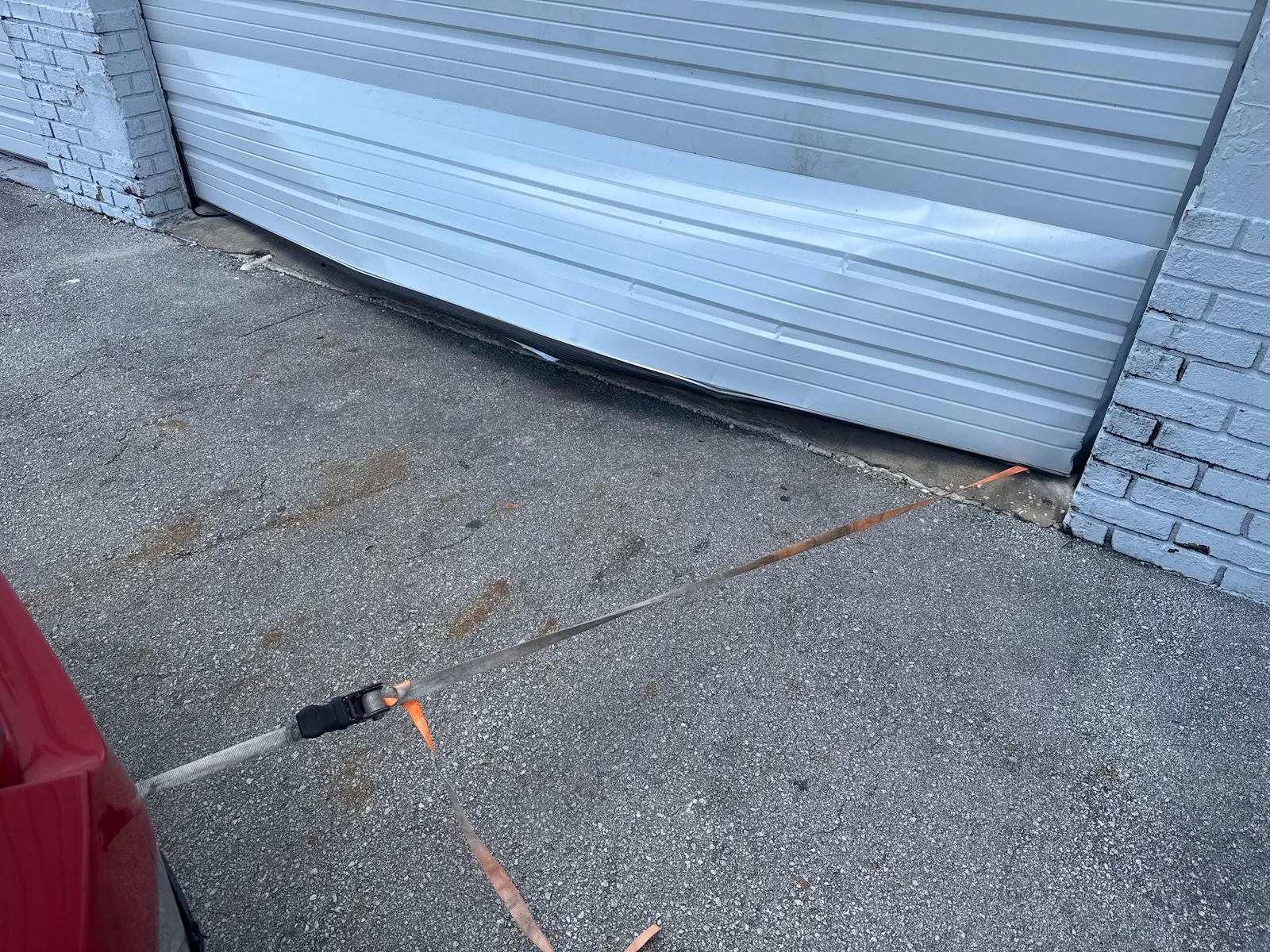
The sections higher up suffer differently. A car door opened too wide inside a narrow bay, or a bin rolled against the door from the outside, leaves a dent that can stop the hinges between sections from folding cleanly as the door turns onto the horizontal track. Cracked hinges and loose hinge screws make the door twist slightly as it travels, which shows up as rubbing on one track.
A repair can include a new bottom seal, new hinges, tightened fasteners and, where a matching part is still made, a replacement section. Part of good garage door repair in Bay Village is checking that the bottom seal still closes against an old threshold that may not be perfectly level, so the door seals along its full width.
Openers and sensors in a street-facing bay
An opener in a bay under a house hangs from joists that carry the room overhead, so a worn drive shows itself as vibration upstairs before it fails outright. Remotes and wall buttons fail in the ordinary ways: flat batteries, worn contacts, a wire pinched at a staple. The safety sensors matter more here than on a driveway, because a door with the pavement right outside comes down into a space where people walk past.
Every visit for garage door repair in Bay Village, MA ends with the sensors aligned, the opener’s force and travel set to suit the door, and the reversing test passed. Openers that are past repair can be replaced, including LiftMaster openers, which we repair and replace.
What a visit involves
- Setting up from the street. The parts chosen from your call are carried in together, and the bay is worked on from the inside.
- Uncoupling the motor. The trolley is released from the opener so the technician can raise and lower the door by hand and feel exactly how it is weighted.
- Checking the whole door. Every spring, cable, drum, roller, hinge, rail, bracket and panel gets a look, rather than only the item you mentioned when you rang.
- Explaining what was found. Before a tool comes out, you are told which part gave way and what led to it.
- Repairing and rebalancing. Broken parts are replaced and the springs are set so the door holds its position when stopped partway.
- Proving the opener and eyes. Once the motor is coupled again, its limits and closing pressure are matched to the freshly repaired door, and an object is placed in the doorway to confirm the door reverses rather than pressing down on it.
The aim is that the door leaves the visit working as a whole, so that a new spring is not straining against a dragging roller or a misaligned track.
Repair or replace the door
Most faults on a sound door are worth repairing. Springs, cables, rollers, hinges, brackets, sensors and a single dented section can all be replaced without changing the door. Repair stops making sense when the sections themselves are failing: when several panels are cracked or rusted through along their bottom edges, when the door has been bent badly in a fall from its tracks, or when replacement sections for an older door are no longer made.
A door under a row house is also part of the street face of the building, so appearance and fit are worth weighing as well as cost. If the door is beyond saving, our page on new garage doors in this neighbourhood explains what replacement involves, including how a new door is carried in panel by panel and assembled inside the bay.
What you can safely check before calling
A handful of checks are harmless and sometimes cure the fault outright:
- Should the door have halted part of the way, disconnect the opener at its plug so the motor cannot cycle.
- Clean the little lens on each side post with a soft cloth, and clear away anything leaning in the path between the pair.
- Fit a fresh battery to a handset that has gone quiet; if the inside button still runs the door, the handset was the culprit.
- Sight down each side rail for something leaning against it, such as a bin, a stroller or a bike.
Leave the springs, the cables, the bottom brackets and the drums alone. Do not lift a door by hand that has a broken spring, and do not pull the manual release cord on a door that is stuck open with a broken spring, because without the spring nothing holds the door up and it can fall hard and fast.
When the door is stuck at a bad hour
A garage in a row house is often the street-level entrance to the home, so a door jammed in the raised position leaves that entrance exposed. Our phone is picked up through the night and at weekends too, so a door that gives out after dark can be reported there and then instead of waiting for business hours. If it is a broken spring, a door hanging off its track, or a door that will not shut, our page on emergency repairs in Bay Village covers what to do until help reaches you.
Book a repair
Whether the door has stopped, is running crooked or is simply louder than it used to be, tell us how it is acting and whether a vehicle is trapped in the bay. For garage door repair in Bay Village, MA, that description is what lets the right parts come in off the street together. You can also read about our wider garage door repair service, or the Bay Village page for everything we do in the neighbourhood. Ready when you are: call us or book online.
Questions from Bay Village
My garage is under the house. Will the repair shake the rooms above?
The work itself is done inside the bay and is not unusually loud. What does carry upstairs is a door that is out of balance, a dry roller or a struggling opener, and fixing those usually makes the door quieter than before.
There is no driveway. Where do you work?
From the street and inside the bay. Parts are carried in by hand, and as much of the job as possible is done from inside with the door closed or nearly closed, so the sidewalk is kept clear.
Can a dented bottom section be replaced on its own?
Often it can, if a matching section is still made for your door. If it is not, the choice is between living with the dent and replacing the door, and you hear that before any work is done.
My door reverses as soon as it touches the floor. Is that the opener?
Sometimes, but more often one of the low lenses has been bumped off its aim, or the closing-pressure setting no longer matches the door. Both are put right on a visit, and the reversing test is repeated before the technician leaves.
Do you repair commercial doors in the neighbourhood as well?
Yes. Commercial roll-up and sectional doors are repaired as well as home garage doors. Tell us the type of door when you call.