
What Brookline’s garages ask of a spring
A loud bang from the back of the lot and a door that will not budge: that is how most requests for garage door spring repair in Brookline, MA begin. The springs are the parts that actually lift a garage door, and in Brookline they work in demanding places. Behind the large Victorians around Coolidge Corner and Washington Square, the garage is usually a detached, unheated building at the rear of the lot. A few old carriage houses still hold cars, with doors fitted beneath low beams. The brick apartment buildings run shared garages whose doors open and close all day for many households.
Cold, damp and heavy use are what wear a spring out, and these garages supply all three. A spring that has worked through enough cycles will eventually snap, often on a cold morning when the steel is least forgiving.
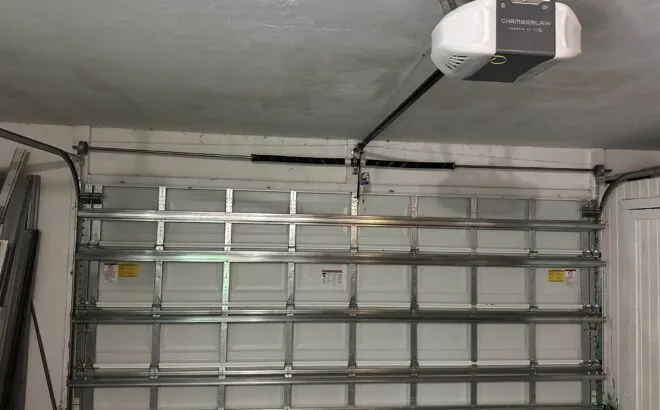
Without touching anything, three signs from a safe distance tell you a spring has gone:
- A clear gap between the coils of the spring on the bar above the door.
- An extension spring hanging slack, or stretched out, beside one of the overhead tracks.
- A door that the opener raises only a few inches before it stops or reverses.
The spring problems we put right
Snapped torsion springs
The spring on the shaft over the opening has broken in two. The door stays down, or lifts a little and stops.
Broken extension springs
Long springs that stretch beside each horizontal track. When one breaks, the door lifts unevenly and can jam crooked.
Springs that have lost their strength
Not broken yet, but no longer balancing the door: it drifts down from halfway or lands hard on the floor.
Springs matched to the door
A heavy wooden carriage-house door and a light steel door need very different springs. Each is sized to the door it lifts.
Pairs replaced together
Where a door runs on two springs, both are normally renewed at the same visit so the door rises evenly.
How springs lift a heavy door
A garage door weighs far more than most people expect, and the opener is not what lifts it. The springs carry that weight. A door with healthy springs can be raised by hand with one arm and will stay where it is left halfway up. A door with a broken spring feels like a dead weight, because nothing is holding it except whoever is trying to lift it.
On a torsion system, the springs are wound around a steel shaft that runs across the top of the opening. At each end of the shaft sits a drum, and a cable from each drum runs down to a bottom corner of the door. As the door closes, the cables unwind from the drums and the shaft turns, winding the springs tighter. As the door opens, the springs unwind, turn the drums and wind the cables back up, lifting the door evenly from both sides.
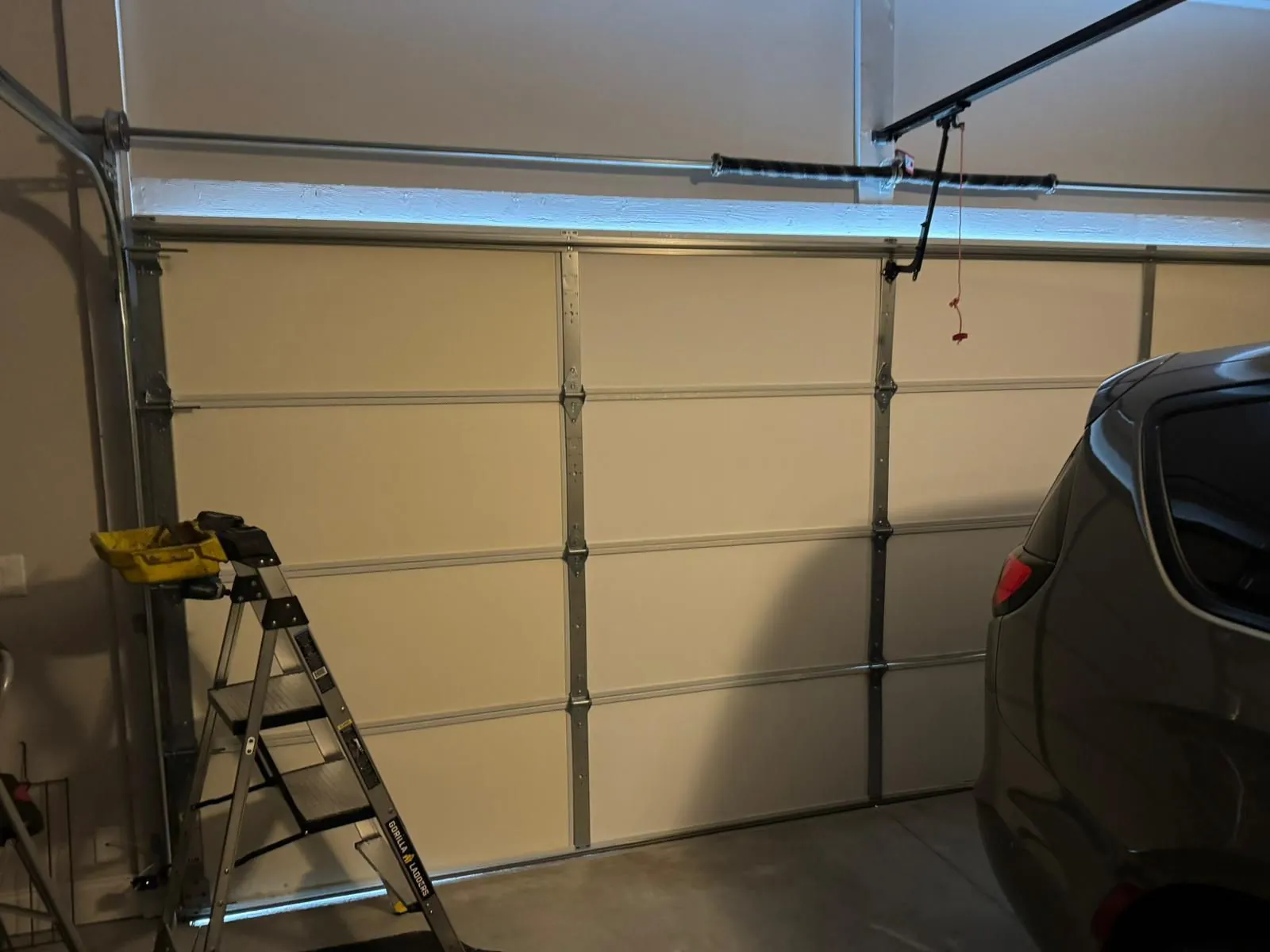
On an extension system, a spring lies parallel to each horizontal track overhead. The springs stretch as the door comes down and pull back as it goes up, working through pulleys and a cable on each side. Extension springs are common on older doors and on garages where the space above the opening is too tight for a torsion shaft, which describes some of the older buildings in Brookline.
Torsion or extension: telling which your door has
The first question in any garage door spring repair in Brookline is which system the door runs on, and you can usually answer it from the floor. Stand inside the garage with the door closed and look at the wall above the opening. If there is a steel bar running across it with one or two tightly wound coils on it and a round drum at each end, the door has torsion springs. If the space above the door is clear, look up along the horizontal tracks that run back toward the rear wall. A long spring running beside each track, connected to a pulley near the door, means extension springs.
Knowing which system is there helps when you call, because it tells us what to bring and what to expect. A garage behind a Victorian with a reasonable ceiling height will usually have torsion springs. A carriage house with beams close over the door, or a garage whose door has been in place a very long time, is more likely to have extension springs. Some older doors have been converted from one system to the other, and occasionally a door has been left with a mismatched pair after a partial repair. Whatever is there, it is identified properly before any part is ordered or fitted.
Why a torsion spring is never a DIY job
A torsion spring holds dangerous tension, and repairing or adjusting one is not a DIY repair. The spring is wound with enough force to lift the entire door, and that force is stored in it whenever the door is closed. When a spring breaks, the energy does not all disappear: the broken halves, the shaft, the drums, the cables and the bottom brackets can all remain under load. Winding a replacement takes proper winding bars, a firm footing and knowledge of how many turns that particular door needs. A tool that slips from a winding cone, or a set screw undone in the wrong order, can spin the shaft violently and cause serious injury.
Extension springs carry a different risk. When one snaps without a safety cable running through its centre, the spring and its hardware can fly across the garage. Older doors, especially those whose springs were changed piecemeal over time, are not always fitted with those cables.
So after a spring breaks, keep the steps short and simple. Leave the door where it is. Unplug the opener so nobody presses the button by habit. Keep children and pets out of the garage. Do not lift the door by hand, and never try to drive out under a door that is only partly open.
Cold rear garages behind the Victorians
The detached garages behind Brookline’s large Victorians are usually unheated, so the springs inside them live at outdoor temperature. Steel that has been wound and unwound many times becomes more prone to failure in the cold, which is why spring calls tend to bunch up on the first hard frosts of the season. A spring that was near the end of its life in autumn is likely to choose a freezing morning to give out.
Damp adds to the wear. A wooden garage at the back of a lot, shaded by the house and trees, can stay damp for long stretches. Surface rust on a spring adds friction between the coils and roughens the steel, and a rusted spring often fails sooner than a clean one. A light coat of the right lubricant on the coils helps, and a spring visit always includes a look at how much corrosion the remaining hardware is carrying.
Distance from the house matters too. A broken spring at the end of a long driveway may not be noticed until someone needs the car, so the first sign is often a door that will not open at all. If the opener has strained against a broken spring for a while, its gears or drive may also need attention afterwards.
Carriage houses, low beams and heavy doors
The few carriage houses still in use around Brookline bring their own spring questions. The opening may be generous, but the beams or loft floor above it often sit close to the top of the door, leaving little room for a standard torsion shaft. Some of these buildings run on extension springs for that reason; others need a low-headroom arrangement with the shaft mounted differently. Replacing a spring in a carriage house means working within that space rather than forcing a standard layout into it.
Doors on carriage houses are also more likely to be heavy, with wooden sections chosen to suit the building. A heavy door needs springs sized to its real weight, and that weight can increase over time as wood takes on moisture. A door that once balanced well may start to feel heavy and drift down, not because the spring has weakened but because the door has become heavier. Weighing and balancing the door is part of choosing the right replacement spring, rather than simply matching the old one by eye.
Shared garages in brick apartment buildings
The brick apartment buildings around Washington Square and Coolidge Corner often have garages shared by several households. Every resident with a space raises and lowers the door, often more than once a day, so the springs on those doors run through their working life much faster than on a single-family garage. A spring sized for a household’s use can wear out in a fraction of the time on a busy shared door.
For a door like that, higher-cycle springs can make sense, so that replacements are needed less often. Because many people use the door and none of them watches it closely, the early warnings, such as a door that has started to slam or an opener that sounds strained, are easy to miss. Building managers who hear about a change in the door’s behaviour can save a lot of disruption by having the springs checked before one breaks and holds every car inside.
Steep driveways and the strain they add
Where a driveway climbs steeply from Beacon Street, the door often closes on a sloping threshold. One side of the door touches down before the other, so the cables and springs on that side are slack a moment earlier, and a door that lands unevenly puts uneven wear on the hardware. Over time, the cable on the low side can loosen on its drum, and the spring on the high side ends up carrying more of the load than it was set for.
A slope also makes a heavy, unbalanced door more dangerous. A door with a weak spring will try to run downhill once it starts closing, and on a grade there is less room to step clear. A balanced door, with springs set to the door’s actual weight, closes gently and stays where it is left.
Signs a Brookline door’s springs are tiring
Springs usually give warning before they break. A door that once stayed put when lifted halfway now creeps down. The door closes faster than it did, or lands with a thump. The opener labours on the way up or reverses partway for no clear reason. On a torsion spring, the coils may look stretched compared with its partner. On an extension spring, the coils may stay slightly apart even when the door is fully open.
If any of these signs appear, it is better to arrange garage door spring repair in Brookline as a booked visit than to wait for the bang. A planned replacement at a convenient time is far easier to manage than a door stuck shut with a car behind it.
What happens on a spring visit
- The opener is disconnected and the door’s weight and balance are checked by hand, with care taken around the broken spring.
- The failed spring is identified and measured, and the parts that work with it are inspected: cables, drums, bottom brackets, the shaft and its bearings, rollers and tracks.
- You hear what broke, why, and whether anything else has been damaged before work begins. A spring that snapped while the door was moving often leaves a frayed or displaced cable.
- The new springs are fitted and wound or set to suit the door’s actual weight, not just the size of the old spring.
- The door is balanced, the opener is reconnected and its force and travel are checked, and the safety reverse is tested.
Cables and drums alongside the springs
Springs and cables work as a team, and a broken spring often affects the cables. When a torsion spring snaps, the sudden loss of tension can let a cable jump off its drum or unwind into a loose tangle. When an extension spring breaks, the cable that runs over its pulley can slacken and slip out of the groove. Frayed cables, worn drums and corroded bottom brackets are all checked at a spring visit, because a new spring on a failing cable only moves the problem along. Cable work on its own is covered on the cable repair page.
Repair the springs, or replace the door
Most garage door spring repair in Brookline ends with the same door lifting smoothly again, on the same tracks. In nearly every case, a broken spring is a repair, not a reason to replace the door. New springs return a sound door to service. The question of replacing the door arises only when the door itself is failing: sections rusted or rotted through at the bottom from water running down a sloping drive, several panels beyond repair, or an old wooden door so heavy with moisture that no sensible spring arrangement can balance it. If that is the case, you will be told directly, and the full garage door repair page for Brookline covers the wider range of door repairs.
Booking spring work
The general spring repair page describes the work across Greater Boston, and the Brookline area page lists every service in the town. If the opener has been damaged by straining against a broken spring, see opener repair in Brookline. For a spring that breaks at night, at the weekend or with a car trapped inside, the emergency repair page explains what to do while you wait.
Because the phone is answered at any hour, every day of the week, a broken spring can be reported the moment it happens. Tell us whether the door is open, closed or stuck partway, what you can see from a safe distance, and whether a car is inside. To arrange garage door spring repair in Brookline, MA, call us or book online.
Questions from Brookline
Why do springs seem to break on the coldest mornings?
Cold steel is less forgiving, and a spring that has run through most of its working life is most likely to give out when it is cold and the first run of the day puts load on it. Detached garages behind the house are usually unheated, so the springs feel the full outdoor temperature.
My carriage house has very little room above the door. Can the springs still be replaced?
Yes. Low headroom affects where a spring can go and which type is used, and some older buildings run on extension springs or a low-headroom torsion layout for that reason. The replacement is planned around the space that is actually there.
Our building’s shared garage door goes through springs often. Is there anything that helps?
Heavy use is the main cause. Springs rated for more cycles can be fitted so they last longer on a busy door, and having them checked when residents first notice a change, rather than after one breaks, avoids a door stuck shut with everyone’s cars behind it.
Can I open the door by hand to get the car out after a spring breaks?
It is better not to. With a broken spring the full weight of the door rests on whoever is lifting it, and it can drop without warning. On a sloping drive that is even more dangerous. Leave the door closed, unplug the opener and call us.
Should both springs be replaced if only one has broken?
On a door with two springs, usually yes. They have done the same work, so the other is likely close to the end of its life, and two new springs balance the door evenly.