
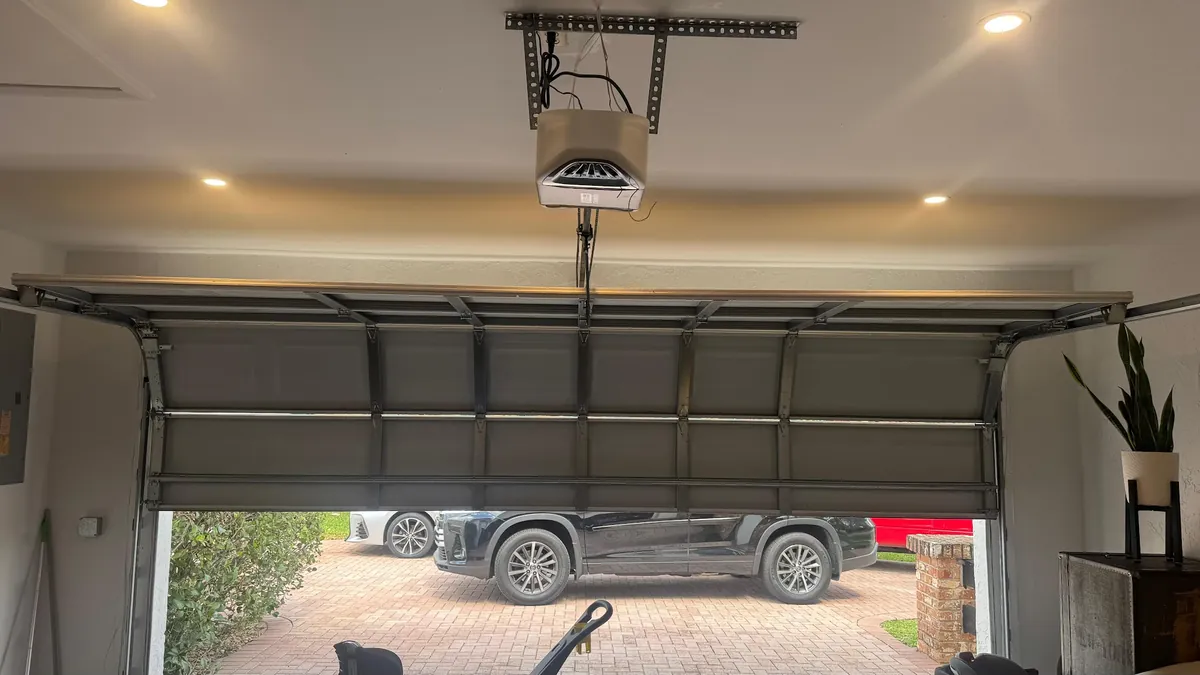
Sea air near the harbour, wide doors inland: what wears out here
Two very different kinds of house share this town, and their doors wear out for different reasons. Close to the harbour, older houses carry garages that were often added long after the house was built, and every part of the door lives in damp, salt-laden air. Further inland, larger and newer houses have wide double or triple bays with heavy insulated doors and powerful openers. When people search for garage doors Cohasset MA homeowners can rely on, they usually have one of those two situations in front of them: a door corroding by the shore, or a big inland door that has suddenly stopped lifting.
Salt does its work slowly and out of sight. It settles on springs, cables, hinges and roller axles, draws moisture into every joint, and turns a smooth door into a stiff, noisy one long before anything visibly breaks. The heavier inland doors fail more suddenly: a spring that has lifted a wide steel door thousands of times finally gives way, and the opener cannot do the job on its own.
Before calling, and without touching the springs or cables, take a look at:
- Rust bleeding orange down from the hinges, or a crust of it where each lift cable meets its bottom bracket.
- A coil on the shaft over the opening that has parted, leaving a visible break of a finger’s width or more.
- Whether the door hangs level or drops on one side when it is partly open.
Garage door services in Cohasset
Garage door repair
Stiff hinges, cracked panels, worn rollers and loose track brackets, on harbour-side doors stiffened by salt and on big inland doors that work hard every day. Everything that falls under garage door repair is handled, from one squeaking hinge on a cottage-sized door to a whole wide door re-hung.
Spring repair
Torsion springs on wide inland doors and extension springs on many older single garages. Rust eats a spring from the surface in, which is why harbour-side garage door springs so often snap with no warning at all.
Openers, remotes and sensors
Our opener services cover repair and replacement, LiftMaster units included, plus handsets, keypads and the photo eyes whose brackets corrode in a damp shore garage.
Emergency calls
A door jammed open while an easterly drives rain into the bay, or a wide inland door sealed shut on a cold morning with the commuter car trapped inside. Calls for emergency garage door repair are taken whatever the hour.
Cables and drums
Near the shore, lift cables corrode between their strands where nobody can see, then fray where they loop round the bottom bracket. Cable repair here means a matched pair, never one side alone.
Off-track doors and new doors
Doors that have jumped their rails get off-track repair; sections that salt has finished off are better served by new garage doors, supplied and fitted to the real opening.
What salt air does to a door on the shore side
The houses nearest the water take the most salt. Of all the garage doors Cohasset MA shore houses carry, the ones facing the harbour see the worst of it, and a garage door has more exposed steel than almost anything else on the outside of a house. Springs are bare coiled wire. Lift cables are twisted strands that hold moisture between them. Hinges, roller stems and the bolts that hold the track to the wall are plated, but plating wears thin where parts rub against each other, and that is exactly where salt gets in.
The result is a door that slowly asks more of everything that moves it. Rollers stop rolling and start sliding. Hinges grind. The opener strains a little more each month, and the spring, which never stops working while the door is closed, rusts along the coils until one of them gives. Most of the urgent calls we get from houses on the shore side come down to one of those parts failing after a long, quiet decline.
Rust is not only a strength problem. A rusted spring coil rubs against the coil beside it, which adds friction and makes the spring wear faster still. A rusted cable can look whole from a distance while several strands inside it have already parted. When we look at a door near the water, we look at those parts closely, even if the call was about something else, because a door that has just had one part replaced will not stay quiet for long if the part beside it is about to go.
Older houses near the harbour and the garages added to them
Many of the older houses close to the harbour were built before anyone planned for a car. Their garages came later: a single bay tucked beside the house, a converted outbuilding, or an addition squeezed onto a narrow lot. Each of those leaves its own constraints for whoever works on the door.
Headroom is often short, so the space above the opening for a torsion spring and an opener rail is tight. Some of these garages still run extension springs along the horizontal tracks, which suits a low ceiling, provided a containment cable runs through the middle of each spring to hold the pieces if it lets go. Wooden framing around the opening may have moved over the years, so track brackets end up fixed into wood that has been drilled before. Sometimes a scraping sound on one edge has nothing to do with the sections: the old jamb has crept inward as the framing settled.
None of this rules out a smooth, reliable door. It means the repair has to fit the building as it actually stands, rather than a standard garage drawn on paper.
Larger newer houses inland and their wide bays
Away from the water, the houses are larger and newer, and the garages are built around the door rather than the other way around. Inland, garage doors Cohasset MA builders fitted to these houses are usually wide and heavy. Two-car and three-car openings are common, often with insulated steel doors that weigh considerably more than a single-car door. These doors are usually driven by an opener every time, often several times a day, and they rely heavily on a correctly balanced torsion spring system.
Wide doors bring their own failures. A long torsion shaft carries two springs, and when one breaks the other is left trying to lift the whole door, which twists the shaft and pulls one cable harder than the other. Long horizontal tracks give a door more room to sag in the middle if a strut is missing or a hinge has cracked. A heavy door left on a struggling opener chews through its gears and keeps tripping the force limit, so the door bounces back up from a few inches off the floor.
Inland garages also tend to see less salt but more snow on the driveway, which packs against the bottom seal and freezes the door to the floor on cold mornings. Forcing it with the opener can strip the drive or pull a cable off its drum.
Springs: the part that does the lifting
Every sectional door, whether it is a narrow single on an old house or a wide double inland, is lifted mostly by its springs. The opener only guides it. Take the spring away and the full dead weight of steel or wood is suddenly hanging off two thin cables and a motor.
A torsion spring holds dangerous tension, and turning it loose with a screwdriver or a pair of grips has put people in hospital. So no, this one is never a DIY repair, and nudging the tension up a quarter turn isn’t one either. Keep your hands off the cones at each end of the spring and the bolts that clamp them. A noise like a gunshot through the kitchen wall, followed by an opener that strains and gives up, nearly always marks a spring failure; let the door sit and phone us.
Extension springs, the long springs strung parallel to the overhead rails in some older harbour-side garages, are loaded every moment the door sits closed. They also need replacing as a matched pair and should always run with a safety cable through them.
Close to the harbour, springs rust and fail sooner. When one spring on a two-spring door has broken, the second has done the same amount of work in the same salty air, and replacing both on the same visit is normally the better use of the trip. That is a recommendation we explain on the day; you decide.
Cables, drums and the bottom brackets
Two lift cables climb from the lowest corners of the door to grooved drums on the spring shaft, and between them they hold up every pound of it each trip. On the shore side, they also sit in salty air at floor level, where water collects on the bottom bracket after rain or after a wet car is driven in.
A frayed cable shows as loose strands near the bottom bracket. A snapped cable drops one corner, so the door hangs crooked and may jam in its tracks. A cable unwound and slipped from its drum leaves the door slack on one side. In every case the door should be left alone until the cable is reattached or replaced, because the remaining cable is now taking the weight unevenly.
Rusted bottom brackets are worth mentioning on their own. They hold the cable to the door and they are under spring tension. Removing one without first releasing that tension is dangerous, so it is a job for us, not a weekend project.
Openers, remotes, wall buttons and safety eyes
Most wide inland doors and a good share of the single garages near the water run on an opener. We repair and replace them, LiftMaster openers included, and look after the remotes, keypads and wall buttons that go with them.
An opener that hums without moving, starts and then reverses, or runs but leaves the door where it was, is often telling you about the door rather than about itself. A broken spring, a frozen bottom seal or a binding roller makes the opener work against weight it was never meant to lift. We check the door first, then the opener.
The safety eyes, a pair of small sensors mounted low on the jambs and aimed at one another, send a closing door back up when something crosses the beam. In a damp garage near the shore, their low-voltage wiring and thin brackets corrode, and in a busy inland garage a recycling bin or a bike pedal nudges them out of line. A door that will close only while you hold the wall button is usually pointing at those sensors.
When a door comes off its tracks
A door can leave its tracks after a bumper catches it, after a cable snaps and the door twists, or when worn rollers finally slip out of a bent rail. On a long inland door, the twist is often dramatic; on a small door near the harbour, rusted rollers are a frequent cause.
An off-track door is unstable. It may look as though it is resting safely, but it is held by springs and cables that are now pulling at odd angles. Leave the rails and rollers be, keep your finger off the opener button, and park the car somewhere it cannot be hit if the door shifts. We release the tension safely, straighten or replace the bent track, fit new rollers and re-hang the door so it runs true again. See off-track garage door repair for how that is done on other doors too.
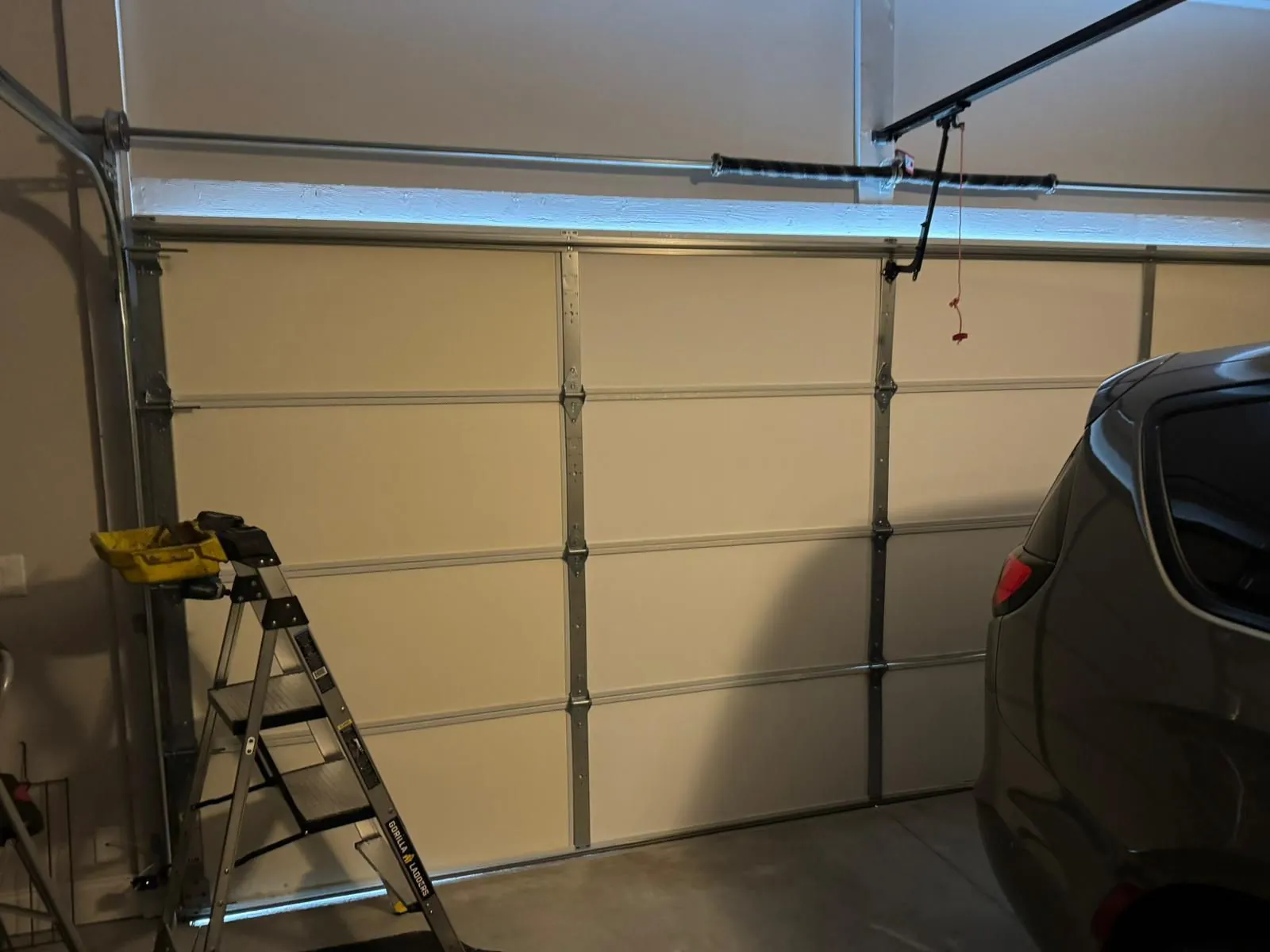
Problems that will not wait until morning
Doors break at awkward times. A spring snaps on a cold evening with a car still inside, or a storm off the water leaves a garage open to the weather overnight. Ring the moment it happens, whether that is a Sunday dawn or the small hours of a holiday, rather than lying awake about it. We won’t quote an arrival time over the phone; what you get is a straight account of what can be done and when.
While you wait, keep the door still. A door frozen in the open position on a broken spring should not be hauled down by hand. A shut door with the car behind it should not be heaved upward. A door hanging at an angle wants a wide berth. Pull the red emergency release only when the door is fully closed and resting on the floor, never when it is open or partly open.
What a visit involves
We look over the whole door first, whatever part you rang about. We run it, watch how it moves, listen to it and look at the springs, cables, rollers, hinges, tracks and opener in turn. On a door near the shore, that includes a close look at the rust on parts that have not failed yet.
Then the findings are laid out in plain words, door part by door part. Anything that can safely wait is flagged as such, and anything close to giving out is flagged too. Nothing is touched until you say yes. Once the work is finished, the spring tension is checked against the weight of the door, the opener’s limits are reset to suit, a box or a broom handle goes across the photo-eye beam to prove the reversal works, and you watch the door cycle up and down until you are happy with it.
Repair, or put in a new door
A failed spring, a parted cable, rollers worn flat or a tired motor are all parts, and parts can be changed while the door itself carries on for years.
It tips toward a replacement when it is the panels that are going: steel rusted through along the bottom panel of a harbour-side door, wooden sections soft with damp, or panels cracked in several places on a wide inland door. It also makes sense when a door has been patched so often that the next repair will not be the last. At that stage a replacement door is supplied and installed by us, measured to the opening as it really is, including the low, irregular openings of older garages. More detail is on our new garage doors page.
If you are weighing the decision for garage doors Cohasset MA houses near the water depend on, the questions are simple: how much of the door is sound, how much life is left in the hardware, and how much the salt has already taken. We go through them with you at the door.
Living with a door near the water
Between visits, a few habits help a shore-side door last. Rinse the lower panels and the bottom seal with fresh water whenever a blow off the water has coated the garage front in brine. Keep the floor at the foot of the door clear of standing water. Watch and listen as the door moves: a new grinding note or a hesitation at the same point every time usually means a roller or hinge is starting to bind.
Do not oil the torsion spring yourself, and do not try to tighten anything on the bottom brackets. A little light oil on the roller stems and the hinge pins does no harm, done with the door down and the opener’s plug pulled. Anything that involves the springs, the cables or the drums is our work.
Nearby towns along the shore
We cover the towns around this one as well. If you also have a property next door, see our pages for Hingham and Hull, or browse every town and neighbourhood we reach on the service areas page.
Your next step with a stuck or tired door
Whether the problem is a rusted spring on an older house near the harbour, a heavy double door inland that has stopped halfway, or a new door to replace one that salt has finished off, the first step is the same. Describe the sound it made, where it stopped, and whether the car is in or out. For garage doors Cohasset MA houses rely on from the harbour to the inland lots, a booking can be made whatever the clock says: call us or book online.
Questions from Cohasset
Our house is close to the harbour and the door has started to grind. Is that salt?
Very often, yes. Salt air works its way into rollers, hinges and the spring coils, and the door starts to grind or shudder before anything actually breaks. We check every moving part, not just the one making the noise, and tell you which parts are worn and which are simply dirty.
A spring broke on our wide double door. Should both springs be replaced?
On a two-spring door, the survivor has lifted the same door, through the same salty winters, for exactly as long, so it is seldom far behind. Replacing the pair keeps the door balanced. We explain the reason on the day, and the choice is yours.
The door is frozen to the floor this morning. Can I run the opener?
No. Pressing the button against a frozen seal can strip the opener’s drive or pull a cable off its drum. Leave it, or gently loosen the seal along its length, and call us if it still will not move.
Do you repair openers as well as doors?
Yes. Openers are repaired or swapped out, LiftMaster ones among them, and so are the handsets, the keypad by the door and the sensors at its base.
Our older garage has a low ceiling. Can it still take a new door and an opener?
Usually, yes. Low openings in older garages often need a different spring and track arrangement, and we measure the space as it really is before suggesting anything. New doors we supply are made to suit the odd sizes these garages often have.