
Why the rare garages on the hill need careful repair
Private garages are rare on the hill, and the ones that exist are small, low and frequently dug in below the level of the brick sidewalk, down on the flat part of the neighbourhood. Federal and Greek Revival row houses were built long before anyone parked a car indoors, so every opening was fitted into masonry that was never meant to hold an overhead door. Our garage door repair in Beacon Hill, MA covers springs, cables, panels, openers and remotes, tracks and rollers, doors that have left their tracks, and the safety sensors near the floor.
With no driveways anywhere, a working garage door is worth a great deal here. When one fails, the car is either trapped inside or stuck at the kerb, and the door itself faces the street with nothing in front of it.
Before you call, three quick looks from a safe distance help:
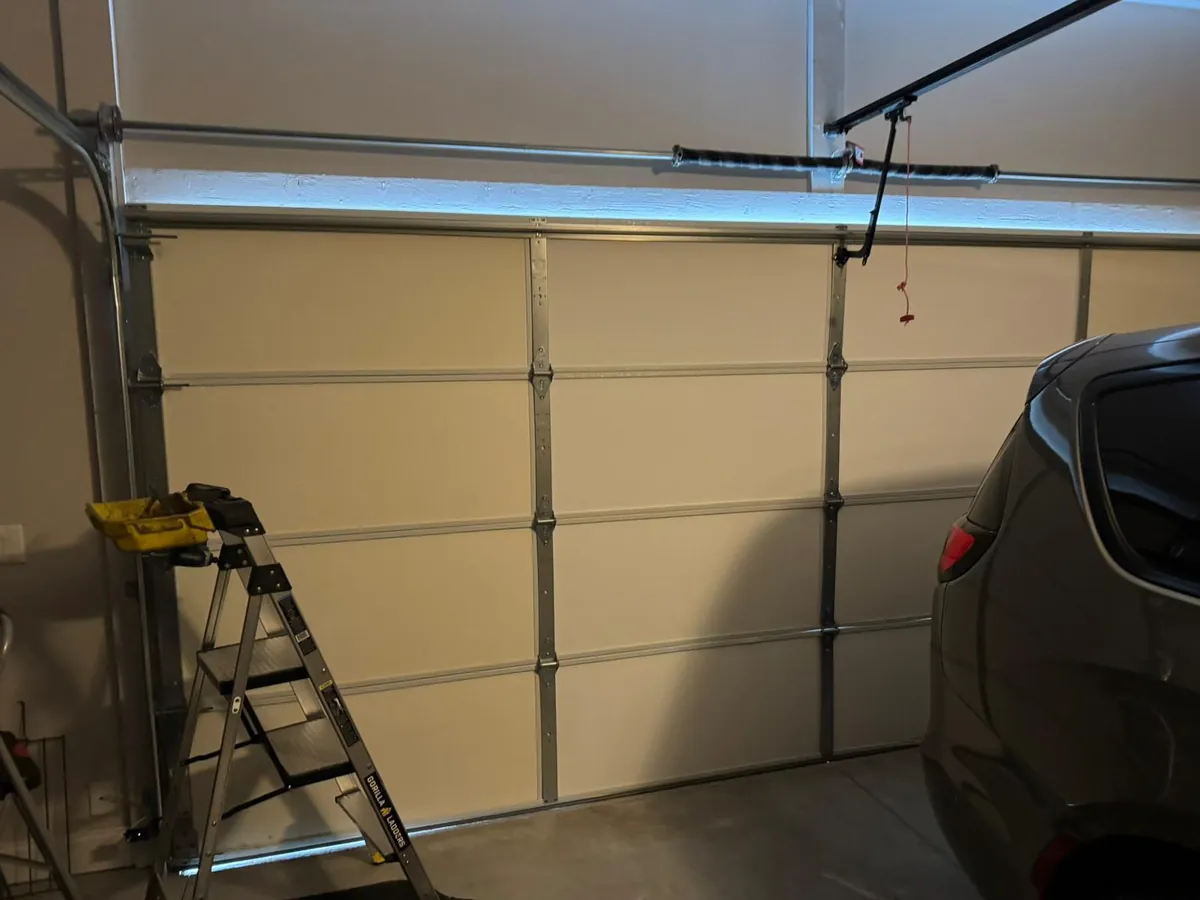
- Look at the spring bar over the door for a gap where a coil has split apart.
- Check each lower corner of the door for a cable hanging slack or unwound from its drum.
- Glance at the little lights on the two sensors near the floor; a blinking or dark light points to the sensors.
Parts a repair visit looks after
Springs
Torsion springs on the shaft above the opening, or extension springs along the side rails. Short headroom often decides which type a small bay can hold. See spring repair in Beacon Hill.
Cables and drums
The lift cables that run from the bottom corners up to the drums. Damp below-grade bays rust them from the bottom bracket upward.
Panels and sections
Dented, split or rotted sections, cracked hinges and a worn bottom seal, which matters most on a garage that sits lower than the sidewalk.
Openers and remotes
Units that hum and do nothing, remotes that only work at the door, and wall buttons that have gone dead. See opener repair on the hill.
Tracks and rollers
Low-headroom track sets, bent vertical rails, loose brackets in old brick and rollers that have seized or cracked.
Safety sensors
The photo eyes on either side of the opening, which get splashed, knocked and misaligned more often on a sloping or sunken threshold.
How a small garage door actually moves
People tend to think the opener lifts the door. It does not. The springs do almost all of the lifting, and the opener only nudges a door that is already balanced. In a torsion setup, a spring wound around a steel shaft above the opening stores energy as the door closes and gives it back as the door rises, turning a drum at each end of the shaft. A cable is wound on each drum and runs down to a bracket at the bottom corner of the door, so both sides rise together. Extension springs do the same job differently: they stretch along the horizontal rails and pull on the door through pulleys and a cable on each side.
Rollers fixed to the edge of every section run inside the tracks, which carry the door up the opening and then back along the ceiling. On a garage with very little room above the opening, that turn from vertical to horizontal has to happen in a tight radius, and the track set is often a low-headroom design with a second rail or a sharper curve. Those tight geometries are less forgiving: a roller that has worn flat or a bracket that has shifted a fraction in soft mortar shows up as binding, jerking or a door that stops short.
When one part fails, the others feel it. A weak spring makes the opener strain. A worn roller wears a groove into the rail. A frayed cable lets one side sag, and the door twists in its tracks. A useful repair finds the cause behind the symptom, not just the piece that finally gave up.
Garages below the sidewalk
On the flat of the hill, many of the few private garages sit lower than the brick sidewalk in front of them, reached by a short slope or set into the base of a row house. That one fact shapes a lot of what goes wrong.
Water runs downhill, and a sunken garage collects it. Rain, snowmelt and road salt find their way to the threshold and sit against the bottom section of the door. Over a few winters that rusts the bottom brackets where the cables attach, rots the lower edge of a wooden section and flattens or splits the rubber seal along the floor. A failed seal lets in more water and leaves, which speeds up the damage. Cables that run down to a damp corner rust from the end upward, and a rusted cable is one that snaps without warning.
Damp air also affects the parts nobody sees. Springs carry a light coat of oil to slow corrosion, and in a garage that never dries out, that coat goes quickly. Roller bearings stiffen, hinges seize, and the tracks pick up surface rust that roughens the ride. A careful garage door repair in Beacon Hill looks at the bottom of the door and the floor around it first, because that is where a below-grade bay does most of its harm.
Low openings and very little headroom
The second thing the local notes make clear is that openings here are very low. A garage door fitted into the base of an old row house may have only a hand’s width or so between the top of the opening and the ceiling joists or a masonry arch. That limits where every part can go.
A standard torsion spring above the door needs clearance that some of these bays simply do not have, so springs are sometimes mounted at the back of the track, or extension springs are used along the rails. Openers need room behind and above the door, and a ceiling-mounted unit may not fit at all; a wall-mounted unit beside the door is sometimes the answer. Track sets are bent to tight curves. None of this is unusual to deal with, but it does mean replacement parts have to be chosen for the space, not just for the door’s size and weight.
Old brick also moves with the seasons. An opening that was square years ago may be slightly out of true now, and a door can rub on one jamb or bind on one side as the masonry shifts. Track brackets anchored in soft historic mortar loosen over time. Part of the repair is often re-securing those brackets so the rails stay straight.
What a repair visit involves
Every call for garage door repair in Beacon Hill ends with a technician looking at the whole door, not only the part described on the phone. The opener is usually disconnected first so the door can be moved by hand and its balance checked. A balanced door stays put when you let go of it partway up; one that drops or shoots upward has a spring problem. The springs, cables and drums are looked over, rollers and hinges are checked for wear, and each track is sighted along its length for bends and loose brackets. If the opener or the sensors are part of the trouble, they are tested on their own.
Because there are no driveways, the work usually happens with the door open to the sidewalk and tools carried in from the street, so it helps to clear the floor just inside the opening if you can. You hear what has failed, and why, before work begins. Once the broken parts are dealt with, the door is balanced again, the opener’s travel and force settings are adjusted to suit the repaired door, and the safety reverse is tested so the door stops and backs up when it meets an obstruction.
Safe checks, and parts to leave alone
A few checks are safe and worth doing before anyone arrives:
- If the door is stuck partway, unplug the opener so it cannot try to run again.
- Wipe the lenses on both sensors with a dry cloth and make sure nothing sits in the beam between them, such as a recycling bin or a bicycle wheel.
- Put a new battery in a remote that has stopped working, then try the wall button to tell a remote fault from an opener fault.
- Look down both rails for something obvious in the way, like a shovel leaning against the track.
Other parts need to be left strictly alone. A torsion spring holds dangerous tension even when the door is closed and still, and the cables and bottom brackets are under that same load. Loosening a set screw on a winding cone, prying at a bottom bracket or trying to wind a spring by hand can release that energy in an instant. This is not a DIY repair. A door with a broken spring is also far heavier than it looks; nothing is holding it up, so it should not be lifted by hand or run with the opener.
Doors that have come off their tracks
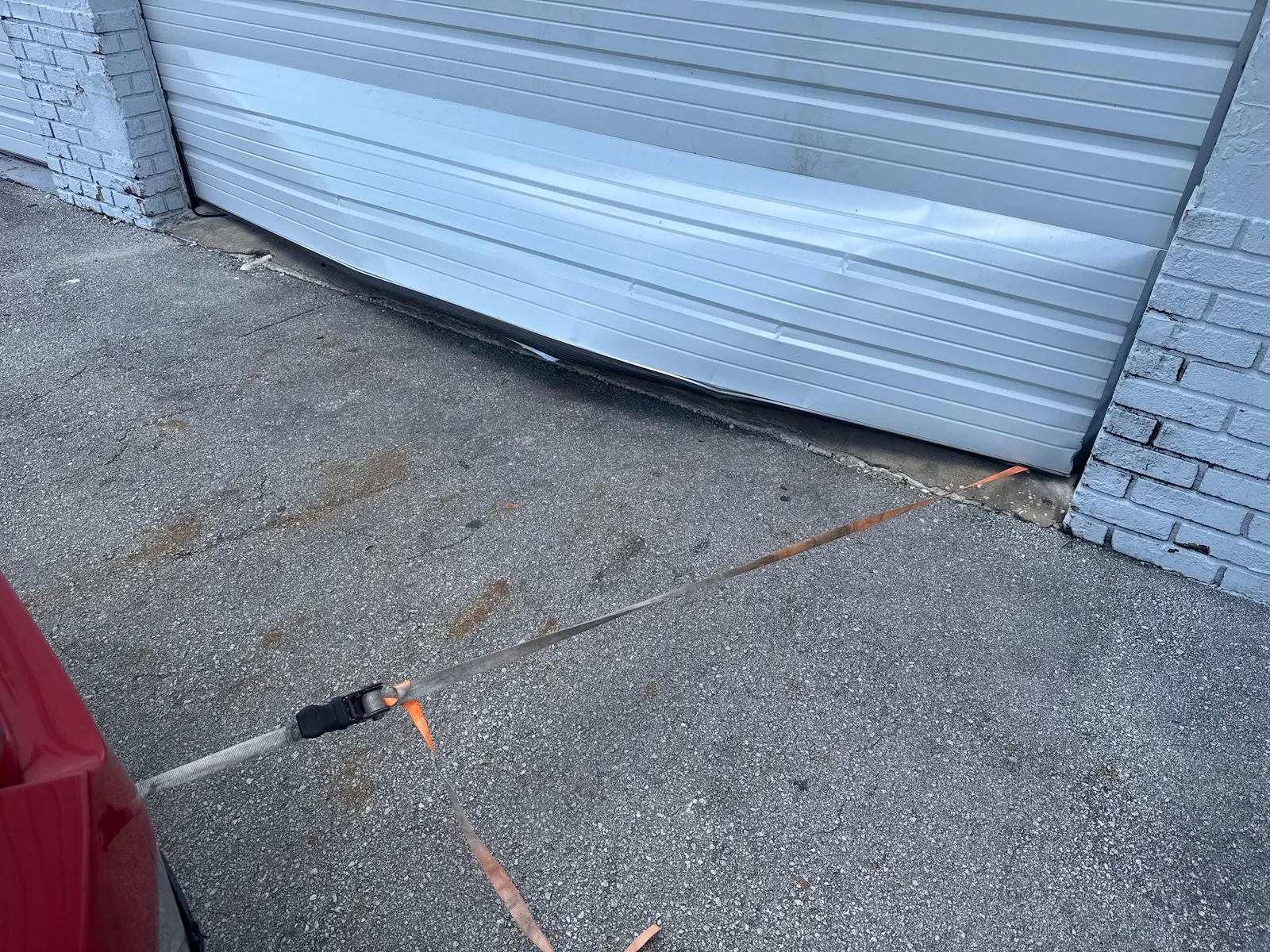
A door that has jumped its rails hangs crooked in the opening, often with a roller or two sitting outside the track. On the hill it usually follows a car clipping the door on a tight approach, a cable snapping on one side, or an opener pushing on a door that had already stopped. An off-track door is unstable and can fall. It should not be forced back or run with the opener. The repair means taking the load off the door, freeing the rollers, straightening or replacing the damaged rail and making sure both cables are even before the door runs again. The emergency repair page for Beacon Hill explains what to do if this happens late at night.
Panels, hinges and the look of the door
On a historic street, the door is part of the facade, and owners care how it looks as much as how it works. Many of the doors here are wooden carriage-style doors or panelled sections painted to match the trim of the house. When a section is dented by a bumper or rotted along its lower edge, the first question is whether that section can be repaired or replaced on its own and still match the rest of the door in profile and finish. Sometimes it can. When it cannot, the conversation turns to the door as a whole.
Hinges between the sections crack with age, and a door with a cracked hinge flexes as it travels, which shows up as a bow in the middle or a scraping sound at the same point every time. The bottom seal is the cheapest part on the door and the one that protects the most, especially in a sunken bay. Keeping it in good shape keeps water off the bottom section and the brackets.
Openers and remotes in a tight bay
The opener in a small, low garage often has a harder life than one in a roomy suburban bay. It may be squeezed into the space between the top of the door and the ceiling, or mounted on the wall beside the opening and turning the spring shaft directly. Either way, it is working against a door that may be heavy, especially a solid wooden door, and in air that is often damp. Common faults are a motor that hums without moving, a door that starts and then stops, a remote that only works from right outside the door, and a wall button that does nothing at all.
Some of these are simple: a dead battery, a loose wire at the wall button, a sensor out of line. Others point to a worn drive gear or a logic board that has failed. Before anything on the opener is replaced, the door is checked by hand, because an opener that seems weak is very often pulling against a spring that has lost its strength. LiftMaster openers are among those repaired and replaced.
Sensors on a sunken threshold
The two photo eyes mounted low on either side of the opening tell the opener whether the doorway is clear. In a below-grade garage, they sit close to where water and grit collect, so lenses get splashed and dirty and the brackets get kicked or bumped by bins carried in and out. If the beam is broken or the sensors are out of line, the door will start down and then reverse, or will not close at all. Cleaning and re-aiming them often fixes it; a sensor whose wiring has corroded in the damp needs replacing.
Repair or replace
Most doors are worth repairing. A new spring, a pair of cables, a fresh set of rollers or a new bottom seal keeps a sound door going for a long time. Replacement makes more sense when several parts are failing together, when the bottom sections have rotted or rusted through from years of standing water, when more than one panel is beyond saving, or when a wooden door has absorbed so much moisture that its weight has outgrown any spring the small bay can hold. A good garage door repair in Beacon Hill will tell you plainly which side of that line your door is on. If replacement is the better answer, the page on new garage doors in Beacon Hill covers choosing a door for a low, historic opening.
All of this sits under our broader garage door repair service, and the hill also has its own neighbourhood page.
Arranging a repair
A garage door tends to fail at an awkward moment, with the car inside and an appointment to keep. Because calls are taken at any hour, every day of the week, you can report a fault as soon as you notice it, whether a spring snapped overnight or the door refused to close in the evening. Tell us what the door is doing, what you can see is broken, whether the garage sits below the sidewalk and whether a car is inside. For garage door repair in Beacon Hill, MA, call us or book online.
Questions from Beacon Hill
My garage is below the sidewalk and water pools at the door. Is that hurting the door?
Yes, over time. Standing water rusts the bottom brackets and cable ends, rots the lower edge of a wooden section and destroys the bottom seal. A new seal, sound brackets and cables, and keeping the threshold clear of leaves and snow do a lot to slow it down.
The ceiling in my garage is very low. Can the door still be repaired?
Almost always. Low-headroom bays use track sets with tight curves and springs or openers placed where there is room. Replacement parts are chosen to suit the space so the door keeps clear of the ceiling and the arch.
My door opens a few inches and stops. What is happening?
That usually means a broken spring. The opener lifts the door a little, then senses that it is carrying the full weight on its own and stops. Unplug the opener, do not try to lift the door, and look at the spring above the opening for a gap in the coils.
Can a single damaged panel be replaced to match an older door?
Sometimes. It depends on whether a matching section can be found in the same profile and finish. If one can, the section is replaced on its own; if not, the options for the whole door are explained before anything is ordered.
Why does my door scrape or bind on one side?
On older brick openings, the masonry and the track brackets fixed into it can move slightly over the years. A loose bracket lets a rail drift out of line and the door rubs or binds at the same point each time. Re-securing the bracket and realigning the rail usually cures it.