
Openers that have to fit where there is barely any room
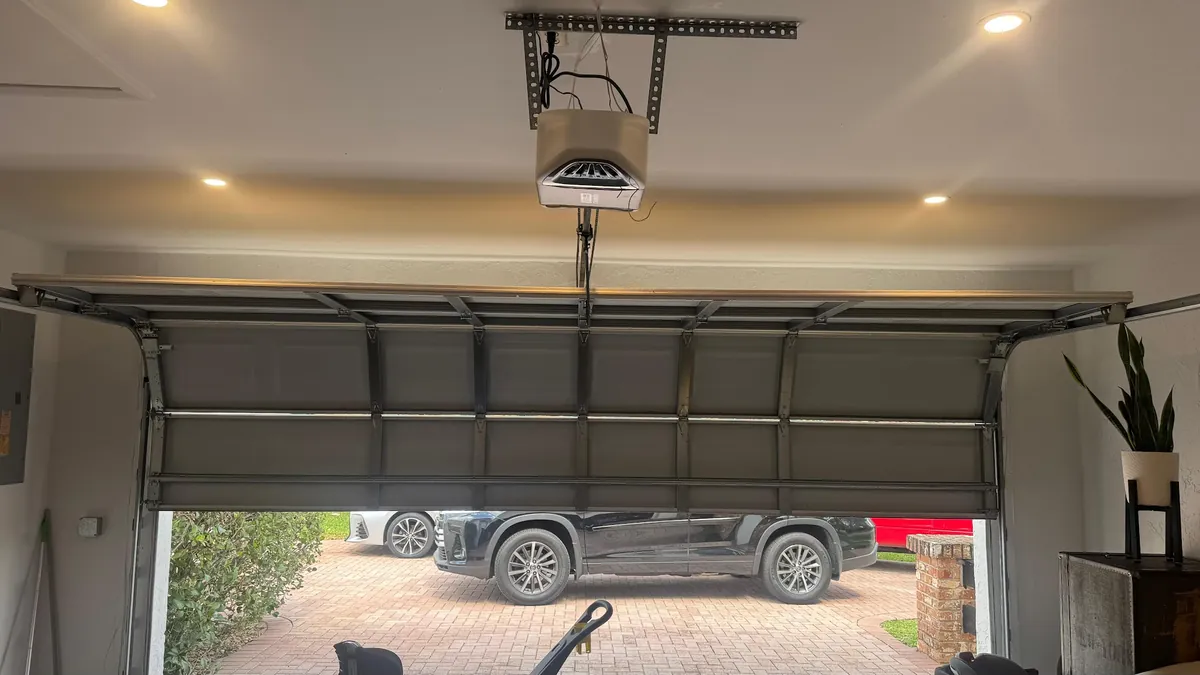
The few private garages on the hill were squeezed into the base of Federal and Greek Revival row houses or dug in below the brick sidewalk on the flat, and almost none of them were built with an automatic opener in mind. The ceilings are low, the openings are lower, and there is often no clear run above the door for a rail. Our garage door opener repair in Beacon Hill, MA covers openers repaired and installed, remotes, wall buttons and safety sensors, on doors where every inch of the bay is spoken for.
With no driveway, the opener is the difference between pulling in off the street and blocking it while you wrestle with a heavy door by hand.
Quick things to look at before calling:
- Is the light on the opener unit coming on when you press the button, or is the whole unit dead?
- Do both sensor lights near the floor glow steadily, or is one blinking or dark?
- Does the wall button work when the remote does not, or does nothing work at all?
Opener faults covered
Openers that hum or click
The motor runs or a relay clicks but the door does not move. Often a stripped drive gear, a disengaged trolley or a door the opener cannot lift.
Remotes
Handsets that have stopped working, work only up close, or have been lost and need replacing and programming.
Wall buttons
Buttons that do nothing, work only sometimes, or set the door moving on their own because of damaged wiring.
Safety sensors
Photo eyes that are dirty, misaligned or corroded, causing the door to reverse or refuse to close.
Replacement openers
New units chosen to fit low ceilings and short bays, including wall-mounted types. LiftMaster openers are among those repaired and replaced.
What an opener does, and what it does not
An opener is a motor with a set of controls. It pushes and pulls the door along its tracks, it stops when it reaches the floor or the top of its travel, and it reverses when the safety sensors or its own force limit tell it something is in the way. What it does not do is carry the weight of the door. That job belongs to the springs. A well-balanced door weighs very little to the opener, which is why a small motor can move a large door.
This matters for diagnosis. An opener that seems weak, stops partway or reverses for no reason is very often pulling against a door that has lost its balance, usually because a spring is tired or broken. Replacing the opener in that situation only means the new one will strain the same way. The first step on any opener call is to disconnect the unit and test the door by hand. If the door is heavy or will not stay put halfway up, the problem lies with the springs; the spring repair page for Beacon Hill covers that side.
Fitting an opener into a low garage
Most openers are mounted on the ceiling, with a rail running from above the door back toward the rear wall. The motor unit hangs at the back end and the trolley travels along the rail, pulling the door open on an arm. That arrangement needs clear space above the top of the open door and a ceiling deep enough to hang the unit. In many of the hill’s garages, the opening is very low and the ceiling sits right on top of it, with joists, pipes or a brick arch in the way.
There are a few ways around this. A ceiling unit with a low-profile rail can sometimes squeeze into a short bay. A wall-mounted opener, fixed beside the door and turning the spring shaft directly, needs no ceiling rail at all and leaves the space above the door clear, which suits many low garages. Where the door uses a low-headroom track or springs at the rear, the choice of opener has to suit that hardware. Whatever goes in has to clear the door at every point in its travel and leave room for the emergency release to be reached.
Damp, cold and the electronics
A garage dug in below the level of the sidewalk tends to be damp. Moisture is hard on anything electronic, and openers are no exception. Circuit boards corrode, terminal screws rust and wiring to the sensors and wall button deteriorates where it runs close to a wet floor. Cold winter mornings thicken the grease on chains and screws and make the motor work harder. On older openers, these conditions show up as intermittent faults: a door that works one day and not the next, a remote that suddenly needs to be pressed several times, or sensors that blink for no clear reason.
Some of this is fixed by cleaning and re-securing connections, re-running a sensor wire higher off the floor, or replacing a damaged wall button. When the board inside the unit itself has failed, the decision is usually between replacing that board and replacing the opener, which depends on the unit’s age and condition.
Remotes and wall buttons
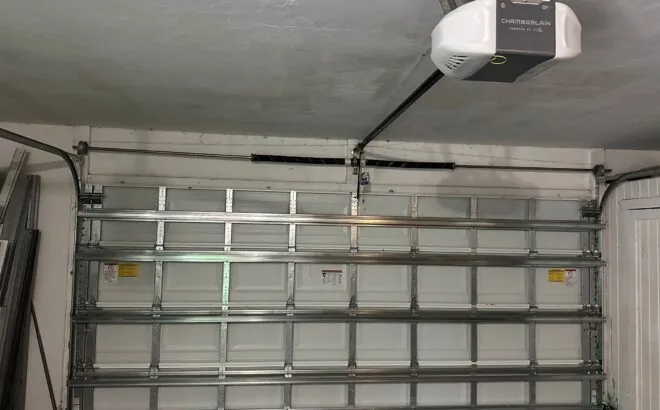
Remote faults are the most common and often the simplest. A dead battery is the usual cause. After that, a remote may have lost its programming, been damaged, or be too old to work with a replacement opener. Thick brick walls and a garage set down below the street can also weaken the signal, so a remote that works from the threshold but not from the kerb may need its receiver checked or an antenna repositioned. Lost remotes should be cleared from the opener’s memory, so they cannot open the door, and new ones programmed in.
Wall buttons fail through worn contacts, a broken wire or damp in the switch. A button that triggers the door on its own, with no one touching it, usually has a short in its wiring and should be looked at promptly.
The safety sensors
The two small photo eyes mounted low on either side of the door send an invisible beam across the opening. If anything breaks that beam while the door is closing, the opener stops and reverses. When the sensors are dirty, knocked out of line or failing, the door will start down and then pop back up, or the opener will refuse to close it at all.
In a sunken garage, the sensors live close to where water, salt and grit collect. Lenses get splashed, brackets get bumped by bins, and wires sitting at floor level corrode. Cleaning both lenses, checking that nothing is in the beam and lining the sensors up so their lights are steady fixes a lot of these calls. If they still blink, the wiring or the sensors themselves need attention as part of a garage door opener repair in Beacon Hill.
What an opener visit involves
The visit starts with the door, not the opener. The trolley is released so the door can be moved by hand, and its balance is checked. If the springs, cables, rollers and tracks are sound, the opener is reconnected and run through its cycle. The technician watches and listens for where it hesitates, checks the drive, the trolley and the rail, tests the wall button and remotes, and checks the sensors and their wiring.
Once the fault is found, you are told what it is and what fixing it involves before any work starts. If a part on the opener needs replacing, it is replaced. If the unit itself is beyond repair, the options for a replacement that will fit your bay are explained. After the work, the opener’s travel limits and force settings are set for your door, and the safety reverse is tested by closing the door onto an object on the floor to make sure it stops and backs off.
Since the garage opens straight onto the sidewalk, the work is done with the door open, and the technician will want to be able to reach the wall button and the area above the door. Clearing a path to those helps.
Setting force and travel correctly
Two settings on every opener matter a great deal for safety and for the door’s life. The travel limits tell the opener where to stop at the top and the bottom. Set too far, the opener drives the door hard into the floor or the stop bolts at the top, bending sections and straining the motor. Set too short, the door stops a few inches off the floor and leaves a gap. The force setting tells the opener how hard it can push or pull before deciding something is wrong and reversing.
On a low door in a tight bay, small errors in these settings show up quickly, because the door’s travel is short and the clearances are tight. After any repair or new installation, both are set carefully for that particular door and then checked with a test of the safety reverse. A careful garage door opener repair in Beacon Hill always ends with that test.
When the power is out
Openers do not work without power, and a door that cannot be opened in an outage is a problem in a garage with no other way out for the car. Every opener has an emergency release, usually a cord with a handle hanging from the trolley, that disconnects the door so it can be lifted by hand. That only works safely when the springs are sound; on a balanced door, lifting by hand should feel fairly light. If the door feels very heavy, do not force it, because a spring may be broken. When power returns, the trolley needs to be reconnected, usually by running the opener until it catches the door again.
Some openers carry a backup battery that keeps the door working for a few cycles during an outage. These batteries wear out quietly, and a unit whose backup has died gives no sign of it until the lights go off. If your opener has one and the door would not move during the last outage, mention it when you call so the battery can be tested along with everything else. Practising the emergency release once, in daylight and with a sound door, is worth doing before you ever need it in the dark.
Heavy wooden doors and the opener
Many doors on the hill are panelled wood or carriage-style faces chosen to suit a historic street. They look right against old brick, but they are heavier than plain steel doors and they change weight with the seasons, taking on moisture in a damp bay and drying out again in summer. An opener moving a heavy wooden door works harder at the start of each cycle, and if the springs have not been adjusted as the door has gained weight, it is effectively lifting part of the door itself. That wears out drive gears, stretches chains and trips the force limit, so the door reverses for no obvious reason. The cure is usually on the door, not the opener: rebalancing the springs to the door’s real weight takes the strain off the motor.
Keeping the hardware discreet on a historic street
Historic district expectations shape how a garage looks from the sidewalk, and owners on the hill are understandably careful about adding anything visible to a brick facade. Almost all of an opener sits inside the garage, out of sight. The parts that can show are an outdoor keypad, if one is wanted, and the sensors at the foot of the opening. Where an exterior keypad is not wanted, remotes and an inside wall button do the job. When a repair involves moving a sensor or adding a keypad, it helps to say so on the call, so the placement can be talked through. A tidy garage door opener repair in Beacon Hill leaves nothing new on the face of the building that was not there before unless you ask for it.
Repair the opener or replace it
Many opener problems can be repaired: a gear, a sensor, a wall button, a remote, a board. Replacement makes more sense when the unit is old and several things are failing at once, when parts for it are no longer available, when it does not have working safety sensors, or when its mounting position does not suit the bay and has always caused trouble. A new opener chosen for the space, such as a wall-mounted unit in a garage with no headroom for a rail, can solve problems the old one was never going to. If the door itself is near the end of its life, it may make sense to replace the door and opener together; the page on new garage doors in Beacon Hill covers that.
Openers are one part of our wider garage door opener repair and replacement service. For problems elsewhere on the door, see the repair page for Beacon Hill, and the hill’s neighbourhood page lists every service available there.
Noise in a garage under a home
Where a garage sits beneath or right beside living space, a noisy opener carries straight into the rooms above. Chain drives tend to be the loudest, and a chain that has stretched or a sprocket that has worn adds to the racket. Belt drives and wall-mounted units are generally quieter. Loose rail brackets, worn rollers on the door and dry hinges also add to the noise the opener seems to make. Tightening, adjusting and replacing the worn parts usually quietens things considerably. If the opener is due for replacement anyway, a quieter type that suits the space is worth considering.
Calling about an opener
If the opener has stopped working, check that the unit has power, change the battery in the remote and try the wall button. If the door is stuck partway or the opener is straining, unplug it and leave the door where it is. When you call, tell us what the opener does when you press the button, whether the sensor lights are steady, whether the door moves by hand and whether a car is inside. For garage door opener repair in Beacon Hill, MA, call us or book online. If the door is stuck open to the street at night, the emergency repair page for Beacon Hill explains what to do in the meantime.
Questions from Beacon Hill
There is almost no space above my garage door. Can I still have an opener?
Usually, yes. A wall-mounted unit fixed beside the door turns the spring shaft directly and needs no ceiling rail, which suits many low bays. A low-profile ceiling unit can sometimes fit too.
My remote works at the door but not from the street. Why?
Thick masonry and a garage set below sidewalk level can weaken the signal. A fresh battery comes first. After that, the receiver’s antenna may need repositioning, or the remote may be failing.
The door starts to close, then goes back up. What is wrong?
Most often the safety sensors. Wipe both lenses and check that their lights are steady and that nothing is in the beam. If that does not fix it, the door may be binding in its tracks, which makes the opener think it has hit something.
The opener hums but the door does not move. Can it be fixed?
Often. The trolley may have been released, a drive gear may have stripped, or the door may be too heavy because of a broken spring. The door is checked by hand first to find out which.
Do you work on LiftMaster openers?
Yes. LiftMaster openers are repaired and replaced, along with their remotes, wall buttons and sensors.