
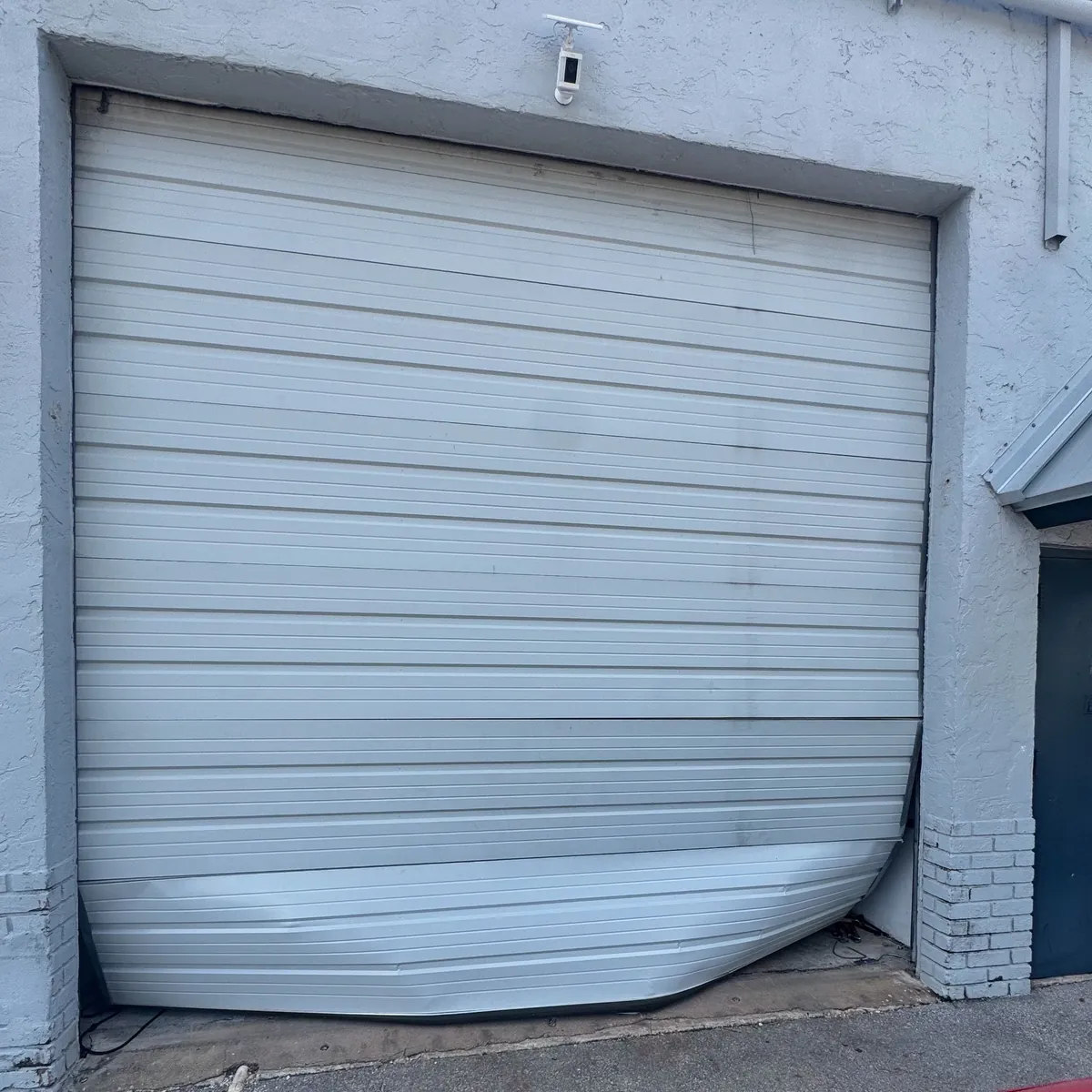
Rear garages at the bottom of the hill
Walk the side streets around the Pond and off Centre Street and you will see the pattern repeat: a Victorian or a triple-decker on the street, and behind it, a detached garage tucked into the back of the lot. Because so much of the ground here rises and falls, the lots are rarely flat. A good many driveways leave the kerb and drop steeply toward the garage, so the door sits at the low point of the property. The work we do on garage doors Jamaica Plain MA owners call about is shaped by that slope more than by anything else.
A downhill approach changes how a door lives. The springs carry a harder load than they would on a level site, rainwater and meltwater run toward the bottom panel, and a car rolling down the drive has gravity on its side when it meets the door. Older detached garages add their own character: timber framing that has moved, openings that are no longer quite square, and power that may or may not reach the building.
From a safe spot, without touching the door, check three things:
- Has the coiled spring over the header parted into two pieces, or is a long side spring dangling loose by a track?
- Is water, ice or grit sitting against the door’s bottom edge?
- Does the door’s lower edge rest evenly across the floor, or rock on one corner?
Every service, one Jamaica Plain hub
Each of these services has a page of its own for Jamaica Plain. A door that judders, grinds, binds or has a cracked panel belongs under garage door repair in Jamaica Plain. Broken torsion or extension springs, the commonest urgent problem on a sloping lot, have their own page: Jamaica Plain spring repair. Openers, handsets, keypads, wall switches and the paired photo sensors are covered by Jamaica Plain opener repair and replacement. A door hung open at midnight with the yard exposed goes to emergency garage door repair for Jamaica Plain. And when the panels themselves have had their day, we supply and fit a replacement through new garage doors in Jamaica Plain.
Garages in neighbouring Roslindale and Mission Hill share some of the same hilly ground; the service areas page lists every other neighbourhood and town we reach.
How a steep driveway works on the springs
A garage door’s springs are wound or stretched to counter the door’s weight, so that the door almost floats when it is lifted by hand. On a level site, the door rests on a flat floor and the springs start each lift from the same, predictable position. On a sloping site things are rarely that tidy.
Where a driveway runs steeply down to the door, the slab inside the garage often has its own pitch, and the door’s bottom edge meets it unevenly. The door may sit lower at one corner, the cables may carry unequal loads, and the springs may be adjusted to compensate for a door that never quite lands square. That puts the springs under more strain than the same door on flat ground, and it shows: on these lots, springs tend to tire sooner and break more often. Frequent cold snaps in a garage with no heat make matters worse, because a fatigued spring is most likely to let go on the first hard frost.
The result is the most common urgent call we get from this neighbourhood. Someone presses the button, hears a crack like a dropped plank, and the door lifts a few inches before the opener quits. A broken spring is the culprit almost every time.
One warning comes first. A torsion spring holds dangerous tension, stored up like a wound clock. Releasing or loading that energy takes proper winding bars, practised hands and a firm grasp of what happens when a bar slips; a mistake can cost fingers or worse. It is not a DIY job. Extension springs, the long pairs running parallel to the ceiling rails on certain older doors, should have a safety cable running through each, because without one a broken spring lashes out across the garage. Leave both kinds to us.
When a spring is replaced on a sloping-lot door, it is sized for the door’s real weight and height, and we also look at why the door is landing unevenly. Sometimes the answer is a cable adjustment, sometimes a new bottom seal shaped to the floor, and sometimes the track needs resetting so the door comes down square. Treating the cause as well as the broken spring makes the next spring last longer.
Victorians, triple-deckers and the yard behind them
The houses around the Pond and along the streets off Centre Street are mostly Victorians and triple-deckers, and their garages stand apart from them: detached, behind the house, toward the back of a lot that often slopes. The house faces the street, and the garage sits wherever the rear of the lot leaves room, which on this ground is frequently well below street level.
A garage placed this way has some recurring traits. The building is often narrow, with little space either side of the door for tracks and brackets. The approach may curve or pinch past the side of the house before it opens out. And the garage is far enough from the street that you may not see or hear the door from indoors, so a door left half open can go unnoticed overnight.
On a triple-decker, one garage may be shared by more than one unit, which means more remotes, more trips a day and more chance of a handset going missing. A door that cycles several times a morning on a sloping lot wears its springs and rollers faster still. Where several households use one door, it is worth knowing how many remotes exist and wiping the opener’s memory now and then so that only the current ones work.
The tight footprint also limits what a replacement door can be. A narrow garage at the bottom of a slope will not take every style or track arrangement, and the low point of a drive is a hard place to stage door panels. For garage doors Jamaica Plain MA yards tuck away at the back like this, measuring the opening, the headroom and the side room properly is the first step in choosing what goes in.
Water, grit and the bottom panel
Water runs downhill, and on a driveway that falls toward the garage it runs straight to the door. Rain, melting snow and the grit that comes with them collect along the bottom seal and, over the years, against the lowest panel and the base of the jambs. On a timber door or timber jambs, that means soft spots and rot at the bottom. On a steel door, it means rust starting at the lowest section.
In winter the same water freezes. A door can be stuck fast to the slab on a cold morning, and an opener trying to lift it will strain hard enough to bend the top panel or strip its gear. If your door will not move on a frosty day, stop pressing the button and loosen the bottom edge first. Keeping a channel clear in front of the door, and fixing a torn or flattened seal, helps a lot. Our winter garage door problems guide covers cold-weather trouble in more depth.
Old frames behind old houses
Many of the outbuildings behind Victorians and triple-deckers here are older timber buildings, some of them put up long before an overhead sectional door was hung in them. Over decades a timber frame twists and settles. A header can sag a little, a jamb can lean, and the bolts that hold the track brackets can loosen as the wood dries and shrinks.
The effect on the door is gradual. It starts to rub on one side, the gap at the top becomes uneven, and in the end the rollers jam in a rail that has wandered from plumb. A repair on a building like this often begins with the frame. A bracket fixed into split or rotten wood will not hold however tightly it is turned, so it may need to move to sound timber or onto a backing board.
The building’s position matters, too. A garage at the back of a sloped lot may sit below the house, with steps or a path between them. Long parts such as track sections, a spring shaft or door panels have to be carried down that route, which is worth mentioning when you book.
Openers on a sloping site
An opener on a downhill garage has more to deal with than most. If the springs are tired or out of balance, the motor ends up carrying weight it was never meant to lift, and its gears and drive wear quickly. That is why a struggling opener on one of these lots is often a spring problem in disguise. Before a new opener is fitted, the door should move easily and stay put at halfway when lifted by hand.
Detached rear garages raise the question of power. Some have a dedicated line run from the house; a few have none, and their doors are operated by hand. Where there is power, a breaker that has flipped indoors, or a feed nicked somewhere along the yard, can make a healthy opener look dead.
The photo sensors near floor level deserve a word on a sloping slab. If the floor is not level, one sensor may sit slightly higher than the other, and a minor knock pushes them out of line. A door that comes down, stops and goes back up, with the opener light flashing, is almost always this. We repair and replace openers including LiftMaster models, reprogram handsets, and set the force so the door reverses when it should.
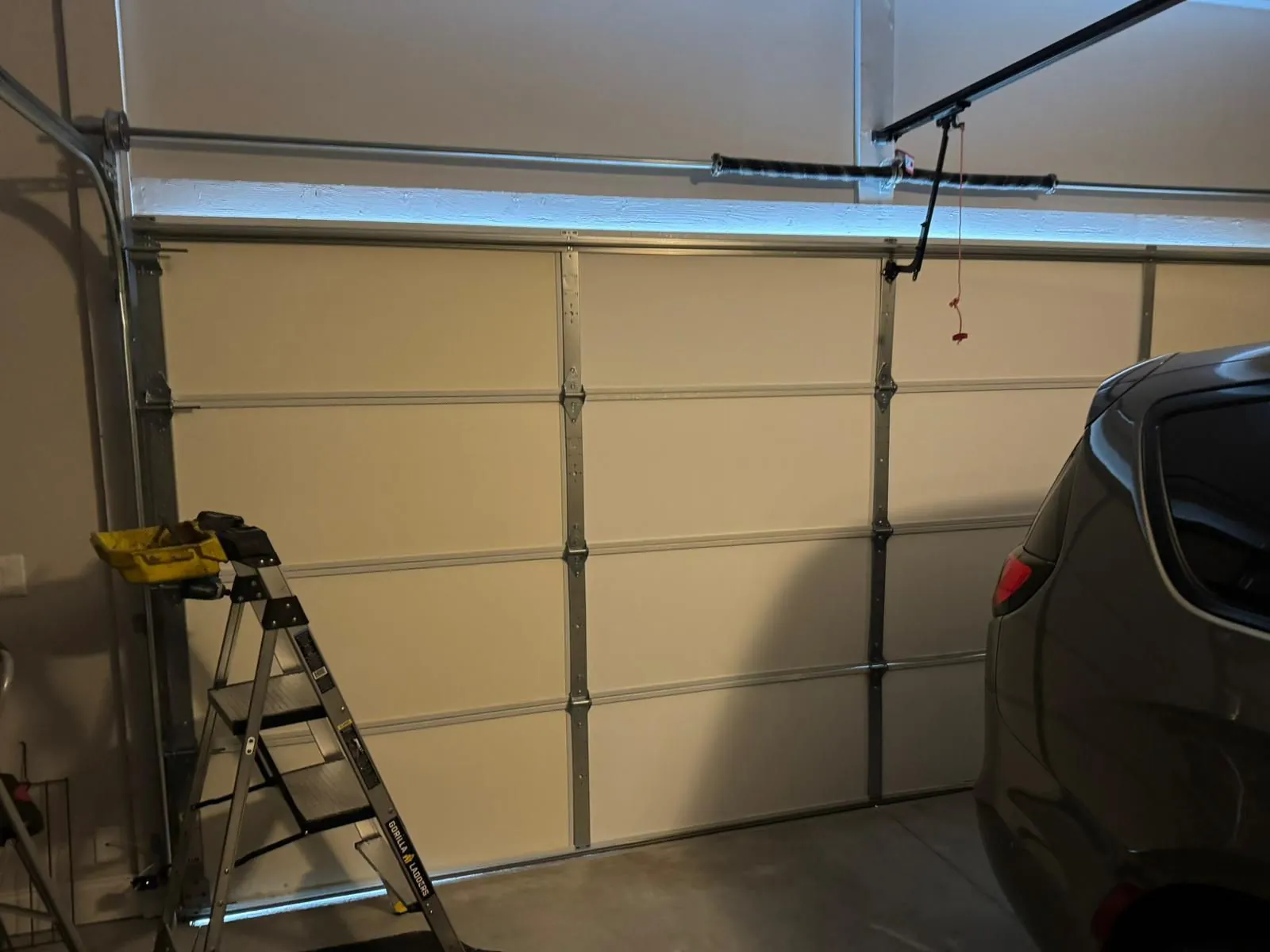
When a door comes off its tracks
On a sloping lot, a car rolling down the drive can nudge the bottom of the door harder than its driver intended. A solid bump can pop a panel’s rollers out of the channel, split a roller or kink a rail. A door that has jumped its tracks hangs at an angle and can drop without warning, so leave it alone, keep children and pets well back, and do not drive in or out under it.
The repair begins by locking the door in position so it cannot slide, then working each roller back into its channel, hammering true or renewing the damaged track, and evening up the lift cables before the door runs again. On older timber framing we also check the brackets have not been wrenched loose.
Late at night in Jamaica Plain
Someone picks up whenever you ring, at any hour and on any day. With a garage set well back from the street, the real worry when a door fails at night is a door stuck open with the yard and whatever is stored inside exposed. A door shut with a broken spring can usually wait safely until the repair, as long as nobody tries to lift it.
While you wait, keep everyone away from the door’s path, leave any loose cable where it hangs, and do not try to prop or tie a door that is hanging crooked. If you cannot get a car out because of a broken spring, that is frustrating but not dangerous; a door stuck open is the one to call about first.
Repair the door, or replace it
Behind the panels, everything that moves is designed to be swapped out in time, and a door with healthy panels can run on for years once those moving parts are fresh. On these older garages, keeping a sound door often makes sense.
Replacement is the better choice when the panels have failed: a bottom section rotted or rusted where the runoff collects, timber panels split or warped, or a door so patched over the years that each repair causes the next fault. We supply and hang a new door sized to the opening the building actually has, with a bottom seal that meets the floor properly and springs set for the door’s weight. For garage doors Jamaica Plain MA rear lots hold, getting that seal and the balance right is what makes a new door last. If you are weighing it up, the warning signs are listed under replacing versus repairing, and the options are laid out in our new garage door guide.
What a visit looks like
A visit begins with the whole door and its frame, not just the part that failed. One broken spring often sits beside a worn cable, flat-spotted rollers or a bracket pulling out of the timber. No part goes on until the fault has been explained to you and you are happy with the plan. Afterwards we hand-test the balance, set the opener’s travel and closing force, prove the auto-reverse against an obstruction, and cycle the door up and down in front of you.
On a steep lot, a cleared drive and a shovelled path down to the garage make the visit go much more smoothly after snow. If the drive is icy, tell us; a ladder and a door panel are awkward to carry down a frozen slope, and it may make sense to bring them by the path instead. Leave the car outside the garage if you can, at the top of the drive rather than the bottom, so the opening and both tracks are clear to work on and nothing is parked downhill of the door while it is being adjusted.
What to mention when you book
Tell us the garage is detached and at the bottom of a slope, if it is. Say whether it has power, and how the door is behaving: stuck shut, stuck open, rising crooked, slamming down, or making a new noise. Mention any bang you heard and whether a cable looks slack. For garage doors Jamaica Plain MA owners describe this way, those details point straight to the likely parts.
Next step
Steep drive, old garage or a door that has simply stopped: tell us what you are seeing. Downhill or level, call us or book online.
Questions from Jamaica Plain
Our downhill garage keeps going through springs. Why?
A sloping driveway and an uneven slab often mean the door lands out of square, and the springs are adjusted to compensate. That extra strain, combined with cold weather in an unheated garage, shortens their life. Fixing the cause along with the spring helps the next one last.
Water pools at the foot of our garage door. Is that a door problem?
It is mostly a site problem, since the drive slopes toward the garage, but it damages the door. Rot or rust starts at the bottom panel and the jambs. A sound bottom seal helps, and keeping a clear channel in front of the door lets the water get away.
Our detached garage has no power. Can it have an opener?
An opener needs a power supply. If there is none to the garage, a feed would have to be run from the house first, which is work for an electrician. The door can be serviced and kept running smoothly by hand in the meantime.
The door scrapes one side as it moves. What causes that on an old garage?
Usually the timber frame has moved over time, letting a jamb lean or a track bracket loosen. Resetting the track and refixing the brackets into sound wood often cures it without touching the door itself.
Can new door panels be carried down to a garage below the house?
Yes. Panels and track sections are carried down by hand along the path or steps. Tell us about the route when you book so the visit is planned around it.