
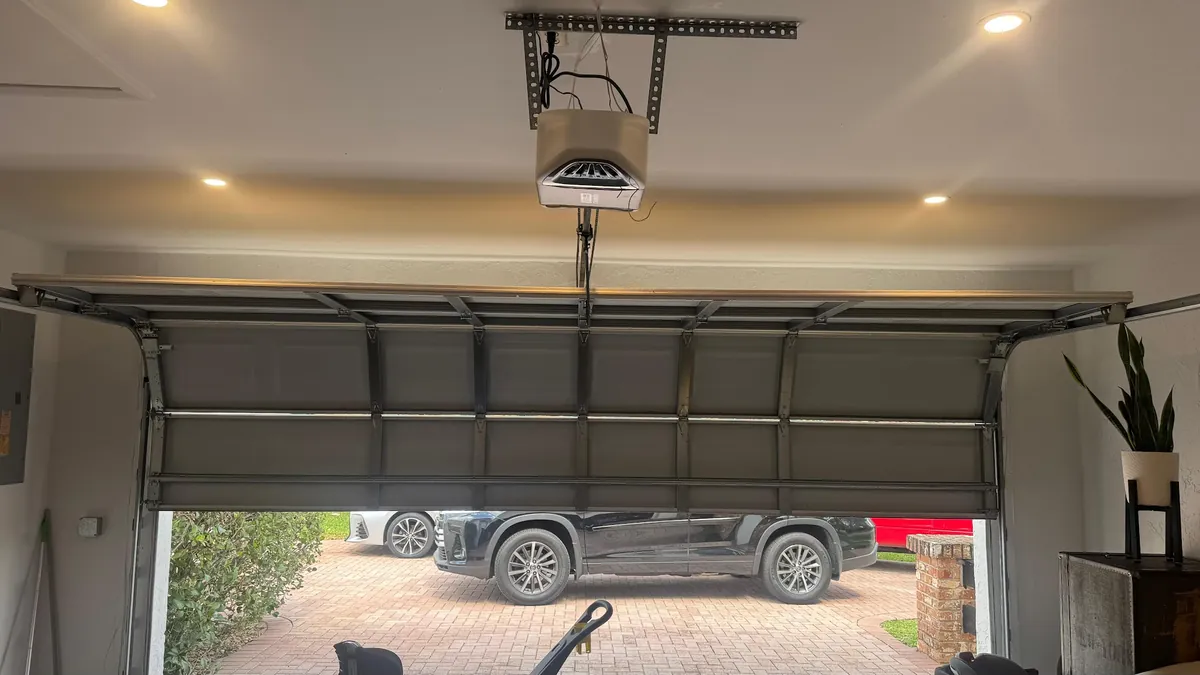
Why openers on Jamaica Plain’s downhill garages work harder
On the Victorian and triple-decker lots close to the Pond and off Centre Street, most garages are separate buildings at the back of the lot, and plenty of them sit at the bottom of a drive that falls away from the street. Garage door opener repair Jamaica Plain MA homeowners call about often traces back to that layout. An opener is meant to guide a balanced door, and where the lot drops toward the garage, the door it moves is rarely as light or as easy-running as it was meant to be.
Water, slush and grit run down the drive and gather at the threshold, and on winter nights the rubber along the bottom edge can lock onto the concrete. A steep approach makes the springs labour more than a level one, and the opener feels every bit of that: as the springs tire, the motor takes on weight it was never built to lift. The photo eyes, mounted just above the wet floor, get splashed and knocked out of line more than they would on level ground.
Before you call, a quick look at three things narrows it down:
- Whether the light on the opener’s ceiling unit comes on when you press the wall button.
- Whether pressing it brings any noise from the motor: a hum, a click or a whir.
- Whether the small indicator lamps on the two photo eyes are lit and steady.
Opener faults we deal with in Jamaica Plain
Motors and drive gears
A unit that hums without moving, or runs while the door stays put, often has a worn drive gear or a trolley that has come unhooked from the carriage.
Remotes
A handset that has gone dead, works only from close up, or has been lost. Remotes are reprogrammed or replaced and paired to the opener.
Wall buttons
The button inside the garage door frame, and the low-voltage wire that runs to it, which can be chewed, pinched or worked loose.
Safety sensors
The pair of photo eyes at each side of the opening. Misaligned, dirty or wet, they stop the door from closing and send it back up.
Stop points and closing force
An opener that stops short, closes too hard or reverses at random usually needs its limits and force set again for how the door now behaves.
Replacement openers
When a unit is worn out, a new one is fitted and tuned to the door it drives, LiftMaster models included.
Why a balanced door matters more than the motor
It helps to know what an opener is actually doing. The springs over the door carry its weight. All the opener has to do is shift a door that the springs have made almost weightless: set it going, stop it at the right points and reverse it if anything gets in the way. It is not a winch.
When the springs are healthy, an opener can last many years with little attention. When they weaken, the motor quietly picks up the shortfall. It works harder on every lift, its gear wears faster, and its force sensing starts to read the extra load as an obstruction. That is how a door begins reversing for no visible reason, or stopping a foot or two short of the top.
Down where these drives level out, the extra load arrives in several ways at once: a bottom seal stuck to an icy threshold, a timber door heavy with damp, snow packed against the lowest section. So before an opener is condemned, the door is always checked by hand. A good number of opener complaints in this neighbourhood turn out to be spring problems, and the Jamaica Plain spring repair page explains that side of things.
Reading the symptoms
The way an opener misbehaves says a lot about where the fault lies.
Nothing at all happens, no light and no sound. Start with power. In a detached garage, the ceiling outlet may be on a circuit that has tripped, or the plug may have been knocked out. If the wall button and every remote are dead together, power is the likely cause.
You hear the motor straining, yet the door stays put. Either the trolley has been disconnected from the drive, the drive gear inside the unit has stripped, or the door is so heavy that the motor cannot start it. Do not keep pressing the button.
The door goes down, touches the floor, then goes back up. The close limit is set too low, or the door is meeting ice or debris at the threshold and reading it as an obstruction. On a sloping drive, a ridge of frozen slush along the bottom often does exactly this.
The door starts closing, then reverses before it gets far. That is almost always the photo eyes. Check that nothing is between them and that both indicator lamps are lit.
One remote works and another does not. The fault is in the handset, not the opener. Try a new cell in it first; if that changes nothing, the handset needs pairing again or replacing.
The button inside works, yet the handset fails from up at the street. The remote may be weak, or the distance and the house between the street and the garage may be eating its range.
Remotes, distance and the drive down to the garage
A detached rear garage puts the opener a fair way from where a driver first reaches for the remote. Coming off the street and starting down a steep drive, people want the door open before they commit to the slope, not halfway down it with the brakes on. A remote that only works from close range is more than an annoyance on a drive like that.
Range problems usually come down to a tired battery, a handset that has been dropped once too often, or an antenna on the ceiling unit that has been tucked up against the joists or bent out of the way. The house itself can stand between the street and the garage, and on a lot that falls away, the garage roof may sit well below the line of sight from the top of the drive. Garage door opener repair Jamaica Plain MA drivers ask for often includes freeing the antenna, testing the receiver and reprogramming every remote the household uses.
When remotes have been lost or a property has changed hands, it is worth clearing the opener’s memory and pairing only the handsets that are still in use. That way nobody holding an old remote can open the garage.
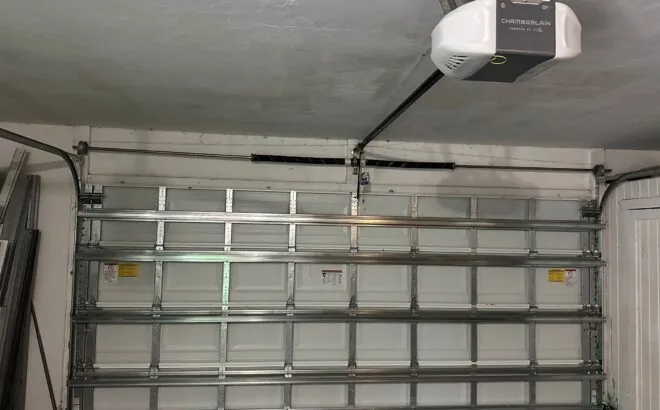
Wall buttons and wiring in a detached garage
Of all the controls, the button by the side door is the plainest, and it is the one people forget to suspect. A slim bell-type cable links it to the motor head, usually clipped up a stud and over the joists. In a detached garage that wire shares the building with stored bikes, tools and garden gear, and it gets caught, pinched or pulled loose. Rodents in an outbuilding at the back of a lot will chew it too.
The signs are easy to read. If every remote works and the wall button does nothing, the button or its wire is the fault. If the button works only when pressed hard or held at an angle, the contacts inside it are worn. Garage door opener repair Jamaica Plain MA owners ask for often turns out to be no more than a new button and a fresh run of wire, routed out of harm’s way and fixed at both ends.
Damp matters here too. A garage that takes water under its door at the bottom of a drive can be humid inside for much of the year, and corroded terminals on the button or the ceiling unit give an intermittent fault that comes and goes with the weather.
Sensors at the bottom of a slope
The safety sensors are two small units mounted on the door tracks, one on each side, close to floor level. A beam of infrared light passes from the sending unit across the opening to its partner, and if a leg, a bike or a bin interrupts it during a close, the motor halts the door and lifts it again. It is the single most important safety feature on the door.
Where a garage takes the runoff from the whole drive, those sensors live a hard life. Rain splashes off the apron onto the lenses. Grit and leaves wash in under the door and settle around them. Snow shovelled down the drive gets pushed against the brackets, and the brackets are easy to kick or catch with a shovel. Any of these can blind a sensor or tip it out of line with its partner, and the result is a door that refuses to close.
Cleaning the lenses with a soft dry cloth is safe and often fixes it. If the lamps still will not settle, the brackets may need re-aligning or the low-voltage wires checking where they run along the wall. Sensors should never be bypassed or taped together to make the door close; that removes the one thing that stops a door coming down on a person or a car.
What a visit involves
Every opener visit starts with the door, because the opener can only be judged against a door that moves freely. With the trolley released, the door gets raised and lowered by hand. If it is heavy, drifts down or binds, the springs or tracks are part of the problem and are looked at before the opener is blamed.
Next the unit is cycled with the door unhooked from it. Its motor, drive gear, trolley and rail are checked, along with the mounting brackets that hold the unit to the ceiling; in an older detached garage, those brackets are sometimes fixed to joists that have moved or to timber that has loosened. The wall button and its wire are tested, every remote is tried, and the photo eyes are checked for alignment and signal.
Nothing is touched until you have heard the diagnosis and the options. After the repair, the opener is reattached, its upper and lower stopping points and its pushing force are tuned to this particular door, and a board laid across the threshold proves it will back off when it meets resistance. The sensors are tested by passing something through the beam as the door closes.
What you can try first, and what to leave alone
Some checks cost nothing and solve a fair share of opener calls:
- Look at the outlet the opener plugs into. If it is dead, check the breaker or any reset button on that circuit.
- Fit a new cell in a silent handset and test it standing close to the door.
- Wipe both photo-eye lenses and clear anything sitting between them.
- On a cold morning, clear ice from along the bottom seal before running the door.
Leave the mechanical side alone. The emergency release cord, the red handle hanging from the trolley, should only be pulled when the door is fully closed. If a spring is broken and the door is up, releasing it can let the door drop at full weight. The springs, cables and bottom brackets are under heavy tension; a torsion spring is wound under dangerous tension, so it is never a DIY job. And do not open the opener’s cover while it is plugged in.
Openers in older garages with low ceilings
Many of the detached garages behind older houses here have less headroom than a modern garage, and some have had their openings altered over the years. That affects where an opener can be hung and what kind will fit. A ceiling-mounted unit needs room for its rail above the door’s travel, and a solid place to hang from. A low garage may call for a different mounting arrangement, and a ceiling with tired or uneven joists may need new hanging brackets.
When an opener is replaced, the new one is picked for the real ceiling height and framing in front of us. It also has to suit the door: a heavy timber door at the bottom of a damp drive asks more of an opener than a light insulated steel door, and the opener’s force and the door’s balance are set together.
Fix the unit or fit a new one
A lot of the faults we find in openers are quick, contained fixes: a stripped drive gear, a worn trolley, a remote that needs pairing, a sensor knocked out of line, a wire chewed through. If the motor and the logic board are sound, fixing the unit is normally the better move.
A new opener becomes the better buy when the unit has failed in its core, when parts for it are no longer to hand, or when it lacks the safety reversing that every opener should have. An opener that has spent years straining against an unbalanced door may also be near the end. We will say which way the evidence points. When a replacement is the right call, the new opener is installed, set up for your door, and every remote you keep is paired to it. Garage door opener repair Jamaica Plain MA owners book with us covers both outcomes, and that includes LiftMaster units, which we fix and swap out like any other opener.
Arranging opener repair
An opener rarely fails at a sensible time; it is usually the morning you need to leave or the evening you come home in the dark. Ring at midnight or on a holiday and the line is still answered. If the door is stuck open or the car is shut in, the Jamaica Plain emergency repair page has the safe steps to follow while you wait, and if the door itself has worn out, read about new garage doors in Jamaica Plain.
Tell us how the unit responds to the button, whether the photo-eye lamps glow, and how heavy the door feels if you raise it yourself, and call us or book online. Armed with that, garage door opener repair Jamaica Plain MA garages need can be planned before anyone arrives. Openers across the city are covered on our main garage door opener page; panels, tracks and other door faults are on the Jamaica Plain garage door repair page, while every local service is collected under Jamaica Plain.
Questions from Jamaica Plain
My opener hums but the door will not move. What is wrong?
The trolley may have been released from the drive, the gear inside the opener may have stripped, or a broken spring may have left the door too heavy to start. Stop pressing the button, and check the coil above the door, from well back, for a gap before trying anything else.
Why does the door reverse as soon as it touches the floor in winter?
Where the drive drains toward the door, ice and frozen slush build up along the threshold, and the opener reads that ridge as an obstruction. Clearing the ice usually helps. If it keeps happening, the close limit and force settings may need adjusting.
The door will not close and the sensor lamp is blinking. What should I check?
The beam between the photo eyes is blocked or out of line. Clear anything between them, wipe both lenses with a dry cloth, and check that neither bracket has been knocked. If the lamp still blinks, the sensors need aligning or their wires checking.
Can old remotes still open my garage after we move in?
They can, if they were paired to the opener. Clearing the opener’s memory and pairing only the remotes you have is a sensible step when a property changes hands or a remote goes missing.
Is it worth repairing an old opener?
Often, yes, if the motor and the board are sound. A worn drive gear or trolley is a modest repair. If the unit has failed at its core or has no working safety reverse, replacing it makes more sense.