
Why Medford garages call for a different kind of repair
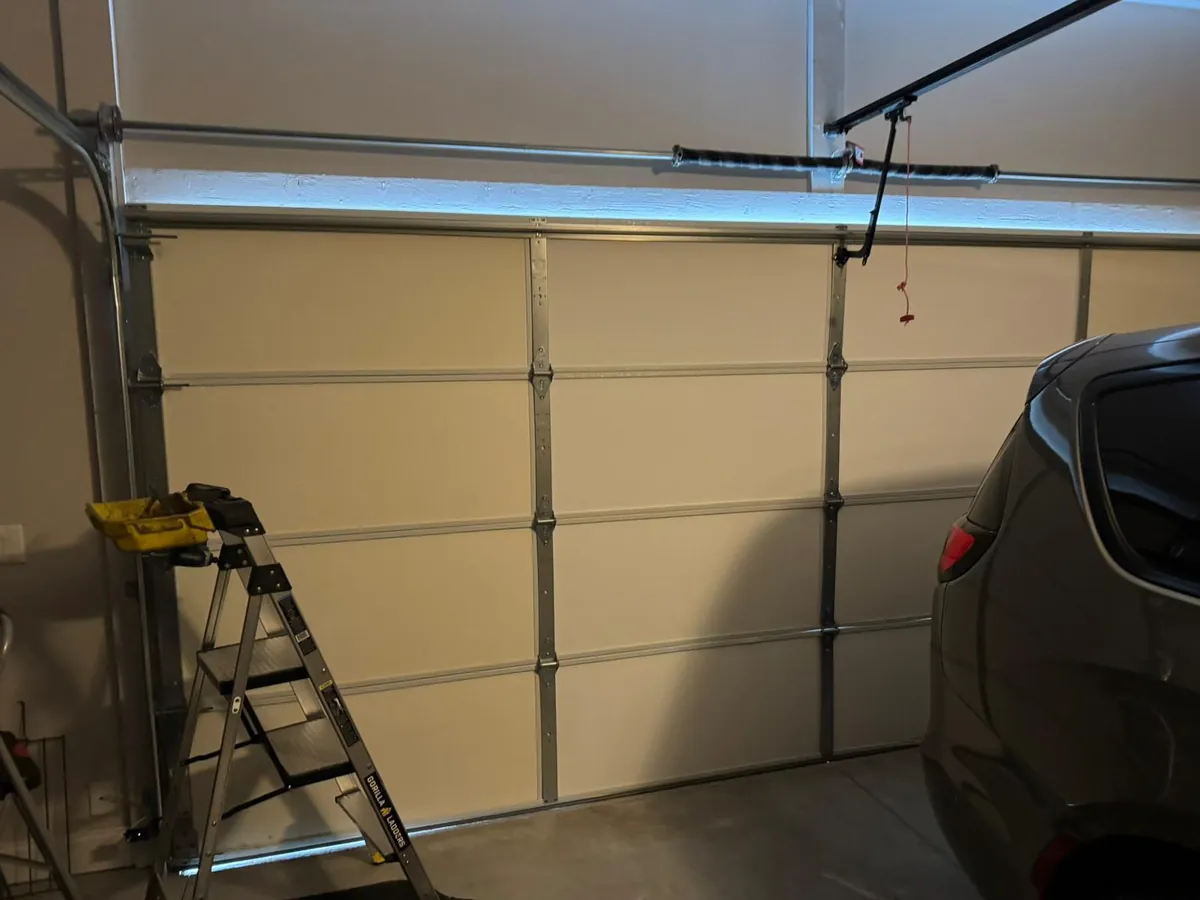
Medford sits a step out from the tight inner neighbourhoods, and its garages show it. Across Wellington, West Medford and the Lawrence Estates, single- and two-family houses stand on lots with room for a proper garage, sometimes joined to the house and sometimes standing alone toward the rear of the property. Where a city bay squeezes one narrow door into a brick opening, a Medford garage often carries a double-wide door, and that one fact changes how much the door weighs, how its springs are sized and what a failing track does to it. Garage door repair Medford MA homeowners ask us for therefore reaches across the whole moving assembly: the springs and the cables, every panel, the opener with its remotes, the tracks with their rollers, doors knocked out of their channels, and the safety sensors.
A garage door is a set of parts that lean on one another, so the part that broke is not always the part that started the trouble. Three quick observations, made from a few steps back with your hands at your sides, help us picture it:
- Overhead, a coiled spring with a visible break in it has snapped.
- Low down at either corner, a loose, drooping cable, or a bottom rail riding higher at one end, suggests a cable or drum fault.
- At ankle height either side of the opening, a sensor light that blinks or has gone dark tells you the beam is broken.
The faults a Medford repair visit puts right
Snapped or tired springs
Torsion springs coiled around the shaft at the head of the opening, or extension springs running parallel with the ceiling tracks. A double-wide door often runs on two torsion springs, each under heavy load. More on spring repair in Medford.
Cables, drums and a lopsided door
A lift cable gone ragged or broken, or one that has slipped from its drum, leaves the door hanging low at one corner. On a wide door that tilt can twist the sections.
Dented or cracked sections
Panels creased by a bumper, split along a seam or soft with rot near the ground, plus hinges that have loosened and a bottom seal worn thin.
Openers and their controls
A motor that groans but never moves the door, a remote with no effect, or a button beside the house door that has gone dead. More on opener repair in Medford.
Tracks, rollers and off-track doors
Rollers cracked or frozen in place, brackets shaken loose, track kinked by a knock, and doors sprung loose from their channels.
Safety sensors
The low-mounted beam pair at each side of the opening, whose job is to send a descending door back up the moment anything breaks the beam.
How a sectional door spreads its load
Picture a sectional door as hinged panels stacked edge to edge, with rollers down both sides, travelling inside two tracks. The tracks climb straight beside the opening, bend through a curve and then carry the door back under the ceiling. The weight itself is handled by the spring system. On most doors one or two torsion springs are wound around a steel bar mounted just above the opening; a grooved drum sits at either end of that bar, and a cable runs from each drum to a lower corner of the door. Closing the door winds the springs tighter and stores energy in them. Opening it releases that energy, turning the drums so the cables raise both sides together.
Older doors, and many detached garages, rely on extension springs instead. These stretch out parallel to the ceiling tracks and work through pulleys to reach the same result. Each one ought to have a containment cable threaded through its coils, so a breaking spring stays captive rather than whipping about the garage.
The opener hangs from a rail down the centre of the ceiling and nudges a door the springs have already counterweighted. It does surprisingly little lifting. Its other duty is protection: when the beam is broken, or the door meets an obstacle on its way down, it has to halt and reverse. Most garage door trouble starts when that counterbalance is disturbed, by a spring weakening, a cable fraying, a roller dragging or a track pushed out of line.
Double-wide doors on Medford’s wider lots
Lot widths here allow double doors where closer-in neighbourhoods cannot, and many Medford garages carry one broad door across two parking spaces instead of two single doors. That suits daily life, and it brings its own repair patterns.
A broad door is heavier, so its springs hold more stored energy and its cables bear more strain. If one of a pair of springs fails on a double-wide door, the remaining spring cannot balance the door alone, and an opener told to raise it anyway will labour, stall or tear its rail from the ceiling. Wide doors also tend to sag across the middle and flex between the rollers. Long sections depend on horizontal steel struts to stay true, and a strut that is missing or bent shows up as a door that bows at the top of its travel, or a top panel that splits where the opener arm bolts on.
Width makes alignment count, too. With the two tracks set so far apart, a small lean on one side is enough to make the door run crooked, scrape along one edge and in time pop a roller from its channel. Work on a wide door therefore treats the two sides as a pair, confirms the spring bar sits level across the opening, and checks that each cable has wound onto its drum to match the other, so the bottom edge lands flat on the slab.
Attached and detached garages are different jobs
Medford has plenty of both, and the difference shapes the work.
An attached garage is part of the house. Its opener is usually wired to a household circuit, its wall button is mounted near the door through to the kitchen or hallway, and whatever noise the door makes carries into the rooms alongside and overhead. When an attached garage’s door sticks in the raised position, that is more than a nuisance, because it leaves a route straight into the home. On an attached garage, the condition of the internal door, the weather seal along the base of the overhead door and how quietly the whole system runs all tend to come into the conversation.
A detached garage stands on its own, frequently toward the rear of the lot. Power may arrive by a single run of cable from the house, or the opener may share a lighting circuit. The building is often colder and damper than an attached one, which is hard on springs, rollers and the lowest panel. Remotes have further to reach, from the street or the drive, and a stand-alone garage is sometimes a storeroom first and a parking space second, so boxes and bikes end up stacked near the door and its sensors.
What a repair visit involves
On the day, garage door repair Medford MA homes book starts with the whole door rather than with one component. Describe on the phone what happened and what you can see, and the technician arrives with that picture already in mind.
- The door is assessed where it sits, and if it is jammed partway or tilted, it is secured before any other work begins.
- The opener is uncoupled and the door is tried by hand, if that is safe, to feel whether it balances or drags.
- Springs, cables and drums are examined for breaks, broken strands, corrosion and uneven winding.
- Both tracks, every roller, the hinges and the mounting brackets are looked over for bends, wear and loose bolts.
- Only once the door underneath is sound are the opener, remotes, wall button and sensors tested.
- You are told what turned up and what we recommend, and nothing proceeds until you agree.
Where two households share a garage on a two-family property, or two doors stand side by side, it often pays to look at both on one visit, since they normally went in together and have aged together.
Panels, hinges and the bottom seal
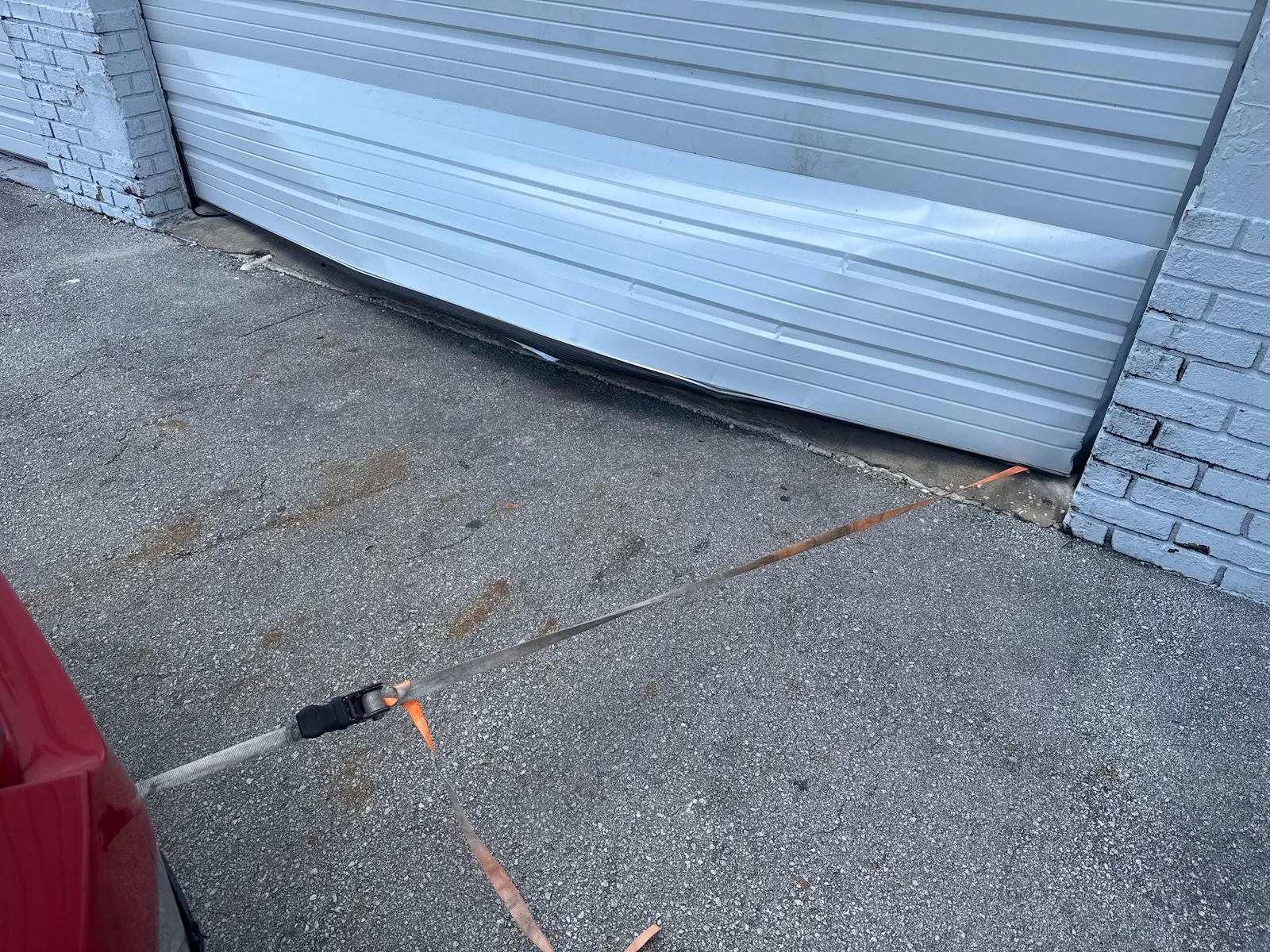
Sections take the knocks. A bumper on a tight turn, a bicycle propped against the door, or years of a ball bouncing off it will crease a steel panel or crack a wooden one. One damaged section can frequently be swapped out alone, as long as a matching panel can still be sourced. When no match exists, or several panels are hurt, the talk turns to a new door.
Hinges between sections loosen over time, more so on wide doors that flex. A slack hinge lets the panels drift out of line, which you notice as a gap opening at one joint when the door is shut, or a tick as it travels. The bottom seal is the rubber strip that meets the slab. Once it hardens and splits, rain, leaves and cold air come in underneath. On a detached garage whose concrete apron has settled unevenly, a tired seal can leave daylight showing at one end.
Rollers, track and doors that jump the channel
Rollers are small parts that work hard. Each one carries a share of the door’s weight as it spins inside the track. Plain steel rollers without bearings wear fast and grow noisy; nylon rollers with sealed bearings run quieter and smoother. A roller that cracks or seizes stops spinning and starts skidding, grinding a groove into the track and stressing the hinge that holds it.
A door leaves its track when a roller escapes the channel. It tends to follow a bumper glancing off the panels, a snapped cable at one corner, or a track bracket that has been working its bolts loose for months. The door may hang at an angle, wedge halfway or lean back into the garage. In that condition it is dangerous to move. Leave it alone, do not press the opener, and keep everybody, the dog and the car at a distance until it has been secured and properly set back in line.
Openers and sensors on a home garage
An opener that groans without moving, runs for a moment and cuts out, or reverses before it reaches the slab is usually reporting a problem with the door rather than failing itself. A door out of balance, a dragging roller or a sensor nudged off its aim all produce those same symptoms. That is why the door gets sorted first and the opener afterwards.
On a detached garage, a remote that works beside the building but not from the street may need a fresh battery, may be suffering from a damaged aerial on the motor housing, or may be meeting interference. On an attached garage, a dead wall button can be a wiring fault where its cable runs along the wall. Sensors cause more nuisance calls than anything: one gets bumped, or low sun shines straight into it at a certain time of day, and the door will not shut. Wiping the lenses and re-aiming the pair often sorts it. When an opener has truly worn out, there is more on the opener repair page for Medford. We also repair and replace LiftMaster openers when one of those is fitted.
Seasons and the wear they bring
Cold makes spring steel less forgiving, and a spring near the end of its working life often gives up on a bitter morning. Lubricant on rollers and hinges stiffens in low temperatures, so the opener has a heavier door to shift. In an unheated detached garage all of that is sharper than in an attached one that borrows a little warmth from the house.
Wet weather works on the bottom of the door. Puddles against the seal, snow banked up against the panels and road salt dripping from tyres all attack the lowest section and its fittings. Over the years that appears as rust on the bottom brackets, which is where the cables anchor. A bottom bracket that rusts through can release a cable, and the door then drops or hangs at a slant. Glancing at those two lower corners each spring is one of the most useful checks a homeowner can make, and it is a good moment to arrange garage door repair in Medford before a small patch of rust becomes a dropped door.
Mend it, or fit a new door?
Most garage doors that stop working need mending, not replacing. A snapped spring, a frayed cable, a handful of worn rollers or a kinked length of track can all be put right on a door with plenty of life left in it.
Replacement becomes the sensible route once the sections themselves are giving out. A timber door with rot running through several panels, a steel door rusted through along its base, or a door patched so often that it no longer hangs square are all candidates. So is a door that keeps failing for the same underlying reason, such as one whose weight has grown beyond anything a reasonable spring can balance. We will tell you plainly which way we think the door should go, and why, and new doors can be raised on the same call.
The other Medford pages
A broken spring has a page of its own, spring repair for Medford garages, with more about torsion and extension springs and why they stay out of DIY territory. When the door has failed at an awkward hour, the Medford emergency page explains what to do first. Across Greater Boston this service has its own garage door repair hub, while the Medford page lists each service available in town.
Book a repair
For garage door repair Medford MA households can plan around, a few details help us: attached to the house or standing apart, one single door or a double-wide one, what the door did when it failed and whether it now sits open, shut or stuck partway. Someone picks up whatever the hour, seven days a week. With those details to hand, call us or book online.
Questions from Medford
Our double-wide door suddenly feels too heavy for the opener. What has happened?
A spring has most likely snapped or lost its strength. A wide door is heavy, and the opener cannot raise it unless the springs do their share. Stop pressing the button, leave the door as it is, and ring us. Driving the opener against a heavy door can ruin the motor and the rail it hangs from.
Can one bent panel be swapped, or must the whole door come out?
A single panel can often be swapped if a match is still made for that door. When the door is old, no match exists, or several panels are hurt, a new door can be the better choice. We say which applies once we have seen it.
Is a detached garage at the rear of the lot harder to work on?
Not harder, just different. The door and its parts are the same, while power supply, remote range and damp conditions often vary. Mention that it is detached when you ring so the technician knows what to expect.
The door gets halfway down and then goes back up. Is the opener broken?
Not usually. The commonest cause is the beam between the two floor-level sensors being interrupted, through a knock, a dirty lens or sunlight. A door that meets resistance, such as a binding roller, will also reverse. Both are ruled out before the opener is blamed.
Is it safe to carry on using a door that is noisy but still works?
Noise is often an early sign of dry rollers, loose hinges or a spring beginning to tire. The door may keep going for a while, but it is worth booking garage door repair Medford MA homes rely on before a small fault turns into a broken part at a bad moment.