
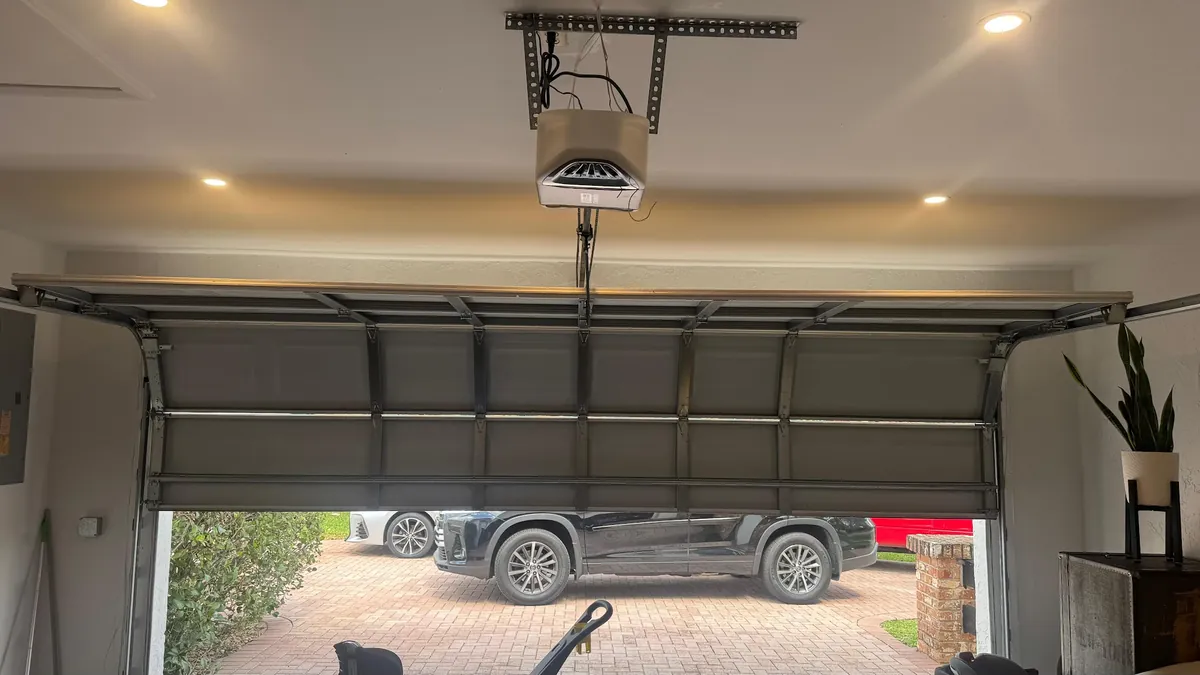
Low doors on the flat of the hill
Beacon Hill’s Federal and Greek Revival row houses stand shoulder to shoulder along brick sidewalks, with no driveways anywhere. A private garage here is a rarity. When one does exist, it tends to be small, with a strikingly low opening, and it is often sunk a little below grade on the flat of the hill. The garage doors Beacon Hill MA owners ask us about are nearly always of that kind: compact, close to the ground and hemmed in by old masonry.
Two forces shape every job. The first is the opening itself, so low that ordinary overhead hardware has to be rearranged to fit. The second is the setting: a historic district where a door on the street is expected to look the part, and where any change to the front of a building is weighed against its neighbours.
What tends to go wrong with these doors comes back to a short list:
- Hardware crammed into too little headroom, so springs, tracks and the opener fight for the same few inches.
- Water and grit gathering at a threshold that sits lower than the pavement outside.
- Wooden doors, kept for their looks, that have swollen, split or grown too heavy to balance.
The services, on this hill
Every line of work we do on the hill has a page of its own. Doors that jam, judder or drag are dealt with under garage door repair in Beacon Hill. A coil that has parted, leaving the door impossibly heavy, is the subject of Beacon Hill spring repair. Motors, remotes, keypads, buttons and photo eyes sit under opener repair and replacement in Beacon Hill. A bay gaping open onto the bricks at an hour when nobody wants it to is what our Beacon Hill emergency line is for. And once an old door has given all it can, our Beacon Hill new garage doors page sets out how we supply, hang and match a replacement to the street.
Close by, the hubs for Back Bay and Bay Village cover garages under similar row houses, and our service areas page lists everywhere else.
Garage doors Beacon Hill MA row houses squeeze into a low opening
The single most defining feature of a garage on the hill is height, or the lack of it. Any sectional door wants space overhead so its panels can curl into the horizontal tracks, for a torsion shaft to sit on its brackets and for an opener to hang from the ceiling. In a low opening tucked under a row house, that room may barely exist.
Doors in these spaces often run on a low-headroom arrangement, where the tracks are set to turn the door through a tighter curve and the springs are placed to suit. Some older doors carry extension springs along the tracks for the same reason. When anything in that arrangement is replaced, the new part has to match it. A standard track, spring or opener dropped into a space like this can leave the top section scraping the ceiling or the opener rail hanging too low to clear a car.
The practical result is that repairs here take more measuring than usual. Before a part goes in, we confirm how much clearance the building really gives, not how much a catalogue drawing assumes.
Below grade: water, grit and the threshold
On the flat of the hill, a number of these garages sit slightly below the brick sidewalk outside. Water runs downhill, and a threshold lower than the pavement collects it. In heavy rain or a thaw, the bottom of the door stands in water more often than a garage at street level ever would.
That shows up in three places. The bottom seal wears and rots faster, and once it gaps, water and grit wash under the door. The bottom section suffers, either rusting along its lower edge if it is steel or softening and splitting if it is wood. And the hardware at the bottom corners, where the lift cables attach, corrodes, which is exactly where a door can least afford weakness.
A repair visit on a below-grade bay checks all three. A new bottom seal suited to an uneven, damp threshold often does more good than any other single part. Corroded bottom brackets are replaced before they fail. Where the bottom section has rotted or rusted through, replacing that section on its own may be possible if a match can be found.
Historic district expectations
Beacon Hill is a historic district, and a garage door on one of its streets sits in the front of a building that people expect to look right. That expectation shapes replacement more than repair. Mending a spring or a roller changes nothing anyone sees from the sidewalk; swapping the whole door does.
For many owners, that is a reason to keep a sound old door going as long as possible, and repair is usually the first thing we look at. When a door does need replacing, the look of the new one is chosen with the street in mind: the material, the panel pattern, the colour and the way it sits in the brick opening. Owners generally settle what is acceptable for their building before a door is ordered, and we then supply and install a door to that choice, made to fit the low opening as it stands.
Of the garage doors Beacon Hill MA streets show to passers-by, many are wooden, painted to suit the house. Wood is handsome and repairable, but it moves with the weather, and an old wooden door can gain a surprising amount of weight as it soaks up moisture. That is worth knowing, because a spring set for a dry door will struggle with a waterlogged one.
Springs in tight quarters
A spring failure is the classic sudden fault here, as everywhere. One cold morning the door simply will not rise more than a crack, or the opener groans and quits. The spring that did the lifting has broken, and the door’s full weight is now on the opener and on anyone who tries to help it.
A torsion spring holds dangerous tension. Changing one is not a DIY repair anywhere, and least of all crouched under a row-house floor on the hill: there is no room to stand clear of a winding bar if it slips. Extension springs, which some of these older low-headroom doors use, are hazardous in their own way if one breaks with nothing to restrain it. In either case, leave the spring alone, unplug the opener, and let the door sit closed until someone with winding bars arrives.
Replacement springs are matched to the weight of the door as it is today. On a wooden door that has been repainted many times, or that has absorbed water at a below-grade threshold, that weight may be well above what the original springs were chosen for. Our page on a broken garage door spring describes the warning signs.
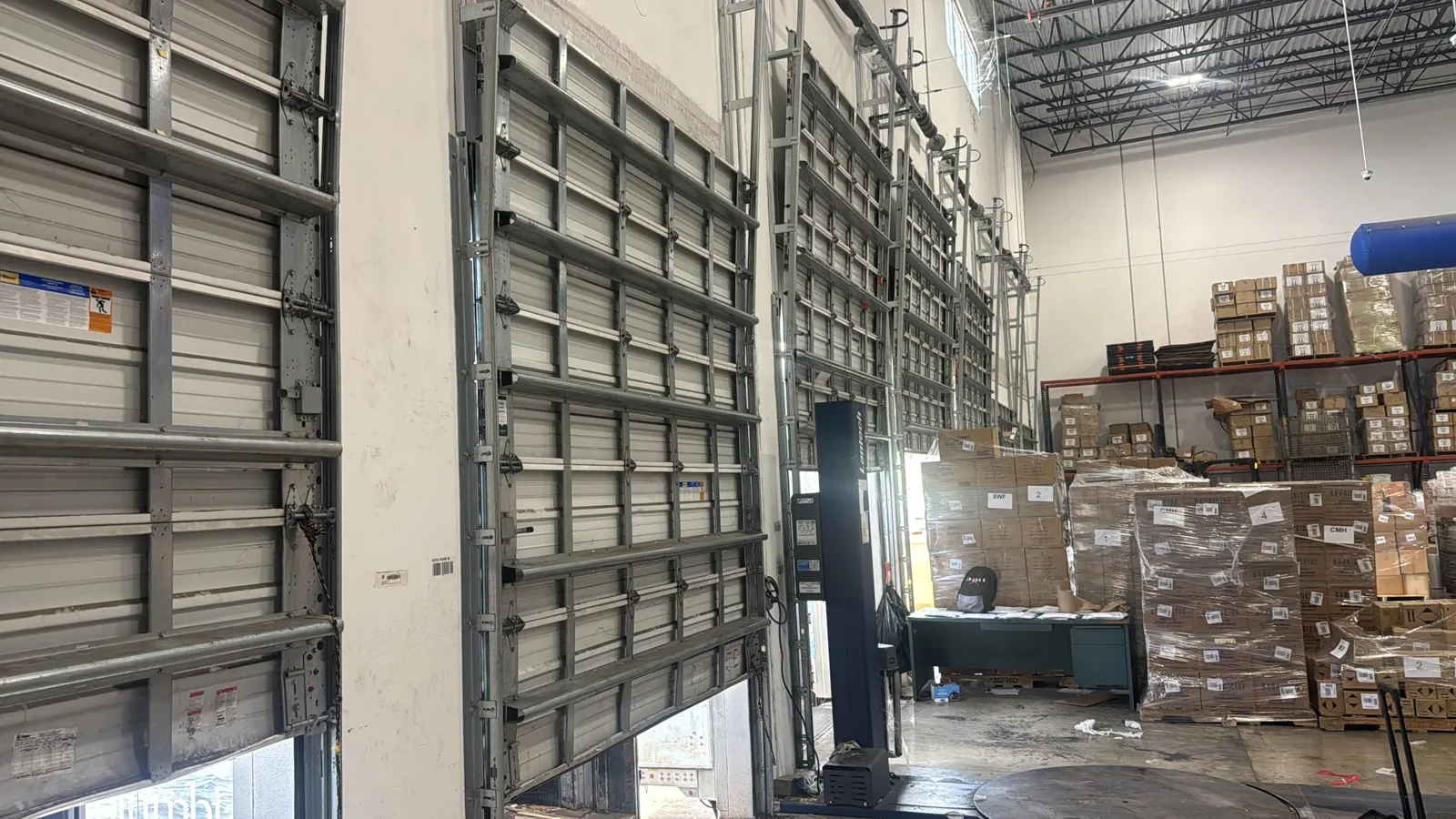
Openers with almost no ceiling
An opener needs a ceiling to hang from and a rail that runs above the open door. In a garage with a very low opening and little room overhead, that space is scarce, and the opener often hangs close enough to brush a tall vehicle. Openers here have to be chosen and adjusted with that in mind.
The faults themselves are familiar. A motor that buzzes but does not move. A door that turns back partway down, though nothing seems to be in its path. A handset that has gone dead though the push button by the door still answers. A wall button that has stopped altogether. In a compact garage, the photo eyes sit close to whatever is stored inside, and a bag or a bike wheel nudging one out of line is a frequent culprit. Where the opener itself is worn out, we replace it with one that fits the space; LiftMaster is one of the opener makes we mend and swap. The safety sensors article explains how the eyes work and why they matter.
A door stuck open onto the sidewalk
With the garage at the edge of a brick sidewalk, one that will not come down leaves the bay exposed to anyone walking by. Ring whenever it happens; calls are taken at any hour, holidays included.
We will not promise when a technician will arrive; that depends on the night. On the phone, though, we can work through the likely cause with you. A door that bounces back up usually points to the photo eyes. A door that ignores the remote but answers the wall button points to the remote. A door hanging crooked has probably left its track and should not be run at all. Our page on a door that reverses when closing goes into the first of those.
Safe to check, and not
A short list of safe checks while you wait:
- Clean the photo eye lenses and clear anything from the line between them.
- Try the wall button, in case the remote’s battery is flat.
- If the door keeps straining, unplug the opener so it stops.
And a short list of things to leave: both springs, both lift cables and the brackets they anchor to. Each holds the door’s weight under tension. A door whose spring has snapped should stay down, and a door hanging askew should stay exactly as it hangs.
Brick sidewalks and a job done from the front
With no driveway anywhere on the hill, every visit starts at the kerb. Tools and parts are carried across the brick sidewalk and straight into the garage, and a replacement door arrives in sections that go in one by one. The sidewalk stays passable throughout, and as much of the work as possible happens inside with the door raised and propped.
The bricks themselves affect the door. A brick sidewalk is rarely dead level, and where it meets a garage threshold the joint tends to be uneven, so a bottom seal may press hard at one side and hang clear at the other. Setting a door down evenly on a threshold like that takes a seal that can follow the line, and sometimes a careful adjustment of the door’s limits so it closes firmly without crushing the seal at its high point. For garage doors Beacon Hill MA owners open onto brick, that detail decides whether the bay stays dry.
Wood that moves with the seasons
A painted wooden door swells in a damp spell and shrinks back in dry, cold weather. In a tight brick opening, that movement matters. A door that cleared its jambs comfortably in winter may rub against them in a wet autumn, and the opener feels the drag as extra load. Over years, the swelling and drying opens joints in the panels, lets water into the end grain and starts rot from the bottom up.
The repair answer is partly mechanical and partly care. Rollers, hinges and track alignment are set so the door runs true in the middle of the opening, not hard against one side. Where the wood is still sound, keeping its paint intact, especially along the bottom edge, slows the cycle down. And the spring balance is checked whenever a wooden door starts to feel different, because a door that has taken on water is heavier than the one the springs were set for.
Doors that leave their tracks
In a small garage, a door is most likely to jump its tracks after something strikes the bottom section, or after an opener keeps pushing against a jam. A derailed door hangs unevenly and can drop. Stop using it, keep everyone clear and unplug the opener.
The fix is methodical. The door is secured so the rollers carry no load, each roller is guided back into its rail, any kinked rail is trued or renewed, both cables get evened up, all before the door travels again. On a low-headroom arrangement, the tighter curve of the track is checked closely, because a kink there will throw the door off again. See off-track garage door repair for more detail.
Noise in a house built of brick and timber
Sound carries in an old row house. A garage below a sitting room or a kitchen sends every grind and clank upward through the floor. Worn steel rollers, dry hinges and a loose opener rail are the usual sources, and each is fixed on a normal repair visit: rollers renewed, hinges and bearings lubricated, hangers and track bolts tightened. A door that runs quietly is also, nearly always, a door that is under less strain. Our article on a grinding garage door covers the common causes.
Repair or replace on the hill
Repair comes first here for good reasons. Springs, cables, rollers and hinges are wear parts. A door with sound sections keeps working once they are renewed. And keeping a door that already suits the street avoids the questions a new door would raise.
Replacement makes sense when the door itself is past saving: a wooden door with rot in several panels, a steel door rusted through at the bottom from years at a damp threshold, or one that has put on so much weight no spring setting can float it. When that point comes, we supply and install a door made for the opening, with low-headroom hardware where the space calls for it and a look chosen to suit the building. Our piece on when to replace a garage door runs through the tell-tale signs.
Looking after a low, old door
A few habits help any of the garage doors Beacon Hill MA owners keep running for years. Keep the threshold and the drain area outside the door clear of leaves and grit, so water does not sit against the seal. Watch the door move from time to time, looking for a lean, a hesitation or a jerk. Listen for new noises. And if a wooden door starts to feel heavier on the opener, or slower, have it checked before the springs give up.
Book a visit
Give us a picture of the garage when you get in touch: the height of the opening, whether you step down into it from the bricks, wood door or steel, and what it does when you press the button. With the building described, the visit can be planned around it. Once that picture is clear, call us or book online.
Questions from Beacon Hill
Our garage door opening is very low. Can it still have an opener?
Usually, yes. The opener and its rail are chosen and set up for the headroom the garage has, so the door clears the ceiling and the opener clears the car. We confirm the clearances on site before anything is fitted.
Water collects at the bottom of our door. What can be done?
A garage below the sidewalk will always see some water, but a bottom seal suited to a damp, uneven threshold makes a big difference. Corroded bottom brackets and a rotted or rusted bottom section are checked at the same time.
We want to keep our old wooden door. Is that realistic?
Often, yes. Springs, cables, rollers and hinges can be renewed on a wooden door, and springs set to its real weight. If several panels are rotten, or the door has become too heavy to balance, replacement becomes the better choice.
Does a new door have to look like the old one?
On a historic street, the look of a replacement is usually expected to suit the building. Owners generally settle the material, pattern and colour before ordering, and the door is then made to fit the opening.
The door stopped halfway with a loud bang. What now?
That bang is nearly always a spring letting go. Pull the opener’s lead from its socket, keep hands and heads away from the coils and cables, and phone us; someone answers whatever the hour.