
Why springs on Jamaica Plain’s sloped-lot garages wear out sooner
Behind the Victorians and triple-deckers near the Pond and Centre Street, the garage usually stands on its own at the rear of the lot, and the drive that serves it often drops sharply from the street. Garage door spring repair Jamaica Plain MA owners need tends to come out of that setting. The setting itself is the cause: when a drive plunges downhill to the door, its springs carry more than they would at the end of a level approach.
The reason is in what the springs are asked to do. A spring is wound or stretched to match one door at one weight. At the foot of a slope that door gathers water, ice and packed snow along its bottom edge, a timber door soaks up moisture and gets heavier, and on frozen mornings the door may be stuck to the slab before it moves at all. Each of those adds a little to every lift, and every lift uses up part of the spring’s working life.
If you suspect a spring has gone, stand clear and check three things by eye:
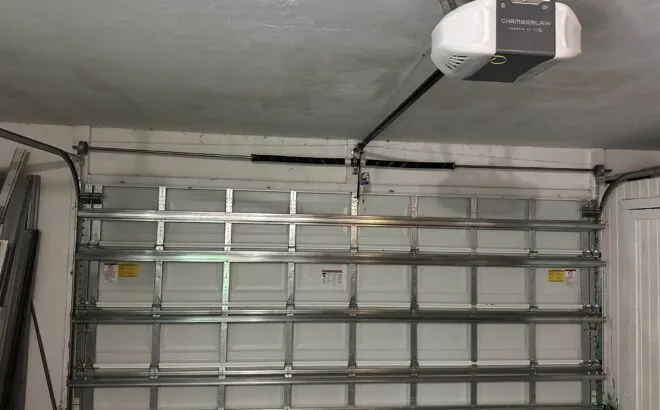
- An open gap partway along the coiled spring that sits on the bar over the door.
- An extension spring along a horizontal rail that hangs loose or has a stretched, open section.
- A door that the opener lifts only a few inches before stopping or reversing.
The spring work we take on in Jamaica Plain
Torsion springs
These coil around the bar spanning the top of the opening, tightening as the door descends and relaxing to raise it. A break leaves a clear gap in the coil and a door too heavy to lift.
Extension springs
Found on many older and lighter doors, one runs alongside each overhead rail and stretches as the door lowers. They should always have a containment cable threaded through them.
Broken spring replacement
A snapped spring is taken off safely and replaced with one sized for your door’s actual weight and height, then wound or tensioned to balance it.
Rebalancing a tired door
A spring that has lost strength without breaking leaves a door that feels heavy and drops when let go. Resetting or replacing it takes the strain off the opener.
How the slope works against a spring
A garage door spring is a store of energy. When the door closes, the spring takes in the door’s weight; when the door opens, it gives that energy back so the door rises almost by itself. The opener on the ceiling is there to steer and to start and stop, not to lift. Everything depends on the spring being matched to what it is lifting.
On a lot that falls toward the garage, several things upset that match. Runoff from the drive collects along the bottom of the door, and in cold weather it freezes. Snow that slides or is shovelled down the drive packs hard against the lowest section. A wooden door standing in that wet corner takes on water and is heavier in spring than it was in autumn. None of this changes the spring, but all of it changes the job. A spring set for a dry door on a level floor ends up working against extra weight and grip, cycle after cycle.
That extra work tells in two ways. Springs break sooner than they would on a flat site, and before they break they tire, so the door slowly becomes harder to lift by hand and the opener starts to strain. Garage door spring repair Jamaica Plain MA properties on steep drives need is often a story of a spring that had been going for a while before it finally snapped.
Torsion and extension: knowing which you have
Look above the inside of the door. A horizontal steel shaft fixed just over the opening, carrying one or two thick coils with a cable drum at each end, means torsion springs. Long springs lying beside the overhead rails, reaching toward the back wall and working through pulleys, mean extension springs.
The two fail differently. A torsion spring usually breaks in one place, and the gap in the coil is easy to see. The bang when it goes can be loud enough to sound like something fell in the garage. An extension spring can break, or it can stretch out and stop pulling its weight; where there is no containment cable through it, a snapping extension spring can whip across the garage, which is why that cable matters so much.
Many older doors on detached garages run on extension springs, and many of those were fitted long ago. If a spring along the rail has no cable running through its middle, that is worth raising when you call, broken spring or not.
Warnings before a spring gives out
Springs give warning more often than people realise. Stop the door halfway and see what it does: if it once hovered there and now creeps toward the floor, the spring is weakening. Raising it by hand feels like hauling a dead weight where it used to feel easy. The opener has started to grind or slow toward the top of its travel. On a torsion spring, the coils may look stretched apart in one area, or there may be rust banding along the coil where the steel has been wet. On extension springs, one side may sit looser than the other.
Garages at the bottom of a slope add a seasonal pattern. A spring that is almost worn out will often hold through the summer and break on the first hard frost, when a door frozen to the threshold asks the most of it. If the door has felt heavy since late autumn, it is worth having the springs looked at before a cold snap rather than after.
Spring life, cycles and a door used many times a day
Every spring is made for a number of open-and-close cycles, and every trip of the door uses one. That is why the same spring lasts longer on a garage used for storage than on one where a car goes in and out several times a day. Behind a triple-decker, one garage may be used by more than one household, and the cycle count climbs quickly.
Garage door spring repair Jamaica Plain MA owners arrange is therefore partly about choosing the right spring for how the door is used. A door that runs often benefits from springs chosen with that in mind, so we ask how often the door runs and who shares it before a spring is picked. It is also worth knowing that a spring does not wear evenly through the year. Cold steel is less forgiving, and the extra load of ice at the threshold arrives in the same months.
Rust shortens spring life too. The coils on a door at the low end of a wet drive spend more time in damp air than those on a garage up on level ground. A light film of the lubricant sold for garage doors, sprayed onto the coils from below without touching any fittings, is about the only spring care a homeowner should do.
What a visit involves
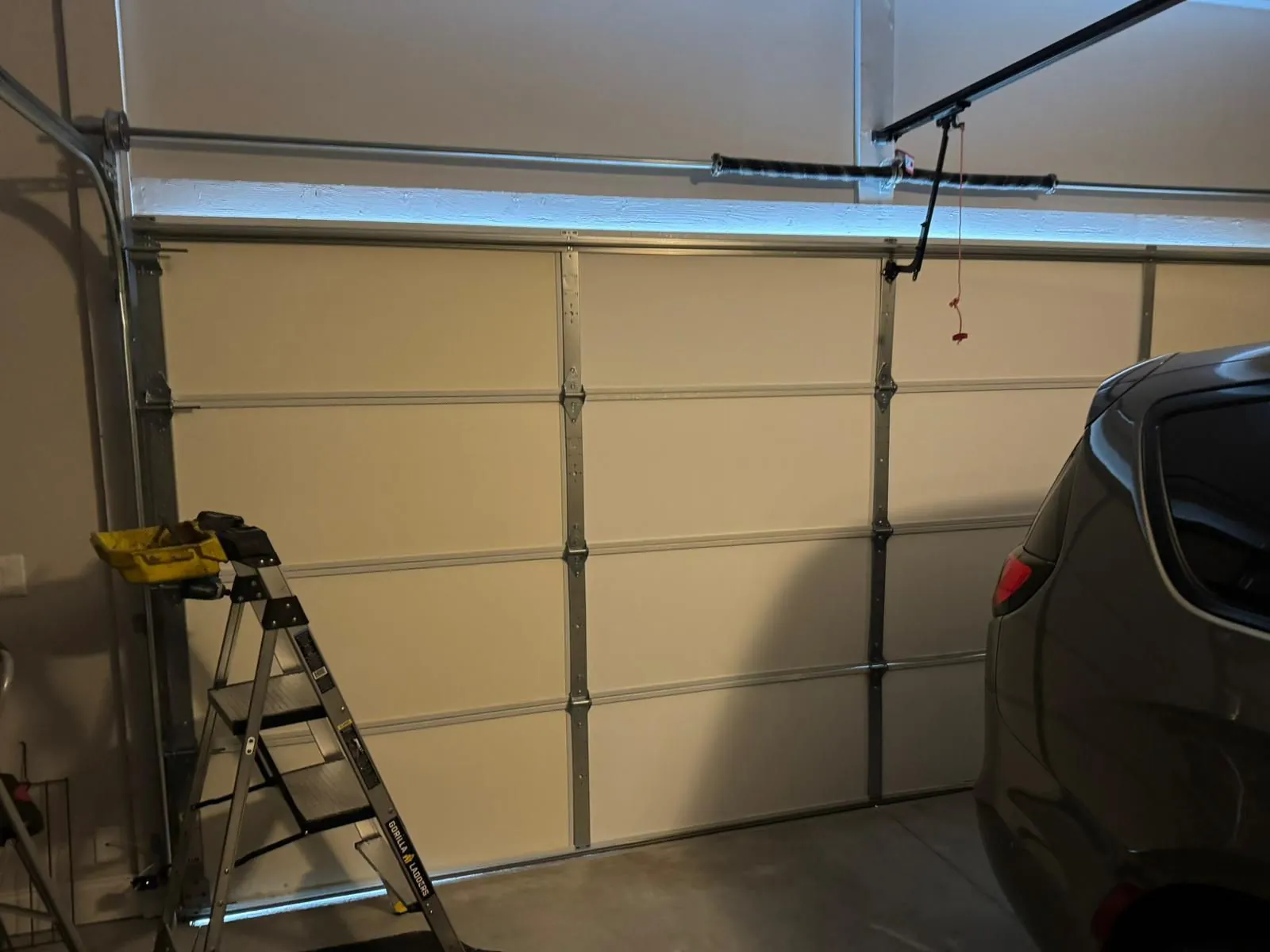
A spring visit begins by making the door safe. If a torsion spring has broken, the door is closed and its weight is resting on the floor; it stays that way while the system is checked. The opener is disconnected so nothing can drive the door by accident.
Then the door is assessed for the spring it really needs. The height and weight of the door decide the size of the spring, and a timber door that has been sitting in the damp at the foot of a drive may weigh more than the original spring was chosen for. The old spring’s wire, length and wind tell part of the story; the door itself tells the rest. On a torsion system with two springs, both are normally replaced together, since the one that has not broken has lived through the same number of cycles.
The cables, drums, bearings and bottom brackets are checked at the same time, because a spring break often shocks the parts around it. Cables that have kinked or come off their drums are put right before the new spring is wound. Nothing is fitted without telling you first what has failed and what the job involves.
With the new spring installed and wound or tensioned, the door is balanced by hand. A well-set door lifted to the middle of its travel should stay there. Once the opener is hooked back up, its stopping points and pushing force are matched to the rebalanced door, and it must reverse cleanly off an obstruction before the work is signed off.
Spring replacement is a job for a technician
There is a lot of online advice about changing a garage door spring yourself, and it should be ignored. A wound torsion spring holds enough stored energy to break bones. The winding cones at its ends are turned with steel bars, a quarter-turn at a time, and if a bar slips or the set screws are loosened in the wrong order, the spring unwinds at once and throws whatever is attached to it. Torsion springs hold dangerous tension and are not a DIY repair. Extension springs carry the same danger in another form: stretched steel that can snap loose with real force.
What you can do safely is limited and still useful:
- Unplug the opener at the ceiling so nobody tries to run the door.
- Leave a closed door closed. Its weight is on the floor, which is the safest place for it.
- With the door hung partway open, nobody walks or parks beneath it; do not try to lift it or pull it down.
- From well back, take note of what is visible: the split coil, any loose cable, which side looks wrong.
Do not touch the spring, the cones, the set screws, the cables or the brackets at the bottom corners. Those are all under load.
When a spring breaks with the car inside
On a garage at the bottom of a steep drive, a broken spring tends to be found at the worst moment: first thing on a winter morning, with the car inside and the door refusing to go up. The temptation is to lift it by hand. Without a spring, an ordinary single door can weigh as much as a heavy person, and with nothing holding it, a door raised by hand can come straight back down.
If the door will not open and a car is shut in, the safe course is to leave the door down and ring us. Someone takes the call whatever the hour, so a break found before dawn can be reported straight away. For a door jammed open or shut, our Jamaica Plain emergency repair page sets out the sensible precautions for the hours before the visit.
Older garages, low ceilings and spring choices
The detached garages behind older houses in this part of the city were not all built for today’s doors. Some have low ceilings, which leaves little clearance over the door for a spring bar. Some have framing that has been patched where earlier hardware was fixed. Both affect spring work.
A torsion spring needs a solid header to mount to, since the full force of the spring is carried through its centre bracket and end bearings. If the timber there is split or soft, it has to be dealt with before a new spring goes on, or the new spring will pull the mounting loose. Where headroom is tight, the spring arrangement has to fit the space, and that is checked before the replacement is chosen. If something else on the door also needs attention, the Jamaica Plain garage door repair page covers panels, tracks, rollers and the rest.
What else a spring break can damage
When a torsion spring parts, the shaft it was loading spins back a little, and the cables that were held taut suddenly go slack. On a door at the foot of a slope, which may already sit unevenly on its threshold, that slack lets a cable slip from its drum or ride over the edge of the groove. The next time anyone presses the button, the opener tries to haul a door with one cable loose, and the door twists in its rails.
That is why the drums, cables and bearing plates get as much attention as the spring itself. A cable with broken strands or a kink where it jumped the drum is renewed before the new spring is wound, and the drums are checked for cracks around their set screws. If the opener was run after the break, its drive and the top section’s bracket are looked at as well, because an opener pulling against dead weight can bend that bracket or strip its own gear.
New springs or a new door
A snapped spring by itself hardly ever justifies a whole new door. Springs are a wearing part, and a sound door gets a full new working life from new ones. If the sections are solid, the hinges are firm and the tracks are true, new springs are the answer.
The calculation changes when the door has other problems. A timber door that has drunk in so much runoff at the bottom of a sloped drive that it is far heavier than it should be may be fighting any spring that is put on it. Sections rotted or rusted through along their bottom edge, or a door carrying repair upon repair, may be better replaced. When that is the case, you are told plainly, and new garage doors in Jamaica Plain explains what a replacement involves. For spring work alone, garage door spring repair Jamaica Plain MA homeowners call about is a repair, not a sales visit.
Arranging a spring replacement
Springs fail without regard for the clock, and when the car is parked at the bottom of a long downhill drive, getting it out matters. Whatever the hour or the day, the call is answered. If the springs turn out to be fine and the opener is at fault, head to the Jamaica Plain opener repair page instead.
Tell us whether the coils sit on a bar above the opening or beside the overhead rails, whether it is stuck open, shut or somewhere between, and whether your car is boxed in by it. With that settled, call us or book online; garage door spring repair Jamaica Plain MA households book this way is planned around exactly those answers. How springs are sized and wound across the city is set out on the garage door spring page, and the Jamaica Plain page is where the neighbourhood’s full list of services lives.
Questions from Jamaica Plain
How do I know if a spring has broken?
From a safe distance, look up at the coil on the bar over the door. A broken one shows a clear gap where the steel parted. A sudden crack from the garage, followed by an opener that manages a few inches and quits, points the same way. Do not touch the spring.
Why do springs seem to break on our garage in the winter?
A garage at the bottom of a steep drive collects water, ice and snow at its bottom edge, and on cold mornings the door may be frozen to the floor. That asks the most of a spring that is already worn, so a tired spring often gives out on the first hard frost.
Should both torsion springs be replaced when just one has snapped?
In most cases. The pair have done exactly the same work, so the survivor has used up roughly as much of its life as the broken one. Renewing both keeps the lift even from one side to the other.
Is it safe to raise the door by hand so I can drive out?
It is not. With the spring broken, nothing is holding the door’s weight, and a door lifted by hand can fall. Keep it down, unplug the opener and give us a ring.
What is the cable running through my extension spring for?
That is a containment or safety cable. If an extension spring snaps, the cable stops the broken pieces from flying across the garage. If your extension springs do not have one, mention it when you call.