
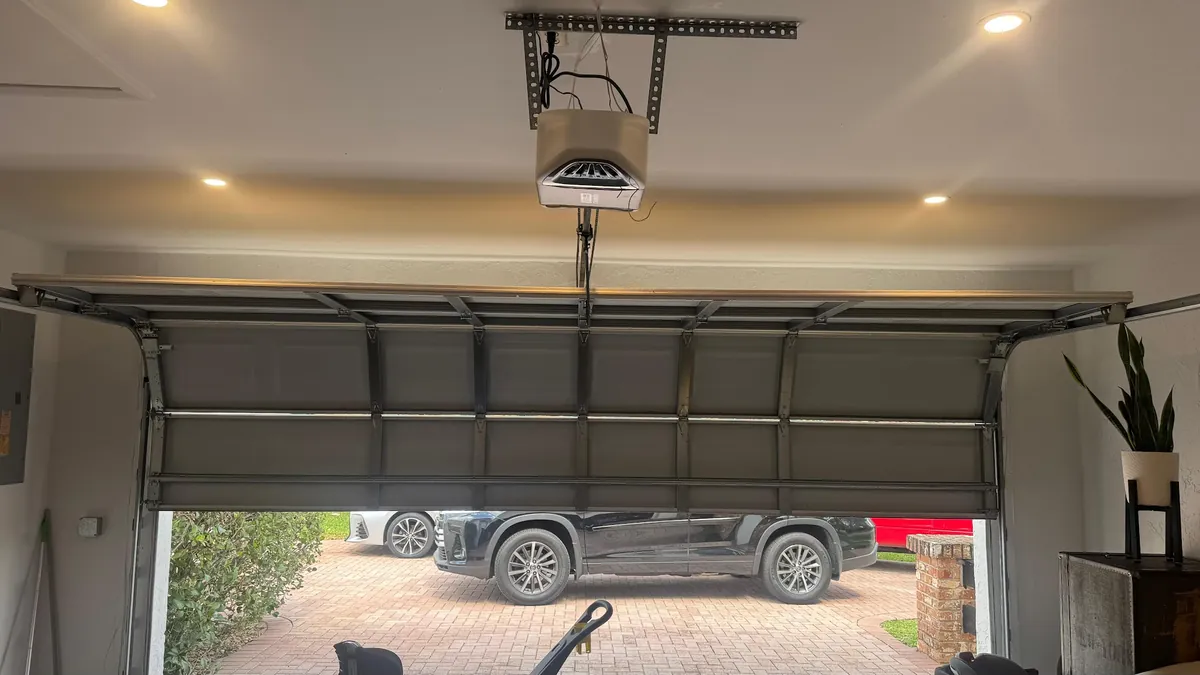
An opener at the back of the lot, pulling an old timber door
Off Mount Auburn Street, plenty of the single-families and two-families from the Nineteen-twenties keep their car in a freestanding garage at the very back of the lot, reached by a driveway that runs alongside the house. Many of those garages still hang the wood doors they started life with, and at some point an electric opener was bolted to the ceiling to work them. That setup shapes most of the garage door opener repair Watertown MA homeowners book: remotes asked to reach a long way down the drive, motors hauling a door heavier than the ones they were designed around, and wiring strung through an outbuilding that was never meant to have any.
An opener is a small machine doing a narrow job. It nudges a balanced door along its rails and stops when something gets in the way. When the door it drives has changed, or the signal can barely reach it, the opener is the part that complains first.
Before calling, three quick observations narrow things down:
- Pressing the wall button: is there a hum, a click, or silence from the motor head?
- Does the light on the motor head come on, and does it blink?
- Are the small indicator lamps on the two floor sensors lit and steady?
Opener faults handled in Watertown
Motors and drives
Units that hum but do not move, stop partway, run in one direction only or have stripped their drive gear. Chain, belt and screw drives are all dealt with.
Remotes
Handsets that work only from the apron, have lost their programming or have simply worn out, plus new remotes paired to the opener.
Wall buttons
Push buttons gone dead, responding only on the third or fourth press, or have damaged wiring running back to the motor head.
Safety sensors
Low-mounted eyes nudged askew, dazzled by sunlight or grimy, or with a broken wire, causing a door that refuses to close.
Opener replacement
A new opener chosen for the door it has to drive, installed with its rail, sensors, button and remotes, and set up for that door.
LiftMaster openers
This shop repairs and replaces LiftMaster units too, whether the trouble is a control board, a gear or a sensor.
Reaching the garage from the street end
A remote talks to the opener by radio, and radio range is the first thing that suffers when the garage sits far behind the house. On a short attached garage, a weak handset still works because the car is only a short way off when the button is pressed. Down a lengthy drive, that same handset may only work once the car is almost at the door, which defeats the point of having it.
Several things cut range. A remote’s battery weakens slowly, and range falls away long before the handset stops working altogether. The opener’s receiving antenna, usually a short wire hanging from the motor head, can get folded up against the ceiling or tucked behind the housing during earlier work. Metal shelving, a steel roof or the mass of a full garage between the door and the motor can block the signal. On older openers the receiver itself may be the weak link.
Simple checks come first: a new battery, the antenna wire hanging straight down, and a test from different points along the drive. If range is still short, the remote may need replacing or the opener’s receiver may be failing, and that is something a visit can sort out. For garage door opener repair in Watertown MA where the garage is well back, it is worth describing exactly where along the driveway the remote stops working.
Heavy wood doors and the opener’s force setting
The opener should never be lifting the door. The springs do that, and the motor only has to overcome friction and guide the door along its rails. An original timber door complicates that arrangement because its weight creeps up over the years as the wood takes on moisture. If the springs are not adjusted to match, the opener starts doing part of the springs’ work, and its motor, gears and drive wear far faster than they should.
A common reaction to a door that stalls is to turn the opener’s force setting up until it no longer stops. That hides the problem rather than solving it. Cranked up, the motor keeps shoving longer before sensing trouble, so its reversal on hitting an obstacle comes late. On a heavy door, that matters a great deal.
No opener gets condemned until its door has been unhooked and worked by hand. If the door is out of balance, the springs are the real fault, and the spring repair page for Watertown explains what that work involves. Fixing the balance often brings a struggling opener back to normal on its own.
Wiring in an old outbuilding
A garage built before anyone had an opener was not wired for one. Electricity tended to be added afterwards, frequently as one feed brought across from the house, and the low-voltage wires for the wall button and sensors were stapled along old studs and joists after the fact. Over the years those thin wires get pinched by a staple, chafed where they pass a door frame, nibbled by mice or soaked where the roof leaks.
The symptoms can be confusing. A wall button that works only when pressed hard, a door that will not close until someone stands in a particular place, or an opener that stops answering entirely in wet weather can all come from damaged low-voltage wiring rather than from the opener itself. Tracing that wiring, and replacing a damaged run, is a normal part of opener repair on these garages. Main power faults, such as a dead outlet in the garage, are worth checking with a lamp or another appliance before calling; if the outlet is dead, the problem lies with the household wiring, which is work for an electrician.
Sensors on settled floors and old jambs
The safety eyes sit close to the floor at either side of the doorway, usually on the track brackets or the door jambs, and they must face one another squarely for the opener to close the door. On a garage built many decades ago, the jambs are timber that moves with the seasons and the floor near the threshold has often settled or heaved. A sensor bracket screwed into a jamb that has shifted slowly drifts out of line, until one morning the door goes down a few inches and comes straight back up.
Bright light is another cause. A garage at the end of a driveway often faces open sky, and low sun shining straight into one sensor lens can stop the door closing at certain times of day. Cobwebs, dust and the odd leaf blown in under the door cause the same symptom.
Checks that are safe to make:
- Look at the two indicator lamps. A lamp that is out or flickering points to the sensor on that side.
- Clean each little lens gently with a dry tissue.
- Move anything near the beam: a bin, a bike wheel, a bag of compost.
- See whether the problem comes and goes with the time of day, which suggests sunlight.
What an opener visit involves
Every garage door opener repair Watertown MA visit starts with the door rather than the motor. A pull on the emergency cord unhooks the trolley, letting the door be run up and down manually to confirm that it moves smoothly and stays where it is put partway up. A door failing that test gets sorted before anything else, since a motor paired with a lopsided load never behaves.
Next the motor gets its own trial, separate from the door. The motor, gear and drive are checked for wear and noise. The wall button is tried, then each remote, then the sensors with the beam blocked and cleared. Low-voltage wiring is followed back from the button and the sensors. The logic board’s diagnostic lights are read, where the opener has them.
You hear what has failed before any part is changed, along with whether repair or replacement makes more sense for that particular unit. After the work, the travel limits are set so the door closes fully onto the floor without crushing the seal, the force is kept at the gentlest level that still moves the door, remotes are programmed, and a length of scrap wood on the threshold shows the closing door bouncing back the moment it makes contact.
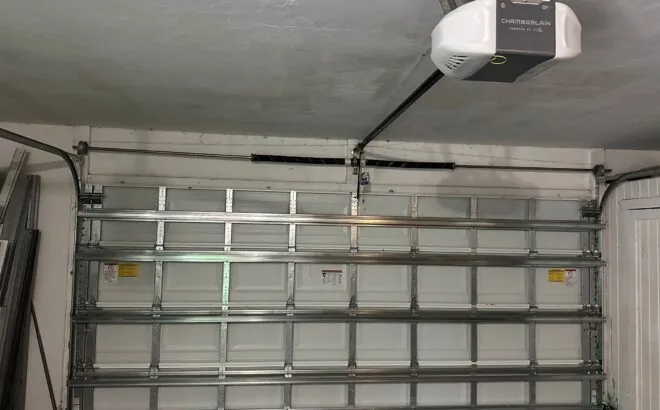
Mend the unit or swap it out
Plenty of opener trouble is worth fixing. A worn drive gear, a broken sensor, a failed wall button, a stretched chain or a bad remote can all be fixed without replacing the unit, and an opener in good overall condition will keep working afterwards.
Replacement makes more sense in other situations. If the motor itself has burnt out, if the control board on an elderly model has died and spares have dried up, if the unit has been damaged by water in a leaky outbuilding, or if the opener was undersized for a heavy wood door and has struggled for years, a new one is usually the better spend. A new opener is chosen for the door it will drive and the space it will sit in, mounted to the ceiling framing, connected to new sensors, a new wall button and new remotes, and adjusted to that door.
A garage door opener repair Watertown MA visit ends with a clear recommendation either way, and the reasons for it. If the door itself is the problem, the garage door repair page for Watertown covers springs, cables, rollers and the rest.
LiftMaster openers
Our technicians repair and replace LiftMaster openers as a routine part of the job. Common faults include a stripped drive gear, a logic board that has stopped responding, remotes that have lost their pairing, and sensors that have drifted out of line. Where a LiftMaster unit is beyond repair, it can be replaced with a new LiftMaster opener. Openers of other makes are assessed on their own merits too.
Shared garages and stray remotes
Where a two-family shares the back-lot garage, it shares the opener as well. Remotes multiply: a handset for each car, a spare in a kitchen drawer, one left behind by a previous tenant and never cleared. Every one of them is still paired with the opener’s receiver until its memory is wiped, which means a remote that walked out with a former occupant can still open the garage.
Clearing the opener’s memory and re-pairing only the remotes in use is a simple job that is easy to forget. It is worth doing when a unit changes hands, when a handset is lost, or when an opener starts acting oddly with doors opening by themselves. On an older receiver that will not clear properly, a new receiver or a new opener may be the tidier answer.
A shared door also cycles more often, and the motor, the gear and the drive wear in step with that. A garage door opener repair Watertown MA visit on a two-family garage often turns up a gear worn by years of double use, and it helps to say on the phone how many remotes are in circulation and who uses the garage, so the visit covers all of them in one go.
Power cuts and the release cord
Storms that bring down branches across the area also bring power cuts, and an opener without power is just a heavy rail across the ceiling. Inside the garage, pulling the red cord that dangles off the trolley uncouples the motor, leaving the door to be moved manually. On a door with sound springs that is straightforward; on an old wood door whose springs have weakened, it can feel much heavier than expected, and if it does, leave it where it is.
When the power returns, the trolley has to be re-engaged before the opener can move the door again. On most units that happens automatically the next time the opener runs, as the carriage travels along the rail and clicks back onto the door arm. If it does not, or the opener now runs to the wrong limits, the travel settings may need resetting, which is part of an opener visit.
Drive types and a detached garage
Openers come with chain, belt or screw drives. A chain drive is rugged and copes well with a heavy door, at the cost of more noise. A belt drive is quieter. A screw drive has fewer moving parts but is more sensitive to cold. Out in a backyard building, quietness seldom tips the decision, so the choice usually turns on the weight of the door and how the opener will cope through winter in an unheated building. Those trade-offs are explained on the visit, before anything is replaced.
When the opener fails after dark
An opener tends to die at the moment it is needed, often when a car is waiting in the driveway at night or the door is stuck open with the garage full of tools. When a door stays open, a tug on the red cord usually lets it be lowered by hand, as long as springs and cables are whole; should it feel like a dead weight, stop and ring us instead. Our line takes calls through the night, and the steps to take meanwhile is on the emergency repair page for Watertown. For Greater Boston generally, read about garage door opener repair and replacement, and the Watertown hub lists all our work in town.
Booking an opener repair
Have the make of the opener to hand if you can see it on the motor head, describe how the door responds to the button and to the handset, and mention whether the sensor lamps are lit. With those notes ready, call us or book online.
Questions from Watertown
Our remote only works when the car is right up at the garage. What causes that?
Usually a weak battery in the remote or an antenna on the motor head that has been folded out of the way. Try a new battery and make sure the antenna wire hangs straight down. If the range is still short, the remote or the opener’s receiver may need replacing.
The opener runs but the door does not move. Is the opener broken?
It may have a stripped drive gear, or the trolley may have been disconnected from the door by its release cord. If the cord has not been pulled and the motor hums or spins with no movement, the gear has probably failed. It is a repair that does not always mean a new opener.
Our door heads down, then turns round and rises again. What is going on?
That is almost always the safety sensors. Check that both indicator lamps are lit, wipe the lenses and clear anything near the beam. On an old garage, a sensor bracket on a shifting jamb can drift out of line over time and needs resetting.
Will a new motor suit the timber door our garage still has?
Yes, provided the door is balanced and in sound condition. The opener is chosen for the door’s weight and the space above it. If the door has become too heavy or its springs are worn, that is put right first so the new opener is not overworked from the start.
Should the opener’s force be turned up if the door keeps stopping?
No. Extra force masks the fault and delays the reversal when an object sits beneath the door. A door that stalls usually has a spring, roller or track problem, and that is what needs fixing.