
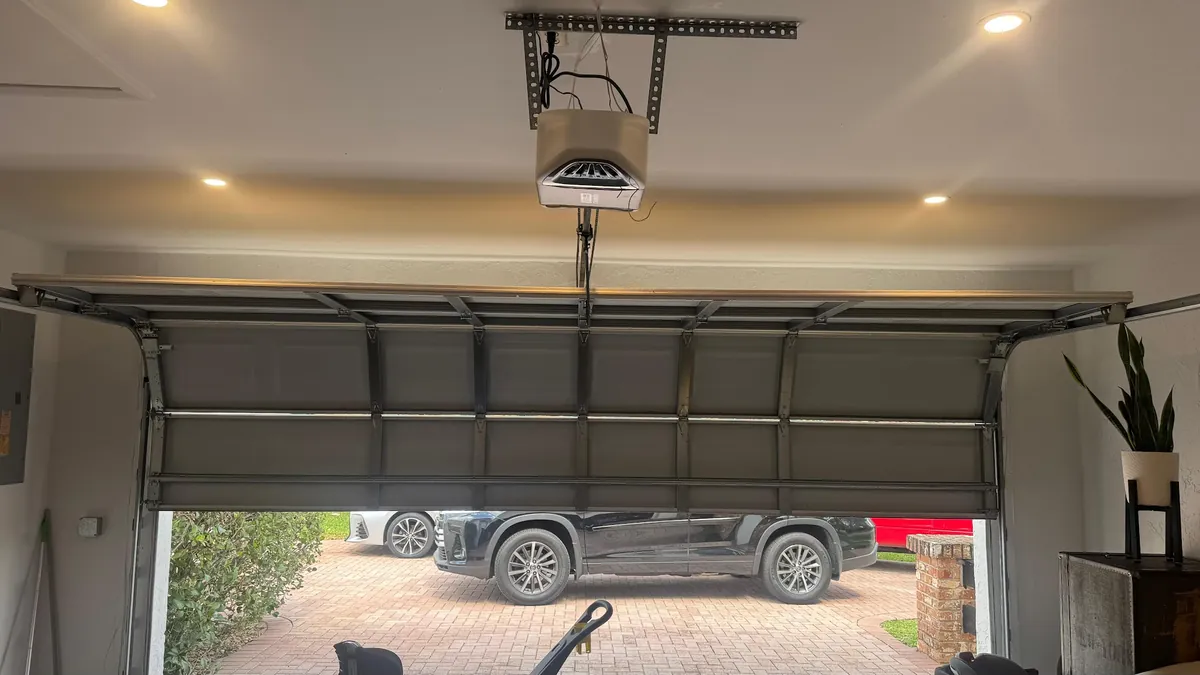
When the motor is the weak link
The garage doors downtown mostly guard shared, below-grade parking under office and residential towers, and the machine that moves them works far harder than the opener over a single household’s door. Garage door opener repair in Downtown Boston, MA covers that machine and everything that tells it what to do: the motor and drive, the remotes, the wall buttons and the safety sensors at the opening. When any one of them fails, the door may refuse to move, stop halfway, or reverse just before it closes, and the whole building’s parking is held up.
On a big shared door the operator is often a heavier, commercial unit mounted on the wall beside the shaft or above the opening, rather than a rail hanging from the ceiling. The faults are recognisable all the same. A motor that hums without turning, a door that answers one remote and ignores another, or a door that starts down and then reverses for no visible reason each point to a different part.
Three things worth noting before you call:
- Does anything happen at all when the control is pressed: a hum, a click, a light, or nothing?
- Does the door respond to the wall button but not to remotes, or the other way round?
- Do the small lights on the safety sensors stay steady, or blink?
Opener parts this service covers
The motor and drive
Operators that hum without moving, run but do not turn the shaft, or stop partway with a grinding sound.
Remotes and transmitters
Remotes that have stopped working, need reprogramming after a new receiver, or work only from very close to the door.
Wall buttons and controls
Wall stations that do nothing, a stuck button that keeps the door running, and damaged wiring between the control and the operator.
Safety sensors
Photo eyes that are out of line, dirty, or wired badly, so the door refuses to close or reverses on its own.
Limits and force settings
Doors that stop short of the floor, crash into it, or reverse on contact because the operator’s limits or force have drifted.
Operator replacement
A new operator installed when the old one is worn out or no longer suits the door, with controls and sensors set up to match.
How the opener and the door work together
The opener does not lift the door’s weight. The springs do. A balanced door, one that stays put when left halfway, needs only a modest push to move, and the opener’s job is to supply that push, stop at the right point at the top and bottom, and back off if anything is in the way. On a sectional door the operator turns the spring shaft directly or drives a trolley along a rail; on a roll-up door it turns the barrel the curtain coils around.
That relationship explains a lot of opener trouble. Once a spring loses strength, the motor is left hauling weight it was never designed for, and its gears, belts or chain wear quickly. If a roller drags or a track binds, the opener senses resistance and stops or reverses, which looks like an opener fault but is really a door fault. Garage door opener repair in Downtown Boston therefore always begins with the door itself: if the door is not balanced and running freely, a new opener will only fail the same way.
The particular strain on a building’s operator
An operator over a single household’s door might run a handful of times a day. The operator on a tower’s ramp door runs for every arrival and departure, so it is constantly heating up, starting under load and stopping again. Motors that run that often wear out brushes, gears, bearings and drive belts long before a household opener would. Many operators are rated for a certain duty, and one that is too light for a busy shared door will overheat and cut out, often at the busiest times of day.
The environment below grade does not help. Exhaust and damp settle on the operator’s electronics; water dripping from a concrete ceiling can find its way into a housing; and in winter the cold makes lubricants stiff and drives sluggish. Some buildings put the operator in a separate equipment room; others leave it on the wall right beside the ramp where it takes the full brunt of the garage air.
Remotes, wall buttons and the people who use them
On a shared garage the door is controlled by whatever the building has chosen: hand-held remotes, a wall station by the door, a key switch, or a combination. When some users can open the door and others cannot, the fault is usually in the remotes or the receiver rather than the motor. A remote with a weak battery, one that was never paired to a replacement receiver, or a receiver whose memory has been cleared can all leave part of the building locked out while the rest drives in as normal.
Range is another clue. A remote that only works from a few feet away, or only when the car has pulled right up to the door, usually comes down to a tired battery, a receiver aerial that has been knocked or painted over, or interference from other equipment in the garage. Concrete walls and steel structure can also block a signal that worked well before something new was installed nearby.
Wall buttons fail in their own ways: a button jammed in by a knock, a cable to the operator cut or chafed where it runs along a concrete wall, or moisture inside the box. These faults are often simple to fix once found, but finding them needs the operator and controls tested one at a time.
Arranging opener work with building management
Downtown, work on the garage door is scheduled with building management rather than a homeowner at the door. The call usually comes from a property manager, a superintendent or a front desk, and it helps if they can say which entrance is affected, whether the door is stuck open or shut, where the operator is mounted and who holds access to it. A building that has its operator in a locked equipment room needs someone on site with the key.
If a remote needs replacing or reprogramming, management usually knows how many are in use and who holds them. If a card reader or keypad is wired into the operator, mention it when you ring so the right people are involved. For residents and tenants with a remote that has stopped working, the first step is to tell management, who can book the repair for the building.
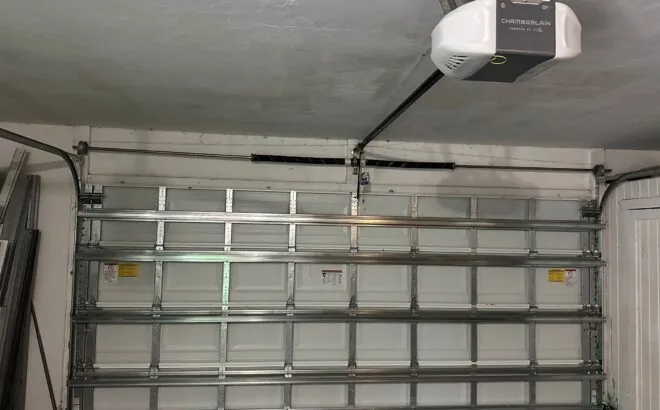
What an opener repair visit involves
Any garage door opener repair in Downtown Boston starts with the door, not the motor. With the operator unhooked, the door is worked by hand while its balance, springs, cables, rollers and tracks are looked over. A door that is heavy or binding is noted, because no operator will run well on it for long.
Then the operator is tested on its own. Power reaching it, the motor, the drive and gears, the end-of-travel limits, and the force threshold at which it reverses are each checked. The remotes are tried one by one, the receiver is checked, the wall controls and their wiring are tested, and the safety sensors are aligned and cleaned. Management is told the fault and its cause up front, whether the answer is a repair, a reprogrammed set of remotes or a new operator. To finish, the door is cycled open and shut a few times and made to reverse against an object placed in its path.
Safety sensors at a ramp entrance
Two photo eyes, one at each jamb, aim a beam across the doorway; interrupt it during closing and the operator sends the door back up. At a busy ramp, those sensors live a hard life. Vehicles brush them, water from the ramp splashes them, exhaust leaves a film on their lenses and vibration slowly pushes them out of line. The result is a door that starts down and then goes back up, over and over, with nothing in the way.
Staff can safely clean both lenses and clear the beam’s path. If a sensor’s light keeps blinking, the pair is not seeing each other, and the bracket may be bent or the wiring damaged. Resist holding the button to override them; the sensors are there to stop it closing on a car or a person.
Power, wiring and the equipment room
A surprising number of operator calls come down to power and wiring rather than the motor. Operators on large doors are often wired into the building’s own supply, sometimes through a separate switch or panel in an equipment room. A tripped breaker, a switch turned off during other maintenance, or a control cable damaged where it runs along a concrete wall can all make a sound operator look dead. In a below-grade garage, damp in a junction box or inside the operator’s housing can cause intermittent faults that track the humidity.
These are checked on every visit, but building staff can help by confirming that nobody has been working on the electrical supply to the garage, and by knowing where the operator’s power switch is.
Moving the door when the operator has failed
When an operator stops working, a building often needs the door moved by hand to let cars in or out. Many sectional doors have a release that disconnects the door from the operator, and many larger doors and roll-up doors have a chain hoist that turns the shaft or barrel by hand. Using either is reasonable only if the door is closed or fully open, level in its tracks, and its springs and cables are intact. Then the door should move with moderate effort.
A door that is a struggle to move, falls when released or hangs crooked points to a failed spring or cable; leave it alone. Never release a door that is partway open, and never leave a released door unattended where the operator could be switched on again with the door disconnected.
Noise and vibration in a tower
An operator bolted to a concrete wall or ceiling can pass its noise and vibration into the structure, and in a residential tower that may mean the rooms nearest the garage hear every cycle. Worn gears, a slack chain, a loose mounting or a door that is out of balance all make an operator louder. Tightening the mounting, replacing worn drive parts and correcting the door’s balance usually quietens it, and if the operator itself is worn out, a replacement chosen for the door’s weight and use can run more smoothly.
LiftMaster and other operators
Operators from many makers are worked on, including LiftMaster openers, which are repaired and replaced. The make matters less than the fault: a worn gear, a failed logic board, a misaligned sensor or a remote that has lost its pairing can happen on any operator. The LiftMaster opener repair page has more on that work.
Repair or replace the operator
Many operator faults are worth repairing: a worn drive part, a failed sensor, a damaged wall control or remotes that need reprogramming. A new unit is the wiser choice once the motor is wearing out, when parts for an older unit are no longer practical to find, when the operator is too light for how often the door runs, or when the door has been changed and the old operator no longer suits it. When that point comes, building management hears it plainly, and a new operator is fitted with its controls and sensors set up for the door. For more on operators in general, see garage door opener repair and replacement.
Limits and force: the settings that drift
Every operator has two kinds of setting governing its behaviour. The limits tell it where fully open and fully closed are, so it stops in the right place at each end. The force setting tells it how much resistance to accept before it decides something is in the way and reverses. Both can drift as parts wear, as the door’s balance changes, or after a repair elsewhere on the door. A door that halts just above the floor, slams into it, or reverses on its own at the same point every time is often showing a limit or force problem. These are set on every visit, with the door balanced first, and the safety reverse is tested afterwards.
Roll-up doors and their operators on the side streets
Many of the steel roll-ups on side-street loading bays, shop fronts and delivery doors are motorised as well. Their operators turn the barrel through a chain or gear, and they fail in familiar ways: a motor that hums without turning, a chain that has come off its sprocket, limits that let the curtain run too far, or a control box soaked by rain. Their operators get the same attention as those at tower garages; commercial garage doors covers these doors more fully.
When the problem is really the door
Some calls about openers turn out to be about springs, cables or tracks. An operator that strains and stops after a few inches is often lifting a door with a broken spring, and the spring repair for Downtown Boston buildings page explains that fault. A door that grinds or jerks may have a bent track or a worn roller, which falls under general garage door repair downtown. Testing the door first, before the operator, is how those faults are kept apart.
Getting an opener looked at
An opener tends to fail with the garage busy, in the middle of the morning or the evening rush, or late at night. Because the line is staffed at every hour, the fault can be logged straight away. For garage door opener repair in Downtown Boston, MA, whoever manages the building can call us or book online, noting how the door reacts when the control is pressed and who holds the equipment room key. If the door is stuck and vehicles are trapped, the emergency garage door page for Downtown Boston explains the first steps, and the new garage doors downtown and Downtown Boston pages cover the rest.
Questions from Downtown Boston
My remote stopped working but other people can still get in. Why?
Then the operator is working and the fault is with your remote or its pairing. A flat battery is the most common cause; after that, a remote that was never paired to a replaced receiver. Report it to building management, who can arrange for the remote to be checked or reprogrammed.
Why does our garage door close partway, then rise again?
Usually not. In a parking garage this is most often the safety sensors: a grimy lens, a sensor bumped askew, or an object in the beam. Wipe the lenses and clear the beam. If it keeps happening, book a check of the sensors and the door’s travel.
What does it mean when the operator hums and nothing happens?
It can mean a stripped gear or drive, a disconnected door, or a door too heavy for the operator because a spring has broken. Do not keep running it. Switch it off if you can, keep people clear and call for a garage door opener repair in Downtown Boston.
Can you replace an operator that is too small for our door?
Yes. When an operator is overheating or wearing out because the door runs too often for it, a more suitable operator can be installed, with its remotes, wall controls and safety sensors set up for the door.
Do you repair LiftMaster operators?
Yes. LiftMaster openers sit on the list of units we repair and replace, on both the sectional doors at tower garages and the roll-up doors on side streets.