
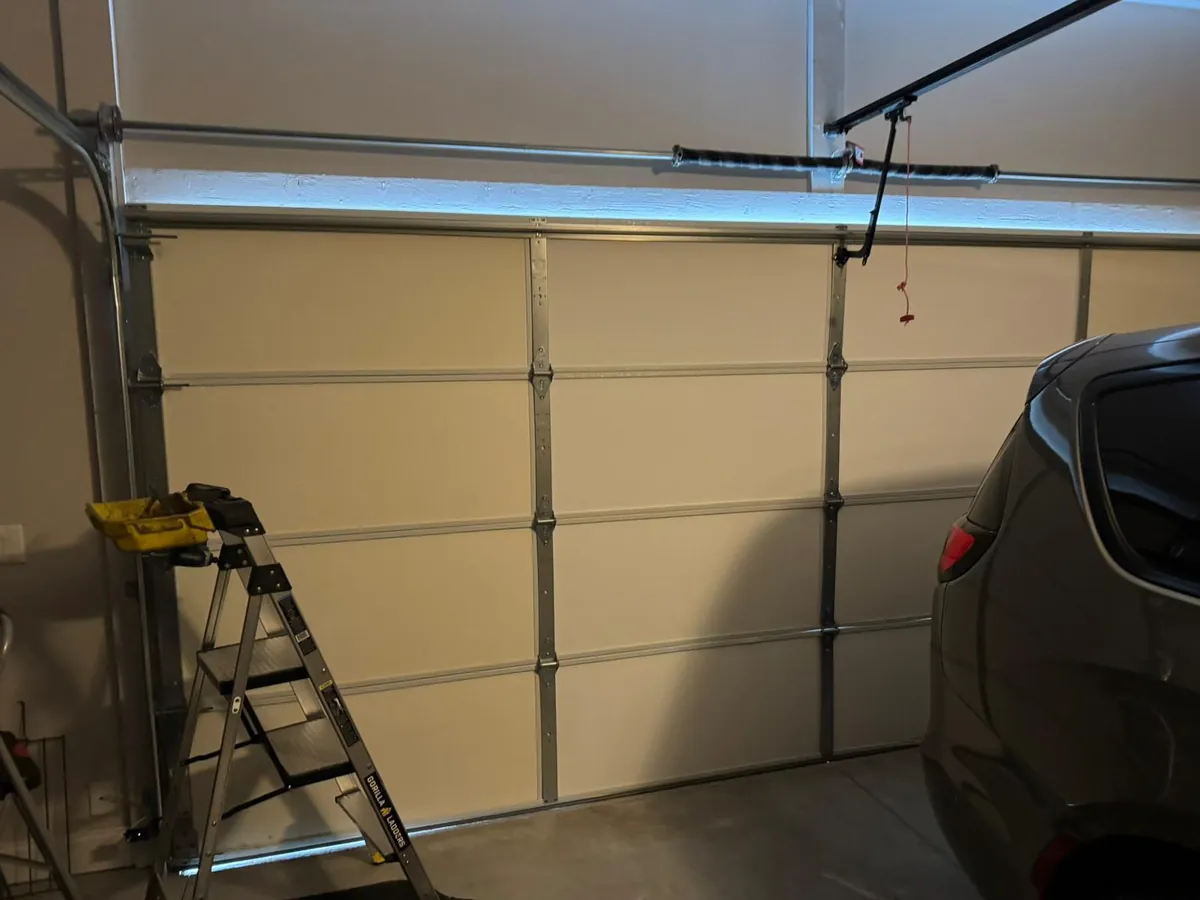
Why a tower garage door wears out faster
Most of the garage doors downtown do not belong to a single house. They close off the ramp into a shared, below-grade parking level beneath an office or residential tower, or they come down over a delivery entrance off one of the side streets. That changes what garage door repair in Downtown Boston, MA looks like: one door carries the cars of a whole building, it opens and closes many more times in a day than a household door does, and when it stops, everybody parked below is affected at once.
A door that serves a building tends to be wider and weightier than one on a house, and it is often driven by a commercial operator rather than a ceiling-mounted opener. The parts are the same family, though: springs, cables, drums, panels, tracks, rollers, the operator and its controls, and the safety devices at the opening. Each of them fails in its own way, and a door that is used constantly finds the weak one quickly.
Before calling, a building’s staff can note three things from a safe distance:
- Where the door has stopped: fully open, fully closed or partway, and whether it sits level in the opening.
- Any sound or sight of something broken: a bang from the spring area, a slack cable, a roller out of its track.
- Whether the controls respond at all, from the key switch, the card reader, the remote or the wall station.
What gets repaired on a building’s garage door
Springs under constant use
A shared door can cycle through a spring’s working life far sooner than a house door. When one breaks, the door becomes too heavy for the operator to lift safely. See spring repair for Downtown Boston buildings.
Cables and drums
The lift cables carry the door’s weight from the drums to the bottom corners. A frayed or snapped cable leaves the door hanging lower on one side.
Panels and sections
Sections dented by a vehicle’s roof rack or bumper on the ramp, cracked hinges, and a bottom section worn by water running down the slope.
Operators, remotes and controls
Operators that hum and do not move, remotes and fobs that have stopped working, and wall stations that do nothing. See opener repair downtown.
Tracks, rollers and brackets
Rollers worn flat by heavy use, rails knocked out of line, and brackets loosened by vibration. Off-track doors are dealt with too.
Safety sensors
The photo eyes at the opening, which keep the door from landing on a car or on someone walking up the ramp.
A shared door works harder than a house door
A household garage door might open a few times a day. The door at the top or bottom of a tower’s parking ramp opens for every car that comes in and every car that goes out, from early morning through the evening, and often through the night. Every one of those cycles flexes the springs, rolls the rollers along the track, winds the cables on and off the drums and runs the operator’s motor. Parts that would last for years on a house door wear out far faster on a building’s door, simply because they are asked to do so much more.
That has two consequences for anyone looking after a downtown garage. The first is that wear shows up in clusters. A spring nearing the end of its life, rollers with flat spots and a track bracket that has started to work loose often appear together, because they have all done the same heavy work. The second is that a small fault does not stay small for long. A roller that drags puts extra load on the operator; an operator that strains wears its own gears; a door that binds in the track can make the operator think it has hit something, so it stops and reverses and the building is left with a door that will not close.
Garage door repair in Downtown Boston for a building’s garage is therefore mostly about finding the part that started the trouble, not only the part that finally gave out.
How the parts of a heavy door share the load
The springs do the lifting. On most sectional doors the torsion spring is mounted on a shaft over the opening, wound tight while the door is down. As the door rises, the spring unwinds, turning drums at each end of the shaft, and the cables on those drums pull the bottom corners of the door upward evenly. Large or heavy doors often carry more than one spring on the shaft, sharing the load between them.
Rollers on the edges of each section ride in tracks that steer the door upward and then back under the garage ceiling. The operator moves a door that the springs have already balanced; it was never meant to carry the whole weight by itself. The safety devices at the opening watch for anything in the way and stop or reverse the door if something is there.
Roll-up doors on the side streets work on the same principle in a different shape. The curtain, made of interlocking slats, coils around a barrel above the opening, and a spring inside or alongside the barrel counterbalances it. Guides at each side keep the curtain straight as it travels. When that spring weakens, the curtain grows heavy to raise manually or the operator labours to raise it; when a slat is bent, the curtain catches in the guides.
Below-grade garages: ramps, damp and salt
A door at the mouth of a below-grade garage lives in a harder place than a door on a house. Water runs down the ramp toward it every time it rains, and in winter the cars bring slush and road salt down with them. The bottom section and the bottom seal sit in that water and salt, and so do the lower ends of the tracks and the brackets that fix them to the wall. Corrosion there is one of the most common findings on a tower’s door.
The air below grade is often damp and carries exhaust, which is hard on the operator’s electronics and on the safety sensors’ lenses. A film on the lenses is enough to make the door reverse for no visible reason. Concrete walls and ceilings sweat in some seasons, and water dripping on to the operator or the door’s top section speeds up rust where it lands.
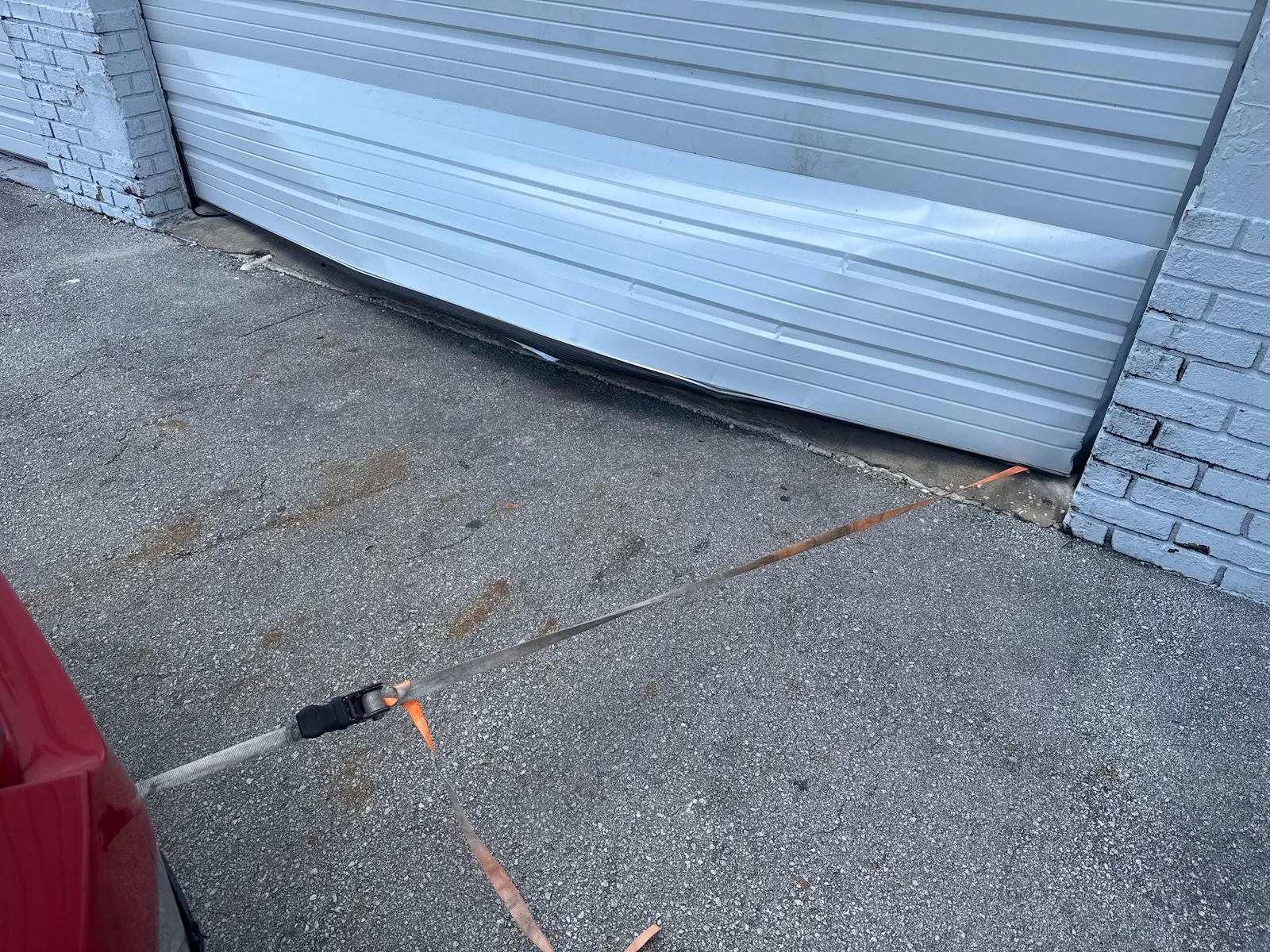
Vehicles add their own damage. A car that misjudges the ramp, a van with a roof rack, or a driver who follows the car in front too closely can clip the bottom of a closing door. That is how panels get creased, rollers get pulled out of the track and the whole door ends up twisted in the opening. Ramps also leave the door working against a slope at the bottom, so a door that does not seal evenly along a sloping floor lets in water and cold air.
Roll-up doors on the side streets
Downtown’s side streets have a different kind of door: steel roll-ups across delivery doorways, loading bays and shop fronts. These are commercial doors, and they are repaired here alongside the sectional doors in the tower garages. Their common faults are a curtain that has come out of a side guide, a slat bent by a delivery cart, a spring whose tension has faded, leaving the curtain heavy, and an operator or chain hoist that has stopped turning the barrel. A roll-up door on the street side also faces the weather head-on, so grit, salt and water work into the guides and the bottom bar. More on these doors is on the commercial garage doors page.
Working through building management
Garage door repair in Downtown Boston is arranged with building management rather than with someone at a front door. In practice that means the person calling is usually a property manager, a superintendent, a concierge desk or a facilities contact, and the visit is fitted around the building’s own rules: where a service vehicle can stop, how the technician reaches the garage, and when the door can be taken out of use without trapping cars below.
It helps to have a few details ready when you call. Which door it is, if the building has more than one entrance. Whether cars are trapped inside or the door is stuck open and leaving the garage unsecured. Whether there is a manual way to open the door in the meantime, such as a chain hoist or a disconnect. And who on site can give access to the operator, which is often in a locked room or behind a panel. With those answers, the visit can be planned around the building rather than the other way round.
If you are a resident or a tenant who has noticed a fault, the most useful step is to report it to the building’s management, who can then arrange the repair.
On site: how a repair visit runs
A visit for garage door repair in Downtown Boston starts with the whole door, not only the part named on the phone. First the operator is unhooked, so the door can be judged by itself. Its balance is tested, then the springs, cables and drums are inspected, rollers and hinges are examined for wear, and both tracks are sighted for bends, loose brackets and corrosion near the floor. On a roll-up door, the curtain, guides, barrel and spring tension are checked in the same way.
Then the operator and its controls are tested by themselves: the motor, the limit settings for the open and closed positions, the force setting, the remotes or access controls the building uses, and the safety sensors at the opening. Before any work begins, building management is told which part failed and the reason. After the failed parts are replaced, the door’s balance is reset, the operator’s travel and force are matched to it, and the reversing safety is proven by closing the door against an obstruction.
Doors knocked off their tracks at the ramp
An off-track door is one of the more dangerous faults in a parking garage. It usually follows a vehicle strike, a cable breaking on one side, or an operator that kept pushing a door that had stopped. The door hangs crooked, with rollers outside the rail, and it can fall if it is moved. It should not be run with the operator, and nobody should try to force it back by hand or drive under it. Fixing it means unloading the door’s weight first, then easing the rollers loose, truing or renewing the damaged track and making sure the cables sit level on each side before any test run. There is a fuller account of this fault under off-track garage door repair.
Panels, hinges and the bottom of the door
Damage to the sections of a garage door is usually mechanical: a bumper, a roof rack, or a door closing on a vehicle that stopped in the opening. One damaged section may be swapped by itself if a section to match the door’s profile and finish can be had. Hinges that crack between sections allow the door to bow in travel and to scrape at a single spot along the track. The bottom seal suffers the worst of the ramp’s water and grit, and once it is split or flattened, the bottom section starts to corrode from the inside out.
Safety sensors at a busy entrance
The pair of photo eyes flanking the opening are a door’s main protection for the cars and the people who pass under it. In a parking garage they get knocked out of line by vehicles, coated by exhaust film and splashed by water running down the ramp. The sign is a door that starts to close, then reverses for no visible reason. Building staff can safely wipe the lenses and look for anything blocking the beam. If the door still reverses, the sensors, their wiring or the door’s travel needs a closer look, and the door should not be forced closed by holding the control.
Repair or replace
Most building garage doors are worth repairing. New springs, a set of cables or fresh rollers will keep a solid door running. Replacing it becomes the better call once the sections are corroded through at the bottom, when several sections are damaged at once, when the door has been bent beyond straightening by a vehicle, or when the cost of keeping an old door running keeps coming back. When that point is reached, building management hears it plainly, and the new garage doors for Downtown Boston buildings page describes how a new door is chosen and fitted.
What building staff can safely do, and what they should not
Some steps are safe and worth taking while waiting for a technician:
- Stop running a door that is behaving oddly, and cut power to its operator where that is safe to reach.
- Keep cars and people clear of a door that is hanging crooked or stuck partway.
- Wipe both sensor lenses and move anything blocking the beam.
- Try a second remote or the wall station to see whether the fault is in one control or in the operator.
Leave the rest to a technician. The torsion spring stores dangerous tension wherever the door happens to be sitting, and the cables and their bottom-corner brackets share that load. Undoing one fixing on the spring assembly can unleash the whole load. Treat it as a job for a technician; this is not a DIY repair. Nor should anyone heave up a door whose spring is broken, by hand or by operator: it weighs much more than it appears to.
Booking a repair for your building
A building’s garage door tends to fail at the busiest moment, with a line of cars on the ramp or a row of them trapped below. Because calls are taken at any hour, the building can ring the moment the fault appears, whether a spring gave way overnight or a roll-up door has jammed halfway on a side street. For garage door repair in Downtown Boston, MA, the building’s manager can call us or book online with a note of the door’s symptoms, any trapped vehicles and the name of whoever will let the technician in. If the door cannot wait, read the emergency garage door repair steps first. Our wider repair work is set out under garage door repair, and the rest of what we do nearby is gathered on our Downtown Boston overview.
Questions from Downtown Boston
I live in the building. Can I book a repair for the garage door myself?
The shared garage door is usually the building’s responsibility, and repairs are arranged with building management. The quickest route is to report the fault to the management office, the superintendent or the concierge desk, who can then call us or book online.
The garage door keeps reversing before it reaches the floor. Why?
In a parking garage the usual cause is the safety sensors: a lens coated with exhaust film, a sensor nudged out of alignment by a vehicle, or something in the beam. Wiping the lenses and clearing the beam is safe to try. If it still reverses, a door binding in its track can also make the operator stop, and that needs a technician.
Our door is stuck open overnight. What should we do?
Keep vehicles and people clear of it, do not keep pressing the control, and call. An open door leaves the garage open to anyone, so describe what happened just before it stopped and whether anything looks broken. Calls are picked up at night as readily as by day.
Do you repair the roll-up doors on the side streets as well?
Yes. Roll-up steel curtains on shops, loading bays and back-of-house doorways are fixed as well as the big sectional doors at parking ramps. Curtains out of their guides, bent slats, weak springs and operators that will not turn the barrel are all covered.
Is it worth repairing an old garage door that keeps breaking?
Often it is, if the sections are sound and the faults are wear parts such as springs, rollers and cables. When rust has eaten through the bottom, several sections are damaged, or the same failures keep returning, it is time to talk about a new door, and management gets a straight answer either way.