
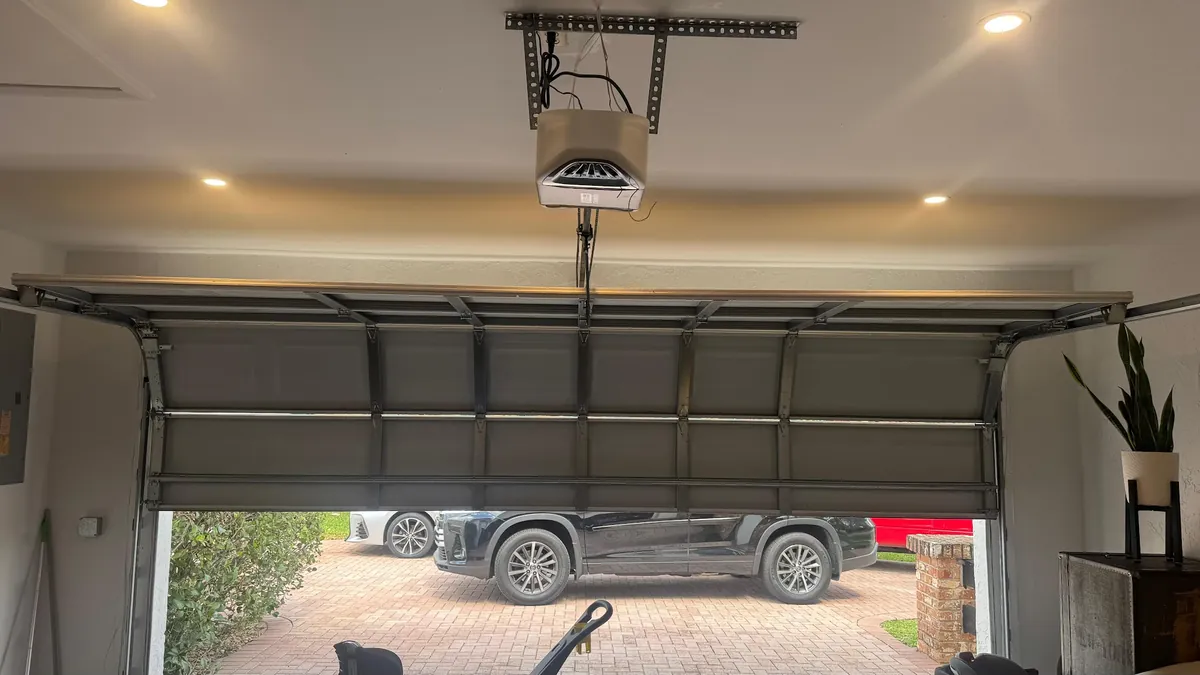
Single-car doors from another era
On the side streets leading off Broadway and Ferry Street, a two-family or single-family house typically has its garage standing apart, out back, where a proper driveway finishes. A large share of those garages still hold single-car doors from the nineteen-fifties and sixties. Looking after garage doors Everett MA homes have means working with that older stock: doors built before many of today’s safety features were standard, often on their second or third set of springs, and often driven by an opener added years after the door was hung.
An older door can run well for a long time. What it needs is someone who recognises how it was built and does not treat it like a door from last year. The springs may be a different type, the track and hinge pattern may be older, and the door may be heavier than a modern one of the same size.
Before you call, look from a safe distance for:
- Long springs stretched along the ceiling tracks on each side, or one coiled spring on a bar over the opening.
- Whether a cable runs through the middle of each long spring.
- Whether the door sits level, or leans to one side in the opening.
How older single-car doors differ
A door from the fifties or sixties may look like a modern sectional door from the driveway, but the details under the skin are often different. Many have extension springs: long coils hung parallel to the ceiling rails that lengthen each time the door comes down. Many are wood, or steel with a thinner skin and no insulation. Some are older one-piece designs that swing up and out on a pivoting arm rather than rolling up on tracks.
Each of those details changes the repair. Extension springs wear and break like any spring, but each also needs a containment cable threaded down its centre, which catches the pieces if the coil parts. On older doors that cable is sometimes missing or was never fitted, and adding it is one of the most useful things a visit can do.
Wooden doors gain weight as they absorb moisture over the years. A spring sized for the door when it was new may now be underpowered, which makes the door feel heavy and makes the opener strain. A one-piece swing-up door has its own hardware entirely, and parts for it are not always easy to match.
Garage doors in Everett MA built in that era are worth assessing honestly: some are good for years more with the right parts, and some have reached the point where repairs cost more than they return.
A proper driveway, and what it means for a repair
Unlike the tight lots in some of the cities nearby, many Everett houses have a real driveway leading back to the garage. That makes a practical difference on the day. A vehicle can usually park close to the garage, parts and ladders do not have to be carried far, and there is generally room to stand in front of the door and see its outside face properly.
That space is useful for diagnosis. With room in front of the door, the bottom section, the seal and the outside of the jambs can be inspected properly, and the door can be opened fully for testing. Swapping a section is easier too, because the damaged panel can be lifted out flat on the driveway and its replacement offered up without juggling it sideways.
A long driveway brings its own wear. A car reversing the full length of a driveway sometimes clips the jamb or the bottom panel on its way out, especially at night. Snow pushed down the driveway in winter often ends up banked against the door.
On a two-family lot the driveway is frequently shared, with cars from both units parked nose to tail along it. On the day of a visit it helps if the car closest to the garage can be moved out, so that the door can be opened fully and the bottom section looked at from the outside. If the driveway runs along the side of the house and the garage sits square at the end, there is usually room enough for a ladder in front of the door as well as inside it, which makes jobs like replacing a top section or adjusting a header bracket far more straightforward than in a cramped city garage. Leaving the area just inside the door clear of bikes and boxes means work can start straight away rather than with a round of shifting things out of the way.
Springs, coiled or stretched
A fifties door relies on its springs for every ounce of lift. Once one has gone, the opener meets a load it was never meant to raise, so the door may creep up a little before the motor gives in, or stay put altogether. A loud bang from the garage with nobody inside is often a spring letting go.
On older doors with extension springs, the pair is always renewed at once, otherwise one side of the door outpulls the other. The pulleys and the safety cables are checked at the same time. On doors with a torsion spring over the opening, the spring is wound on a steel shaft and held by a cone and set screws.
A torsion spring holds dangerous tension. Tackled without proper winding bars, or in the wrong order, it can hurl a bar or bracket with force enough to break bones, so count it firmly as not a DIY repair, and loaded extension springs are no different.
More on spring faults is on the Everett spring repair page.
Cables, pulleys and drums
With extension springs, each lift cable climbs from a lower corner, loops over a pulley and ties off at the rear of the track. With a torsion spring, the cables coil onto grooved drums on the shaft. Whichever you have, a frayed or parted cable leaves that side hanging low.
On older doors the pulleys are a common weak point. A pulley with a worn bearing or a cracked wheel chews the cable that runs over it, and the cable then frays at the same spot every time. Replacing the cable without the pulley just starts the clock again. So the pulley gets renewed alongside both cables, and the spring balance is reset to finish.
Rollers, hinges and tracks on an old door
Rollers on older doors are often the original steel type. They are tough, but their bearings wear, and when they stop turning they slide in the track and grind. Of all the small jobs on a fifties door, fresh rollers often make the biggest difference to how quietly it runs.
Hinges between sections loosen and crack with age. Once a hinge cracks the panels flex against each other in motion, and you notice a dip across the middle or a scrape at an identical spot each cycle. Tracks on a detached garage can drift as the building settles, and brackets screwed into old wood can loosen.
A derailed door stays where it landed: it can still fall, and its springs and cables are still under load. The way such doors are rehung is described on our off-track garage door repair page.
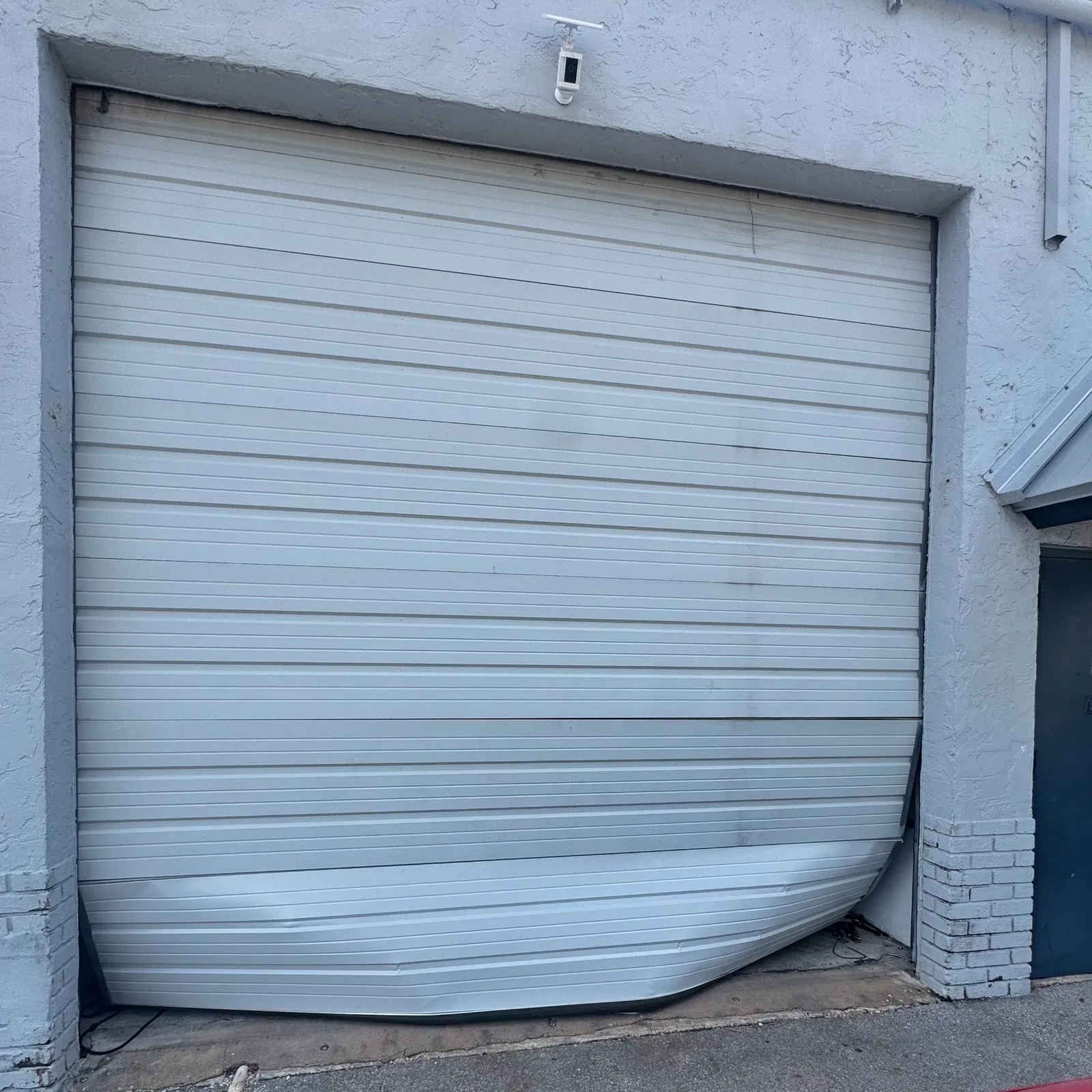
Wood and steel: how each one ages
Older single-car doors on these streets tend to be one of two materials, and each fails in its own way.
Wooden doors are heavy to begin with and get heavier. Paint wears thin on the bottom rail first, water gets into the end grain, and the lowest panel starts to soften. Under a dozen coats of paint, a stile can look perfect and still give like cork when pressed. As the wood takes on water the door gains weight, the springs fall behind, and the hinges and their screws carry more load than they were meant to. Screws pulling out of softened stiles are a common find.
Steel doors of that era usually have a single thin skin with no insulation and no backing. They dent easily, and once a dent cracks the paint, rust follows. The bottom edge, where water sits and snow is banked, is where steel doors go first. A thin steel section that has been dented and straightened more than once can split along the crease.
Knowing which material you have helps when you call. Some garage doors Everett MA owners describe as “the old one” turn out to be quite sound underneath, and some that look tidy have a rotten bottom rail. The visit is where that gets settled.
Panels, seals and the knocks of a long driveway
A long driveway gives a driver more distance to drift. Clips to the bottom panel or the jamb on the way out are common, and so are knocks from a mower, a snow blower or a bin rolled down to the street. Swapping just the damaged section works when a panel with the same profile is still made; on older doors that is not always possible, which is one of the points where repair and replacement are weighed up.
The bottom seal deserves a look on every older door. A seal that has gone hard or torn lets water and leaves blow in, and the cable anchors at the lower corners end up standing in puddles. A new seal costs little effort and spares the hardware above it.
Openers added to older doors
Many of the older single-car doors here were installed as manual doors and had an opener added later. Paired with a properly balanced door and set up for it, that arrangement is fine. It goes wrong when the door is heavy, the springs are tired, or the opener was put in without the safety sensors that are expected today.
Typical complaints: the motor whirs yet the door sits still, travel halts halfway up, the door bounces back just short of the floor, or the handsets and wall control go quiet. On an older door the first suspect is often the door itself, since an overweight or lopsided door grinds down the opener’s drive gear trip by trip.
Safety sensors are a particular concern on older setups. If your opener has no photo eyes at the bottom of the opening, or they have been disconnected, it is worth having that looked at. We repair or swap the whole opener setup, LiftMaster units among them; the detail is on Everett opener repair.
Urgent faults, day or night
An old door can give no warning before a spring breaks or a cable snaps. If it happens after dinner with the car shut in, or before dawn with the door gaping open, ring anyway: somebody answers our line at all times, Saturday and Sunday included.
Sensible steps in the meantime:
- Pull the opener’s plug so nobody in either unit tries the button.
- Keep heads and hands out from beneath any tilted or half-raised door.
- Leave a spring-broken door down; no heaving.
- Leave rollers that have jumped out exactly where they are.
The Everett emergency repair page explains the most common urgent faults and what each one means.
What a visit involves
Diagnosis begins with the door and leaves the motor for later. Once the trolley’s release cord is pulled, the door is moved up and down manually. A balanced door lifted halfway stays roughly where it is left; one with weak or broken springs drops or will not rise. On an older wooden door, this test also shows whether the door has simply become too heavy for its springs.
Next, the hardware is inspected piece by piece: springs, safety cables, lift cables, pulleys or drums, rollers, hinges, tracks and brackets. After that the opener gets its own trial, along with every handset, the wall control and both photo eyes.
Before work starts you get the full account: which part let go, why, what else is getting tired, and the choices for each. With the repair complete, the springs are set to suit what this old door weighs now, the opener is reprogrammed for where the door should stop and how hard it may push, and a board laid on the floor proves the auto-reverse works.
Repairing an older door, or replacing it
The age of a door does not, on its own, mean it must go. A sound wooden or steel door from the fifties or sixties can be kept running with new springs, cables, rollers and hinges, and some owners prefer to keep a door that suits the house.
Replacement starts to win the argument once the structure has gone. Clues include rot or splits across several wood panels, timber so sodden that no spring setting will balance it, steel rusted through along the bottom, or a one-piece swing-up door whose parts can no longer be matched. A door that has no safety features and cannot sensibly be fitted with them is another case.
When garage doors Everett MA owners have reach that point, we take measurements from the existing opening, the headroom and the space beside each jamb, then supply and fit one of our new garage doors and cart the fifties door off.
Small habits that help an old door
Older doors reward a little attention. None of the following involves touching the springs or cables.
- Watch the door as it moves. A jerk, a lean or a new noise is worth a call.
- Keep snow and leaves cleared from the bottom of the door.
- Check that the sensors at the bottom of the opening are clean and lit.
- Do not let anyone ride the door or hang from it.
For a fuller look at the problems these doors run into, see the garage door repair service or the Everett garage door repair page.
Over the city line
Our area takes in much of Greater Boston. Everett’s neighbours Malden and Chelsea have their own pages too; for anywhere else, browse the service areas list.
Booking a visit
For garage doors in Everett MA, the most useful thing you can tell us is what the door is and what it is doing: whether it has long springs along the tracks or one over the opening, whether it is wood or steel, where it has stopped, and whether a car is trapped behind it. Google reviewers have given us 5.0, and you will reach a person whether you ring at breakfast or well after Ferry Street has gone dark. Call us or book online.
Questions from Everett
Our garage door is very old. Can you still get parts for it?
Springs, cables, rollers, hinges and most track parts are standard and can be replaced on most older sectional doors. Matching an individual section, or parts for an old one-piece swing-up door, is harder, and that is often where replacement becomes the better choice.
What is the cable running through the middle of my long springs?
It is a safety cable. If an extension spring breaks, the cable keeps it from flying across the garage. If your springs do not have one, ask for one to be added.
Can an opener be added to an old manual door?
Usually, provided the door hangs level, lifts easily by hand and has no rot. Get the balance right first, otherwise the new motor wears itself out on an overweight door.
Lifting the door by hand has got harder. What changed?
Tired springs, or a door that has put on weight, which happens to wooden doors that absorb moisture over the years. Both put strain on the opener, so it is worth having the balance checked.
One of the two long springs has snapped. Can we still use the door?
No. Running on one spring, the door lifts lopsided and can drop or jam. Switch the opener off at the plug, stand well back and phone us.