
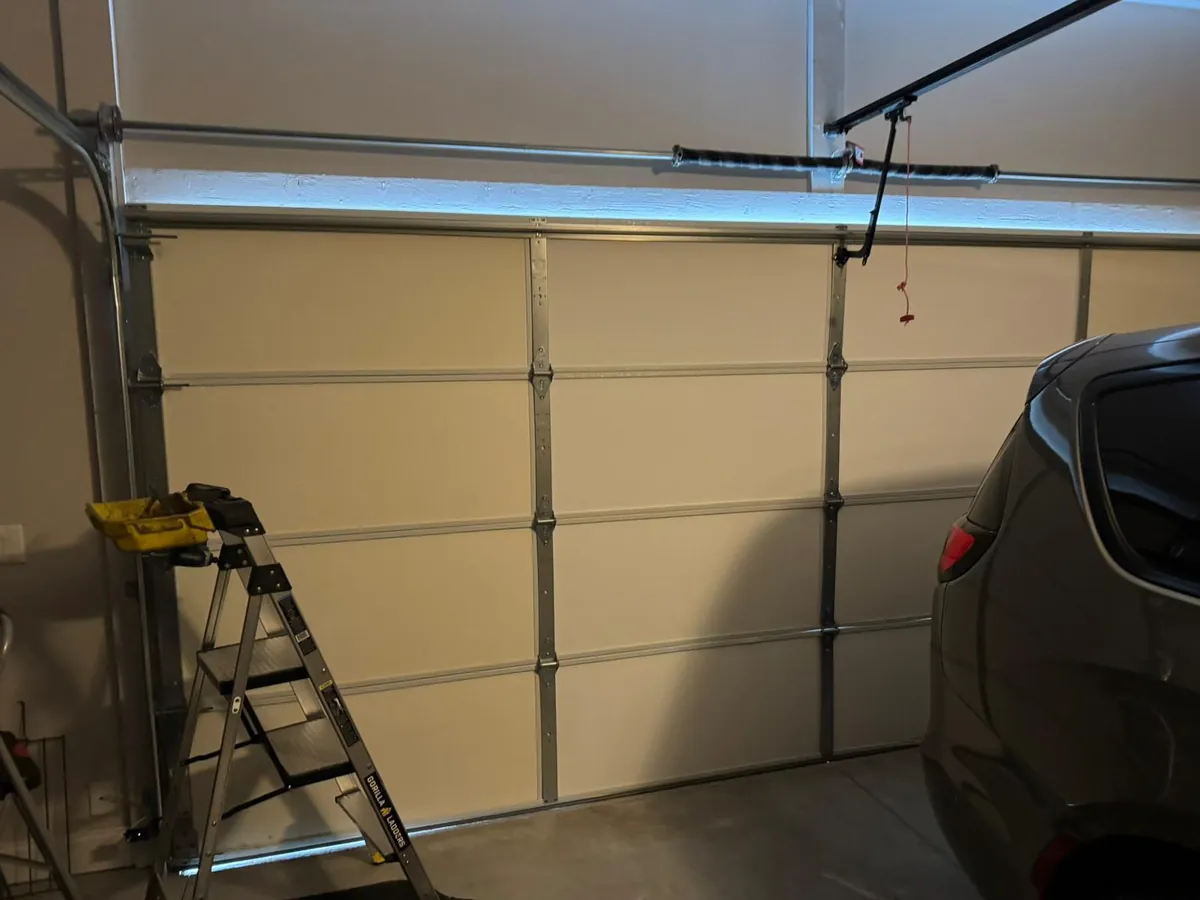
Why the garages at the end of Malden’s shared driveways need repair work
In Maplewood and Edgeworth, the garage usually sits apart from the house. You walk out the back door, past the porch steps, and along a driveway that two households share, to a little outbuilding at the rear of the lot. That layout is the starting point for almost every call about garage door repair Malden MA homeowners make. The door at the end of that driveway works hard, sits through every winter unheated, and is often out of sight from the kitchen window, so small faults go unnoticed until the morning it will not move.
Two-families and single-families here were mostly built with the garage as a separate structure rather than a bay under the living space. A separate building moves on its own footings, takes the weather on all four walls and rarely has more than a bare bulb and one outlet for the opener. Each of those things shows up in how its door wears.
Three observations are worth jotting down from the porch or the driveway, with your hands off the door:
- Is it shut, open, or hung up somewhere between, and is the bottom edge level with the floor?
- Can you see a split in the coil over the opening, or a cable dangling loose by one of the lower corners?
- Is the shared drive clear, or is a car, a bin or the neighbour’s vehicle parked along it?
Faults a Malden repair visit puts right
Springs, torsion and extension
The coiled springs that carry the door’s weight, either on the bar above the opening or stretched along the side tracks. More on the Malden spring repair page.
Lift cables and drums
Braided steel running up each side of the door to a grooved drum. When one frays or jumps its drum, the door tips to one side.
Dented or cracked panels
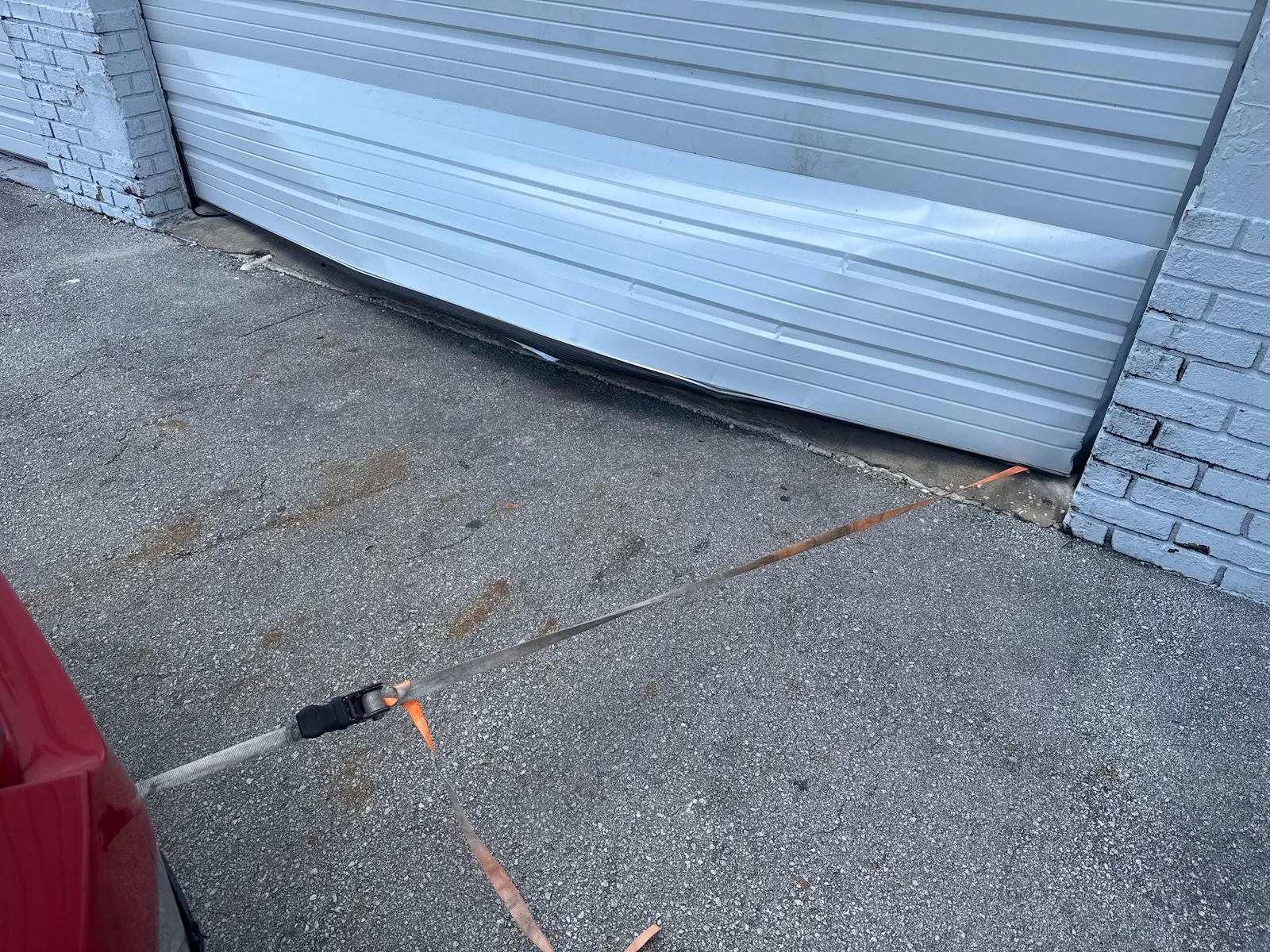
Sections bumped by a car reversing down a tight driveway, split hinges between sections and a perished bottom seal.
Openers, remotes, wall buttons
A motor unit that hums yet will not lift, a handset gone dead, a wall button wired across an old outbuilding. See opener repair in Malden.
Rails, rollers, derailed doors
Kinked rails, brackets working loose from the timber, rollers that grind or have seized, and doors that a bump has pushed sideways out of line.
Safety sensors
Two little photo eyes mounted low on the jambs; break their beam and a working opener should stop the closing door and send it back up.
A garage with no house attached
A garage standing apart from the house behaves differently from an attached one, and the differences matter for the door. With no heated house on the other side of any wall, the inside of the garage follows the outdoor temperature closely. Grease on rollers and hinges stiffens in the cold, the opener has to push a door that is reluctant to move, and the steel of the spring is at its most brittle on the coldest mornings. Many of the spring and cable failures we see in a winter come in the first hard frosts, when parts that have been tired for months finally give out.
The building itself moves, too. A small outbuilding on shallow footings settles over the decades and shifts slightly with frost in the ground. When the frame of the opening drifts out of square, the tracks drift with it. A door that used to glide begins to rub on one side, a roller rides hard against the edge of its rail, and the opener begins to labour. Nothing has broken yet, but the wear is building, and a repair made at that stage is far simpler than one made after a roller cracks or a track bends.
Damp is the third factor. An outbuilding at the rear of the plot often sits lower than the house, with the driveway running down towards it. Rain and snowmelt find their way under the door, so the lowest panel, its rubber sweep and the brackets near the slab spend more time wet than anything else on the door. Rust starts there, and a rusted bottom bracket is a part that anchors the cable and carries its pull, so it is not something to leave.
Shared driveways and narrow access
Much of the garage door repair Malden MA calls bring in starts with the driveway. Narrow access between houses is the normal condition across Maplewood and Edgeworth, and it shapes both how doors get damaged and how repairs are carried out. A driveway squeezed between two houses gives little room to line up a car before it reaches the garage. Reversing out, a driver has a house wall on one side and a fence or the neighbouring house on the other, and the garage door frame is an easy thing to clip. That is how many bent bottom sections, cracked lower panels and twisted track ends come about.
A shared driveway also means the door is in use by more than one person’s routine. A neighbour may need to get past while the repair is under way, or a car parked further up may be blocking the run to the garage. Tell us on the phone who shares the drive and whether anything will be parked in it, so the job can be arranged around both households. Parts, ladders and tools are carried down the driveway to the garage, so a clear run makes the work quicker for everyone.
Where access is tight on the inside, too, such as a garage packed with stored furniture or bikes along the walls, it helps to clear a strip along each track and the area under the opener. A technician needs to reach the springs, follow both rails from top to bottom and stand clear of the door while it is tested.
How the parts of a sectional door share the load
A garage door is a balanced system, and understanding the balance explains most of the faults. The springs are what lift the door. Where torsion springs are fitted, the coil sits on a horizontal steel tube over the header and twists tighter each time the door comes down, then lets that twist go on the way up, spinning the grooved drums mounted at either end. A cable is wound onto each drum and drops to a fixing low on the door’s edge, so both sides rise together under the spring’s stored effort. Extension springs, more common on older and lighter doors, stretch along the horizontal tracks and haul on the door by way of sheaves and a pair of cables.
Each section of the door carries rollers that run inside the vertical and horizontal tracks. Hinges between the sections let the door fold as it rounds the bend where the vertical rail turns back towards the ceiling. The opener, if there is one, does not do the lifting. Its motor only shifts a door the springs are already holding in balance, and its sensors and force setting decide when it should halt and reverse.
When the balance is right, a door disconnected from its opener can be lifted by hand without much effort and will stay put about halfway up. When a spring weakens, the door gets heavier, the opener strains, and the wear spreads to the opener gears, the rollers and the cables. That is why a sound repair weighs up every part of the door, rather than stopping at whichever piece gave out first.
What a repair visit involves
Every visit starts at the door, not with the part described during the call. The technician releases the opener’s trolley and works the door by hand to feel how it balances. The springs are looked over for gaps, stretch and rust. Both cables are followed from drum to bottom bracket for fraying or slack. Every roller is spun and every hinge rocked to find play, and each rail is checked by eye from floor to ceiling for kinks, loose fixings and any lean away from the opening.
When the opener plays a part in the fault, it gets its own test run: where it stops at the top and bottom, and how hard it pushes, are both checked, and the sensors are tried to see whether they line up and halt the door when they should. In a detached garage, the power supply to the opener is worth a look too, because an old outlet or an extension lead run from the house can be the real reason an opener cuts out.
Nothing is fitted until you have heard what broke and the reason it broke. With the faulty parts replaced, the door is rebalanced, the opener is tuned to the door as it now stands, and a short offcut of timber set on the slab under the door proves the closing door turns back when it touches something. A garage door repair Malden MA homes can depend on finishes with the door running smoothly under the opener and under hand power, so you know it will close when you leave.
What you can do safely before help arrives
Some checks are safe and worth doing:
- Door halted part of the way? Pull the opener’s cord out of its socket overhead; then it cannot make another attempt.
- Give each sensor lens a wipe, then shift whatever is standing in the doorway, a bin or a sack of rock salt, out of the beam.
- Swap the battery in a handset that has gone quiet, then press the button on the wall: if the wall button works, the handset was the problem.
- Scan both rails from a few steps back for a rake, a shovel or a stored item leaning on them.
Beyond those checks, hands off. The torsion spring is under heavy, dangerous tension whether the door is up or down, and that load travels down both cables into the lowest fixings on the door. Loosening a set screw or a bracket bolt can release it instantly. That is not a DIY repair. Once a spring has snapped, the door carries its whole weight with nothing to counter it, so lifting it by hand or forcing it with the opener is the wrong move.
Doors knocked out of their tracks
Off-track doors are a common result of the tight approach to many Malden garages. A car that brushes the bottom of a door that is not fully open can push the lowest rollers out of the rail. A door that has been closing crooked for a while, because one cable has stretched, can climb out of its track on the lower side. Once a roller is out, the door binds and the opener can drive it further out of line.
The sensible course is to leave the door exactly as it sits, cut the opener’s power and keep people and vehicles clear. Do not try to pull the door down or push it back into the rails. A partly derailed door can drop or swing, and the tension in the springs and cables is still in play. On the visit, the door is secured, the tracks are checked and straightened or replaced where they have bent, rollers that have cracked are changed, and the door is re-hung square to the opening. More on this work is on the off-track repair page.
Cables, drums and a door that hangs crooked
When one end of the bottom edge sits higher than the other, look first to the cables. Cables fray where they meet the bottom bracket, which is where water and salt collect on a sloping driveway. A frayed cable can stretch and let one side drop, or snap outright. A cable can also unspool from its drum when the descending door lands on something, a bike wheel or a bin lid, and the line goes slack.
A crooked door should not be run. It loads one side of the system unevenly, and it is a short step from crooked to off-track. Both cables are changed together, so neither side lags, and while the door is apart the drums and lower fixings get a close look as well. Our cable repair page explains snapped and frayed cables at greater length.
Dents, split hinges and a tired sweep
Panel damage on a detached garage tends to come from two places: the bumper of a car turning into a narrow driveway and the long-term soaking of the lowest section. A dent in a single steel section can often be lived with, as long as the door still runs true. A section that has creased across its width, or a hinge that has torn out of the steel, weakens the door and puts strain on the rollers and the opener.
The bottom seal is a small part with a large job in a garage that sits at the low end of a driveway. When it splits or flattens, water runs straight in under the door and freezes against the floor in winter, sometimes sealing the door shut. Replacing a worn seal is a straightforward repair, and it protects the bottom section and the lower brackets from the worst of the wet.
Openers and the wiring of an outbuilding
An opener in a detached garage often runs on a supply that was added long after the garage was built. That can mean a single outlet, a long run from the house or a shared circuit with lights or tools. When an opener stops, it is worth knowing whether it has lost power, whether its logic board has failed, or whether the door itself has become too heavy for it to move.
Remotes are affected by the distance as well. A remote that worked fine from the street may struggle when the garage sits behind two houses at the end of a long drive, especially if its battery is weak. Motor units, handsets, wall buttons and sensors each get their own attention on the opener repair page for Malden, and LiftMaster openers, like the others, can be repaired or swapped for a new unit.
When a fault can wait, and when it cannot
Not every call for garage door repair Malden MA residents make is urgent. A door that is a little noisy, a roller that squeaks or a remote that needs pressing twice can wait for a booked visit. Some faults should not wait: a garage left gaping overnight that cannot be secured, a car shut in that has to be out by morning, a spring that has parted, a cable hanging free, or a door twisted half out of its rails. With the phone picked up in the middle of the night and on Sundays too, nobody needs to sit on a broken door until office hours to report it. Our emergency repair page for Malden walks through the steps to take while you wait.
Repair or a new door
Most doors are worth repairing. Springs, cables, rollers, hinges, a bottom seal, a single damaged section or an opener can all be replaced on an otherwise sound door. A door is nearer the end of its life when several sections are rusted through at the bottom, when a wooden door has drunk in years of rain and grown too heavy for any sensible spring to carry, or when repeated knocks have bent the frame of the door itself.
In those cases, you will be told plainly that a repair would be short-lived, and new doors supplied and installed are an option for the opening. On a detached garage with a narrow approach, the door chosen needs to suit the opening, the headroom inside and the way the garage is used. Our main garage door repair page lists every repair carried out across Greater Boston.
Arranging a visit
For garage door repair Malden MA households can book, it helps to describe the house and the garage: whether it is a two-family or a single-family, whether the garage is at the end of a shared driveway, and whether anything will be parked along the way. Tell us what the door is doing now, whether it is open, closed or stuck partway, and any sound you heard when it stopped. Everything we do in this town is brought together on the Malden page. With that much ready to tell us, call us or book online.
Questions from Malden
Our garage is at the end of a driveway we share with the house next door. Does that complicate a repair?
Not usually. Knowing in advance lets the visit work around the neighbour’s car and the tight run down to the garage. Let us know who shares the drive and whether it will be clear.
The door is lower on one side and the opener stopped halfway. What should I do?
Unplug the opener and leave the door where it is. A crooked door usually points to a cable that has stretched, snapped or come off its drum, and running it again can push the door out of its tracks.
There is no heat in our garage. Does the cold affect the door?
Yes. Lubricants stiffen, the opener works harder and springs are more brittle on the coldest days. Many spring and cable breaks happen in the first hard frosts of winter.
Can a door that has been clipped by a car be repaired?
Often it can. Bent track ends, cracked rollers and a single damaged section can be replaced. If several sections are creased or the door frame has twisted, replacing the door may be the sounder choice, and you will be told which.
The door has started to feel heavy when I lift it. Can I tighten the spring?
Please do not. Winding or adjusting a torsion spring means working against tension strong enough to injure, and it is no job for a homeowner. A heavier door is the classic sign of a spring losing its strength, so have it looked at before the spring lets go.