
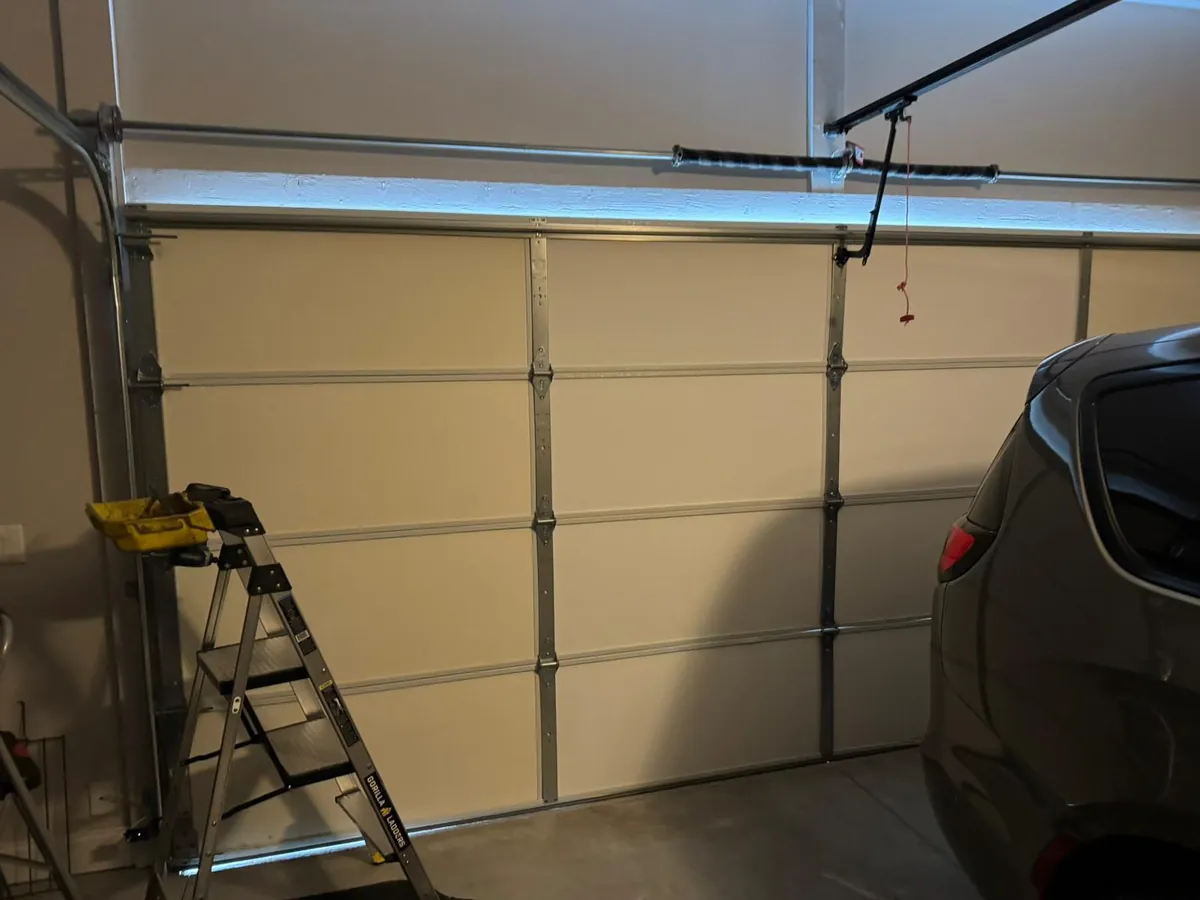
Why the garages behind Dorchester houses need repair
Behind most triple-deckers and Victorians in Ashmont, Savin Hill and Codman Square, the car lives in a separate building. You reach it down a long strip of driveway along the side of the house, and a large share of those outbuildings went up in the 1920s with room for one car. A lot of them still carry an ageing wood door. Our garage door repair in Dorchester, MA is built around that kind of building, and it takes in every moving part of the door: the springs and lift cables, the sections, the opener with its remotes, the tracks and rollers, a door that has jumped its rails, and the sensors at the floor.
Because the garage stands alone, a problem often goes unnoticed until the morning someone walks down the driveway and the door will not move. Three things are worth a look from a safe distance before you call:
- Look along the shaft above the opening for a spring with a gap between its coils.
- Look at both bottom corners for a cable hanging slack or wound off its drum.
- Look at the two small sensors by the floor; a blinking light usually means they have lost sight of each other.
Parts that fail on a Dorchester garage door
Springs
The spring above the opening, or the pair stretched along the tracks on older doors, does the lifting. Once a spring snaps, nothing is left carrying the door. See spring repair in Dorchester.
Cables and drums
Lift cables fray where they rub the bottom brackets, and a slack cable can jump off its drum, leaving the door tilted in the opening.
Wood panels
Older wooden sections crack along the grain, soften at the bottom rail and split at the hinge screws, which lets the door sag as it travels.
Openers and remotes
A detached garage depends on its opener and a remote that has to reach from the street end of the driveway. See opener repair in Dorchester.
Tracks and rollers
Tracks fixed to old framing work loose, and worn rollers grind or seize, until the door binds or leaves the track.
Safety sensors
Two small beam units mounted low on the jambs. In a cramped single bay they are easy to nudge out of line with a bicycle pedal or a recycling bin.
A garage set apart from the house
A detached garage set well back from the street changes how a breakdown plays out. Nobody steps into it from a hallway or a kitchen, so the overhead door is the sole route for the car, the bikes and everything else kept there. Jammed shut, it locks all of that away. Jammed open, it leaves the contents on show and open to rain and snow, sometimes for hours before anyone glances down the yard.
The distance also matters for the opener. A remote pressed as the car swings in from the road may be at the very limit of its reach, and a garage that was wired long after it was built may run its opener from a single outlet on a circuit shared with lights or tools. Intermittent behaviour, or a remote that only responds once the car is halfway up the drive, is often a signal or power question rather than a mechanical one. Sorting the two apart is the first part of most visits.
Long driveways collect what slides down them. Grit, leaves and meltwater run towards the garage and pool at the threshold, which is exactly where the bottom rail, the bottom seal and the lowest track brackets sit. Over a few winters, that is where the rot and the rust begin.
Wood doors from the 1920s
Many of the single-car openings in Dorchester were built for doors that swung or slid, and later took an overhead door. A good number still have a wooden sectional door that has been painted many times over. Wood moves with the seasons: it swells in wet weather, shrinks in a dry cold snap, and soaks up water wherever the paint has cracked. Each of those changes alters the door’s weight and shape.
That matters for repair because the springs are matched to a door’s weight. Years of drinking in rain can leave a wood door heavier than the springs were sized for, so the door feels heavy by hand, drifts down when it is left halfway, and makes the opener labour. Putting in a spring of the old size will not fix that; the door has to be weighed and balanced as it is now.
Old wood also loosens its grip on hardware. Hinge and bracket screws work their way out of softened stiles, a strut can come away from a bowed section, and the bottom rail, which sits in the wet, often softens first. Small repairs to the hardware can keep a sound wood door running for a long time. Once the rot reaches the sections themselves, the conversation moves towards the new garage doors in Dorchester page.
Narrow openings and old framing
A single-car opening leaves very little room on either side of the door. Track brackets are fixed into jambs that may have been patched, shimmed or replaced over the decades, and the headers above the opening are not always level. A door hung in an opening that is slightly out of square will rub on one side and run freely on the other, and the rub gets worse as the framing shifts with frost.
Headroom can be short as well. Older garages were not built with a torsion spring and an opener in mind, so the gap from the head of the opening up to the rafters or ceiling joists may be tight. That limits where a spring can be mounted and how the opener rail is hung. A repair in this kind of garage has to work within the room that is there, which is why it helps to describe the garage when you call: roughly how old it is, what the door is made of, and how much space sits above the opening.
The narrow bay also puts the door hardware within reach of everything else in the garage. Bins, bikes and ladders stored along the walls are close to the tracks and the sensors, and one knock can bend a track or swing a sensor out of line.
What garage door repair in Dorchester involves
A visit begins at the end of the driveway with the door closed. Before anything is touched, the technician looks at how the door sits in its opening: whether the bottom edge meets the slab evenly, whether one side hangs lower, whether the jambs and header have moved. Then the trolley release is pulled so the door runs on its own hardware alone. Raised by hand to about waist height and let go, a healthy door hovers there; one that drops or climbs is telling you about its springs.
From there the inspection works upwards. Rollers are spun to see whether they turn or drag, hinge pins and screws are tried for play, and the cable at each bottom corner is followed up to its drum. Both rails are sighted from inside the garage for kinks and for brackets pulling away from old timber. On a wooden door, a screwdriver tip pressed into the bottom rail and the stiles around each hinge shows quickly whether the wood is still firm.
The opener comes last. It is reconnected and cycled with the wall control, then with each remote from the driveway, and the beam units are tested by breaking the beam mid-travel. Only then is the fault explained, along with anything close to failing, and the work agreed.
Once the repair is in, the door’s balance is set again, the opener’s travel limits and force are adjusted to suit the door as it now is, and a board laid flat across the threshold checks that the door touches it, stops and rises. With garage door repair in Dorchester, that last test earns its place: a garage at the back of the lot is usually reached on foot, walking straight past the closing door.
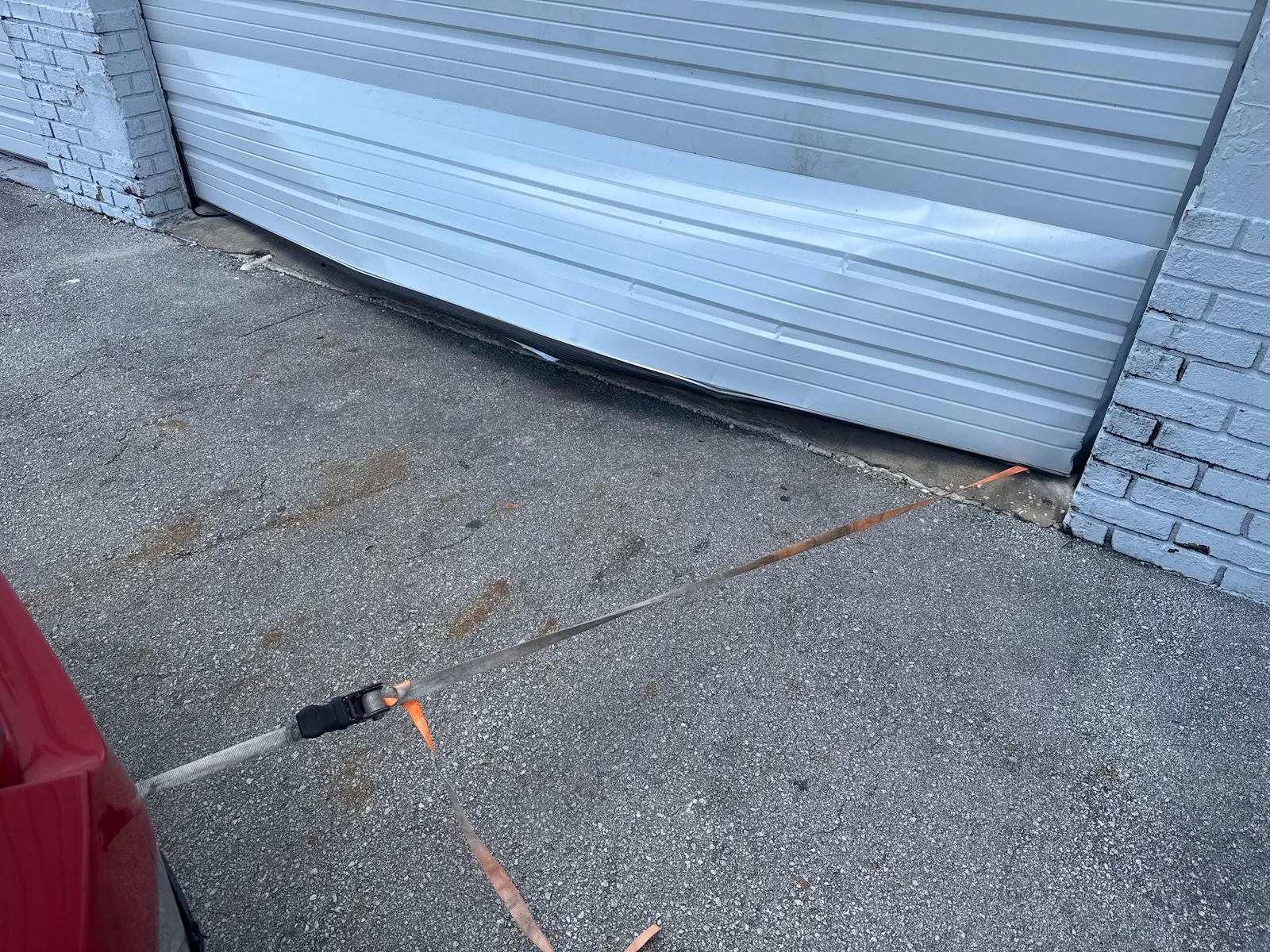
Doors that hang crooked or leave the track
A door that sits lower on one side than the other usually has a cable problem. One cable has frayed, stretched or come off its drum, so the spring is lifting only one corner. If the opener keeps running, the door twists in the tracks, the rollers on the low side are forced out, and the door can come off the track altogether.
In a narrow single-car bay, an off-track door is wedged against the jambs and sometimes against the car, and it is not stable. Leave the opener unplugged and do not try to shove it back into line. Putting it right involves clamping and unloading the door first, then guiding the rollers back into straightened or new track, renewing the cable and setting both sides even before the door is run again. If this happens late in the evening, our emergency garage door repair in Dorchester line is the one to ring.
Openers, remotes and sensors on a detached garage
Opener trouble shows up in a few familiar ways. You hear the motor, yet the door stays put. The door starts down, then reverses before it reaches the floor. The wall button works but the remote does not, or the reverse. The light on the opener flashes and nothing happens.
Each has its own likely cause. A humming motor with a still door often means a broken spring or a stripped drive gear. A door that reverses near the bottom points first at the sensors, then at a track that binds. A remote that fails while the wall button works is often a battery, a lost programming code or a range problem across a long driveway. Openers, remotes, wall buttons and sensors are all repaired, and an opener that has worn out can be swapped for a unit suited to the weight of the door.
Sounds a tired door makes
An old single-car door usually announces its trouble before it stops. A loud bang from the garage when nobody is near it is what a torsion spring sounds like as it snaps; the door may look normal until someone tries to open it. A grinding or popping as the door travels points at a roller with a broken bearing or a cracked wheel catching on a seam in the track. A squeal at one spot, every time, often means a hinge has worked loose from softened wood and the sections are rubbing.
A shudder halfway up is worth paying attention to. On a wooden door it can mean a strut has come loose and the door is flexing in the middle; on any door it can mean a rail has been knocked out of line where it meets the curve. A clatter from the opener rail suggests a slack chain or belt. None of these needs a panic, but each is less disruptive to fix before the door jams than after, and each is easier to diagnose if you can describe when the noise happens and where it seems to come from.
Winter on a garage that stands alone
Cold mornings bring the first rush of broken springs, because steel springs are under the most stress at low temperatures and an ageing spring often gives up on the first hard frost. Snow banked against the door holds water at the bottom rail, the rubber seal along the bottom can bond to the concrete overnight, and an opener trying to lift a door frozen to the floor can strip its gear or bend the top section.
If the door is frozen down, switch the opener off at the wall button or unplug it, then clear the snow and ice from the bottom edge before trying again. Do not keep pressing the button. Salt and slush tracked up the driveway also corrode the lowest track brackets and the bottom of steel doors, so those parts get extra attention on any winter repair.
Safe checks before the visit, and the parts to keep away from
A few things are worth doing while you wait, and none of them involve tools:
- If the door has stopped partway, pull the opener’s plug so a stray press of a remote cannot start it again.
- Clean the lenses on the two beam units with a soft cloth and clear anything stored near them.
- Fit a new cell in a remote that has gone quiet. When the control fixed inside the garage still works, blame the handset.
- Walk the length of each rail and move any rake, shovel or bin leaning into it.
Keep your hands off the springs, the lift cables and the corner fittings they anchor to. A torsion spring holds dangerous tension at all times, and that load travels down each cable into the hardware at the foot of the door. A turned set screw or a loosened bolt can let it go in an instant, which is why this is not a DIY repair. And when a spring has snapped, leave the door down: with the spring gone, whoever tries to raise the door is carrying every pound of it.
Repair or replace
Fixing the door is the right call far more often than not. Fresh springs, new cables, a full set of rollers or a rail re-fixed to sound timber can give a steel door, or a wooden one in decent shape, a long second life. The balance tips towards a new door when the faults pile up together: a bottom section gone soft from years in standing water, a wooden door so heavy with absorbed water that balancing it would take springs far beyond its original size, several cracked panels, or an opening that has shifted until the door no longer fits it. Whichever it is, you get a straight answer. The garage door repair service page explains our wider repair work, and the Dorchester neighbourhood page sets out everything we offer locally.
Calling about a door in Dorchester
Doors seem to choose their moment: a spring gives way overnight and the car is shut in at breakfast, or the door refuses to come down after dark with the garage at the far end of the yard. Calls are taken at any hour, so there is no need to wait for morning to report it. For garage door repair in Dorchester, MA, describe how the door is behaving, what it is made of, anything visibly snapped or hanging, and whether the car is shut in. Then call us or book online.
Questions from Dorchester
The door lifts a hand’s breadth off the ground, then quits. Why?
Almost always a snapped spring. Without it, the motor is hauling the whole door by itself, and after a few inches its built-in force limit shuts it off. Leave the button alone, pull the opener’s plug, and check the coiled spring across the top of the opening for a split.
Can an old wooden door be repaired, or does it have to go?
Many can be repaired. Loose hinges, worn rollers, a broken spring or a frayed cable on a wood door are all fixable. The deciding question is the wood itself: if the bottom rail and the sections are sound, repair makes sense; if they are soft with rot, replacement usually does.
Why does my door feel so heavy when I lift it by hand?
Either a spring has broken or weakened, or the door has grown heavier than its springs, which is common on older wood doors that have absorbed water. Either way the door is out of balance, and the springs need to be checked and matched to its real weight.
The remote only works when I am close to the garage. Is the opener failing?
Not necessarily. Try a new battery first. On a long driveway, a remote can be working at the limit of its range, and the opener’s antenna or receiver may need attention. Openers and remotes are both repaired, and a remote that has lost its code can be reprogrammed.
Is it safe to back the car out with one cable broken?
No. With one cable gone, only one corner is being lifted, so the door can twist out of its rails or drop at an angle onto the car’s roof. Pull the opener’s plug, keep the car where it is, and ring us.