
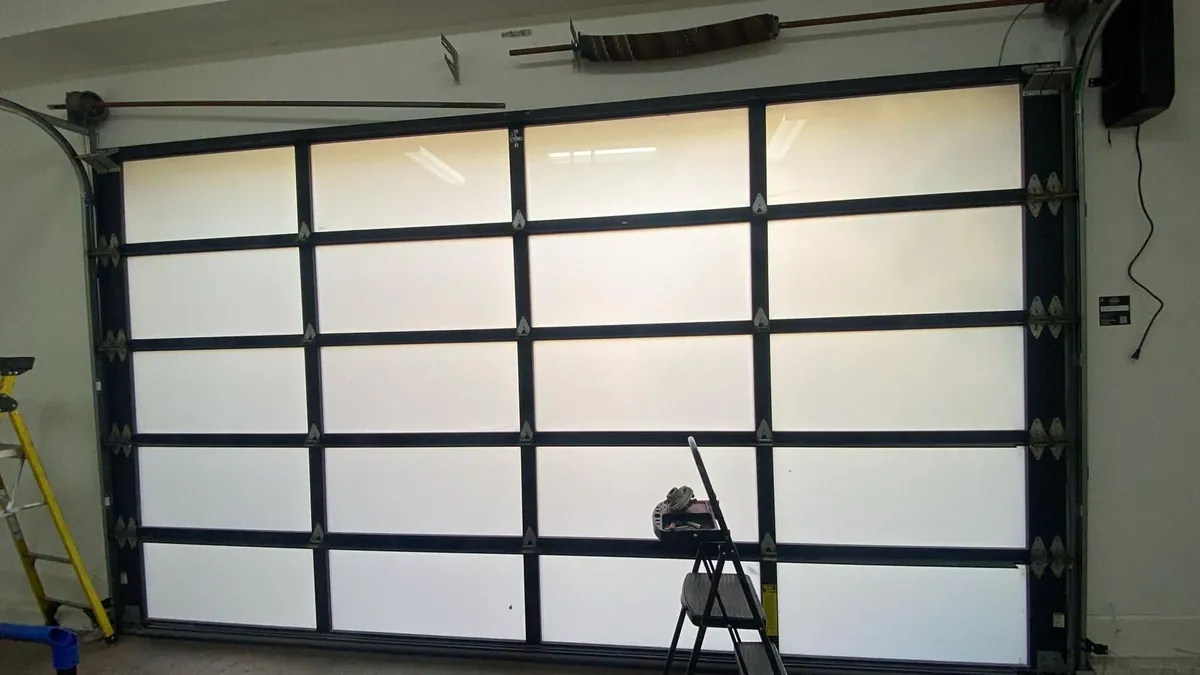
Small garages behind the multi-families
Through the Highlands and East Lynn, most houses are two- and three-families standing close together, and whatever garage a lot has is usually a small one out back. To reach it you go down a driveway that may be shared with the house next door, squeeze past cars belonging to the units, and arrive at a single overhead door on a building that was sized for the cars of another era. Much of the call for garage doors Lynn MA property owners make starts right there, at a door that several households open, close and bump into.
Add the ocean. Salt carried on the wind from the shore settles on everything metal, and the hardware of a garage door is nearly all metal: the coiled springs, the braided lift cables, roller stems, hinge pins, track lengths and the many small bolts tying it all into the framing.
Three questions worth answering before you ring:
- Who uses this garage, and does each of them have a remote, a key or a keypad code?
- Can a work van reach the garage, or will the shared driveway be full of parked cars?
- Has the door changed recently: louder, slower, crooked, or stopping partway?
Garage door services in Lynn
Garage door repair
Bent sections, snapped hinges, flattened rollers, loose track bolts and torn seals on the small rear garages of Lynn’s multi-families. Start at our garage door repair page.
Spring repair
Plenty of these little garages lift on a pair of side-mounted extension springs; others carry a torsion bar over the header. Either way, a snapped spring means stop. See garage door springs.
Openers and remotes
One opener answering to remotes from two or three apartments, a wall button wired across a cramped ceiling, sensors at ankle height in a tight bay. See opener repair and replacement.
Night and weekend breakdowns
A rear garage left gaping at midnight, or a door wedged shut with a tenant’s car behind it. The phone is picked up at any hour; our emergency garage door repair notes cover the hours before help arrives.
Lift cables
Ocean air corrodes lift cables until strands start to snap, and a failed cable drops one side of the door. Read about cable repair.
Off-track doors
A mirror or bumper catching the jamb on a narrow approach can kink a track and throw the rollers loose. See off-track repair.
New doors
A rusted or crumpled door on a small garage, replaced with a new one cut to the same narrow opening. See new garage door installation.
A door with several owners
On a single-family house, one household knows the door’s habits. Behind a two- or three-family, the garage door may answer to three sets of remotes, a shared keypad code and a manual handle, and no one person is quite in charge of it. That changes how problems develop. A door that starts squealing gets noticed by everyone and reported by nobody. A sensor that one tenant knocks out of line with a bicycle stops the door for the next tenant, who assumes it has simply broken. A remote lost when a tenant moves out is still able to open the garage.
Small habits make a big difference for garage doors Lynn MA multi-families share:
- Keep a list of every remote and keypad code in use, and clear the opener’s memory when a tenant moves out, then reprogram the remotes still in use.
- Agree on who reports a problem, and to whom, so a noisy or sticking door is looked at before it fails.
- Make sure everyone using the garage knows where the emergency release cord is and when not to use it: never with a broken spring.
- Keep the area in front of the sensors clear; a stored bin or a bike against the wall is the usual culprit.
When a repair is needed on a shared garage, whoever arranges the visit should let the other units know, so the driveway can be cleared and nobody needs the garage while work is under way.
Narrow drives, wing mirrors and bent track
The narrow driveways between Lynn’s houses are hard on garage doors, and the damage is mostly from the outside. A car swinging off a shared drive into one of these bays often has to swing in at an angle, and a wing mirror or a corner bumper meets the door jamb, the vertical track or the edge of the bottom section. Do that often enough and the track bends inward, the rollers start to bind, and one day the door comes off its track partway down.
The other common damage is to the bottom of the door. A car nosing in too far, or a vehicle reversing into the bay, pushes into the lowest section and creases it. A creased bottom section stiffens the whole door, puts strain on the hinges above it and can pull the bottom brackets out of line with the cables.
Signs of driveway damage to look for:
- A vertical track that is no longer straight, often with a kink at bumper height.
- Rollers that scrape or jump instead of turning smoothly at one point in the door’s travel.
- A gap that opens between the door and one jamb when the door is closed.
- A bottom section with a visible crease or dent.
A few changes reduce the knocks. A bright strip of reflective tape on each jamb shows the edges of the opening in a dark drive. A tennis ball hung from the ceiling on a string, or a wheel stop on the floor, tells a driver when to stop before the bumper reaches the back wall or the door’s travel path. Folding mirrors in before the last turn into the bay takes a second and saves a track. And if one vehicle regularly scrapes, it may simply be too wide for the opening, which is worth knowing before a new door is ordered to the same size.
The access matters on the day of a visit as well. If the shared driveway is lined with parked cars, the van may not reach the garage, and the tools, parts and ladders come down the drive by hand. Clearing the driveway, even for an hour, makes a repair quicker and safer.
Salt air on the hardware
Lynn’s shoreline is never far away, and salt carried on the sea breeze reaches the rear garages even several streets inland. Salt on steel draws moisture out of the air and holds it there, so rust starts sooner and spreads further than it would inland.
On a garage door, the effect shows up in predictable places. Springs grow a rough coat of rust that makes the coils rub, and a pitted coil can let go with no hint beforehand. Cables rust under their galvanising and lose strands at the drum or at the bottom bracket. Rollers with bare steel bearings seize, so instead of turning they slide and grind along the track. Hinges and track bolts rust at the threads, which can make them hard to undo when they need replacing. On an opener, the rail and the trolley collect rust and grime, and the chain can start to bind.
None of this means a door near the coast cannot last. It means it needs a bit more attention:
- Look over the springs, cables and bottom brackets for rust every season, and have heavily rusted ones replaced rather than waiting for them to break.
- Use a garage door lubricant on hinges, rollers, bearings and springs, which helps keep moisture off.
- Keep the bottom seal intact so puddles and spray do not sit against the bottom section.
- When a part is replaced, it is a good moment to replace the rusted bolts that hold it as well.
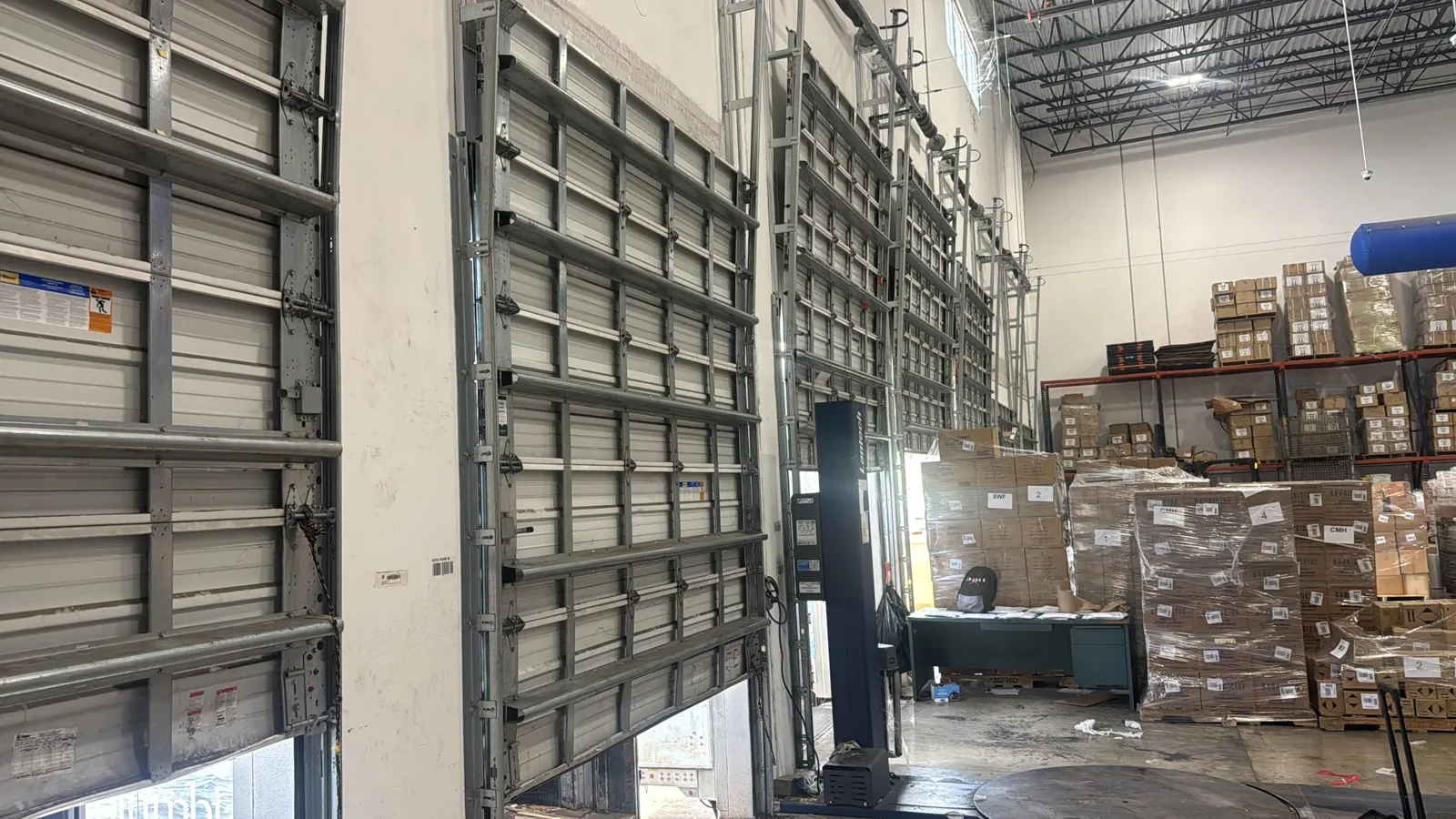
Springs in a small garage
Small garages often have very little room above the door, and that decides what kind of spring is fitted. Many older rear garages run on extension springs: a pair hung beside the overhead rails and pulling on cables that loop over pulleys. Others have a torsion spring on a shaft directly above the opening.
Either type is loaded hard. The torsion type especially packs a violent amount of wound-up force, which is why its adjustment and replacement belong to a technician with winding bars, never to a homeowner. If a spring breaks, leave the door alone. Resist the urge to yank the red release cord and muscle the door up, and never try to wind or unhook a spring yourself.
Side springs ought to be threaded with a containment cable, which keeps a broken spring captive rather than letting it whip around the bay. Older doors in small garages are sometimes missing these, and they are worth adding whenever the springs are replaced. Springs are replaced in pairs where there are two, so both sides of the door lift evenly.
Openers in a cramped bay
An opener in a small rear garage often hangs only just above head height, with its rail running across a ceiling crowded with stored things. In many of these garages it was added years after the door, and the mounting brackets, wiring and sensors show it.
Faults that come up regularly in Lynn’s rear garages:
- Sensors knocked out of alignment, because in a tight bay they sit close to whatever is parked or stored.
- A wall button whose wiring has been chafed or cut where it runs along the wall.
- Remotes that have stopped working after a tenant reset the opener by accident.
- A motor that runs but no longer moves the door, often a worn drive gear.
- An opener straining because the door underneath has a rusted spring or seized rollers.
We fix and swap LiftMaster openers and service other makes too. No motor gets condemned until the door has been tried manually, because a badly balanced door wears out whatever opener is hung above it.
What happens on a visit
- The door is looked at as it is, and secured if it is stuck open or hanging unevenly.
- With the trolley unlatched, the door is raised manually, which shows straight away whether the springs are carrying their share.
- Springs, cables, rollers, hinges, tracks, brackets and the opener are inspected, with particular attention to rust and driveway damage.
- You are told what is wrong, what else is worn, and what the choices are before anything is replaced.
- After the work, spring tension is trimmed, the moving joints are oiled, and the photo eyes and reverse are tried with the door running.
Doors with no opener at all
Plenty of rear garages behind Lynn’s multi-families have never had an opener. The door is lifted by its handle, held shut by a slide bolt or a lock bar on the inside, and often used only for storage. A manual door still depends on its springs, cables and rollers, and it fails in the same ways: a broken spring turns a door that used to lift with one hand into one that will not move at all.
Manual doors bring a few faults of their own. The lock bars that run across the inside of the door into slots in the track can bend, so the door locks itself halfway or will not lock at all. Outside handles loosen and pull through a thin bottom section. A door that has been opened by hand for years often has worn rollers on one side, because people tend to lift from the same corner every time.
An opener can be added to a manual door if the door is in sound order and there is enough room above it. Before an opener goes in, the door is balanced, the manual locks are removed or disabled so the motor cannot fight a locked door, and power is checked at the ceiling. Where the springs no longer hold the door level, they get sorted first; an opener only hides the problem for a while.
A garage out of sight from the street
A garage tucked behind one or two houses on a deep lot sits out of view from the street, and that matters when its door misbehaves. A door that stops partway open, or will not close at night, leaves bikes, tools and cars exposed where nobody passing can see. Tenants on the upper floors may not notice it is open until the morning.
When garage doors Lynn MA landlords and tenants rely on will not shut, safety still comes first. Never haul the door shut yourself when a spring or cable has gone, nor wedge it with a board or a bin that could slide out. Should the door refuse to come down without risk, carry bikes and tools indoors and phone us; a garage that cannot be shut is exactly why the line is answered at any hour.
A rear garage door that closes but no longer locks is worth fixing just as quickly. Out of sight, it can be tried by anyone walking down the drive, and a loose lock bar or latch gives way to a firm tug. A bent lock bar, a broken side latch or an opener that no longer holds the door down all leave the garage easier to open from outside than it should be.
When a new door makes more sense
Small garage doors take a lot of punishment from tight driveways and salt air. Each scrape and each damp winter adds up, and some doors reach a stage where patching them again would only buy a few more months of trouble. A new door is worth considering when:
- The bottom section, or more than one section, is creased, rusted through or rotted.
- The tracks have been bent and straightened so often that the door never runs quite true.
- Rust has reached the structure of the door, not just its surface.
- The door is an old single-piece or very worn sectional door that is hard and unsafe to use.
New doors are supplied and fitted for the narrow openings common behind Lynn’s multi-families, with new springs, cables, tracks and rollers matched to the new door.
Neighbouring towns
Lynn borders Swampscott and Saugus. Their garages have their own pages: garage doors in Swampscott and garage doors in Saugus. For everywhere we work, see our service areas.
Stuck now?
Door gaping open out back after dark? Car shut in a garage the whole house shares? Spring broken with a bang? Whatever the case, keep hands and heads away from the door, and leave the wall button alone. For garage doors Lynn MA households need working again, call us or book online.
Questions from Lynn
Our garage is shared by all three apartments. Who should arrange a repair?
Whoever is responsible for the building usually arranges it, and the other units should be told so the driveway can be cleared. We work with whoever books the visit; access to the garage and the driveway is the main thing to agree in advance.
A tenant moved out with a remote. Can the opener be reset?
It can. The opener’s memory can be cleared so the old remote no longer works, and the remotes and keypad codes still in use are reprogrammed.
The springs on our door are rusty but not broken. Should they be replaced?
Heavy rust makes springs more likely to snap without warning, and a corroded spring rubs on itself and wears faster. If the rust is more than a light surface film, replacing the springs before they break is worth considering.
A car hit the side of the garage door on the way in. Is it safe to use?
If the track is bent or the door now binds, stop using the opener and have it checked. A bent track can let rollers jump out, and a door off its track can fall.
Do you work on older garage doors Lynn MA rear garages still have?
Yes. Older doors are repaired where they are sound, with springs, cables, rollers, hinges and openers replaced as needed. If a door is past repair, we explain why and talk through a new one.