
Single garages on Randolph’s mid-century capes and ranches
A great many Randolph homes are nineteen-fifties and sixties capes and ranches, most with a one-car garage tucked against one gable end and a short driveway running from the garage door almost straight to the street. For a lot of these households the garage door is the way in and out every day, more often than the front door. Questions about garage doors Randolph MA homeowners bring us nearly always start with that one door, used many times a day and expected never to fail.
On a house of that age, the garage door you see now is probably not the first one the opening has held. Many were swapped from wooden tilt-up or early sectional doors to steel ones, and openers have come and gone more than once. That history matters, because a replacement door may have been hung on tracks, springs or framing left from an earlier setup, and that patchwork does not always run well together.
A short driveway brings the car, the bikes and the bins right up against the door. Before you call, take a look at three things from a safe step back:
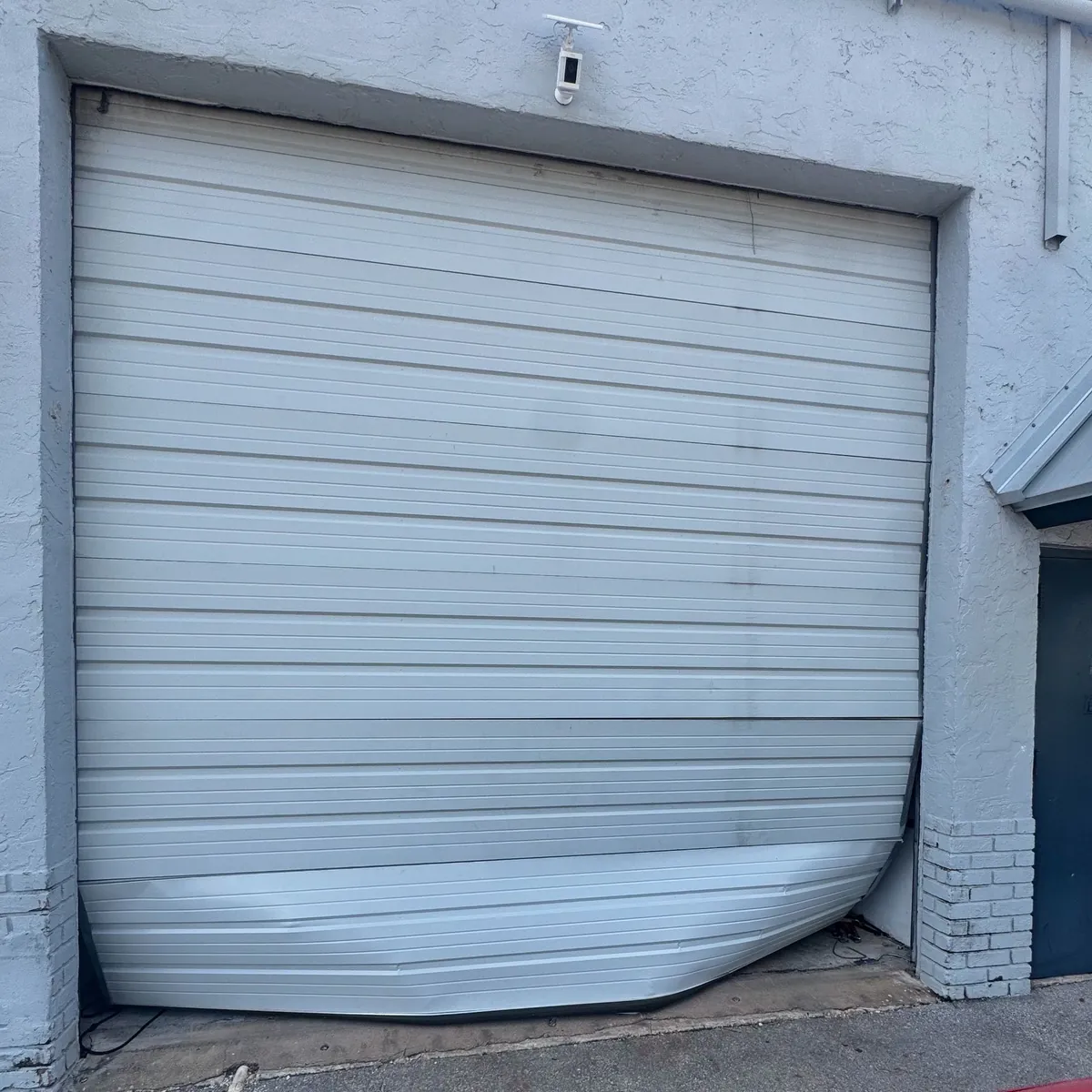
- Whether the bottom section is dented or pushed inward, where a bumper or a bin may have caught it.
- Whether the spring above the opening, or one of the springs alongside the ceiling tracks, has snapped.
- Whether both lift cables are still tight, and the door sits level on the slab.
Garage door services in Randolph
Garage door repair
Dented bottom sections, cracked panels, worn rollers, loose hinges and failing seals on the single door that gets the most traffic of any door in the house. The full list is under garage door repair, part by part.
Spring repair
Older single doors often run on extension springs, newer ones on a torsion spring. A torsion spring holds dangerous tension; swapping it is never a DIY repair on a Randolph cape or anywhere else. For the detail, read garage door springs first.
Openers, remotes and wall buttons
Aging openers, remotes that have quit, wall buttons in the breezeway and photo eyes kicked out of line by a bike. We repair and fit openers, LiftMaster included: opener services, explained.
Emergency calls
When the one door you use every day jams with the car inside, ring us whenever it happens. Our emergency garage door repair page has steps to take in the meantime.
Cables and drums
A frayed lift cable on a door that cycles all day, or one that slipped its drum when the door met a bin. Both are changed together; read garage door cable repair for more.
Off-track doors
A single door bumped out of its rails by a car pulling in too far, lowered with care and rehung straight. Details sit under off-track garage door repair on our site.
New doors
A new steel or insulated door sized for a mid-century single opening, replacing a tired one. The process is set out under new garage door installation, start to finish.
One door, used all day
On a cape or ranch with an attached single garage, the overhead door often handles every trip in and out of the house: to work, to school, to the shops, to put the bins out and bring the groceries in. A door like that may open and close many times between breakfast and bedtime, and every cycle counts against its springs, rollers, hinges and opener.
That is why the most common failures on these doors are the ones linked to use. Each spring is built to survive only so many open-and-close cycles, and a busy one-car door uses that life up faster. Rollers wear flat spots and start to grind. Hinges loosen at the joints between sections. The opener’s drive gear, belt or chain wears with every trip.
A door used this much tends to tell you when it is tiring. It gets noisier, slower or jerkier; it pauses before it starts; it bangs as it lands. Those are signs worth acting on while the fix is small. For garage doors Randolph MA households lean on this heavily, a roller swap or a spring replacement at the first sign of trouble is much less disruptive than a door that fails with the car shut inside on a weekday morning.
Short driveways and the bottom section
A short driveway leaves little margin between a parked car and the garage door. Many of the repairs we see on these houses start with a light tap: a bumper nudging the bottom section while someone pulls up close, a car rolling forward a little too far, or a bin or bike blown against the door in the wind. The bottom section takes most of these knocks, and a dent there can stiffen the door’s movement, kink the hinge line, or push a roller partway out of its track.
The lowest panel also takes the weather. With the door only a few car lengths from the curb, salty slush from the road and from the car’s own tyres ends up splashed along its lowest edge. On steel doors that leads to rust along the bottom edge; on any door it wears the bottom seal until it no longer seals.
A dented bottom section can sometimes be straightened, and on many doors a single section can be replaced on its own. Where that is not possible or the door is old and worn elsewhere, replacing the door can be the better spend. Either way, the bottom seal is the simplest barrier against water and drafts, and replacing it when it splits or flattens keeps the garage drier.
Springs on mid-century single doors
Many older single doors in Randolph use extension springs: a long coil on either side, pulled taut beside the ceiling rails whenever the door is down. Newer doors and many replacements use a torsion spring mounted on a bar above the opening. Some garages have changed from one system to the other when the door was replaced, so it is worth knowing which you have.
A snapped extension spring tends to dangle from its pulley or drop to the concrete, and the door then rises lopsided or stays put. Each of these springs should have a containment cable threaded through its centre, so that a break cannot send it whipping round the garage; if yours have none, mention it when you call. When a torsion spring breaks, the coil shows a visible gap and there may have been a loud bang.
The dangerous tension in a torsion spring can break bones if it is released with improvised tools, and nobody should treat it as a DIY repair. The stretched coils of an extension setup are loaded too, whenever the door is down. After a break, a closed door is best left closed: keep fingers off the springs and cables and stop reaching for the opener button. See torsion versus extension springs for the two systems side by side, and broken garage door spring covers what to do next.
The single garage on a cape compared with a ranch
The two house types handle their garages a little differently. On a ranch, the garage usually extends the long, low line of the house, sharing its roof and opening at one end of the front. On a cape, the garage is often a lower addition set to the side, sometimes joined by a breezeway or mudroom. Either way it is a one-car space, and on many of these houses it has quietly become a storage room, a workshop and a laundry route as well as somewhere to park.
That extra use crowds the opening. Shelving, freezers, bikes and tools pushed up against the walls can end up near the tracks, the springs or the photo eyes, and an item leaning into the door’s path will stop it or knock a sensor out of line. Before calling about a door that will not close, check that nothing has crept into the opening or against the tracks. For garage doors Randolph MA capes and ranches fit into a busy single space, keeping clutter back from the rails and photo eyes saves many a service call.
Older openers and newer safety
Many capes and ranches still have an opener that has been in place a long time, and some very old openers predate the safety sensors that newer openers rely on to reverse a closing door. Where children, pets and bikes pass under the door all day long, a working safety reversal matters a great deal.
Typical complaints on these houses: a dead remote, an unresponsive button in the breezeway, a door that heads down only to climb back up, a motor whirring while the door stays still. The climbing-back fault is usually a photo eye nudged sideways or screened by a recycling bin; the whirring one tends to come down to worn gear teeth, or a snapped spring leaving the motor with dead weight.
We repair openers where it makes sense and replace them where it does not, LiftMaster openers included, and we check that the safety reversal works before we leave. If your opener is very old, we will tell you honestly whether it is worth repairing. Our article on garage door safety sensors explains how the photo eyes work and why they matter.
Cables, rollers and a door that slips out of line
Two lift cables carry the force of the springs to the bottom of the door. Through constant cycling, the cables chafe where they wrap the drums or pulleys and where they anchor at the bottom corners. A frayed one can part without warning, and one can leap clear of its drum if the descending door lands on a bin or a bike. Either way, one side of the door loses its support and the door hangs crooked.
A door can also come out of its tracks when a car nudges it, when a roller cracks, or when a track bracket works loose. On a single door, that usually means one side has dropped and the door is jammed at an angle in the opening.
A crooked or derailed door calls for three things: pull the opener’s plug, keep the family out of the garage, and phone us. Its springs remain loaded and it could come down. When we arrive, the door is lowered under control, the tracks are straightened or replaced, damaged rollers and hinges are swapped, and the cables are renewed as a pair. Common causes are listed in garage door off track.
The garage as part of the house
On a ranch, the attached garage often sits right beside a bedroom, a family room or a kitchen, and on a cape it may sit under or beside living space. That means the garage door’s condition affects the house in ways that a detached garage would not. A rattling door or a clattering opener carries through the wall, most noticeably when the household is asleep. A worn bottom seal or a gap at the sides lets cold air into the garage, which then chills the rooms next to it.
Simple fixes go a long way. Swapping worn metal rollers for nylon ones takes much of the racket out of a door. Tightening or replacing loose hinges stops the bang between sections. A belt-drive opener in place of an old chain drive can make the door much quieter. A fresh bottom seal and weatherstrip along the sides and top keep out drafts, water and leaves.
At replacement time, choosing an insulated door helps keep the bedroom or den behind that shared wall warmer. For garage doors Randolph MA ranches and capes have built into the side of the house, that is often one of the main reasons owners choose a new door.
What a visit looks like
- When you call or book, describe the symptom, say if the car is trapped, and tell us if this door is how the household normally comes and goes.
- On arrival, the springs, cables, rollers, rails, opener and photo eyes are inspected in the state we find them.
- You get a plain account of the fault, any damage it caused, and the proposed fix, before tools come out.
- With your say-so the fix goes in; the spring is set to suit this door’s weight, opener limits are reset, and auto-reverse is proven against an object placed on the slab.
- The door cycles in front of you before we go.
On a short driveway, it helps if the car can be moved clear of the door, and if there is a way into the garage through the house in case the door will not open.
Repair, or a new single door
For most faults on a one-car door, repairing it is the sensible route. Its moving hardware is designed to be replaced as it wears, and sound panels will carry on through several rounds of new springs and rollers.
A new door becomes the better choice when the sections are rusted through along the bottom, cracked or badly dented in several places, when an old wooden door has rotted, or when the door no longer seals and the rooms beside the garage are cold. A new door for a mid-century single opening is usually a straightforward installation: the old door, tracks and springs come out, the opening is checked, and a new door, tracks and springs go in, with the opener adjusted or replaced to suit. Styles, insulation and materials are compared in the new garage door guide, while when to replace a garage door helps you judge when a door has had its day.
Book a visit in Randolph
Describe the fault, say whether the car is shut in, and let us know if there is an inside door from the house into the garage. For garage doors Randolph MA households use every day, calls are taken at any hour, and a breakdown before the school run can be phoned in on the spot. Call us or book online.
Next door, Braintree and Canton are covered as well; the complete town list sits on our service areas page.
Questions from Randolph
Our car is shut in and the door will not budge. What now?
When a shut door ignores the opener, a broken spring is the likeliest cause. Do not force it up by hand. Call us, and if you need the car urgently, tell us when you call so we know the door is blocking it.
Our door lands on the slab and immediately rises again. Why?
Usually one of three things: a photo eye out of line or blocked, something on the floor under the door, or the opener’s close settings drifting out of adjustment. Clear the floor and check the photo eyes first. If it still reverses, it is worth a visit.
Our car left a dent low on the door. Do we need a complete replacement?
Not necessarily. A dent can sometimes be straightened, and on many doors the bottom section can be replaced on its own. If the door is old and worn elsewhere too, starting again with a new one may serve you better.
Can an old opener be repaired, or should it be replaced?
It depends on the fault and the opener’s age. A worn gear or a remote problem can often be fixed. If the opener has no working safety sensors or is failing in several ways, replacing it is usually the better choice.
Our garage is next to a bedroom and the door is very loud. Can it be made quieter?
Usually, yes. New nylon rollers, tightened or replaced hinges, lubrication of the moving parts and a properly balanced door all reduce noise. A quieter belt-drive opener can help further.