
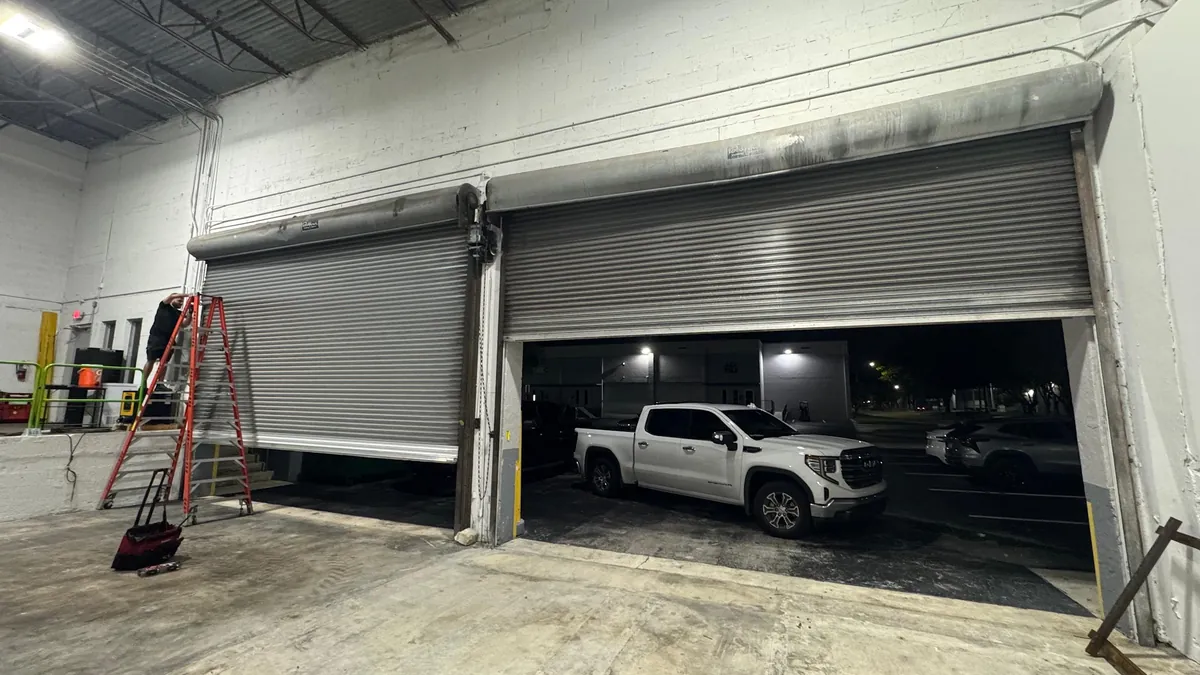
When the garage is the front door
Garages are scarce in this part of the city, so the ones built into the recent townhouse rows by the old Navy Yard end up carrying much of a household’s daily traffic. When that door jams, the problem is immediate: the house may be open to the street, or the only car may be shut inside. Emergency garage door repair in Charlestown is for exactly that moment. Someone picks up the phone whether it is noon or the middle of the night, for doors jammed shut, doors jammed open, springs that have let go, and doors that have jumped their rails.
Before anything else, three things decide how to keep everyone safe:
- Whether the door is fully down, fully up, or stuck somewhere in between.
- Whether it is level, or hanging crooked with a side lower than the other.
- Whether you can see a gap in the spring above the door, or a loose cable at either side.
What counts as an emergency
Door stuck open
An opening that refuses to shut at nightfall exposes the bay, and frequently the connecting door into the home, to anyone passing. On a street where the garage faces the sidewalk across a few paces of apron, that exposure is immediate.
Car trapped inside
A door that will not lift with an early start ahead, and nowhere on a short driveway to leave the car anyway.
Snapped spring
A sudden crack from below the living space, then a door that weighs far more than it should.
Off-track door
Rollers out of the rail and the door twisted in the opening, unstable and liable to fall.
Door that drops
A door that slams down, or will not stay up when opened, because a spring or cable has failed.
Emergency garage door repair Charlestown homes call about most
The calls tend to fall into three groups. The first is a door that will not open, usually with the car inside. With aprons so short that a parked hatchback nearly touches the sidewalk, there is nowhere else to keep the car, and no slack in the morning if it cannot get out. Snapped torsion springs lead the list, then openers that have seized and doors iced to the slab.
The second is a door that will not close. A garage on a townhouse’s ground floor often has an inside door straight into the home, so an opening that will not shut after dark leaves the whole house reachable from the pavement, and lets the weather in too. Beam sensors knocked out of line, an opener whose circuit board has died, and rollers forced from their rails are the usual culprits.
The third is a door that has become dangerous: hanging at an angle after a cable failure, twisted out of its rails after a bump, or dropping hard because the springs can no longer hold it. These are the calls where the most important advice is what not to do. A crooked door may look as though one firm shove would set it right, but the sections, the rails and whichever lift wire survives are all bearing load in ways nobody can see from the floor, and a well-meant push is how fingers and feet get hurt.
Your first moves
The safest response to a failed garage door is usually to stop using it. In order:
- Leave the remote and the console alone. Each fresh attempt by the motor to shove a jammed or lopsided door adds damage and drags the sections further askew.
- Pull the opener’s plug from the ceiling socket, or trip its breaker, so it cannot be triggered by accident or by a remote in someone’s pocket.
- Clear the doorway of children, dogs and vehicles, above all when the door hangs half-raised or skewed.
- From a few steps back, study the coil over the header and the wire ropes down each jamb, and remember what they look like.
- Ring us with the door’s position, anything visibly snapped, and if your car is stuck behind it.
What not to do is just as important. Remember that a torsion spring holds dangerous tension; the same load travels down the lift wires into the fixings on the lowest panel. None of those parts should be loosened, pried at or adjusted by hand: this is not a DIY repair. Do not prop a heavy door open with a stick or a ladder, do not try to walk a twisted door back into its track, and leave the red release cord alone while the door is up, since a door cut loose from its opener with failed springs can crash down.
When the door will not close at night
A stuck-open garage door at night is the call that feels most urgent, and sometimes the fix is simple. If the door rises and falls normally but reverses before reaching the floor, the safety sensors are the first suspect. Wipe both lenses, move anything out of the beam, and check the small light on each sensor. If one is dark or blinking, it is out of line. Holding the wall button down continuously will usually override the sensors and bring the door down, which is a reasonable way to secure the garage until the sensors are fixed in daylight.
A door that stays frozen in place, or creeps a few inches and quits, should not be forced. A door held up by a failed coil or by a roller out of its channel should be left where it is, and the inside door to the house locked if there is one. The repair can then be made without making a dangerous door worse.
Snapped springs in the small hours
Torsion springs often fail in the cold early hours, as the steel contracts and a spring that was close to its limit gives out. In a garage beneath the bedrooms of a townhouse, that break is loud and unmistakable, and people regularly call about it within minutes. Glance at the steel tube spanning the header: a clear break between two turns of the coil confirms it.
With the door closed, a broken spring is not an immediate danger as long as nobody tries to open it. Leave it down and unplug the opener. With the door open when the spring went, the situation is less stable: stay out from under it and do not attempt to lower it manually. Our page on spring repair in Charlestown explains what replacing the spring involves.
Off-track doors on short, steep driveways
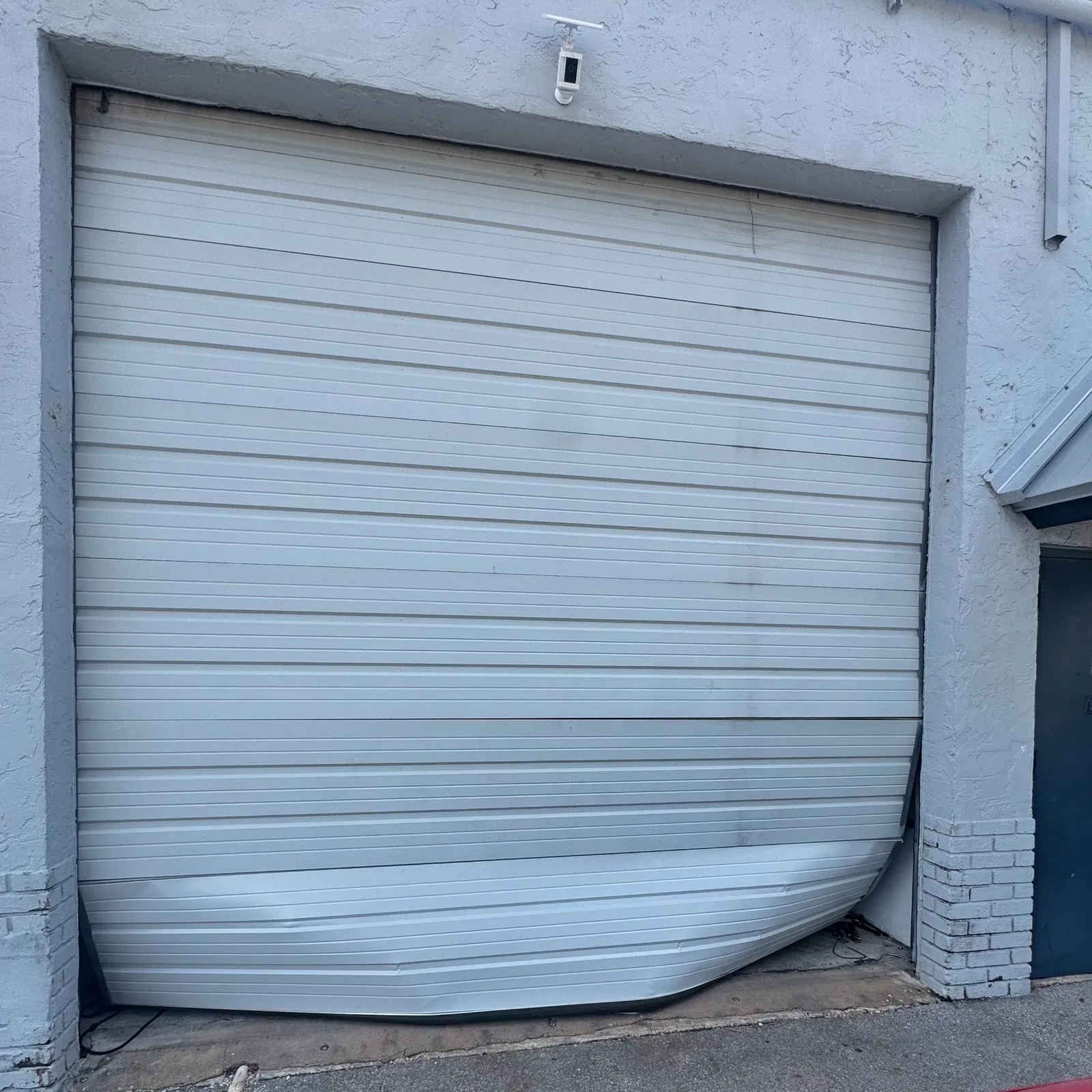
The combination of a steep approach and a driveway with no room to spare produces a particular kind of emergency. A car that rolls a little further than intended, or a door that comes down onto an open tailgate, can push the bottom section in and force the rollers out of their tracks. What remains is a door skewed across the doorway, a corner sagging, possibly on the verge of coming down.
An off-track door must not be run with the opener and should not be pushed back by hand. The weight is often resting partly on bent track and a few remaining rollers. Stabilising it means clamping and supporting the sections, coaxing each roller back into its channel, truing or renewing the kinked rail, and confirming that both lift wires are sound before any movement. Where a wire has parted too, the door is hanging from a single corner and can swing or drop without warning.
What happens when you call
The phone is answered by a person, whatever the hour. Expect some straightforward questions: how the door is behaving, how far up it sits, whether any coil or wire looks broken, if a vehicle is inside, and if the garage opens into the house. That information shapes the advice you get on keeping the door safe while you wait, and it tells the technician what parts are likely to be needed.
Nobody here will quote you an arrival time, because traffic, weather, the hour and the other jobs underway all affect it. You will, though, always reach a person and get the situation talked through.
What an emergency visit involves
On arrival, the technician’s opening task is to stop the door moving unexpectedly. A door stuck partway open is supported so it cannot drop. A door off its track has its weight taken off the rollers. Any remaining tension in a broken spring system is dealt with using the proper tools. Once the door is stable, it is inspected the same way as on any other visit: springs, cables, drums, rollers, tracks, hinges, the opener and the sensors.
Before tools come out, you hear the diagnosis and the choices. Often the whole fault can be put right during that call-out, whether that means a replacement coil, fresh lift wires or a trued rail. Sometimes the right first step is to secure the door so the house is closed up and safe, with the remaining work arranged afterwards. Either way, nothing is done without your agreement.
Weather that turns a fault into an emergency
Winter brings its own urgent calls. Rain and meltwater running down a sloping driveway toward the garage pool against the bottom seal and freeze overnight, gluing the door to the floor. An opener left to strain against a frozen door can strip its gear, split the rubber seal or wrench the corner fixings off the bottom panel, so a door that will not lift on an icy morning should be left alone until the seal has thawed. Cold mornings are also when springs are most likely to break.
Wind matters too. During a storm, a raised door lets driving rain and snow into the bay and catches the wind like a sail. If yours will not close in bad weather, the sensor check and the manual override on the wall button are worth trying first; if those fail, call us.
Securing the house while you wait
When the garage opens straight into the living space, the priority while help is on the way is the house, not the door. Lock the connecting door from the garage, and if there is a second internal door, lock that too. Move anything valuable that is in plain view from the street, such as bikes, tools or boxes, toward the back of the bay or indoors. If the door is stuck open only partway, do not try to block the remaining gap with a board or a bin pressed against the door; the door may move, and a jammed object can bend a section or knock a roller out of its track.
Turn on the garage light if it is safe to reach the switch. A lit bay is less inviting, and it makes the technician’s first look easier. Outside lighting over the apron helps for the same reason, and it lets the van find the right door on a street of near-identical frontages.
Why emergency calls come at awkward hours
Emergency garage door repair in Charlestown is rarely needed at a convenient time, and there are mechanical reasons for that. Springs break most often in the cold of early morning, when the steel is stiffest and the door is about to make its first trip of the day. Openers tend to fail under load, which means when the door is being used, at the start and end of the working day. Off-track doors usually follow a bump from a car, and that happens when a car is coming or going. Frozen seals show up on the first trip after a hard frost.
So the door gives out exactly when it is needed most. That is the whole point of a phone line that is always staffed: the moment the problem appears is the moment you can get advice on it. Any request for emergency garage door repair Charlestown residents make outside working hours is treated the same as one made at midday. You get a person, the same questions, and the same advice on keeping the door safe.
Older buildings with a garage carved in
The Federal-era row houses by the Training Field and up and down Main Street mostly have no garage, and the few that do had one cut into a structure never meant to house a car. Low headroom, close side walls and openings that are not quite square all affect an emergency repair. Springs may be mounted along the sides instead of above the door, and access to the brackets can be tight. When you call, mention that the garage is in an older building; it helps the technician bring the right parts and plan the work.
After the emergency is over
When the panic has passed, find out what set it off. A coil that lasted many years simply ran out of cycles. One that failed young may never have been matched to the door’s weight. A door knocked off its rails by a gentle nudge probably had tired rollers or brackets working loose already. An opener that quit may have been carrying a door that was out of balance for months. Those causes are explained at the end of the visit, and anything else that is close to failing is pointed out.
Some of that follow-up falls under regular garage door repair in Charlestown, and opener issues are covered on our Charlestown opener repair page. When a night like this reveals a door too far gone to keep, read about new garage doors in Charlestown.
Calling for help now
For emergency garage door repair Charlestown MA households can phone at any hour of the night or day, every day of the week, and speak to someone straight away. Because the phones here are staffed every hour of every day, there is no waiting for office hours before reporting a breakdown. Urgent work across the wider city is described under emergency garage door repair, while everything offered locally is listed on the Charlestown overview. If your door cannot wait, call us or book online now.
Questions from Charlestown
It is after midnight and our door will not come down. What can we try?
Start with the beam units low on each side: clean both lenses, move anything between them and see whether their lights are steady. Holding the wall button down will often close the door even if the sensors are misaligned. If it still refuses to budge, leave it, lock the inside door to the house and call us.
Is a broken spring an emergency if the door is closed?
It is less dangerous with the door down, as long as nobody tries to open it. Pull the opener’s plug and let the door stay down. It becomes urgent if a car is trapped and needed, or if the door was partway up when the spring went.
The door came off its track after the car touched it. Can we push it back?
No. An off-track door can be resting on bent track and a handful of rollers, and pushing it can bring it down. Keep clear, unplug the opener and call us.
Can you tell us how long it will take to get to us?
We do not promise an arrival time, because it depends on the hour, the weather and other calls. The phone is answered at any hour, and you will get clear advice on keeping the door safe in the meantime.
Our door is frozen to the floor on a winter morning. Is that an emergency?
Usually not, as long as you stop the opener from straining against it. Let the seal thaw gently without prying. If the door still will not lift once thawed, or the opener has been damaged trying, call us.