
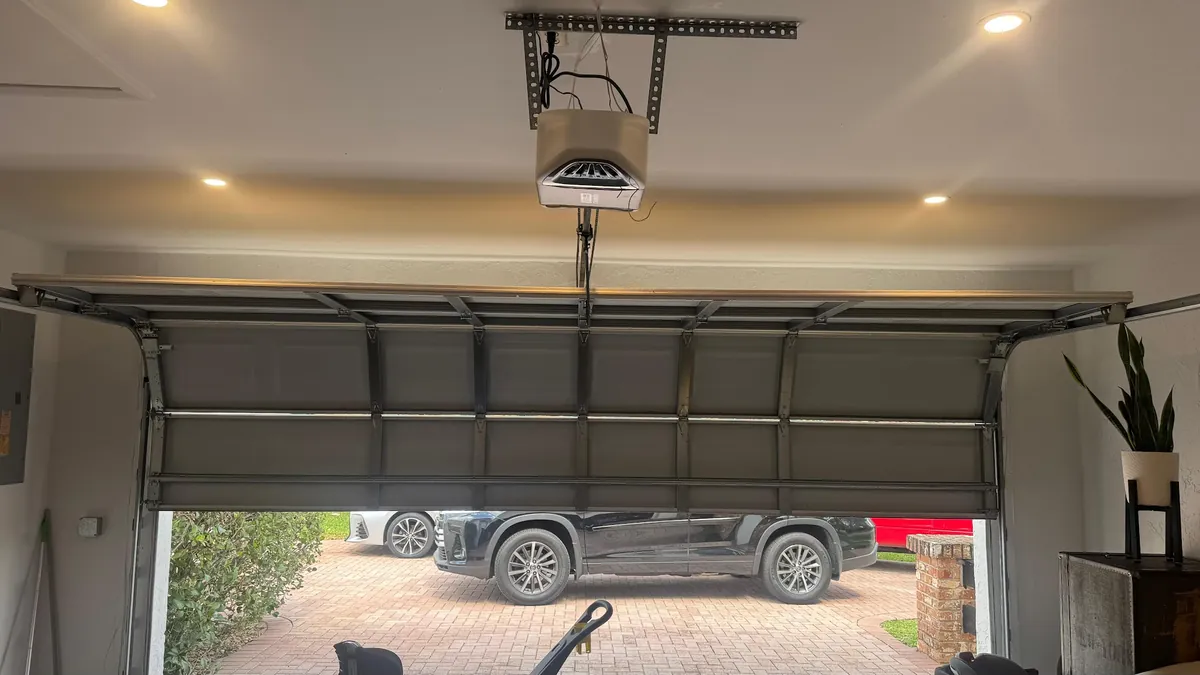
No two garages the same, street to street
Waltham’s garages refuse to follow a single pattern. Near Moody Street the houses are mostly two-families and triple-deckers, and whatever garage they have tends to be compact and tucked behind or beside the building. Cross to the north side and the stock shifts to post-war single-families, whose garages were laid out to a different plan. Go a block in any direction and the opening changes width, the ceiling changes height and the door changes type. That variety is the defining fact for anyone dealing with garage doors Waltham MA homes have: no part, size or setting can be assumed in advance.
For us, that means each call begins with questions rather than a standard kit list. How wide is the opening? Does the bay share walls with the house, or stand on its own footing? Does a torsion coil sit over the header or do long springs stretch beside the ceiling rails? The answers decide which parts travel with the technician and how long the job is likely to take.
When you ring, three details save the most time:
- Roughly how many cars the garage holds, and whether it stands alone or joins the house.
- Where the springs are: one coil across the top of the opening, or a long spring along each side.
- What the door does now: refuses to move, rises a little and stops, reverses, or hangs crooked.
Garage door services in Waltham
Repairs of every kind
Dragging sections, cracked hinges, rollers that rasp along their rails, panels bent by a bumper or a bin, in tiny bays and roomy ones alike. More on garage door repair.
Broken springs
The coil is what really lifts the door, so once it fractures even a small single-car door becomes a dead weight. Torsion and extension types are both replaced, sized to the door that is actually there. See garage door springs.
Openers and controls
Drive units, fobs, keypads, push buttons and the pair of safety eyes near the floor, fixed when worth fixing and swapped when not. See opener repair and replacement.
Help after hours
Waltham callers reach a person at any hour, holidays included, about a bay that will not shut or a vehicle left stranded. Read about emergency garage door repair.
Lift lines and corner fittings
Frayed or snapped lift lines, cables that have jumped their drums, and the lower corner fittings they hang from. Details under garage door cable repair.
Derailed doors and replacements
Wheels knocked out of their rails and kinked track put right, and a replacement door supplied and hung when the old one is beyond help. Visit doors off their tracks or new door installation.
Small bays behind the two-families
Behind many two-families and triple-deckers near Moody Street, the garage is a modest structure meant for one car, or two at a squeeze, often shared by the households living in the building. Often it waits at the back of a slim driveway, with only a little clearance either side of the opening and not much space overhead.
A compact bay brings its own set of faults. With little room to manoeuvre, doors pick up dents from mirrors, bumpers and bins wheeled past on collection day. Low ceilings leave little space for a torsion coil, so plenty of these doors still run on extension springs along the overhead rails. And because several households may open the door, it racks up cycles far faster than a single family’s would: wheels flatten, hinges loosen, and springs wear out well ahead of what an owner might guess.
Shared use also hides early warnings. A grind or a jolt that one resident hears once may never be mentioned, because everyone assumes somebody else will report it. When the sections finally refuse to move, a flattened wheel has frequently gouged its rail or a fraying cable has let one corner drop. For a building owner, asking everyone with a fob to pass on any new noise straight away is one of the simplest bits of care there is.
Post-war houses on the north side
On the north side, post-war single-families come with garages planned for a family car of that era, sometimes attached, sometimes detached, and sometimes since altered. Some of those openings are generous, some were widened later, and some still frame the original single door. The framing is often sound but of its time: header heights and jamb details vary, and doors fitted decades after the house was built may have needed packing, shimming or a different track arrangement to fit.
That makes a careful look at the surround part of every visit here. A rail bracket that keeps shaking loose usually means the screws are sitting in tired wood, and moving the bracket onto solid stock or adding a backing plate is the lasting fix. Sections scraping one jamb can be blameless; sometimes it is the jamb that has wandered.
Where an attached garage sits next to living space, the condition of the door’s seals matters too. A worn bottom seal or gappy side stops let cold air and water in against a shared wall, and replacing them is a small job that makes a noticeable difference.
Springs, plainly
Snapped coils account for more urgent calls than anything else, and a bay of any size can lose one. Typically someone hears a bang like a dropped plank, and later the door either sits immobile or crawls up a hand’s breadth under power and gives up.
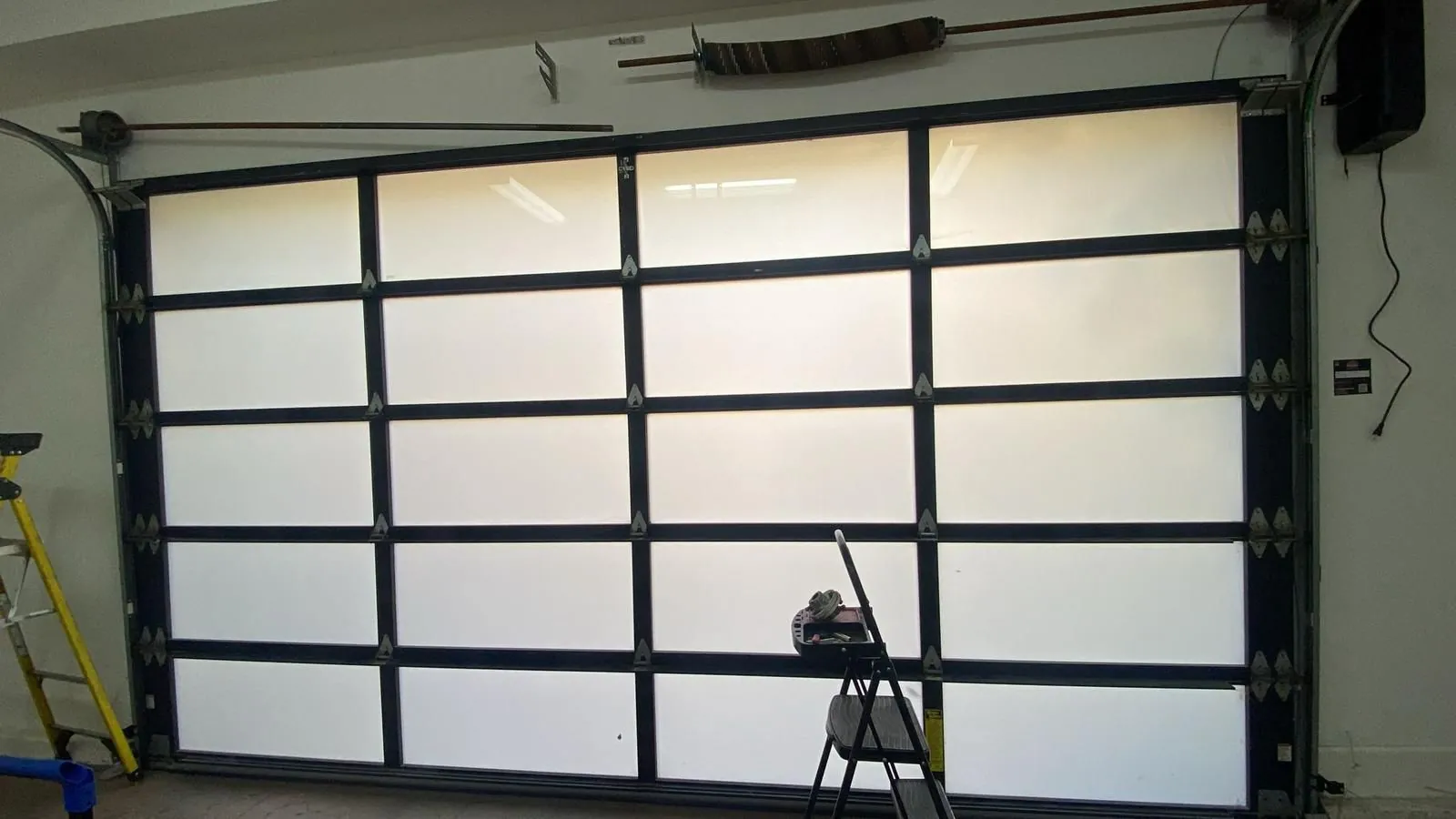
Two spring systems turn up across Waltham. A torsion coil mounted on a bar over the opening winds tighter as the door comes down. Extension springs stretch along each overhead rail and pull the door up as they contract. Be clear-eyed about the first kind: it holds dangerous tension, so treat any torsion spring on a Waltham garage as off limits for DIY repair. Its winding cones and set screws hold the load back even with the door shut, and using the wrong tool or the wrong order can fling a bar or bracket with real force. The second kind needs a safety line run through each spring so that a break does not send it whipping across the bay; where those lines are missing, they are fitted as part of the job.
New coils are sized by weighing up the door that actually hangs in that opening. On a street where one garage holds a light single door and the next holds a heavy insulated one, that matching is never a formality. For the finer points of coil selection, read garage door springs.
Cables and what they hold
The lift cables run from the springs to the lower corners of the door. With a torsion coil, each line spools around a drum fixed on the bar; with side springs, they loop over sheaves. Either way, both cables share the door’s weight evenly when all is well.
A cable can fray against a bracket edge, rust in a damp garage, or slip from its drum when the door lands on something. Once one side loses its support, the door tilts in the opening, the sections twist and the wheels on the low side bind. The door may stick or fall. Both lines get renewed together so neither corner lags, and the corner fittings are checked at the same time. Those fittings carry the full spring load; they are never unbolted until the tension has been safely released.
Openers in very different garages
An opener in a compact shared bay and an opener in an attached north-side garage face different lives. In the shared bay, the unit cycles often, may be paired with many fobs, and is sometimes run on a door that is already dragging. In the attached garage, it may be mounted under a bedroom, so noise matters, and it is often the family’s main way in and out.
Opener problems tend to show in familiar ways. A door that starts down and rises again usually has a safety eye that is dirty, bumped out of line or blocked by something parked too close. A motor that hums while the door stays still suggests worn gears or a trolley left in release. A fob that works only near the door may need a battery, or the unit’s aerial may have been knocked. A door that has grown louder over the months is usually pointing at worn wheels or dry hinge pins, seldom the drive itself.
No drive unit gets condemned until the sections pass a hand-balance test, because a door heavier than its springs can carry will wear out any drive. Where a new opener is the right call, its pulling power and rail length are picked for this particular door and ceiling. We repair and replace LiftMaster openers on Waltham ceilings along with other units. In a shared building, the remotes are worth a tidy-up too: wiping stored codes and re-linking only the fobs still in residents’ pockets keeps the bay secure when tenants come and go.
How a call-out unfolds
First the door is looked at from outside while it is closed: whether the lowest section kisses the slab along its full length, whether the sections sit square in the opening, whether any panel is bent. Inside, the technician disengages the trolley and hoists the sections by hand, judging their balance by feel. A healthy door parks at waist height without drifting; one that sinks or will not come up has a problem with its springs or cables.
Then the hardware gets checked piece by piece: springs and their mounting, both cables and their drums or pulleys, every wheel and hinge, both rails and the brackets holding them to the framing, with attention to the wood behind those brackets on older garages. The opener runs on its own, each fob and the push button are tried, and the safety eyes are tested.
You hear what has broken, what caused it, and which other parts are nearly worn out, and work starts only once you agree. With the new parts in, spring tension is trimmed, the opener relearns its travel and force, and a chunk of scrap timber on the threshold confirms it backs away on contact.
After dark and at weekends
Doors seldom choose a good moment. A spring tends to snap on a cold morning; a door jams open late in the evening. Someone real takes the call at any hour, Sundays too, which means a Waltham door that quits at midnight can be logged at midnight.
Until help arrives: unplug the opener so nobody runs the door again. Steer people and pets clear of sections that hang lopsided or have slumped at a corner. If an attached garage is stuck open, lock the door from the garage into the house. Do not try to lift a spring-broken door by hand or prop it open to work under, and leave the springs, cables and corner fittings alone.
Off the rails
In a tight bay behind a two-family, a car reversing at an angle or a door struck while half-open can knock the wheels out of their rail. The door then hangs crooked, held unevenly, and can fall. Running the opener or shoving it back into line usually bends things further.
The right approach: cut power at the opener’s plug, give the door a wide berth, and phone us. The fix involves locking the sections in place with clamps so the wheels go slack, straightening or replacing any bent rail, easing each wheel back into place, and confirming both cables carry equal tension before the door moves again.
Repair it, or start again
Repair is the usual answer. Springs, cables, wheels and hinges are parts that wear and get swapped; sound sections behind fresh hardware keep going for years. A fresh door wins out once the sections give up: steel rusted through along the bottom, wooden panels split or soft, or a door so dented and patched that it no longer runs true.
Because sizes vary so much across town, a new door is always measured to the actual opening, and the springs, cables and opener are re-specified for what the new door weighs instead of being reused out of habit. We supply and hang the replacement and take the old door away. Choosing whether to repair or replace garage doors in Waltham MA is always yours, after an honest look at what is there.
Getting the garage ready
Moving cars out of the bay and off the nearest stretch of driveway, shifting shelves and bikes away from the side walls under the rails, and making sure the opener’s socket can be reached all help on the day. In a shared building, letting the other households know a visit is booked avoids surprises. If access is down a narrow driveway shared with a neighbour, mention it when you book.
What every size of garage shares
For all the variety in garage doors Waltham MA streets hold, the moving parts follow the same logic. Springs carry the weight, cables pass that pull to the bottom corners, wheels and rails guide the sections, and the opener merely steers sections the springs have already made light. A compact bay behind a triple-decker and a wide north-side opening fail in the same ways, just at different rates and with different parts. That is why a visit always starts with balance, then works outward.
It is also why one maintenance habit pays everywhere in town: a quick look and listen once a season. Watch the door run its full travel, listen for new grinding or banging, and glance at the springs and cables from a safe distance. Caught early, most faults on garage doors in Waltham MA stay confined to one worn component instead of spreading.
Close by
Waltham borders Newton, where wide doors on attached two-car garages are the norm, and Lexington to the north. Every place we work is on our service areas page.
Booking a visit
When you contact us about garage doors Waltham MA homes like yours depend on, give us the rough size of the bay, whether it is freestanding or built onto the house, where its springs sit and what the door is up to, plus whether any vehicle is stuck behind it. Snapshots of the springs and both lower corners help enormously. Whenever it suits the household, call us or book online.
Questions from Waltham
Our garage is behind a two-family and shared with the other unit. Who should arrange a repair?
Usually the owner of the building, but anyone can report a fault. Raising a new noise or a jerky run early, before the door stops, is the best way to keep a shared door from getting worse.
Which spring system does our door use?
A coil wrapped around a horizontal steel shaft just above the header is a torsion setup. Long springs stretched out beside each ceiling rail mean an extension setup. Identify it by eye only and keep hands off both.
Our bay is tiny with a low ceiling. Is an opener still possible?
Frequently. Low-headroom rail kits and drive units are made for exactly that, and the clearance is taped out on site before anything gets suggested.
Can I knock a derailed door back into its rail myself?
No. Once the wheels leave the rail the door can drop, and its springs and cables remain loaded. Kill the power to the opener, keep away, and phone us.
Do you only fit one size of new door?
No. Since bay widths shift block by block in this city, each new door is measured to the opening it is going into.