
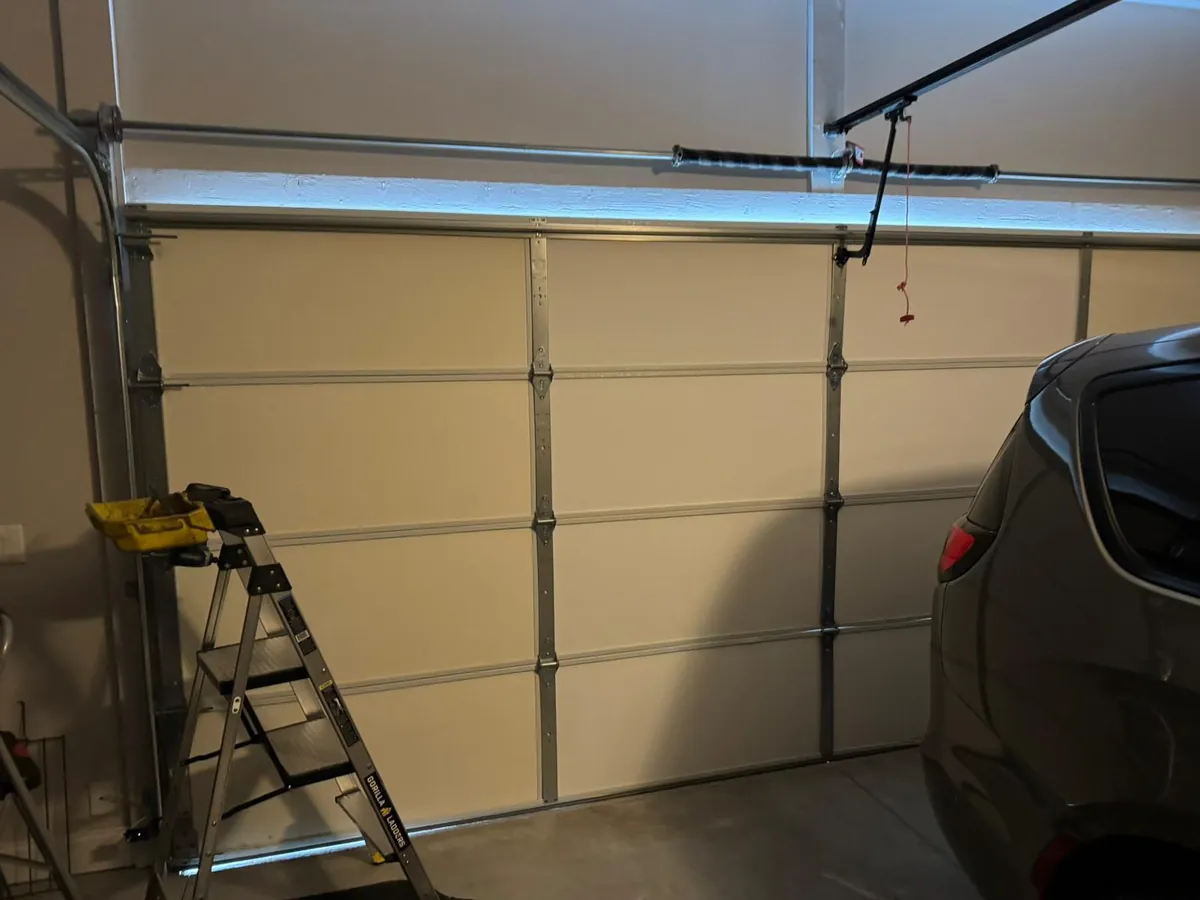
Small rear garages that work harder than they look
Tucked behind plenty of the two- and three-families on the cramped lots off Broadway and around Bellingham Square is a modest rear garage, most often one bay wide, reached down a slim drive. It gets heavy use, sits out in the weather with hardly any shelter, and breathes salty air off the creek. Put those together and you have the source of most requests for garage door repair in Chelsea, MA. We look after every moving piece of the door, from the coils overhead down to the photo eyes at floor level: wound and stretched springs, drums and the cables on them, hinges and sections, motor units with their handsets and wall buttons, wheels and rails, and any door that has wandered out of its channel.
Standing at the end of the drive, with your hands in your pockets, you can learn three useful things:
- Is the door’s lower edge parallel with the floor, or tilted down toward one jamb?
- Does either cable at the lower corners droop, curl or dangle loose?
- Are the tiny lamps on the two photo eyes lit solid, flashing, or dark?
Parts we fix on Chelsea garage doors
Springs
Whichever kind lifts your door, a wound coil across the header or a stretched pair alongside the ceiling rails, a single snapped spring leaves the door stuck down.
Cables and drums
Braided steel lines climbing from the lowest section to grooved drums or pulleys. Damp, briny air rots the outer strands well before a cable finally parts.
Panels and hinges
Bumper dents, cracked sections, hinges split along their knuckles, and a flattened rubber strip at the base that now lets puddles creep in.
Openers and remotes
Motor units that buzz yet stay still, handsets gone silent, a dead button by the side door, a door that quits at the midpoint.
Tracks and rollers
Kinked rails, brackets shaking on their screws, and wheels whose bearings have rusted solid so they skid rather than spin.
Safety sensors
A paired transmitter and receiver at ankle height. Knock either one out of line and the closing door balks or bounces back.
A door is a machine, not a slab
From the street a garage door reads as one flat thing. Up close it is a chain of separate parts, each depending on its neighbours. Hinged sections fold around the bend where the upright rail curves toward the ceiling. Every section rides on rollers at both edges, and those little wheels are all that keeps it captive in the rails. The weight, which is a good deal more than most owners imagine, rests almost entirely on the springs.
Where a torsion setup is fitted, a coiled spring threaded onto a steel tube over the header winds tighter as the door lowers, storing energy. Grooved drums at each end of that tube hold the cables, and the cables hold the base of the door. An extension setup swaps that tube for a pair of coils pulled taut alongside the overhead rails, working through pulleys toward the same end. Whichever arrangement you have, a properly set door should hover wherever you let go of it.
The opener is the junior partner. It nudges a load the springs have already counterweighted, and it relies on the photo eyes and its own force limit to know when to stop. Because everything is linked, the noisy part is often not the guilty part. A fading spring leaves the motor groaning. One frayed cable lets that side sag, twisting the whole door in the rails. A seized wheel grinds a groove into steel until the rail itself needs replacing. Sound garage door repair in Chelsea works backwards from the symptom to the first thing that gave way.
Salt air off the creek and what it does to hardware
A steady share of garage door repair in Chelsea is really rust repair. Chelsea lies right beside the creek and the harbour, and the breeze that comes in off that water leaves a fine film of salt on whatever it touches. An unheated, often damp garage collects it on every bare piece of steel. Far from the shore, door hardware can carry nothing worse than dust for a long while. Here, the coils, the cable strands and the hinge pins start to wear an orange bloom far sooner.
Rust does its worst on parts that are never at rest. A spring is loaded every hour of every day, and a corrosion pit on its wire becomes the starting point for a fracture. A lift cable is woven from many thin wires; as the outer ones oxidise they snap one at a time, leaving tiny bristles near the lowest bracket. Those lowest brackets, bolted where meltwater and slush pool, can corrode thin around their screws.
Wheels take punishment as well. An open-bearing steel roller soaks up briny moisture, the bearing roughens, and soon the wheel stops turning and drags along the rail instead, levering sideways on the hinges. Rollers made of nylon with sealed bearings usually last longer in a damp Chelsea bay, and fitting a whole new set is a routine part of many visits here.
A door near the water is not a lost cause. Its hardware simply wants checking more often, rust scrubbed off before it bites deep, and a light film of door lubricant on the moving parts a couple of times a year, with the surplus wiped away so it does not hold grit.
Truck traffic and the shake it puts through a garage
Heavy trucks rumble through Chelsea from morning to night, and every pass sends a faint tremor through the ground and into nearby walls. A garage door hangs on dozens of lag screws, carriage bolts and set screws, and that steady shaking slowly unpicks them. Over a season a snug rail bracket starts to wobble, a hinge bolt creeps out a turn, and the two upright rails wander a fraction apart.
Usually you hear it first: a buzz in the hardware as a big rig rolls past, or a clunk at one particular height. Next the door hesitates at that height, or a wheel climbs the lip of the rail. Left alone, the drift keeps growing until a wheel escapes completely. The same shaking can tilt a photo eye’s mounting just enough that it stops seeing its partner, leaving a door that will not shut for no reason anyone can spot.
Much of the garage door repair in Chelsea that we carry out on these streets begins right there, with a loose bracket. The remedy is plain work. Brackets get re-anchored into sound timber or masonry, hinges get fresh fasteners where the old holes have wallowed out, and the rails are trued up plumb and parallel. Road grime pulled in by all that traffic is scraped out of the channels so the wheels roll on clean metal.
Tight lots, narrow drives and doors that get clipped
A parcel carrying a two- or three-family plus a garage out back has almost no slack in it. Drives are slim, the swing into the bay is sharp, and recycling bins, bikes and winter snowbanks crowd right up against the opening. So a large share of repairs on these garages start with a knock: a fender catching the lowest panel, a side mirror bending an upright rail, a barrel shoved into the track, or a door brought down onto a car that had not fully cleared it.
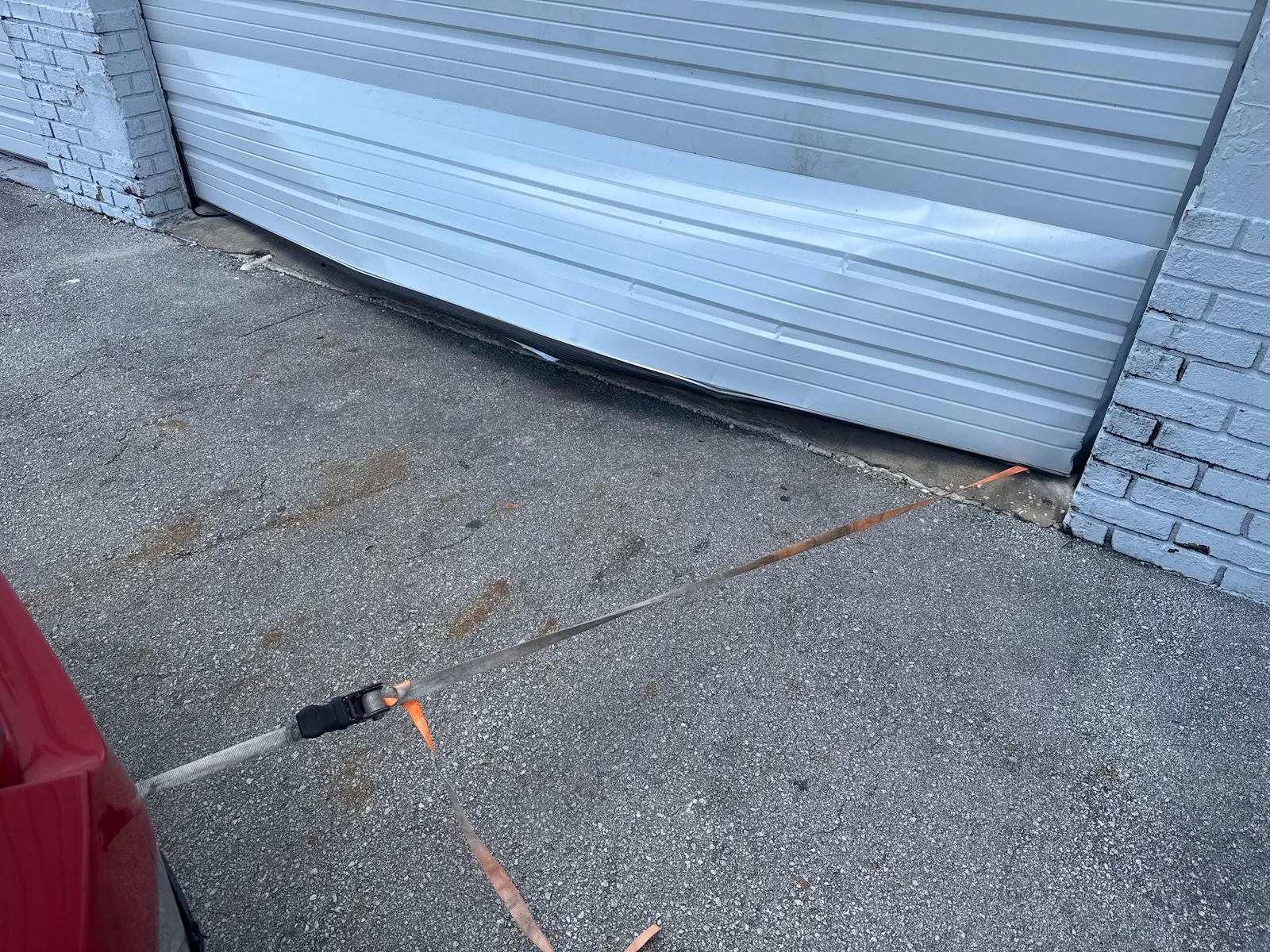
Little rear garages also tend to be short on headroom and tight beside the rails, which restricts where a spring can go, how the rails can be hung and which opener will clear the ceiling. Older openings have often settled slightly out of square, so the door rubs harder against one jamb. Every one of those quirks changes how the job is done, and each visit is planned around them rather than around a roomy suburban double bay.
Inside a Chelsea repair visit
The sequence stays the same no matter what was described when you rang:
- First the door is made stable. A door hung up partway is propped, and the opener is unhooked so it cannot lurch into motion.
- Everything is examined, not only the piece you mentioned: coils, cables, drums, wheels, hinges, rails, brackets, the motor unit and the photo eyes.
- Balance is judged by hand, which shows whether the springs are still pulling their weight.
- The findings are explained to you in plain terms, cause included, and the spanners stay in the bag until you agree.
- Worn or broken parts are swapped or adjusted, the door is rebalanced, and the opener’s limits are re-tuned to match the door as it now is.
- The door cycles up and down several times, and the auto-reverse is proven by setting an object in its path.
On a cramped rear garage the visit also weighs up what the building is doing to the door: how much clearance there is overhead, whether the jamb wood will still grip a lag screw, and how far rust on the base panel has crept up past the seal.
When the door rides out of its rails
A door that has escaped its rails sits askew in the opening, with a wheel or two perched outside the channel. Around Chelsea the usual culprits are a rail clipped by a car, one cable snapping, or a motor left grinding against a door already wedged tight. Such a door is unstable and can slump or twist further, so leave the opener alone and do not try to shove it straight.
Fixing it means unloading the door’s weight with care, coaxing the wheels free, straightening or swapping kinked rail, re-anchoring any bracket that tore out and confirming the cables sit evenly on both drums before the door is run again. There is more about this on the off-track garage door repair page, and a frayed or broken line is dealt with on the cable repair page.
Openers, remotes and safety sensors
Plenty of the openers in rear garages here hang from low ceilings, run off older wiring and haul doors that carry more friction than they ought to. A motor that hums, halts at the midpoint, reverses without cause or ignores the handset is not necessarily faulty. Misaligned photo eyes, a dragging wheel or a tired spring can all fake a dead opener. When the motor unit genuinely is the problem, we repair it or fit a new one, LiftMaster openers included. Handsets, wall buttons and photo eyes are part of the same job, and our Chelsea opener repair page goes into that side of things.
Panels, hinges and the bottom seal
On these garages a damaged panel usually comes from a bump rather than from age, though the lowest section also soaks up the salt and any water that pools at the threshold. One dented or split section can frequently be swapped by itself, provided a matching profile can be sourced. Hinges between sections crack under repeated flexing, and once one goes the door sags at the centre as it travels round the bend. The rubber strip along the base flattens and tears with time; after that, rain, leaves and road grit slip underneath and the lowest panel begins to decay from within.
A worn seal looks trivial, yet near the water it is where corrosion of the whole lower section gets its foothold, so it is worth renewing early.
Repair or replace on a Chelsea garage
Most doors deserve repairing, and every visit starts from the aim of keeping a sound door working. Renewed coils, a pair of new lines, fresh wheels all round or one swapped section will keep a decent door earning its place for a long stretch. Replacing the whole door earns a conversation when several problems are piling up at once: base panels eaten through by corrosion, more than one panel beyond rescue, a timber door so waterlogged that no sensible spring can carry it, or a door that never suited its opening.
We will say honestly which camp your door falls into. If starting over is wiser, the new garage doors page explains supply and fitting. For how the same repair work runs from the shop out to every other neighbourhood we cover, the main garage door repair page lays it out.
Safe checks, and the hardware to keep away from
A few checks are harmless and can save time:
- If the door has frozen partway, unplug the motor unit so it cannot surprise anyone by starting up.
- Clean the lenses on both photo eyes and clear away anything sitting in the line between them.
- Press the wall button too. If it works while the handset does not, the handset most likely wants a fresh battery.
- Run your eye along each rail for anything leaning on it, such as a barrel or a bicycle wheel.
Some hardware is strictly hands off. Coils wound over the header hold dangerous tension at every moment, open door or shut, and the lines and corner brackets carry that same load down to the floor. A quarter turn of a set screw, or a screwdriver levered under a bracket, can set it free faster than anyone can flinch. Torsion springs are never a DIY repair, full stop. With a spring broken, the door is enormously heavy and nothing is holding it, so keep it closed rather than heaving on it or calling on the motor.
When it fails after dark
Doors have a talent for failing at the worst hour, and a rear garage stuck open at night leaves the car and everything else on view from the drive. Our phone line is staffed through the small hours and on holidays alike, so a breakdown can be phoned through the moment you find it. If it cannot wait for a booked slot, the page about urgent breakdowns in Chelsea covers what to do meanwhile and what to have ready when you ring. Snapped coils get their own treatment on the Chelsea spring page, and all our work in the city is gathered on the Chelsea page.
Booking a repair
Describe what the door does, or will not do, mention anything obviously bent, say if a vehicle is stuck behind it, and explain where the garage stands on the lot. That lets the right parts come along before anyone walks up the drive. For garage door repair in Chelsea on any part of the door, call us or book online.
Questions from Chelsea
My door lifts a hand’s width and then quits. What happened?
That nearly always means a spring has snapped. With the spring gone, the motor is trying to raise the whole dead weight by itself, senses the strain and gives up. Leave the door shut, pull the opener’s plug and glance up at the coil above the header for a clean gap.
My springs and cables show rust. Should I worry?
Some surface rust is normal this close to the water and is no emergency. Thick flaking on a coil, or snapped wires bristling from a cable, are another matter, because both parts are loaded all the time. A visit will show whether they should be renewed before they let go.
Why does the door rattle every time a truck goes past?
The tremor from heavy traffic slowly loosens the lag screws and bolts holding the rails and hinges. A rattle in time with passing trucks nearly always points to a bracket or hinge working itself loose. Re-tightening and truing the hardware quiets it and keeps the wheels inside the channel.
The door touches the floor and then heads straight back up. Why?
Begin with the photo eyes at the base of each rail. Clear the line between them, wipe the lenses and look for steady lights. Vibration knocking a bracket out of line is common here. When the eyes check out, the door may be catching in a rail, and the motor reads that resistance as something in the way.
Is my door worth fixing?
Usually, yes. Replacement is worth talking about when corrosion has holed the base panels, a number of sections are battered, or the door has become too heavy for springs to balance. You will know which applies before any work starts.