
Why springs give out in Allston’s back-lot garages
A crack like a gunshot from out back, followed by a door that barely leaves the ground: that is how most calls for garage door spring repair Allston MA homes need begin. The garages here are mostly detached single-car buildings at the back of long narrow driveways behind triple-deckers and rental buildings off Commonwealth Avenue and Brighton Avenue, many of them original to the 1920s. They were not built with overhead doors in mind, and the springs that now lift those doors often work in cramped, unheated spaces on doors that open many times a day.
A spring is a part that wears out by use. Every time the door goes up and comes down, the steel winds and unwinds, and in the end it fatigues and snaps. The more people who share a garage, the sooner that day comes.
From a safe distance, without touching anything, three things tell you a spring has gone:
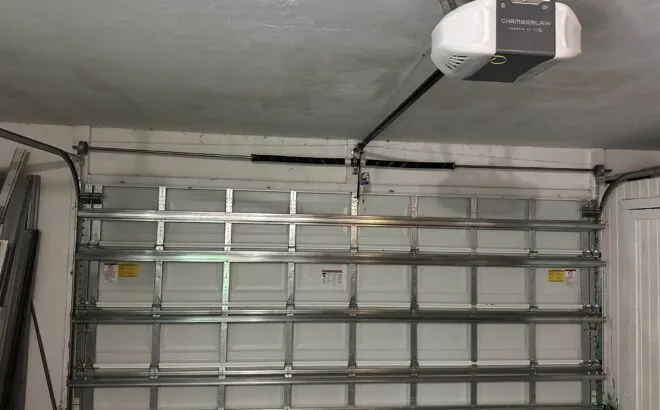
- A clear gap of a few inches between the coils of the spring over the door.
- An extension spring hanging loose or stretched out along one of the side tracks.
- A door that feels like dead weight when the opener is disconnected.
The spring problems we deal with
Snapped torsion springs
The coil wound around the bar over the opening has parted in two. The door stays shut, or the opener lifts it a few inches and stops.
Broken extension springs
On older and lighter doors, the springs stretch along each horizontal track. When one breaks, the door lifts unevenly and can jam.
Tired springs
A spring that has not broken yet but no longer balances the door: the door creeps down when left halfway, or slams the last stretch.
Matched replacement
Springs are sized to the door’s weight and height. Where a door has a pair, the two are normally renewed as a set so the door stays even.
Spring work on low headroom
Short garages leave little room above the door, which decides where and how a spring can be fitted.
How the springs carry the door
The weight of a sectional door is held almost entirely by its springs. The opener merely steers a door whose weight the springs are already holding, which is why a healthy door can be lifted by hand with one arm and a door whose spring has snapped will hardly budge.
On a torsion system, one or two springs sit on a steel shaft that runs across the top of the opening. As the door comes down, the cables pay out from a drum at either end of the bar, and that turning winds the springs tighter. When the door goes up, the springs unwind and turn the drums, and the cables lift the bottom corners of the door. The energy stored in a wound torsion spring is considerable, and it is there all the time the door is closed.
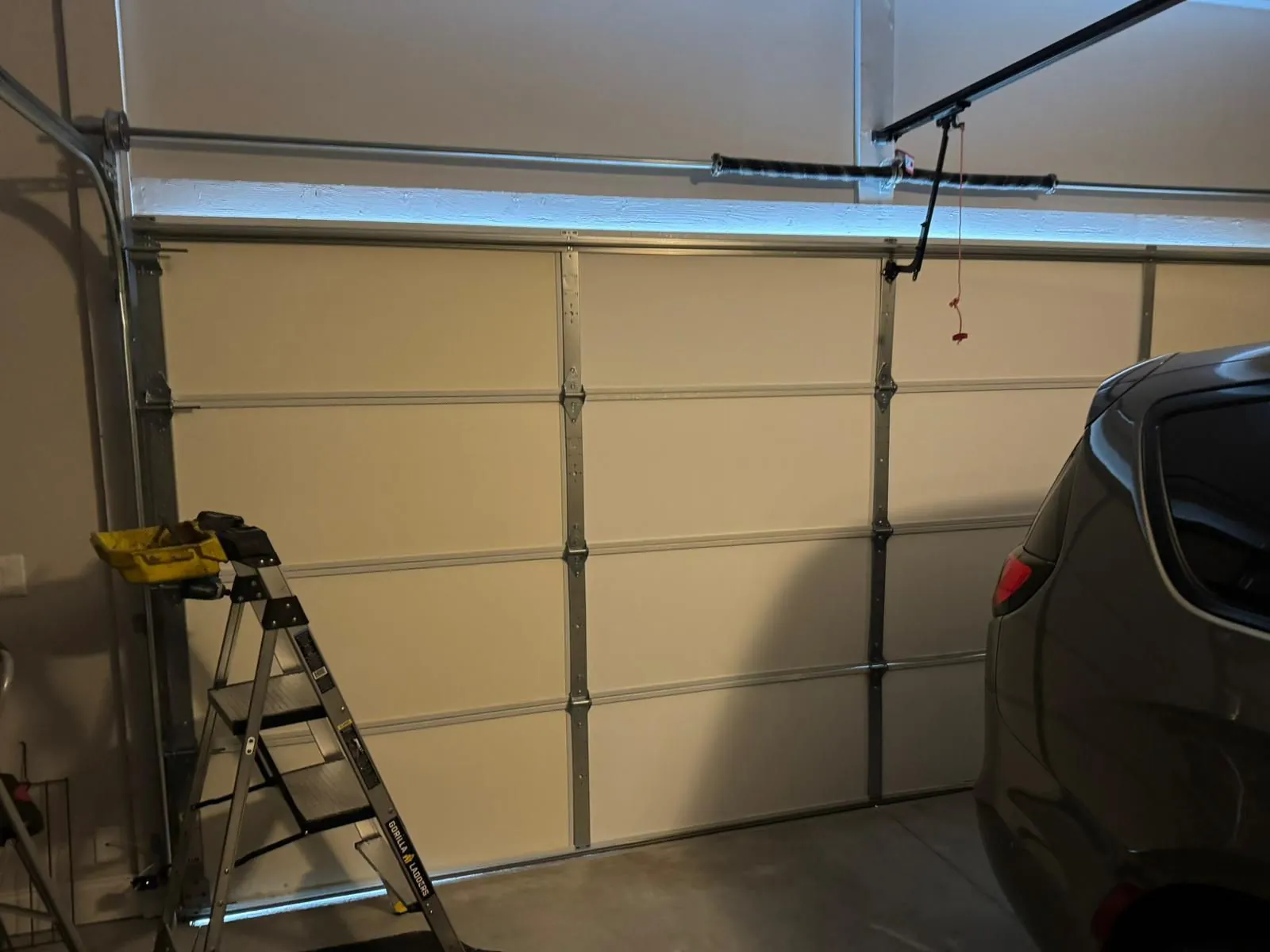
On an extension system, a spring lies beside each horizontal track, hooked to a hanger near the rear of the track and, at its front end, to a pulley that the lift cable runs through. The springs stretch as the door comes down and contract as it opens. Extension springs are common on older doors and lighter single-car doors, which describes a good share of the doors behind Allston’s houses.
Why torsion springs are left to us
Plainly put, a torsion spring holds dangerous tension, and replacing or adjusting one is not a DIY repair. It has been wound hard enough to raise the entire door, and that force does not go away when the spring breaks; the broken halves, the shaft, the drums and the cables can all still be under load. Winding a spring requires the right winding bars, a secure stance and a clear idea of how many turns the door needs. A screwdriver slipping out of a winding cone, or a set screw loosened in the wrong order, can turn the bar into a projectile.
Extension springs carry a separate hazard. Without a containment cable threaded through the middle, a snapping extension spring can whip its hooks and pulley across the garage. Older doors that have had their springs replaced at different times are not always fitted with those safety cables.
So once a spring has gone, the safe course is short. The door stays exactly as it is. The opener comes off the power, so a passing hand cannot set it running. Children and pets are kept out of the garage. Nobody lifts the door by hand, and nobody tries to squeeze a car out beneath a door that is half raised.
Extension springs on older Allston doors
Many of the doors in garages from the 1920s run on extension springs, either because they replaced an earlier door of the same type or because a low ceiling left no room for a torsion shaft. Extension springs work well, but they age in particular ways. The springs stretch over time and lose their pull, so the door starts to feel heavier and the opener has to work harder. The pulleys wear and develop flat spots. The cables running over them fray where they bend.
When an extension spring breaks, the door usually lifts on one side only and can jam crooked in the tracks. Both springs are normally replaced together so they pull evenly, and the pulleys, cables and safety cables are checked at the same visit. If the garage has room for one, a conversion to a torsion system can be discussed, but on many low garages extension springs remain the sensible choice.
Warning signs on an Allston door
A spring tends to drop hints before it parts. A door that used to stay put when lifted halfway now drifts down. The door closes faster than it used to, or lands with a thump. The opener labours on the way up, or reverses partway for no obvious reason. On a torsion spring, a small gap may appear in the coils, or the spring may look stretched compared with its partner. On an extension spring, the coils may stay slightly apart even with the door open.
In a garage that serves a whole building, those signs are easy to miss, because the door passes through many hands and no single person notices it changing. If anyone mentions that the door has started to feel different, that is worth acting on. A booked visit at a time that suits you is easier to manage than finding a door stuck shut with a car inside.
What a spring visit involves
Nothing goes on the door until it has been looked at properly. With the opener unhooked, the failed spring is found and measured, and the parts that work with it are inspected one by one: the cables, the drums, the bottom brackets, the shaft and its bearings, the rollers and the tracks. A spring that broke while the door was moving can damage other parts, so a frayed cable or a cable off its drum is not unusual.
The door’s size and weight decide which springs are fitted. Once the new springs are installed and wound to the right tension, the door is balanced and tested by hand, so it lifts smoothly and stays where it is left at the halfway point. After that the opener is clipped back on, its limits and force are reset to suit the lighter-feeling door, and its auto-reverse is proved on a block of wood placed in the opening.
You hear what has broken, what else is worn, and what the options are before any work begins.
Cables and drums after a spring lets go
When a torsion spring breaks, the tension on the cables drops all at once. The cables can slacken, unwind from their drums and, if the door is moving at the time, tangle or jump off entirely. On an extension-spring door, a broken spring lets its cable run loose over the pulley. Either way, a spring call is very often a cable call as well.
So part of any garage door spring repair Allston MA garages get is checking the lift cables along their full length. A cable with broken strands near the bottom bracket, or kinked where it wrapped badly on the drum, is replaced rather than reused, since it will carry the full force of the new spring from the first lift. The drums are checked for cracks and for set screws that have worked loose, and the bottom brackets, which anchor the cables to the door, are checked for rust and bending. On old garages where the bottom section sits on a damp floor, those brackets are often more corroded than they look.
The shaft and its bearings get the same attention. A bent shaft, or a worn centre bearing on a torsion system, makes a new spring wind unevenly and wear out early. Fixing the spring without fixing those parts only moves the problem a few months down the line.
Low ceilings and where a spring can sit
A torsion spring needs room. It sits on a shaft above the top of the opening, and the drums and the centre bearing all need space in the strip of wall above the door. In many of Allston’s old detached garages, that clearance is tight. The roof may slope down toward the door, the ceiling joists may sit low, or a beam may cross right where the shaft would go.
Garage door spring repair in Allston MA garages of this kind is therefore not always a straight swap. Sometimes the existing arrangement is the only one that fits, and the replacement spring has to suit it exactly. Sometimes a low-headroom arrangement, with the shaft positioned differently and the tracks adjusted to match, is the answer. Sometimes extension springs remain the right call. Each of those choices is made on the day, from the garage itself, rather than guessed over the phone.
Working on springs behind a door in a narrow alley
In the alleys behind Pratt and Gardner, a garage can open almost straight onto the lane, with hardly any room left to stand behind the door. Spring work is done mostly from inside the garage anyway, but the door often has to be raised and secured partway to set the cables and drums, and with an alley tight against the outside face there is little room for the door’s travel to be checked from outside. The work is planned around that: the door is clamped in the track while the springs are wound, and the bottom section is checked from inside.
The long driveways bring their own logistics. Springs, winding bars, ladders and replacement cables are carried down the driveway by hand. Clearing a car out of the driveway, if one is in the way, and leaving the floor inside the door clear makes the visit simpler.
Why springs break in the cold
Detached garages are rarely heated, so the springs in them sit at outdoor temperature all winter. Cold makes steel less forgiving, so a worn spring frequently snaps on a frosty morning, at the first lift of the day. If a door has felt heavy through the autumn, the first hard frost is a common moment for the spring to break.
Rust is the other enemy. Damp in an old garage, and in some cases a leaking roof dripping onto the shaft, lets surface rust build up between the coils. Rusty coils rub against each other, add friction and wear the spring faster. A light coat of a suitable lubricant on the coils helps, but a spring that is heavily rusted is better replaced.
Doors that open many times a day
Spring life is measured in cycles, one cycle being the door going up and coming down once. A garage used by a single household might see a few cycles a day. A garage behind a triple-decker that is shared between units, or used both for parking and for daily access to stored bikes and bins, can see many more. The springs on that door simply reach the end of their life sooner.
For a door in that kind of use, it is worth talking through the choice of spring when it is replaced. Spring options vary in how many cycles they are built for, and a door that opens often may be better served by springs sized for heavier use. That is a conversation to have during garage door spring repair Allston MA rental buildings need, not a fact to assume from a phone call.
Replace one spring or both, and when the door itself is the problem
With twin torsion springs, the survivor of a pair has worked exactly as hard as the one that broke, and it rarely lasts much longer. Renewing the two together keeps the lift even and spares you a second call a few weeks later. The same goes for a pair of extension springs.
Sometimes the spring is not the real problem. A wooden door that has soaked up water over the years may now weigh far more than it did when it was hung, and no reasonable spring will balance it for long. A steel door with sections rusted through at the bottom is in the same position. In those cases, a new spring is a short-term fix, and it may make more sense to look at new garage doors in Allston that suit the opening.
Getting a broken spring replaced
Of all the reasons a door suddenly stops working, a snapped spring comes up more than any other, and it seldom picks a good moment. Calls are taken at any hour, which means a spring that went in the night needs no wait before you report it. If a car is stuck behind the door, read the Allston emergency repair page for the steps to take before help arrives. Other faults on the same door, from cables to rollers, are covered under garage door repair in Allston, and an opener that strained against a broken spring may need a look on the Allston opener repair page. The wider picture of this service is on the garage door spring repair page, and the Allston page brings together everything we do here.
For garage door spring repair Allston MA homes and rental buildings can rely on, tell us whether the garage is reached from a driveway or an alley, what you heard, and whether the door is closed or stuck partway, and once those details are noted down, call us or book online.
Questions from Allston
There was a bang out back and the door is stuck down. Is that a spring?
Probably. A torsion spring lets go with a sharp report, and from then on the opener cannot manage the door’s weight. Look at the spring over the door from a safe distance for a gap in the coils, unplug the opener, and leave the door closed.
Could I fit and wind the spring on my own?
Please do not. The tension stored in a wound torsion spring is dangerous, and putting one on or taking one off is not a DIY repair. The tools and the method matter, and a slip can cause serious injury.
Only one of our two springs broke. Does the other need changing?
In most cases it does. Both have carried the door through every lift since they went in, and the survivor tends to follow the first before long. Replacing them together keeps the door balanced.
Our garage is very low. Can a torsion spring still be fitted?
Often, with a low-headroom arrangement. In some low garages extension springs remain the better choice. It is decided on site, from the room above the door.
Can I get the car out with a broken spring?
Not by lifting the door yourself. Without the spring, the door is at its full weight and can come down without warning. If the car must come out, call and explain, and do not drive under a door that is partly raised.