
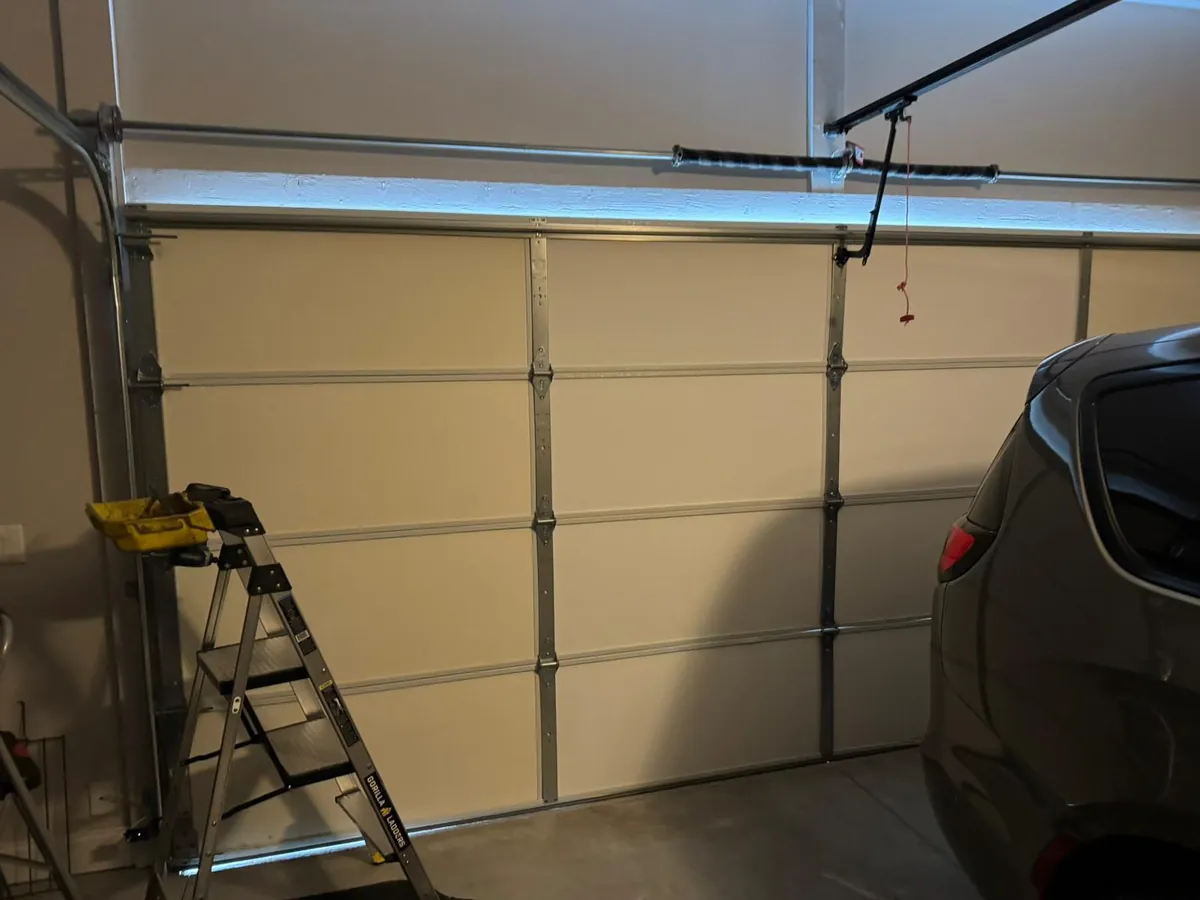
Why a Back Bay garage needs its own kind of repair
Most of the brownstones along Commonwealth Avenue, Marlborough Street and Newbury Street were built without any garage at all, so the few private bays in the neighbourhood are unusual pieces of work. Where one exists it is either a single bay cut into the ground floor of the house or a carriage house that faces the service alley at the back of the lot. Our garage door repair in Back Bay starts from that reality: a door squeezed into an opening that was never designed for it, running on hardware that has to fit around old masonry, joists and the rooms built above or beside it.
A broken part on one of these doors matters more than it would on a suburban double garage. There is rarely a second bay to fall back on, and a door that will not close leaves the bay open to the alley. Before you call, three things are worth noting from a safe distance:
- Whether the door is fully closed, fully open or stuck somewhere in between.
- Whether either of the long springs above the door, or the cables at its bottom corners, looks broken or slack.
- Whether the opener hums, clicks, or does nothing at all when the wall button is pressed.
Parts we repair on Back Bay doors
Springs
Torsion springs on the shaft above the opening and extension springs along the tracks. When one breaks, the door becomes a dead weight. See spring repair in Back Bay.
Cables and drums
Lift cables that fray, snap or slip off their drums, leaving the door crooked in a narrow opening.
Panels and sections
Sections dented by a car turning in from the alley, cracked hinges and worn bottom seals.
Openers and remotes
Openers that strain, remotes that no longer reach and wall buttons that do nothing. See opener repair in Back Bay.
Tracks and rollers
Bent rails, loose brackets, worn rollers and doors that have jumped off the track altogether.
Safety sensors
The pair of photo eyes near the floor that stop the door closing on a car, a bin or a person.
Garage door repair in Back Bay starts with the opening
The first thing a technician looks at on a Back Bay garage is not the broken part but the opening around it. A bay cut into a brownstone’s ground floor is a hole made in a wall that was designed to carry the house above it. The door, its tracks and its spring all have to fit inside whatever space the original builders and later alterations left behind, and that space is rarely generous. The ceiling of the bay may be low, the side walls may lean slightly, and the header above the opening may be stone, brick or a steel lintel added when the bay was created.
That shapes almost every repair. A spring has to sit where there is room for it to turn. A track has to be fixed to whatever the wall will hold. An opener has to hang from a ceiling that may have a living room or a hallway directly above it. When something fails on a door like this, the fix has to respect the building as well as the door, which is why a quick look at the opening comes before any part is taken off.
Carriage houses are different again. These are separate brick buildings, or the rear portion of a lot, facing the service alley that runs behind the main houses. Their openings were often made for carriages and later adapted for cars, so the door may be a modern sectional door fitted into an older arch or a square opening that has been narrowed or reframed. The walls are thick and solid, which is good for holding brackets, but the floors and thresholds can be uneven after long use.
How the parts of a door depend on each other
A sectional garage door is a balanced system. The springs carry the weight, the cables transfer that lifting force to the bottom of the door, the rollers guide each section along the tracks, and the opener only pushes and pulls a door that the springs already hold in balance. When one part fails, the others take the strain. A weak spring makes the opener labour. A worn roller drags in the track and wears a groove. A frayed cable lets one side sag, which twists the door in its rails.
On a door squeezed into a tight Back Bay bay, those knock-on effects show up quickly. There is little clearance on either side, so a door that twists even slightly will rub against the jamb or catch on the track brackets. A door that drops unevenly can wedge itself in the opening. That is why a repair looks at the whole door, not just the part that broke, and why a door that has been noisy or sluggish for a while usually needs more than one thing put right.
The service alley and what it does to a door
The service alleys behind Commonwealth Avenue, Marlborough Street and Newbury Street are where carriage house doors live, and the alley itself causes much of the wear. Cars turning in from a narrow lane have little room to straighten up, so bottom sections and jambs get clipped. Bins, recycling and deliveries are stacked close to doors, and a bin nudged against a sensor or the bottom of a track is a common reason a door suddenly refuses to close.
Water and salt find their way in as well. Alleys collect slush and runoff from the roofs and lanes around them, and that water pools against the bottom of a door. Over time it rusts the lowest brackets, the bottom of each track and the fixing points for the cables. A bottom seal that has split or flattened lets the water straight in. When we carry out garage door repair in Back Bay on a carriage house, the bottom of the door is one of the first places we check, because that is where alley conditions take their toll.
Alley width also affects the visit itself. A narrow lane leaves limited room to park and work, and resident permit rules around the neighbourhood decide where a service vehicle can stop and for how long. Small parts such as rollers, cables and springs travel easily. A replacement section or a full door is a different matter, and the timing of that delivery depends on the alley and the permits as much as on the repair.
Bays below living space
A garage built into a brownstone’s ground floor shares the building with the rooms above it. That makes noise and vibration part of the repair. A worn opener chain, dry rollers or a loose track bracket can send a rumble straight up through the joists into the rooms above. A spring that is out of balance makes the opener work harder, which adds to the sound and the vibration.
Quiet operation is a practical goal in a bay like this, not a luxury, and it shapes how we approach garage door repair in Back Bay houses with rooms over the garage. Replacing worn steel rollers, tightening the hardware, lubricating hinges and springs, and making sure the opener’s travel and force settings match the door all help. Where the opener itself is the source of the noise, the opener page covers what can be done, and the opener repair page for Back Bay explains the choices for a ceiling with rooms above it.
What a repair visit involves
Every visit follows the same order, whatever was mentioned on the phone.
- The opener is disconnected so the door can be checked by hand, and the door’s balance is tested by lifting it partway and seeing whether it holds.
- The springs, cables and drums are inspected, then each roller and hinge, then both tracks along their full length, including the brackets where they meet the masonry.
- The opener, the wall button, the remotes and the safety sensors are tested on their own.
You are told what has failed and why before anything is replaced. Once the faulty parts are dealt with, the door is balanced again, the opener’s limits are reset to suit the repaired door, and the safety reverse is tested so the door stops and backs up when it meets something in its path. On a bay facing a service alley, the test includes closing the door fully and checking that it seals against the floor, so the bay is secure when the visit ends.
Doors that come off their tracks
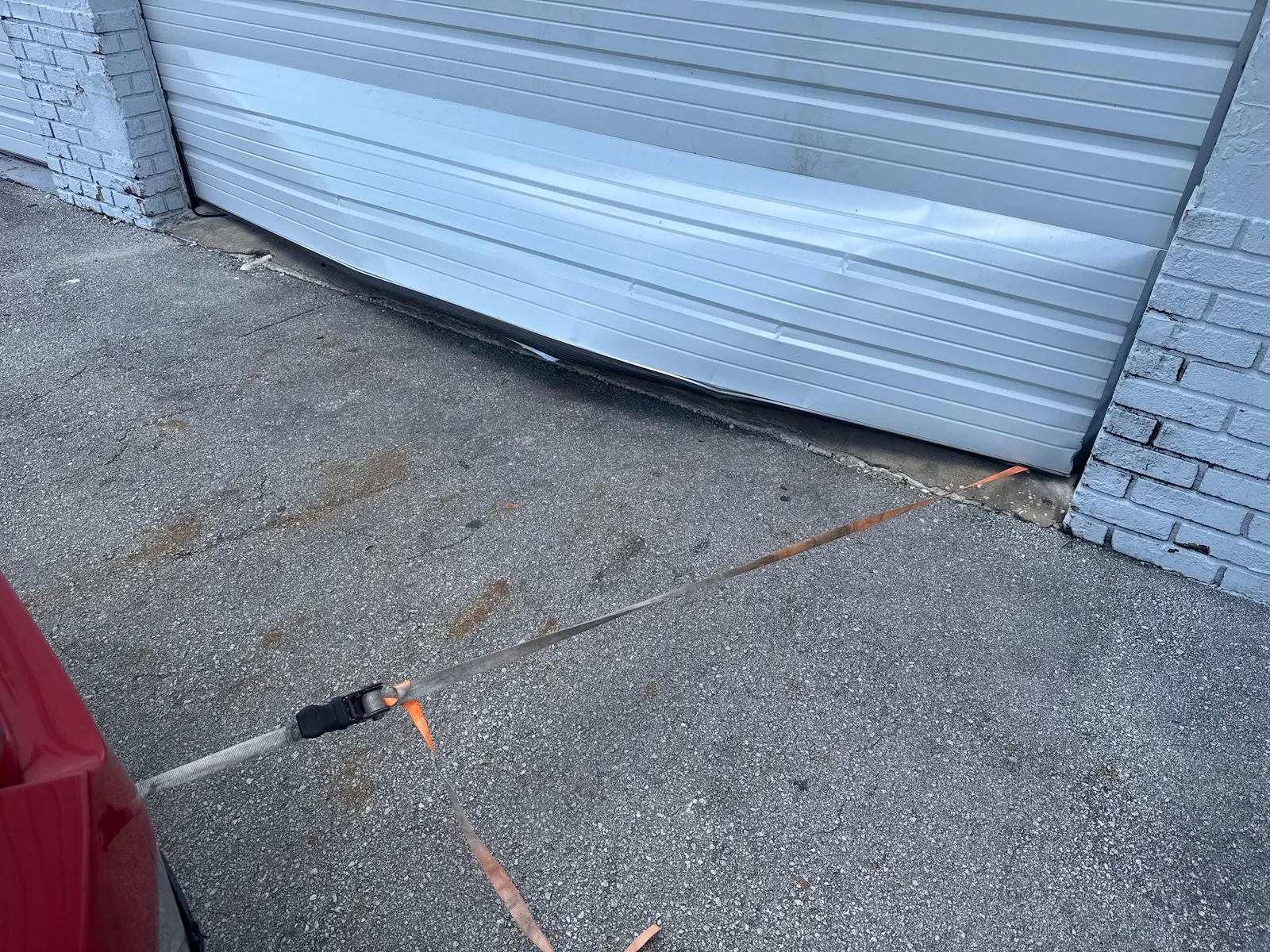
A door that has left its track sits crooked in the opening, often with one or more rollers hanging free. In a narrow Back Bay bay this tends to follow a bump from a car turning in from the alley, a snapped cable on one side, or an opener that kept pushing against an obstruction. An off-track door is unstable and can fall. It should not be run with the opener or forced by hand. The repair means taking the weight off the door safely, freeing the rollers, straightening or replacing the bent sections of track, and checking that both cables are even before the door runs again.
Springs and cables, and the parts to leave alone
Some checks are safe to make. Unplug the opener if the door is stuck partway. Wipe the sensor lenses. Try the wall button as well as the remote. Look for anything pushed against the track or the bottom of the door.
Other parts are not for a homeowner to touch. A torsion spring holds dangerous tension whether the door is open or closed, and so do the cables and the bottom brackets they connect to. Loosening a set screw or a bracket can release that tension in an instant. This is not a DIY repair. A door with a broken spring should be left where it is, because nothing is holding its weight. The spring repair page for Back Bay goes into this in more depth.
Panels, hinges and seals in a tight opening
Panel damage in this neighbourhood is usually the result of a tight turn rather than age. A bumper catches the bottom corner of the door, or the edge of a section is struck as a car squeezes past the jamb. One dented section can sometimes be replaced on its own, provided a matching section in the same profile and finish can be sourced. A section that is creased across its width weakens the whole door, because it can no longer flex at the hinge line the way it was made to.
The hinges between sections deserve attention too. When a hinge cracks or its screws pull loose from the section, the door bows in the middle as it travels over the curve of the track. In a bay with very little headroom, that bow can touch the ceiling or the opener rail. Replacing the hinges and refastening them into sound metal stops the flexing before it does more damage.
The bottom seal is the cheapest part of the door and the one that does the most to protect it. Once it is torn or squashed flat, water and grit from the alley run under the door and sit against the bottom section. Renewing the seal, and checking that the door closes evenly onto the floor, is part of almost every repair we carry out on an alley-facing door.
Cold mornings and old masonry
Steel springs become more brittle in hard cold, which is why a run of freezing mornings tends to bring a cluster of spring breaks. Grease in the rollers and hinges stiffens at the same time, so the opener has to work harder just as the springs are under the most stress. A door that was merely noisy in autumn can stop altogether in the first deep freeze.
Old brick and stone also move with the seasons. Openings that were square when a bay was cut can shift slightly over the years, and a track fixed firmly to the masonry can end up a little out of line with its partner on the other side. The result is a door that binds at the same point every time it travels. Realigning the tracks and resetting the brackets restores a smooth run without any change to the opening itself.
Repair or replace the door
Most doors are worth repairing. A spring, a pair of cables or a set of rollers keeps a sound door working for a long time. Replacement makes sense when several parts are failing together, when the bottom sections have rusted through from standing water in the alley, when a wooden door has absorbed so much moisture that it is too heavy to balance, or when the door no longer fits the opening properly after years of movement in the masonry. We will tell you plainly which side of that line your door is on.
If a new door is the better answer, it is worth knowing that the alley width and resident permit rules decide when a door can be delivered, so replacement in this neighbourhood needs a little more planning than elsewhere. The new garage doors page for Back Bay explains how that works.
When the door fails at night
Garage doors do not wait for a convenient hour. A spring that snaps overnight, a door that will not close after a late return, or a car trapped inside before an early start all happen at awkward times. The phone line is open 24 hours, 7 days a week, so a breakdown can be reported as soon as it is noticed. The emergency repair page for Back Bay covers what to do while you wait and how to keep a door that is stuck open as secure as possible.
Booking a repair
When you get in touch, describe what the door is doing, whether the bay is in the ground floor of the house or a carriage house on the alley, anything that looks broken, and whether a car is inside. That helps us plan around the alley and the permits before arriving. For garage door repair in Back Bay, call us or book online. More detail on every type of repair is on the main garage door repair page, and the Back Bay page lists everything we do in the neighbourhood.
Questions from Back Bay
Can you repair a door in a garage cut into the ground floor of a brownstone?
Yes. These bays often have low ceilings and tight side clearances, so the repair is planned around the space: where the spring can sit, how the tracks are fixed to the masonry and how the opener hangs below the rooms above.
My carriage house door opens onto a narrow alley. Does that make the repair harder?
It can affect where the service vehicle stops and how long it can stay, because of the alley width and resident permit rules. Small parts are easy to bring in. A replacement section or a full door needs more planning.
Why does the door stop and reverse before it reaches the ground?
Often the safety sensors. In an alley-facing bay, a bin or a bike nudged against a sensor knocks it out of line. Wipe the lenses, check that nothing blocks the beam and see whether the small lights on both sensors are steady.
The bottom of my door is rusting. Can it be fixed?
Rust at the bottom usually comes from water pooling against the door from the alley. A worn bottom seal can be replaced and rusted brackets renewed. If the bottom section itself has rusted through, a new section or a new door may be the better option.
Is it safe to open the door by hand when the opener stops working?
If the springs and cables are intact, pull the release cord on the opener and lift gently. If the door feels very heavy or drops when you let go, the spring has failed and the door should be left closed until it is repaired.