
When the spring goes in a one-bay garage
A loud bang from the garage, followed by a door that will not lift more than a few inches, nearly always means a spring has broken. In a neighbourhood where private garages are scarce, that single failure can shut the only bay a household has. Garage door spring repair in Back Bay is our most common urgent call, whether the door is cut into the ground floor of a brownstone on Commonwealth Avenue or Marlborough Street, or sits in a carriage house off the alley behind Newbury Street.
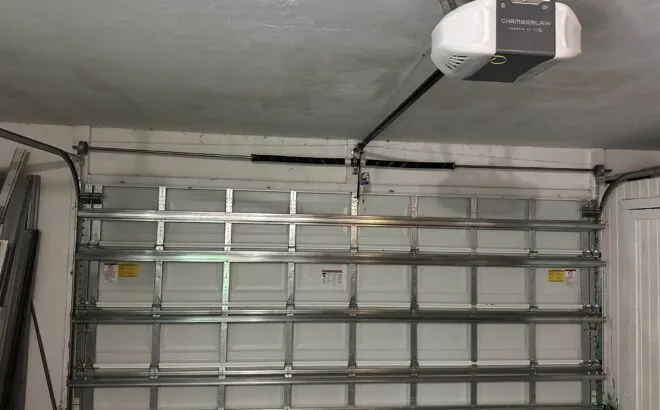
The spring is what lifts the door. The opener only guides it. Once a spring has failed, the full weight of the door rests on the opener, the cables and whoever tries to lift it, which is why the safest move is to stop and look rather than keep pressing the button. Three things are worth checking from where you stand:
- A visible gap in the coils of the spring on the shaft above the door, or along either track.
- Cables hanging loose at the bottom corners instead of running taut up the sides.
- A door that feels like a dead weight when the opener is released.
The springs we repair and replace
Torsion springs
Wound springs on a steel shaft across the top of the opening. They turn the drums that wind up the lift cables and carry most of the door’s weight.
Extension springs
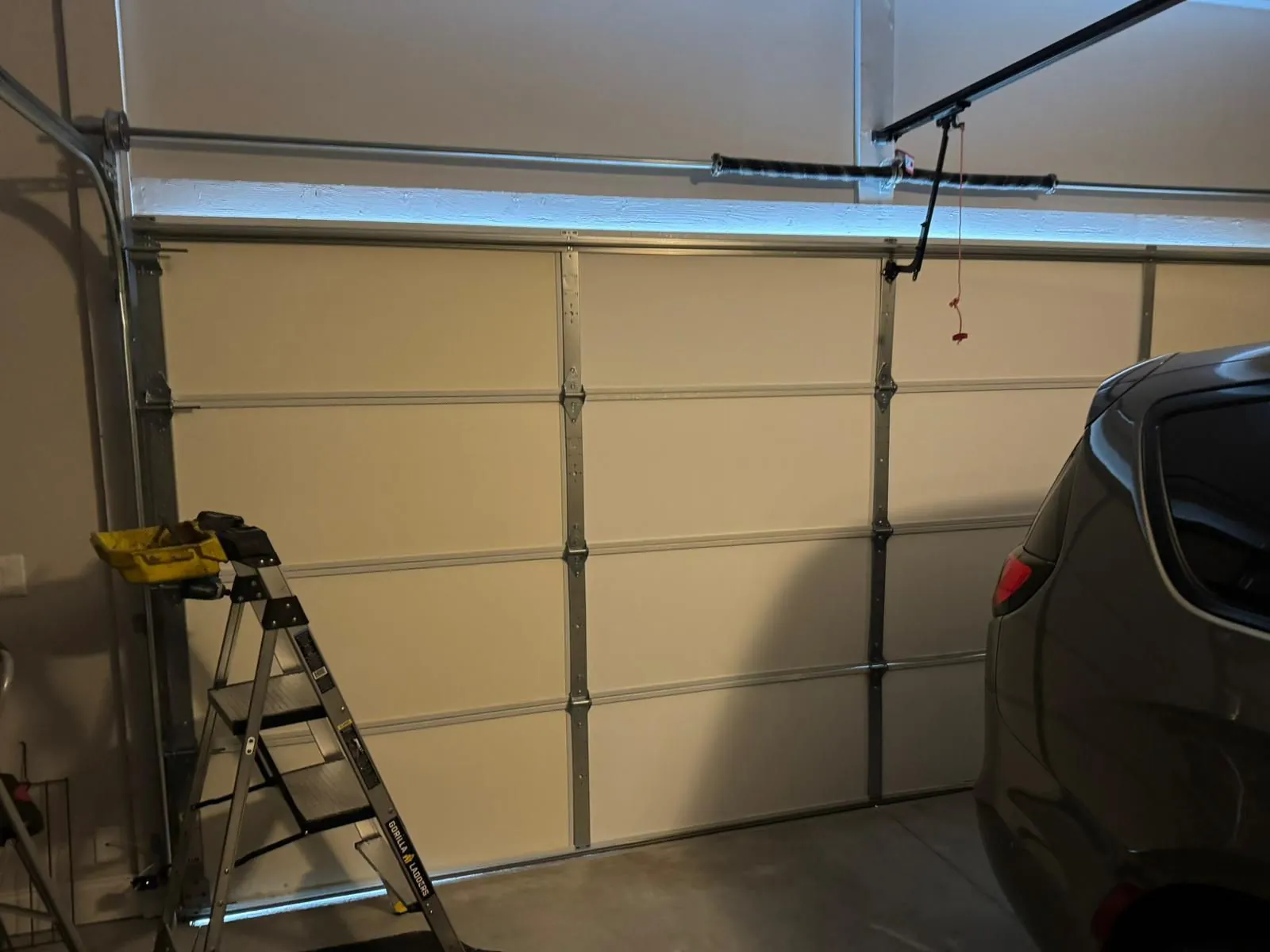
Long springs stretched along each horizontal track, pulling the door up through pulleys and cables. Common on older and lighter doors.
Broken springs
A snapped coil leaves the door unbalanced and too heavy for the opener. Running it again risks the cables and the opener itself.
Spring replacement
New springs matched to the door’s weight and height, wound or stretched to the right tension, then balanced and tested.
How garage door springs carry the weight
Every sectional door is heavier than it looks. The springs are there so that neither the opener nor a person has to lift that weight. A torsion spring is wound tight as the door comes down, storing energy; as the door rises, the spring unwinds and turns a drum at each end of the shaft, and cables wrapped around those drums lift the bottom of the door evenly on both sides. An extension spring does the same job by stretching. As the door closes, the spring is pulled out along the track; as it opens, the spring contracts and pulls the cable through a pulley to raise the door.
A well-balanced door stays put when it is lifted halfway by hand and let go. If it drifts down or creeps up, the springs are either tired or set to the wrong tension. A door that slams onto the floor, or one the opener struggles to start, has springs that are no longer carrying their share.
Springs are rated for a certain number of open and close cycles. Each trip up and down flexes the steel, and eventually the metal fatigues and breaks, usually at a point near one end of the coil. That is ordinary wear, not a fault in the door, and it is why spring breaks happen even on doors that have been looked after carefully.
Garage door spring repair in Back Bay garages
The buildings make spring work here different from spring work on a suburban driveway. A bay cut into a brownstone’s ground floor often has very little room between the top of the opening and the ceiling. A torsion spring needs space above the door for its shaft, its drums and its centre bracket, and in a low bay that space can be measured in a few hand widths. Some doors in tight openings use a low-headroom track arrangement or extension springs for exactly that reason. Garage door spring repair in Back Bay starts with confirming which system the door has and how much room there is to work in it.
Carriage houses off the service alley usually have more headroom, but their own issues. The walls are old, thick masonry, and the brackets that anchor the spring shaft are fixed into that masonry. If a bracket has loosened over time, the shaft can sit slightly out of line, which wears the spring unevenly and shortens its life. Replacing the spring without checking its mounting only fixes half the problem.
Doors in both kinds of garage tend to be single-width and close-fitting, so there is little side clearance. When a spring breaks and the door drops on one side, it can wedge against the jamb. Freeing a door like that safely is part of the repair, and it is one more reason not to force the door with the opener.
Torsion springs hold dangerous tension
This deserves saying plainly. A torsion spring holds dangerous tension whether the door is open or closed. Winding or unwinding one needs proper winding bars and a set order of work, and the energy stored in the coil can spin a bar or a cone with enough force to cause serious injury. Torsion spring replacement is not a DIY repair.
Extension springs are dangerous in a different way. A stretched spring that snaps can whip across the garage, and older installations without a safety cable running through the spring are the worst for this. The cables and the bottom brackets on both types of door are also under load from the spring, so loosening a bracket bolt on a closed door can release that load all at once.
What you can do safely is limited but useful. Unplug the opener so it cannot try to lift a door it is not built to lift. Keep the door closed if it is closed. If it is stuck open, do not try to pull it down by hand, because without a working spring it can drop far faster than expected. Keep children, pets and cars clear of the opening until the repair is done.
Signs that a spring is on its way out
Springs do not always break without warning. A door that has started to feel heavy when lifted by hand, one that no longer stays put when stopped halfway, or one that has begun to lurch on the way up are all signs that a spring is losing tension. You may also see a gap starting to form between coils, rust on the coil surface, or hear a creak from the shaft as the door moves.
The opener often gives the first clue. When a spring weakens, the opener carries more of the load, so it may slow down, labour on the first few feet of travel, or reverse partway for no obvious reason. Replacing a tired spring before it snaps saves the opener from that extra strain and avoids the sudden stop that always seems to come at the worst moment.
Cold weather and alley moisture
Spring breaks bunch together when the weather turns hard. Steel becomes less forgiving in deep cold, and the first freezing mornings of the season bring a cluster of calls. Alley-facing carriage houses add moisture to the mix: runoff and slush collect along the service alleys, damp air finds its way under the door, and rust forms on the coils over time. A rusted spring rubs against itself as it winds, which adds friction and stress to every cycle. A light coat of suitable lubricant on the coils during a service helps, and it is one of the things checked on every visit.
What a spring visit involves
- The door is secured so it cannot move, and the opener is disconnected.
- The broken spring is identified, measured and matched, and the cables, drums, bearings and centre bracket are checked for damage caused when it snapped.
- The old spring is unloaded safely and removed, the new spring is fitted and set to the right tension for the door’s weight, and both cables are checked to make sure they wind evenly.
- The door is balanced by hand, the opener is reconnected and its limits are reset, and the safety reverse is tested.
On a torsion door with two springs, when one has broken the other has done the same number of cycles and is often close behind. Replacing both together is usually sensible, and you will be told why before anything is done. On an extension spring door, the springs are normally replaced as a pair so both sides lift evenly.
Matching a new spring to the door
A spring is not a generic part. Each one is chosen for the door it lifts: the thickness of the wire, the inside diameter of the coil, its length and, for torsion springs, whether it is wound for the left or the right side of the shaft. Get any of those wrong and the door will either fight its way up or refuse to stay down. The door’s weight and height decide the combination, so the door is weighed or its balance is measured before a replacement is chosen, rather than simply copying whatever was fitted last time.
That matters more in this neighbourhood than you might think. Many doors in old bays have been changed over the years. A light wooden door may have been swapped for an insulated steel one, glass panels may have been added, or a new bottom section may have been fitted after a knock in the alley. Each change alters the weight, and a door that still carries springs sized for its earlier self wears through them quickly and works the opener far too hard. Re-springing is the moment to correct that mismatch.
Older doors and odd setups
Some garages in the neighbourhood still run doors with arrangements you will not see on a new installation: extension springs without safety cables, homemade brackets fixed into brick, or a torsion shaft cut short to fit between two walls that sit closer together than standard. None of that is unusual in buildings this old, and none of it is a reason to replace the door. It does mean the spring is looked at together with the parts that hold it, and that anything unsafe is pointed out. Fitting safety cables through extension springs, for example, contains a spring if it ever snaps again.
Keeping the new springs in good order
Once new springs are in, a few simple habits help them last. Watch the door through a full cycle now and then: it should rise smoothly and evenly, without jerking or hesitating. Lift it by hand with the opener released every few months to check it still holds at the halfway point. Keep the area around the shaft and the tracks clear of stored items, so nothing rubs on a moving spring. If the door starts to feel heavier, or the opener begins to labour again, that is the time to have the balance adjusted, long before anything breaks. Leave any adjustment to the spring itself to a technician; the same tension that makes a spring dangerous when it breaks makes it dangerous to tweak.
Why a bang from the garage is worth investigating
In a bay cut into the ground floor of a house, a spring that snaps can be heard in the rooms above or beside it, and the sound is often mistaken for something falling over. If you hear a sharp crack from the garage and the door has not been used since, look at it before anyone tries to drive out. Check the shaft above the door for a gap in the coils and see whether the cables at the bottom corners are still taut. Finding a broken spring while the door is closed and the car is parked is far better than finding it halfway through opening, when the door can stall or drop.
Cables and drums after a spring break
When a spring snaps, the cables can jump off their drums or unspool, especially if the opener kept trying to run the door. A cable that has been pulled tight across a sharp edge can fray, and a drum can crack if the door dropped hard. These parts are checked as a matter of course during garage door spring repair in Back Bay, because putting a new spring on a door with a damaged cable simply moves the failure along. If the door has come out of its track as well, the general repair page for Back Bay explains how off-track doors are put right.
When the spring is not the whole story
Sometimes a spring break exposes a door that is near the end of its working life. A wooden door that has soaked up moisture from the alley can become too heavy for any reasonable spring. Sections that have rusted at the bottom, or a door that no longer fits its old masonry opening, may mean replacement is the better choice. That is not the usual outcome, and most doors are simply re-sprung and returned to service. Where replacement makes sense, the new garage doors page for Back Bay explains how a new door is supplied and installed, bearing in mind that alley width and resident permit rules decide when a door can be delivered.
A spring break often strains the opener as well. If the opener struggled before the spring went, or still labours after the new spring is fitted, the opener repair page for Back Bay covers what can be done.
A broken spring at night
Springs have no sense of timing. A break in the early hours can trap a car before a morning start, and a door stuck open on the alley side leaves the bay exposed overnight. The phone line is open 24 hours, 7 days a week, so a broken spring can be reported as soon as it is found. The emergency repair page for Back Bay covers what to do while you wait.
Booking a spring repair
Tell us whether the door is in a ground-floor bay or a carriage house on the alley, whether it is open or closed, whether you can see where the spring has broken, and whether a car is inside. For garage door spring repair in Back Bay, call us or book online. More on how springs are matched and fitted is on the main garage door spring repair page, and the Back Bay page lists everything else we do in the neighbourhood.
Questions from Back Bay
My garage is cut into the ground floor and the ceiling is very low. Can the spring still be replaced?
Yes. Low bays often use a low-headroom track arrangement or extension springs. The replacement is matched to whatever system the door already has, and fitted in the space available.
Can I wind a new torsion spring myself?
No. A torsion spring holds dangerous tension, and the tools and order of work matter. It is not a DIY repair. Leave the door closed, unplug the opener and call.
Why did both springs need replacing when only one broke?
On a door with two torsion springs, both have done the same number of cycles, so the second is usually near the end of its life too. Replacing them together keeps the door balanced and saves a second call soon after.
My carriage house door is stuck open after the spring broke. What should I do?
Do not pull it down by hand or run the opener. Without a working spring, the door can come down far faster than expected. Keep people and cars clear of the opening and call.
Do cold mornings really cause more spring breaks?
They tend to. Steel is less forgiving in deep cold, and a spring that was already near the end of its cycles often gives out on the first hard freeze of the season.