
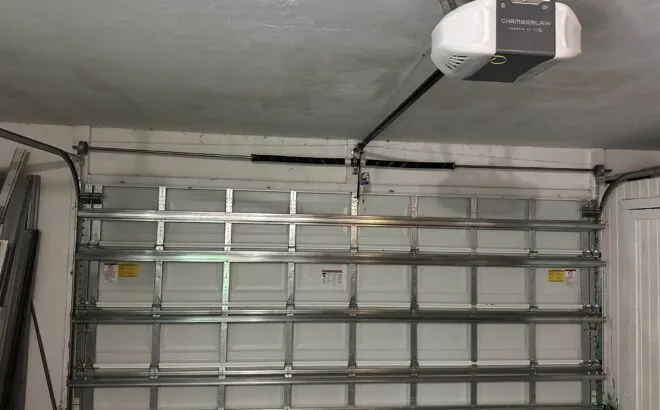
A snapped spring in a garage with no room to spare
A broken spring is the most common reason a garage door suddenly refuses to open, and on the hill it tends to happen in the tightest spaces imaginable. Private garages here are scarce, small and often sunk below the brick sidewalk at the foot of a Federal or Greek Revival row house, with an opening so low that the spring hardware has to be fitted around the ceiling rather than above the door. Our garage door spring repair in Beacon Hill, MA covers torsion and extension springs, broken springs and full spring replacement.
There is no driveway to fall back on. If the spring goes with the car inside, the car stays inside until the door is fixed.
Signs a spring has broken, all visible without touching anything:
- A clear gap, often a hand’s width or more, between two sections of a torsion spring above the door.
- A loud bang from the garage, like a heavy object dropped, with nothing out of place on the floor.
- An extension spring hanging loose or lying in pieces beside one of the horizontal rails.
Spring problems this work covers
Broken torsion springs
The coiled spring wound around the shaft over the opening. When it splits, the drums stop turning and the door will barely move.
Broken extension springs
The long springs stretched along each side rail, common where headroom is too short for a shaft above the door. They need a safety cable running through them.
Weak or tired springs
Springs that have lost tension with age, leaving a door that drifts down when you let go, or an opener that labours.
Unbalanced pairs
One spring of a pair replaced years ago and now pulling unevenly against the old one, so the door rises crooked.
Why the springs carry the door
A sectional garage door made of wood or steel weighs far more than an adult can comfortably lift. The springs exist to cancel out that weight, so that the door feels almost weightless and a small motor, or one hand, can move it. When the door is closed, a torsion spring is wound tight. As the door rises, the spring unwinds and turns two cable drums, and the cables reel the door up evenly by its bottom corners. Extension springs work by stretching instead of twisting: as the door comes down they lengthen along the rails, storing energy, and as it goes up they shorten and pull it with them through pulleys and cables.
Either way, the spring is the part doing the heavy lifting. The opener only steers. That is why a door with a snapped spring stays planted on the floor no matter how many times the button is pressed, and why an opener that is pushed to lift a door without a working spring often strips a gear or burns out its motor soon after.
Low ceilings and where the springs can go
The local notes describe openings that are very low, and spring work on the hill starts from that fact. A conventional torsion spring mounted on a shaft across the top of the door needs a band of clear space between the opening and the ceiling. In many row-house garages, that band is barely there, and in some it is interrupted by a brick arch or a heavy beam.
When the space is too short, there are a few ways the springs are set up. Extension springs along the rails need very little room above the door, which is why they are common in older, lower bays. A low-headroom torsion arrangement moves the shaft and springs back along the track, toward the rear of the garage, with the cables running over a second set of drums. Some doors in tight bays use springs mounted at the back of the horizontal tracks altogether. The replacement spring has to suit whatever arrangement the door already has, and has to be sized for the door’s actual weight in that particular layout.
What wears a spring out
Every spring is made to last a certain number of open-and-close cycles, and then it fails. A door used several times a day reaches that point much sooner than one used at weekends. Beyond simple use, a few conditions on the hill shorten a spring’s life.
Damp is the first. A garage set below the sidewalk tends to hold moisture, and a spring that rusts between its coils develops weak points where it eventually cracks. A light coat of oil helps, but in a bay that never really dries out it does not last. Cold is the second. Steel becomes more brittle in hard frost, so a spring near the end of its life often gives out on the first sharp morning of the winter. Weight is the third. A heavy wooden carriage-style door, kept for the way it looks against the brickwork, can soak up water over the years and grow heavier than the spring was sized for, which strains it on every cycle.
Warning signs before a spring gives out
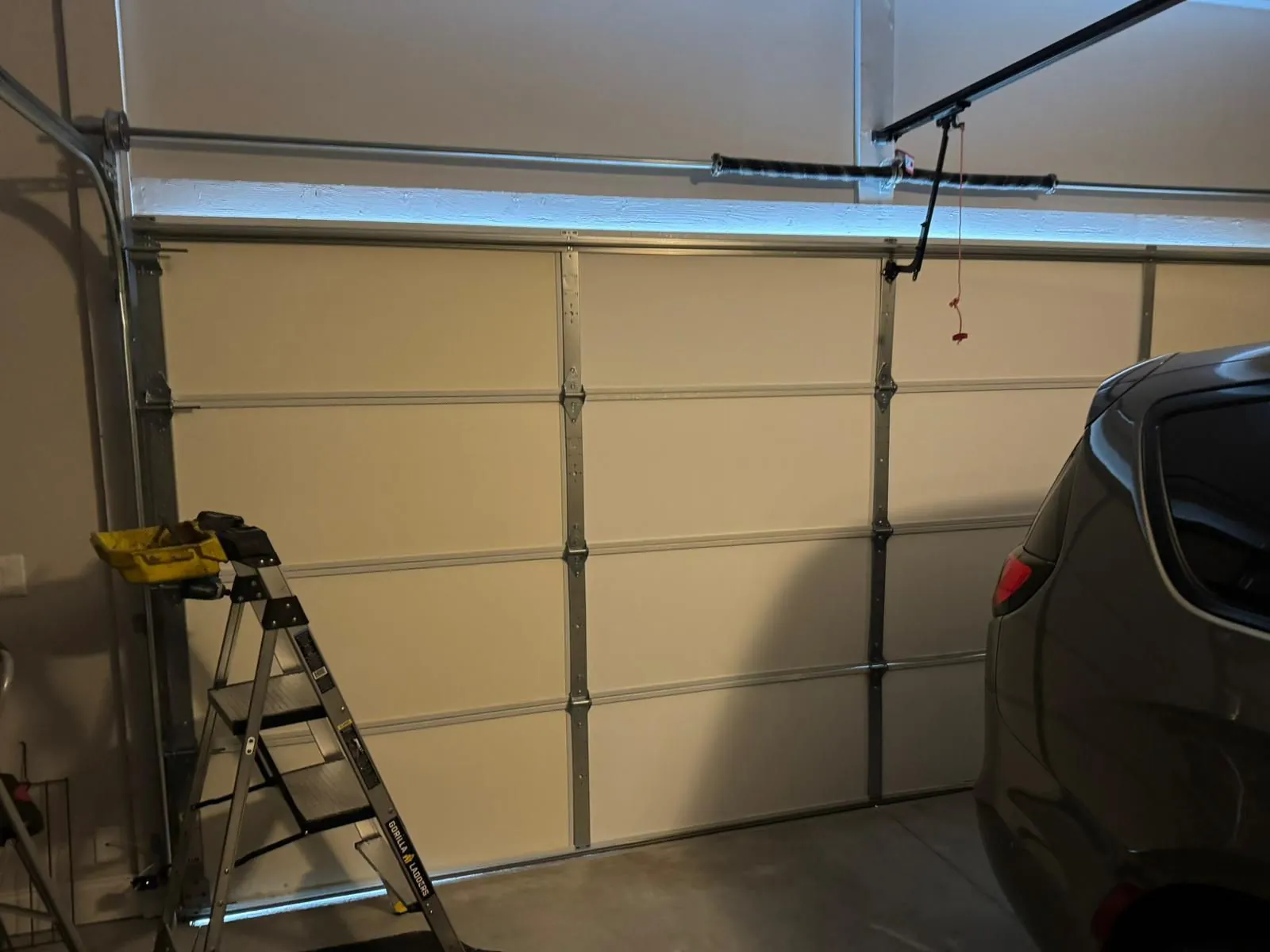
Springs rarely fail without some notice, and a spring caught early can be replaced on your own schedule rather than at the worst moment. The clearest sign is balance. With the opener disconnected and the door lifted to about waist height, a healthy door stays roughly where it is put. A door that sinks back down is carrying more weight than its springs can handle. Other signs include an opener that sounds strained or slows near the top, a door that rises unevenly, visible rust or flaking along the coils, and a spring with gaps opening up between its coils where they used to sit tight together.
If you see any of these, arranging garage door spring repair in Beacon Hill before the spring breaks saves a door stuck shut, a car trapped in a below-grade bay and the risk of collateral damage to cables and the opener. Checking balance this way is safe as long as you only lift a door that moves freely; if it feels very heavy, set it down and leave it.
Safety cables on extension springs
Extension springs stretch and relax with every cycle, and when one breaks, the pieces can whip across the garage with real force. A safety cable threaded through the centre of each spring and anchored at both ends holds the broken pieces in place. In older, low garages, these cables are sometimes missing altogether, perhaps never fitted or removed at some point. When extension springs are replaced, it makes sense to have a safety cable running through each new spring, and if the cable is missing on the side that has not broken, ask about that too. In a cramped bay where the car parks a few inches from the rails, a loose spring has nowhere harmless to go, so this small part matters more here than in a wide garage with space to spare.
Why spring work is not a DIY job
This deserves to be said without softening it. A torsion spring holds dangerous tension even when the door is closed and nothing seems to be happening. The energy stored in a wound spring is enough to lift the whole door, and if a winding cone slips or a winding bar comes loose, that energy is released in an instant. People are badly hurt this way every year. The cables and bottom brackets carry the same load, so they are not safe to unbolt either. Extension springs are dangerous in a different way: a spring that breaks without a safety cable through it can fly across the garage.
What is safe is staying clear. Unplug the opener, do not try to lift the door by hand, and do not pull the emergency release while the door is open, because a door with a broken spring can drop the moment it is let go. In a small garage there is little room to step out of the way, which is one more reason to leave the whole thing alone and call.
What a spring repair visit involves
A visit for garage door spring repair in Beacon Hill begins with the door and the spring layout. The technician confirms which spring has broken, which arrangement the door uses, and whether the cables, drums and bottom brackets came through the break undamaged, because a spring that lets go suddenly can unwind a cable or jolt a drum loose. The door is secured so it cannot move during the work.
The tension is let out of the remaining spring, the broken spring is taken off the shaft or the rail, and a new spring sized to the door’s weight is fitted. Torsion springs are then wound by the correct number of turns, and extension springs are hung at the right stretch with their safety cables threaded through. The door is tested by hand to make sure it balances, holding its position partway up rather than drifting. Then the opener is reconnected, and its force and travel are checked against a door that is now properly counterweighted.
Because the street gives no space to work beside the garage, the work is done inside the bay, so moving bikes and boxes away from the side walls before the visit helps.
Replacing one spring or both
On a door with two torsion springs, or with an extension spring on each side, the springs were usually fitted at the same time and have done the same number of cycles. When one breaks, the other is close behind. Replacing only the broken one leaves a new spring working alongside a worn one, which can make the door rise unevenly and means a second call before long. Many owners choose to have both replaced together so the door is balanced from both sides. It is a choice worth discussing when you call, and the reasoning is explained on the visit before any part is fitted.
Matching the spring to a heavy historic door
Many garage doors on the hill are chosen to sit well against old brickwork: panelled wood, carriage-style faces, or sections finished to match the trim of the house. These doors are often heavier than plain steel doors of the same size. A spring has to be matched to that weight, and to the drum size and the height of the opening. A spring that is too weak leaves the door heavy and makes the opener strain. One that is too strong lets the door fly upward and refuse to stay down.
That weight can change over time, too. A wooden door that has taken on water in a damp, sunken bay, or one that has had extra trim or glazing added, may now weigh more than when its springs were first fitted. Part of a proper garage door spring repair in Beacon Hill is checking that the replacement suits the door as it is today, not as it was when it was hung.
When a broken spring takes other parts with it
A spring that snaps suddenly can cause collateral damage. On a torsion system, the jolt can throw a cable off its drum or loosen the set screws on a drum. On extension systems, a spring without a safety cable can damage the track or the ceiling. If the opener was running when the spring went, it may have strained against a dead weight and damaged its gear or rail. These are all checked during the visit. A cable that has unwound or frayed is replaced, a drum that has shifted is reset, and the opener is tested once the door is balanced again. You can read more about related work on the garage door repair page for Beacon Hill.
A spring break in the middle of the night
Springs do not choose their moment. Many break as the door is closing in the evening or on the first cold morning, when the steel is at its most brittle. Because calls are taken at any hour, every day of the week, a break can be reported as soon as it happens. Whether a visit goes ahead straight away or is booked for later depends on the situation, but you will be told what to expect. If the door is stuck open to the street, or the car is needed, see the emergency repair page for Beacon Hill for what to do while you wait.
Repair the springs or replace the door
A broken spring is almost never a reason on its own to replace a door. New springs on a sound door restore it fully. The calculation changes when a spring break is one problem among several: sections rotted at the bottom from years of standing water, hinges cracked across the door, or a wooden door that has grown so heavy that the spring arrangement the low ceiling allows can no longer balance it. In that case, it may be more sensible to look at a lighter door built for a low opening. The page on new garage doors in Beacon Hill covers that, and the main spring repair page has more about torsion and extension springs in general.
Opener faults that look like spring faults
Sometimes a door that will not open is blamed on the opener when the spring is the real cause, and the other way round. A door that lifts a few inches and stops is nearly always a spring. A door that will not move at all, with the opener silent, is more likely an opener or power problem. If the motor runs but the door stays still, the opener may have been disconnected by its release cord, or a drive part has failed. The opener repair page for Beacon Hill explains those faults. The hill’s neighbourhood page lists every service for the area.
Booking spring work
A door with a broken spring should stay closed and still until it is repaired. Leave the opener unplugged, keep children and pets out of the garage, and do not try to raise the door. When you call, tell us whether the spring is above the door or along the rails, whether one or both have gone, and whether a car is inside. For garage door spring repair in Beacon Hill, MA, call us or book online.
Questions from Beacon Hill
My garage has almost no space above the door. Can the springs still be replaced?
Yes. Low bays usually have extension springs along the rails or a low-headroom torsion setup at the back of the track. The new springs are fitted to the arrangement the door already has, sized for its weight.
I heard a loud bang from the garage and now the door will not open. What happened?
That is the classic sound of a torsion spring breaking. Leave the door closed, unplug the opener and look, from a distance, at the spring above the door for a gap in the coils.
Can I open the door by hand to get my car out?
Not with a broken spring. Without it, the full weight of the door is on you and the door can drop suddenly. Keep it closed and call so it can be repaired safely.
Why did my spring break in winter?
Cold steel is more brittle, so a spring that is near the end of its life often breaks on a hard frosty morning. Damp in a below-grade garage adds rust, which weakens the coils further.
My door is heavy wood. Does that change the spring?
It does. A heavier door needs a stronger spring, matched to its weight, drum size and height. A wooden door that has absorbed water may need a different spring from the one first fitted.