
A new door for an opening that was never built for one
Garages on the hill are few, and each one is a small, low opening cut into the base of a Federal or Greek Revival row house or sunk below the brick sidewalk on the flat. Choosing a door for an opening like that is a different exercise from picking one for a suburban double garage. The door has to fit a low, often slightly out-of-square opening, work with very little headroom, stand up to a damp threshold and sit comfortably on a historic street. Our new garage doors in Beacon Hill, MA are supplied and installed, and old doors replaced, with all of that in mind.
There are no driveways here, so the door faces the sidewalk directly and is seen by everyone who walks past. It is part of the building’s face.
Three things to think about before you call:
- How much space is there between the top of the opening and the ceiling or arch inside?
- Is the garage level with the sidewalk, or down a slope below it?
- Is the look of the current door, its panels, colour and style, something you want to keep?
Choices for a new door
Carriage-style doors
Sectional doors made to look like a pair of hinged carriage doors, a look that often suits a historic brick facade.
Raised and recessed panels
Traditional panelled faces that echo the doors and shutters on older row houses.
Flush and plain faces
A simpler, quieter face for an opening where the door should recede into the brick.
Insulated doors
Doors with an insulated core, worth considering for a garage beneath living space or one that stays cold and damp.
Glazed doors
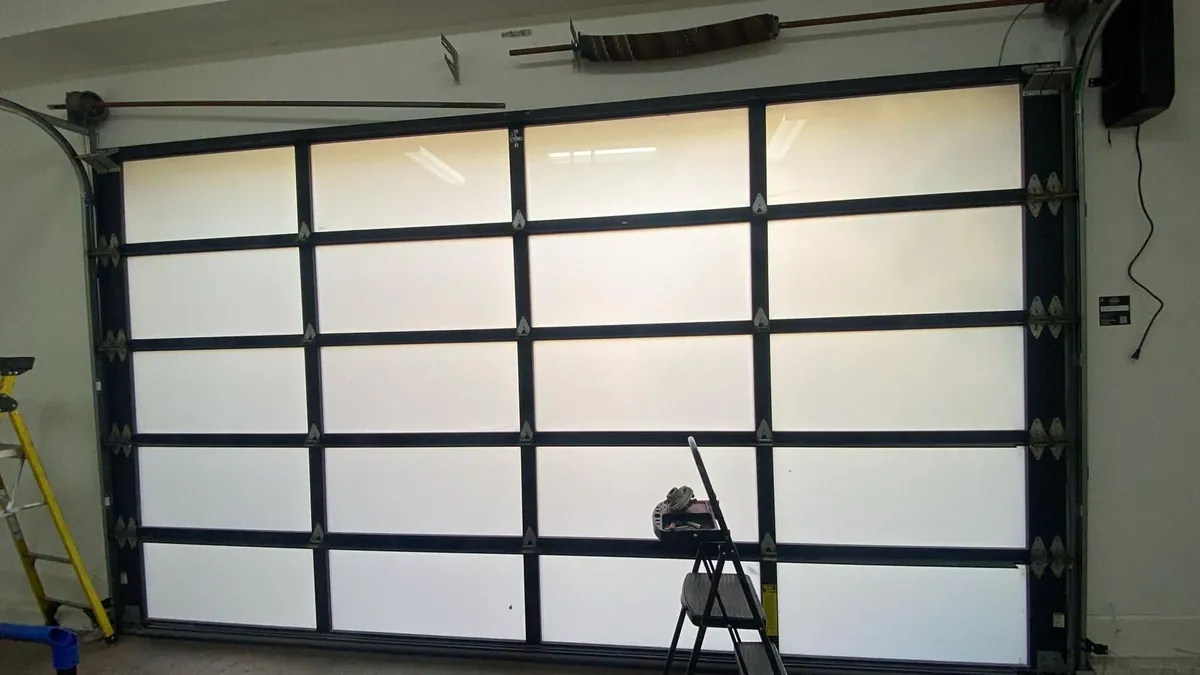
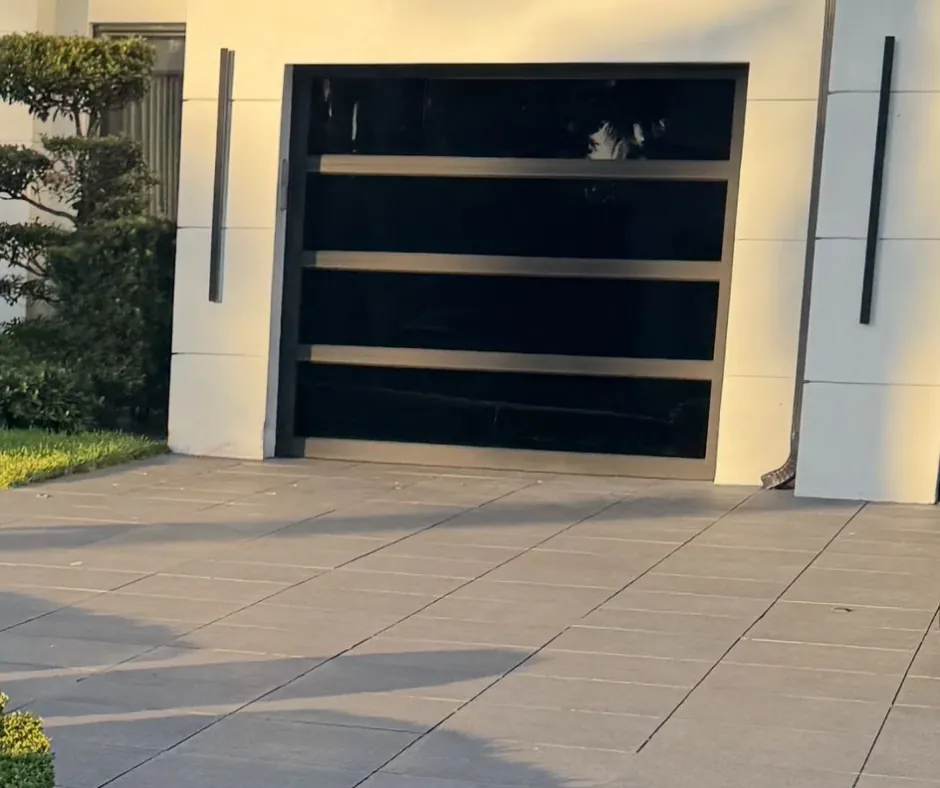
Doors with window sections, or full view aluminium and glass doors. See full view glass doors.
When it is time for a new door
Most garage doors are repaired many times before they are replaced. A new spring, cables, rollers or a section keeps a sound door going. Replacement starts to make sense when the door itself is the problem: bottom sections rusted through or rotted from years of standing water in a sunken bay, more than one panel cracked or split, hinges failing across the door, or a wooden door that has soaked up so much water that the springs a low ceiling allows can no longer balance it. A door that has needed repeated repairs in a short time is often telling you the same thing.
Sometimes the reason is not mechanical. An owner may want a door that looks more in keeping with the house, an insulated door for a garage under a home, or a quieter, lighter door that is easier on the opener. Whatever the reason, the first conversation is about the opening and what it can take. If you are not sure whether the old door can be saved, the garage door repair page for Beacon Hill explains what can usually be fixed.
Measuring a low, historic opening
A new door starts with careful measurements, and the local notes explain why that matters so much here. Openings on the hill are very low, and the garages behind them are small. Four measurements decide what can go in:
- The width and height of the opening. In old masonry these are taken at several points, because an opening that has settled over the years may be slightly wider or taller at one side.
- The headroom. The clear space between the top of the opening and the lowest obstruction above it, whether a joist, a pipe or a brick arch.
- The side room. The wall space beside the opening, which the vertical tracks and any wall-mounted opener need.
- The back room. The depth from the opening to the back wall, which the horizontal tracks need when the door is open.
Headroom is usually the tightest. It decides the track arrangement, where the springs can go and which opener fits. A door that would be straightforward in a modern garage can need a low-headroom track kit and springs mounted at the rear in one of these bays. Getting those choices right at the start is what makes a new door run smoothly for years.
Historic district expectations
The local notes say historic district expectations shape every job here, and that is especially true of a new door, because the door is the part of the garage the street sees. Owners on the hill tend to want a door that looks as though it belongs: panelled or carriage-style faces, proportions that suit the opening, and a colour that matches the trim of the house.
If you are changing the look of the door, check what approval the change may need before anything is ordered. Replacing a door like-for-like is often simpler than changing its style, material or colour. Bringing photos of the existing door and the facade to the conversation helps choose a door that keeps the look of the building. If you are keeping the look of the old door, that becomes the brief, and the new door is chosen to match it as closely as possible while being lighter, tighter and easier to run.
Materials and weight in a tight bay
The material of a new door affects how it looks, how long it lasts in a damp bay and how heavy it is, which in turn decides the springs and the opener.
Wooden doors have the most traditional look and suit many historic facades. They are heavy, they need painting or finishing, and in a garage below the sidewalk they can take on water over time unless they are well sealed, particularly along the bottom edge. Steel doors are lighter and more resistant to damp, and many are made with panelled or carriage-style faces that read well from the street. Aluminium doors, including full view glass doors, are lighter still and resist corrosion. Insulated cores add a little weight but make a door stiffer, quieter and better at keeping out cold, which matters most where the garage sits under living space.
Weight matters more in a small garage than in a large one, because the spring arrangement a low ceiling allows has less room to grow. A lighter door is easier to balance with extension springs or a low-headroom torsion setup, and it is kinder to an opener working in a cramped space.
A door that opens onto the sidewalk
Because there are no driveways, every garage door on the hill opens directly onto a public sidewalk. That shapes a few practical choices. The door should close firmly and evenly along its whole width, with no gap at one corner where an old, out-of-square opening meets a straight bottom section. The sections should be stiff enough not to flex when pushed from outside. If the door is to be opened by hand at times, a sturdy handle and lock that suit the style of the facade are worth choosing at the start rather than adding later. And the door’s travel should be smooth and predictable, because anyone standing on the sidewalk is only a step away from the opening.
Stiffness also matters for the life of the door. A thin, flexible door in a narrow opening tends to rack as it moves, rubbing the jambs and wearing the rollers. A well-built sectional door with sound hinges and struts runs straight even in tight, slightly irregular masonry.
Colour, finish and the face of the building
Many owners spend more time on the colour of a new door than on anything else, and on a historic street that makes sense. A door painted to match the window trim or the front door of the house tends to sit quietly in the facade; a contrasting colour draws attention to the garage. Factory finishes on steel doors are hard-wearing and come in a limited set of colours, while wooden doors can be painted or stained to almost anything but need repainting over time, particularly at the bottom edge where water and salt reach. Choosing a finish that will cope with a damp, sunken threshold is part of choosing new garage doors in Beacon Hill that still look right after several winters. Bringing a paint sample or a photo of the trim to the conversation helps.
Doors for a garage below the sidewalk
Many of the hill’s garages sit lower than the brick sidewalk, so rain and snowmelt run down toward the door. A new door for one of these bays should be chosen and fitted with that water in mind. A good bottom seal that meets an uneven floor, a bottom section made of a material that tolerates damp, and hardware that resists corrosion all help. The threshold itself matters too: if the floor slopes toward the door or water pools there, it is worth dealing with that alongside the new door, so the new bottom section does not suffer the same fate as the old one.
Cold is the other factor. A sunken garage stays cool, which can be useful, but if it sits under a room, an insulated door with good seals around the sides and top makes a noticeable difference to that room. When you ask about new garage doors in Beacon Hill, mention whether the bay sits below grade, so the door and its seals can be chosen for it.
What an installation involves
A new door is ordered once the measurements, style, material and colour are settled and you have agreed to them. On the day of the installation, the old door is taken down first. That starts with letting the tension out of the old springs safely, because a torsion spring holds dangerous tension even on a door that is about to be removed. The old door sections, tracks, springs and hardware are then taken out of the bay.
The new tracks are fixed in place and anchored into the masonry, with attention to whether the old brick is sound enough to hold them where they need to go. The new sections are stacked into the opening one at a time and joined with their hinges, the rollers are fitted into the tracks, and the springs and cables are installed and set for the new door’s weight. The door is then balanced by hand. If an opener is part of the job, it is fitted or reconnected, and its travel and force settings are set for the new door, with the safety reverse tested at the end.
With no driveway, the new door sections arrive and the old ones leave across the sidewalk, so the work is planned to keep the path clear for passers-by as far as possible.
Openers with a new door
A new door is a good moment to look at the opener too. An old opener may not suit a new door’s weight or track arrangement, or may lack working safety sensors. In a low bay, the choice of opener is shaped by the headroom: a wall-mounted unit beside the door, turning the spring shaft directly, needs no ceiling rail and often fits where nothing else will. If the existing opener is sound and suits the new door, it can be kept and re-set. The opener repair page for Beacon Hill covers the options, and LiftMaster openers are among those repaired and replaced.
Springs set up for the new door
Every new door needs springs matched to its weight, its height and the drums it uses. In a garage with plenty of room, that usually means a torsion spring on a shaft above the opening. In the low bays of the hill, it often means extension springs along the rails or a low-headroom torsion arrangement mounted toward the back. Whichever arrangement goes in, it is set so the door stays roughly where you leave it when lifted by hand. That balance is what lets the door run lightly for years. Spring work on an existing door is covered on the spring repair page for Beacon Hill.
Replacing a door or repairing it
The decision between repair and replacement should be an honest one. If a door is sound and the problem is a spring, a cable or a roller, repair is the answer. If the bottom has rotted or rusted through, several sections are damaged, or the door is too heavy for its low bay, a new door is usually the better use of money over time. During any repair visit, if replacement looks like the better answer, you are told so and why.
When a door has failed suddenly and the garage is left open to the street while a new door is being ordered, the old door can usually be made safe and secure in the meantime. The emergency repair page for Beacon Hill explains what to do if a door fails out of hours.
Looking after a new door
A new door runs best when it is looked after from the start. In a damp, below-grade bay, keep the threshold clear of leaves and snow, and keep the bottom seal in good condition. Check the balance once in a while by disconnecting the opener and lifting the door to waist height: it should stay put. Listen for new noises, which often point to a roller or hinge that needs attention. A wooden door needs its finish kept up, especially on the bottom section. Simple care like this keeps new garage doors in Beacon Hill working properly in the conditions they face.
The wider new garage doors service page has more about doors supplied and installed across Greater Boston, and the hill’s neighbourhood page lists every service there.
Starting the conversation
A good first call covers the size of the opening, how much room there is above it, whether the garage sits below the sidewalk, what the current door is made of and what you would like the new one to look like. Photos of the opening from outside and inside help when the door is chosen. If the old door has a fault that is making the garage hard to use in the meantime, say so as well, so it can be kept working or made secure until the new door is fitted. To ask about new garage doors in Beacon Hill, MA, call us or book online.
Questions from Beacon Hill
My garage opening is very low. Can a new sectional door still fit?
Usually. Low openings use track sets with tight curves and springs mounted along the rails or toward the back of the garage. The door, tracks and springs are chosen to suit the headroom you actually have.
Can a new door match the look of my old wooden door?
In many cases a new door can be chosen with a similar panel pattern, proportions and colour. Bringing photos of the old door and the facade helps find the closest match.
Will a new door work with my existing opener?
Sometimes. If the opener is sound, suits the new door’s weight and has working safety sensors, it can be re-set for the new door. If not, a replacement chosen for the bay is suggested.
My garage is below the sidewalk and floods at the door. What should I consider?
A bottom section that tolerates damp, a good bottom seal that meets the floor, corrosion-resistant hardware and, where possible, dealing with the water at the threshold so it does not pool against the new door.
Do I need approval to change my garage door on a historic street?
It depends on the change. Replacing a door like-for-like is often simpler than changing its style, material or colour. Check what approval applies before ordering a door that looks different from the old one.