
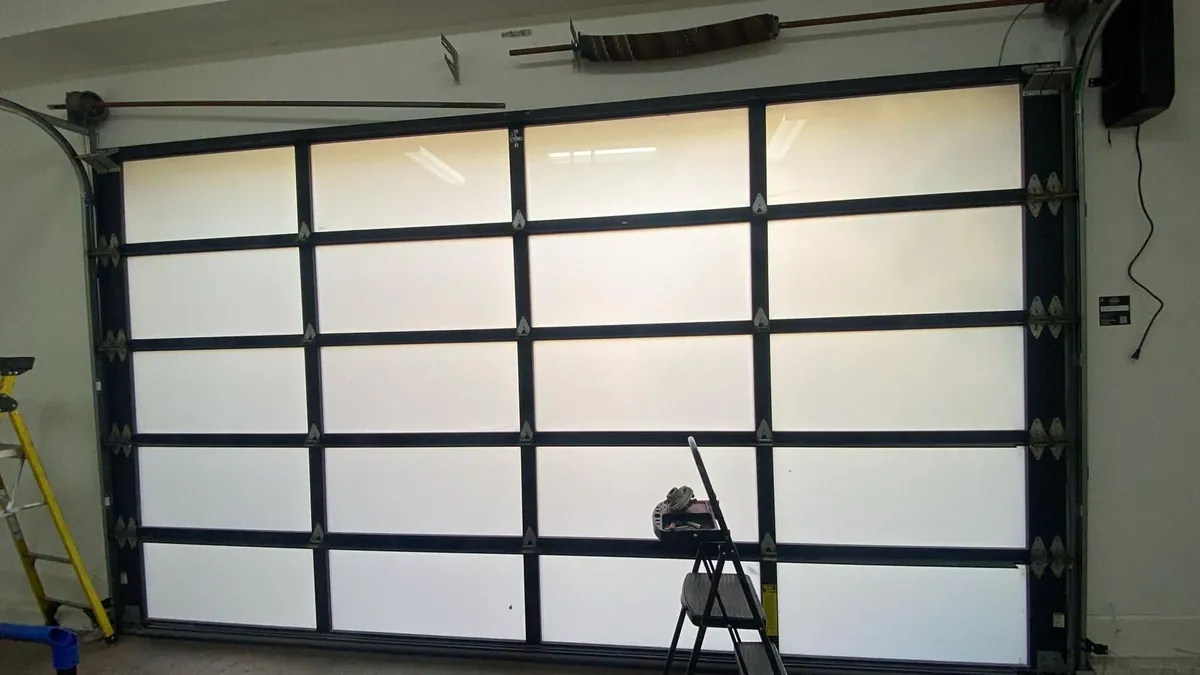
Replacing the original door on an older detached garage
Plenty of the garages standing behind Brighton’s older multi-family houses, the ones built in the nineteen-twenties near Oak Square and along the side streets off Washington Street, still hang the door they started life with: one single-car timber door, repainted again and again, heavy with damp and worn ragged at the base. Sooner or later a door like that brings more repairs and aggravation than it is worth. Our job is fitting new garage doors in Brighton to these older openings, and the old door is taken down and replaced in the same job.
A new door is more than a new face for the garage. It arrives with its own springs, cables, rollers and track, all sized to its weight, and it can be paired with an opener that suits it. On an old detached garage it is also the moment to check the opening and the framing everything hangs from.
Three signs suggest an old door has earned retirement rather than another repair:
- Its lowest section is soft, split or rotted, so screws and brackets will not stay put.
- It has become so heavy that even fresh springs struggle with it.
- Repairs keep coming, a different fault every season.
What goes into a replacement
Taking down the old door
Old springs are unwound first, while the door is clamped, and only then do the door, its cables and its track come down.
Measuring the opening
Width, height, clearance overhead, room on each side and the garage’s depth are all measured, because old openings are rarely square.
Jambs and header
Soft or rotted jambs and headers are flagged before anything new goes up, because fresh hardware needs sound timber to bite into.
The new door and its hardware
A door supplied to suit the opening, with springs, cables, rollers and track matched to what it weighs.
Opener and remotes
The current opener gets reattached and its settings redone to suit, unless replacing it makes more sense. More under opener repair and replacement.
Why so many original doors survive
Timber garage doors on these older lots have hung on because they are simple, and because a single-car door on a garage out at the back of the lot sees less use than the door of an attached garage that doubles as the family’s front entrance. Some are sectional doors with wooden panels; some are one-piece slabs that tilt up and out on pivoting arms; a few are older again. They have been patched, repainted and adjusted for generations, and many still run.
Age catches up with them in familiar ways. Water creeps up into the bottom rail and lower panels, which soften and finally rot. Paint traps moisture as often as it keeps it out. The door gains weight, so the springs balancing it need replacing more often and with stronger springs each time. Hinges and brackets work loose in softened timber. At some point the honest answer is that a new door will serve better than one more round of fixes.
Choosing a door for a single-car opening
The openings on these garages are narrower than a modern two-car bay, and the garages behind them are often shallow, with modest clearance under old rafters. That narrows the choice in helpful ways: the door has to suit the opening as it stands, the track has to fit the space above and beside it, and the springs have to suit the room available over the header.
Points worth weighing before you choose:
- Material. Steel is lighter than solid timber, asks for less upkeep and copes well with the soggy bottom edge that ruins wooden doors. Many steel doors come in wood-look finishes where keeping the original look matters. Real timber is still an option, as long as you are ready for regular care.
- Insulation. A detached garage is unheated, so insulation matters less for warmth than for stiffness and quiet. An insulated door is more rigid, which helps a door that is opened and shut every day.
- Glazing. A band of glass in the top section brings daylight into an outbuilding that may have no window of its own. Doors that are almost all glass are a separate product, covered on our full view glass garage doors page.
- Style. Many owners want a door that sits well with the house and the old garage rather than looking out of place. Carriage-house panel designs are a popular choice on outbuildings like these.
Our main new garage doors page describes the range of doors in more depth.
Fitting a new door to an older opening
Old openings are seldom perfectly square. The walls of a detached garage settle, jambs lean, and the slab often falls toward the driveway to shed water. New garage doors in Brighton are measured with all of that in mind: width measured high and low, height taken at each jamb, the clear height between the header and the lowest rafter, side room on each side for the vertical track, and the garage’s depth for the horizontal track and any opener rail.
Overhead clearance decides the spring and track layout. A standard torsion shaft needs room over the door; where rafters sit low, a low-headroom track kit, or springs mounted another way, may be the answer. Side room decides how the vertical track is fixed. The slope of the slab decides how the bottom seal is shaped so rain and leaves stay out.
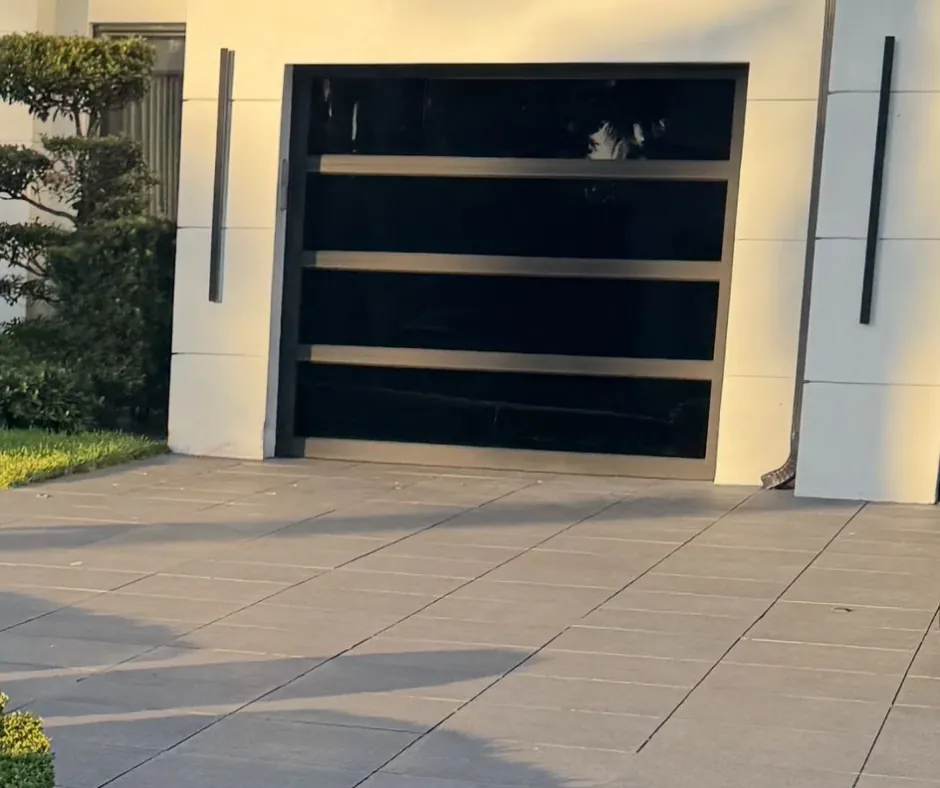
Framing matters as much as the door. A new door hung on rotted jambs or a soft header will not stay square, and its hardware will work loose. If the framing needs attention, you will hear about it before the door is ordered, so it can be put right first.
How installation works
Every installation of new garage doors in Brighton follows the same sequence.
- The old door is lowered and clamped, its springs are unwound safely, and it comes down section by section along with its track and hardware.
- The opening is checked again, and any trouble with the jambs or header is dealt with.
- New track is fixed to the framing, plumb and level.
- The new door is built up in the opening one section at a time, with hinges, rollers and bottom seal.
- Springs and cables go on, and the door is balanced until it rests midway without a hand on it.
- The opener is reattached or a new one fitted, and its limits, force setting and auto-reverse are adjusted and proven.
Getting a new door up a long shared driveway
Garages on these lots sit at the far end of long, often narrow drives shared with the neighbours. A new door arrives in sections, together with its track and springs, and all of it has to come up the drive and into the garage. That is usually simple, but it helps to know ahead of time whether the drive is shared, where the van can stand without blocking other households, and whether the car can be kept out of the garage on the day.
Because the garage stands on its own, power for an opener and any lighting comes from wherever someone ran it years ago. Where the order includes an opener, its outlet and circuit are checked; where the wiring needs work, an electrician should look at it first.
Timber or steel on a wet bottom edge
The single biggest enemy of the original doors here is water at the base. Look at almost any old timber door on these lots and the story is written along its lowest panel: paint lifting in flakes, the grain opened up and grey, a dark tide line where melt has sat against it, and sometimes a corner soft enough to push a thumbnail into. Where a garage sits down a drive, rain sheets off the asphalt toward the door, snow banks up against it through the winter, and the bottom rail of a timber door sits in that wet for months. That is where rot starts, and where the bracket holding the lift cable eventually loses its grip.
A new door changes that picture. A steel bottom section does not soak up water, and a new bottom seal, shaped to the slope of the slab, keeps most of the water and leaves outside. If a timber door is chosen to keep the look of the original, sealing all its edges before it goes up, and keeping the bottom rail painted or sealed afterwards, makes a big difference to how long it lasts. Either way, the threshold itself is worth a look: a cracked or sunken slab at the opening lets water pool under the door, and a new door will only seal as well as the floor it closes onto.
One-piece doors replaced with sectional ones
Some of the original doors on these garages are single tilt-up slabs on pivoting arms. They swing out at the bottom as they open, which means anything parked close to the garage has to be moved first, and they need clear space in front of the opening that a narrow shared drive does not always have. Replacing a one-piece door with a sectional door that rolls straight up and back into the garage avoids that, and is one of the most common reasons owners here choose new garage doors in Brighton.
The change needs a little planning. A sectional door’s horizontal tracks run back into the garage along the ceiling, so the depth of the garage and any storage hung from the rafters matters. The jambs often need trimming or packing, because a tilt-up door’s hardware was fixed differently, and the old pivot brackets have to come off cleanly. All of that is measured and discussed before the new door is ordered. The finished result also changes how the drive can be used: with no slab swinging out, a car can pull up close to the opening, and the door can be raised with snow or a bin standing just in front of it.
Condensation and cold in an unheated outbuilding
Out in a garage with no heat, winter temperatures match the outdoors and the building warms only slowly in spring, a swing that brings condensation. On a bare single-skin steel door, moisture can bead on the inside face on a damp morning and drip onto whatever is stored below. An insulated door, with foam sandwiched inside its panels, keeps the inner face closer to the air temperature and so collects less water. It also stiffens the door, deadens the boom of a steel panel in the wind, and keeps the door quieter as it travels.
Weather seals finish the job. A new door comes with a fresh bottom seal, and the stops along the jambs and header can be renewed at the same time so the door closes against something soft all the way round. On an old garage where daylight shows around the existing door, that alone makes the building drier and keeps leaves and snow from blowing in under the edges.
Planning the day
A replacement is a planned job, which means it can be fitted around the people who use the garage and the drive. Before the day, it helps to clear a working space inside the opening, move anything hung from the rafters along the path of the new track, and agree with the neighbours on a shared drive where the van will stand. The car should be out of the garage before work starts, as the old door will be down for part of the day.
When the job is done, you are shown how the new door works: how to release it from the opener by hand, where the lock or lock button is, and what to look out for over the first few weeks as the springs and seals settle. Anyone else who uses the garage, such as other units on the same lot, can have their remotes programmed before the van leaves.
Care once it is up
Very little upkeep is needed, though some habits pay off. Nothing should lean on the tracks, and the bottom seal should be kept clear of ice and packed snow in winter, so the opener never has to tear it loose. A light lubricant on the rollers, hinges and springs once or twice a year keeps everything moving quietly; the tracks themselves should be kept clean rather than greased. If the door ever starts to feel heavy, drifts down when released from the opener, or runs unevenly, have it looked at before a spring or cable fails. Owners who choose new garage doors in Brighton in timber should also plan on repainting or resealing the bottom rail and edges as soon as the finish starts to wear.
Replace the door, or keep repairing it
Replacement is not always the answer. A timber door with one damaged section, sound framing and springs that suit it can often keep going after a repair; that kind of work is covered on garage door repair for Brighton, and a door that has simply snapped a spring is dealt with on Brighton spring repair.
Replacement makes sense when a door is rotted in more than one place, has grown too heavy for any sensible spring, has hardware that will not stay fastened, or has needed a string of repairs in a short time. You will hear plainly which way your door leans. If an old door has failed suddenly and is stuck, urgent repair for Brighton explains how it is made safe first, and opener service in Brighton covers an opener that should be replaced along with the door.
Taking the next step
A new door is usually a planned job rather than an urgent one, but our line is staffed day and night, every day, so you can ask about it whenever suits you. It helps to mention whether the garage is detached, roughly how old the door is, whether there is an opener, and whether the driveway is shared. Our Brighton neighbourhood page lists every local service. To talk about a replacement, call us or book online with those details to hand.
Questions from Brighton
Will a new door fit my old opening without rebuilding it?
Usually, yes. Doors are supplied to suit the opening, and the track and springs are chosen for the clearance overhead and the room at the sides. Where jambs or the header have rotted, they need fixing before a new door goes up.
Can I keep my current opener with a new door?
In many cases. Provided it runs well and has the strength for the new door’s weight, it stays. Its limits and force setting are reset for the new door. An older opener without working photo eyes is usually best replaced at the same time.
Steel or timber for a detached garage?
Steel is lighter, needs less upkeep and copes better with a wet bottom edge. Timber can still be chosen for its look, as long as it gets regular care. A wood-look finish on steel is a common middle path.
How is the old door taken down?
Carefully, and in a set order: the door is clamped, its springs are unwound so they hold no tension, and only then are the door, its cables and its track taken apart and removed from the opening.
My old door tilts up in one piece. Can a sectional door replace it?
In most garages, yes. A sectional door needs room overhead and along the ceiling for its track and springs, so the opening and the space inside are measured first. Where clearance is very low, a low-headroom track is used.