
Springs on doors that never get a day off
The street-level doors of Chinatown work harder than almost any garage door in the city. Most are rolling steel shutters in the lanes branching from Washington Street, raised for every delivery and lowered again when the stock is in, and the spring is the part that pays for every one of those cycles. Garage door spring repair Chinatown MA calls therefore tend to come from doors that have simply worn their springs out, often at the moment a truck is waiting at the curb.
Three signs, all visible without touching anything, suggest a spring problem:
- The door is much heavier to raise than it used to be, or the operator labours on the way up.
- When stopped partway, the curtain or door drifts back down instead of staying put.
- A loud bang came from above the opening, and now the door barely leaves the ground.
Springs and spring problems covered
Roll-up barrel springs
Torsion springs coiled inside the barrel of a rolling steel door, wound as the curtain comes down and unwinding as it rises.
Sectional torsion springs
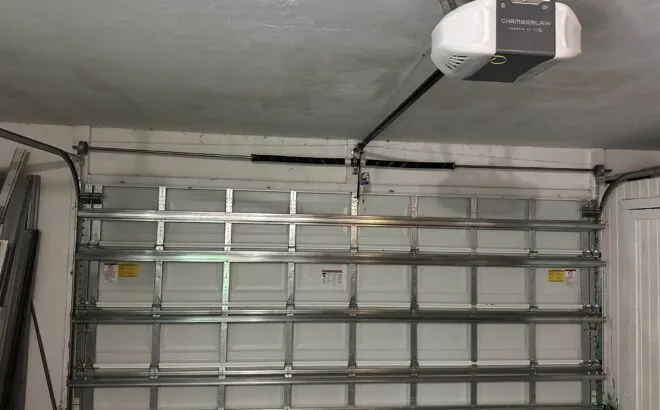
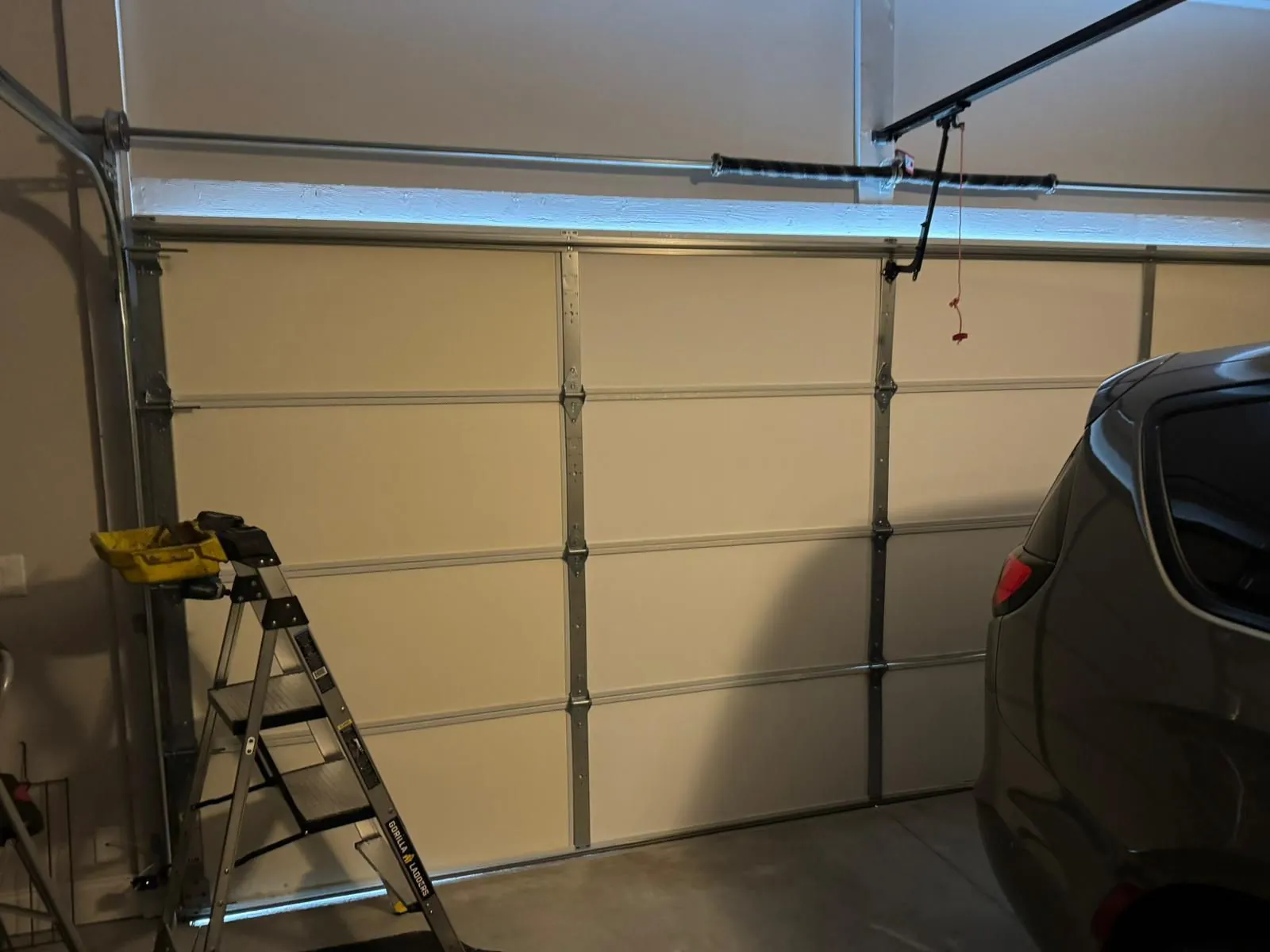
Springs on the shaft across the top of a sectional door, turning the cable drums at each end.
Extension springs
Long springs that stretch along the horizontal tracks of lighter sectional doors and pull through pulleys and cables.
Broken springs
A snapped spring, usually with a clear gap between coils, that leaves the door too heavy for anyone or any operator to lift.
Springs that have lost tension
Springs that have not broken but no longer balance the door, so it is heavy, runs away downward, or will not stay open.
What a spring actually does
A door’s spring is what makes it light enough to lift. On a rolling door, the curtain of steel slats can weigh far more than a person could raise comfortably; the torsion spring inside the barrel stores energy as the curtain unrolls and gives it back as the curtain is raised, so that a balanced door moves with modest effort from a hand chain, a crank or an operator. On a sectional door the principle is the same, but its spring is mounted on a cross shaft over the doorway and turns drums that wind lift cables connected to the bottom corners.
When the spring is right, the door is balanced: it neither leaps upward nor drops when it is stopped halfway. When the spring weakens, the balance shifts, and every other part of the door starts to carry load it was never meant to. The operator strains. The drive wears. The bottom bar hits the ground harder. A door that runs out of balance for long enough rarely loses only its spring.
Why commercial roll-ups wear their springs out
Spring steel tires with use: each spring is wound for a finite run of lifts, and once that run is spent it snaps. A door on a family garage might open and close a handful of times a day. A loading entrance on a busy side street can do that in an hour, with the shutter going up for each drop-off, down to lock the space, and up again when the next vehicle arrives. The spring on that door ages much faster, and garage door spring repair in Chinatown is often a question of when, not whether.
Other things shorten a spring’s life:
- Cold. Steel springs become more brittle in hard frost, so breaks bunch up on the first bitter mornings of winter. Street-level doors that face the weather head-on feel this more than a door tucked inside a heated building.
- An unbalanced door. If a spring was set with too little or too much tension, it works harder on every cycle.
- Dirt and corrosion. Grit and road salt find their way into the hood and onto the spring coils, adding friction and rust that weaken the steel.
- A door that is forced. Pulling down hard on a curtain that is sticking, or running an operator against a binding door, loads the spring unevenly.
The danger in a torsion spring
Plain words are needed here. A torsion spring holds dangerous tension, permanently, including while the door rests shut and nobody is near it. On a rolling door, the spring inside the barrel is under load whenever the curtain is down. On a sectional door, the spring on the shaft is wound tight whenever the door is shut. If a set screw is loosened, a bracket is removed or a winding fitting is turned without the right bars and the right method, that energy can be released in a fraction of a second, spinning metal parts with enough force to cause serious injury.
Treat the torsion spring as a job for a trained technician, never a DIY repair. The same goes for the brackets at the bottom of a sectional door where the cables attach, or the tension wheel and end plates of a roll-up barrel. If you suspect a broken spring, leave the door where it is, keep people out from under it and call.
Extension springs bring a different hazard. If one parts and there is no containment cable threaded through its coils, the loose half can lash out across the bay with real force, so they are best left alone as well.
What a spring visit involves
Garage door spring repair Chinatown MA visits follow a set order, because the spring is never the only thing worth checking once it has failed.
- Securing the door. Power to the operator is cut and the curtain or door is clamped or blocked in place before anyone touches the spring. On a street-level door, passers-by are steered away from the work area.
- Confirming the cause. The spring is inspected for a break or for lost tension, and the rest of the door is looked at to see why it failed: a binding curtain, worn guides, a damaged drum or cable, or a door that has been out of balance.
- Explaining the options. You hear what has broken, and whether anything else needs attention, before work begins.
- Releasing and replacing. Remaining tension is released under control, the failed spring is removed, and a replacement sized for the weight of that door is fitted. On a sectional door fitted with twin springs, we generally swap both together, so the new one is not paired with a tired partner.
- Setting the tension. The new spring is wound to balance the door. On a roll-up, that is adjusted at the barrel; on a sectional door, at the winding cones on the shaft.
- Testing. Balance is felt by hand first, then the operator takes over and its travel limits and reversing behaviour are tuned to suit the lighter-feeling door.
Working around the loading door’s day
In a dense block where loading access and delivery windows govern the day, a broken spring often means goods that cannot come in, or a space that cannot be shut. Two situations come up again and again:
The door is stuck closed. With a broken spring, a roll-up curtain becomes a dead weight. Forcing it up with the operator or with the hand chain can strip a drive or bend the curtain. It is better to reroute a delivery through another entrance, if one exists, and have the spring dealt with first.
The door is stuck open. If a spring fails with the door up, the curtain may come down hard the moment anything disturbs it. Nobody should walk or stand under it, and the area in front of the opening needs to be kept clear. Making the opening safe and secure is the first priority.
On the call, it helps to say which side street the door is on, what time goods usually turn up and whether a van can pull in close by. On narrow side streets that information makes a real difference to how the visit is planned.
Roll-up springs compared with sectional springs
The two door types share the same principle but very different hardware, and that changes the work.
On a rolling door, the spring lives inside the barrel, hidden by the hood. Getting to it means opening the hood and working at the end of the barrel, often from a ladder over a sidewalk, with the curtain secured. Tension is set by turning the barrel’s tension wheel or fitting, and the curtain’s weight changes as it coils, so the balance is checked through the full travel.
On a sectional door, the torsion spring is in plain view on a shaft above the opening, with cable drums at each end. Many sectional doors carry a pair of springs, one each side of a centre bracket. The cables must be checked as part of any spring job, because a spring failure often shocks the cables and drums, and a slipped cable will leave the door hanging crooked once the new spring is wound.
Some lighter sectional doors use extension springs along the tracks. These are replaced in pairs, with safety cables run through them if they are missing.
Spring life on a door that cycles all day
A loading door that rises and falls for every drop-off spends its springs far faster than a residential door, so the question for a building owner is less whether the spring will go than whether it goes on your terms. A few practical points follow from that.
Keep a rough note of when the springs were last replaced and how the door has behaved since. A shutter that now takes a harder pull on the hand chain, or one whose operator now groans on the way up, is telling you the springs have lost some of their strength. Booking a replacement at that stage, in a quiet part of the week, means the work happens when the opening can spare it, not on the morning the shutter will not lift with a van double-parked outside.
On some rolling doors the spring is sized with extra capacity for heavy use, and on a busy entrance that can be worth asking about when the old spring is replaced. A heavier-duty spring has to be matched to the curtain’s weight, though, because a spring that is too strong leaves the door wanting to fly upward and puts as much strain on the operator as a weak one.
Hand chains, cranks and a heavy curtain
Many street-level shutters on these side streets can be worked by a hand chain or a crank as well as by an operator. That manual drive is useful in a power cut, but it is also a good early warning. If the chain used to raise the curtain with a steady pull and now needs real effort, the springs inside the barrel are losing tension.
When a spring has actually broken, the hand chain becomes dangerous to use. Hauling on it puts the full weight of the curtain through the chain wheel and gearing, which can strip teeth, jump the chain off its sprocket, or let the curtain run back down once you let go. If the chain suddenly feels far heavier than usual, stop, leave the curtain where it is and call.
Exposure, grit and the spring housing
A street-level door sits close to everything the road throws at it. Slush and salt spray up from the curb, grit blows along the side streets, and water runs down the face of the building. Much of it finds its way into the hood above a rolling door and onto the barrel and spring. On a sectional door inside a bay, the spring is better protected, but road salt carried in on deliveries still ends up in the air and on the steel.
Corrosion pits the surface of the spring wire, and each pit becomes a point where a crack can start. That is one reason springs on exposed doors tend to fail sooner. When a spring is replaced, the hood, barrel ends and brackets are checked for rust at the same time, and the condition of the curtain’s bottom slats and bottom bar is noted, since they suffer from the same exposure.
Signs a spring is nearing the end
Springs give warnings, and noticing them early means the replacement can be booked around the delivery schedule instead of forced on you at the worst moment:
- The operator sounds strained, or the door slows on the way up.
- The door does not stay put when stopped partway.
- On a sectional door, you can see gaps opening between the spring’s coils, or one spring looks stretched compared with its partner.
- On a roll-up, the curtain feels noticeably heavier by hand than it used to.
- The door has started to come down harder against the ground.
New spring, or a new door altogether
One snapped spring seldom justifies scrapping the whole door. Springs are consumable by design, and a healthy curtain or panel set carries on happily once fresh ones are fitted. A full replacement starts to look sensible when the failed spring belongs to a door that is also rusted through, badly dented across several slats or panels, binding in damaged guides or tracks, or simply too heavy for its opening after one patch repair too many. You will be told which applies. Replacing a tired door is covered on our new doors for Chinatown page.
Springs and the rest of the door
A spring that fails often uncovers other problems. An operator that has been hauling an unbalanced door may have a worn drive or tired gears, which is the subject of our Chinatown opener work. Curtains, guides, cables and panels sit within general door repairs in the neighbourhood. And for a spring that lets go late at night, read about urgent call-outs in Chinatown.
Getting a spring replaced
Let us know the style of door, rolling or sectional, which position it is stuck in, whether there was a crack or bang from overhead, and whether the space can be locked as things stand. To arrange garage door spring repair in Chinatown, please call us or book online. Our wider garage door spring repair page deals with springs throughout Greater Boston, while the Chinatown overview gathers every local service in one place.
Questions from Chinatown
Spring or motor: which one has failed?
Isolate the operator, then see whether the door can be moved by hand or with its hand chain. If it is very heavy, will not move, or drops when let go, the spring is the likely cause. If the door moves easily and balanced by hand but not with the operator, the operator is more likely at fault.
Can I keep using the door with one spring broken?
No. On a sectional door with a pair of springs, the remaining one is carrying load it was never meant to and the door can come down unevenly. On a roll-up, a broken spring leaves the curtain as a dead weight. Leave the door where it is.
Do both springs need replacing if only one broke?
On a sectional door with paired springs, replacing both is usually the sensible choice, because they have done the same work and the second is likely close to failing. That keeps the door balanced evenly across the shaft.
Why do so many springs snap when the weather turns cold?
Cold makes steel more brittle, and a spring with few lifts left in it is likelier to give way on a bitter morning. Street-level doors that face the weather feel this most.
Is garage door spring repair in Chinatown mostly on commercial doors?
Mostly, yes, because there are so few private garages here. Barrel springs on rolling shutters and shaft springs on sectional bay doors are the bulk of it, and a residential door’s springs are handled the same way.