
When the button stops opening the door
In the tight blocks either side of Washington Street, hardly any door is lifted by hand. Most are commercial shutters and the occasional sectional bay door at the foot of mixed-use buildings, driven by an operator and called up and down from a wall station, a remote or both, often many times between the first and last delivery of the day. Garage door opener repair Chinatown MA work covers that whole chain of control: the operator itself, the remotes and wall buttons that tell it what to do, and the safety sensors that stop it closing on someone.
Three observations help narrow down an operator fault:
- Whether anything happens at all when the button is pressed: a click, a hum, a light, or nothing.
- Whether the door runs in one direction but not the other.
- Whether the remote and the wall station both fail, or only one of them.
Opener problems covered
Operators that will not run
No sound, no movement, no lights. Power, the control board, a blown fuse or a damaged wall station.
Operators that hum or strain
The motor is trying but the door is not moving, which can be the operator’s drive or a spring that has failed.
Remotes
Remotes that have stopped working, lost their programming, or only work right next to the door.
Wall stations and buttons
Open, close and stop buttons that are cracked, stuck, wired loose or knocked off the wall.
Safety sensors
Photo eyes across the opening that are dirty, blocked or out of line, leaving the door refusing to close.
Replacement openers
New operators installed where the old one is worn out or wrong for the door, LiftMaster among them, for repair or replacement.
How a door operator differs from a home opener
A home garage opener is usually a motor unit hanging from the ceiling, pulling a trolley along a rail attached to the top of the door. That type does turn up on some sectional doors here. But the more common arrangement on the street-level doors of Chinatown is different: the operator mounts beside the barrel of a rolling door, or beside the shaft of a sectional door, and turns the barrel or shaft directly through a chain, a gear or a drive. There is no rail running back into the room, which suits a storeroom or loading area where ceiling space is taken up by ducts, pipes or the floor above.
Many of these operators also carry a hand chain or a crank for manual operation, so the door can be raised and lowered during a power cut or an operator fault. Knowing that the chain is there, and how to engage it, is useful for anyone who runs the door.
Whatever the layout, the operator is not what lifts the weight. The springs balance the door; the operator just nudges that balanced weight along and halts it at the top and bottom limits. So a sick spring and a sick operator frequently turn up on the same call.
Common faults and what they usually mean
Nothing happens at all. Check for power at the outlet or the disconnect, a tripped breaker, and whether the wall station has been damaged. If everything has power and the operator still does nothing, the control board, a fuse inside the operator or the wiring to the wall station is the likely cause.
A hum, and no movement. Current is reaching the motor, yet nothing is being passed through to the barrel or shaft. That can mean a failed gear or drive inside the operator, a slipped or broken chain, or a door that is far too heavy because a spring has broken. The spring is checked before the operator is condemned.
The door goes up but will not come down. Most often the safety sensors. A sensor knocked out of line by crates, a lens covered in grime, or something sitting in the beam will stop the door closing. A fault in the limit settings or a reversing edge can do the same.
The door reverses just before the ground. The operator thinks it has hit something. That can be a sensor, a bottom bar that is bent and meets the ground too early, a limit that needs resetting, or a curtain that is binding in its guides near the bottom.
The remote works, the wall station does not, or the other way round. A fault in the control that has stopped, not the operator itself. A damaged wall station or a loose wire on one side; a flat battery or lost programming on the other.
The door stops partway. The operator’s force setting may be tripping because the door is binding, or the limit settings may have drifted.
Remotes in a dense block
Remote controls work by radio, and a block of tall mixed-use buildings packed tight together is a busy radio environment. Other transmitters nearby, metal in the building structure and the distance from the curb to the operator’s receiver can all shorten a remote’s working range. A remote that only works a few steps from the door may simply need a new battery, but it may also point to an aerial that has been damaged or tucked away behind the hood, or a receiver that needs attention.
Remotes can also lose their programming, and an old remote may need replacing outright if its buttons or casing are worn. For doors that several people operate, it is worth knowing how many remotes are programmed into the operator, because a lost remote that still works is a security question as well as a convenience.
Safety sensors and the sidewalk
On these streets, a door often comes down within a pace of a public sidewalk. That makes the safety system more than a box to tick. The photo eyes on each side of the opening watch for anything in the doorway, and many commercial doors also carry a sensing edge along the bottom bar that reverses the door when it touches something.
Bypassing a sensor to get a door closed is tempting when a delivery is waiting, but it removes the one thing that stops a closing door striking a person, a cart or a vehicle. A photo eye shoved askew by a stack of crates, or one hanging from a cracked bracket, is a simple repair, and it is far better than a door with no protection at all.
What a visit involves
Garage door opener repair Chinatown MA visits look at the door as well as the operator, because an operator is only as healthy as the door it drives.
- Isolating the operator and checking the door by hand. The door is run manually, or with its hand chain, to check that it is balanced and travels smoothly. A heavy door or a binding curtain is a door problem first.
- Testing the controls. The wall station, any key switches and the remotes are tested one at a time.
- Checking the sensors and edge. Alignment, lenses, wiring and the reversing edge are all tested.
- Testing the operator. Power, the control board, the drive, the chain or gear, and the limit and force settings are checked.
- Explaining the fault and the choices. You hear whether the operator can be repaired sensibly or whether replacement makes more sense.
- Repair, set up and test. With the work done, the open and close limits and the force threshold are dialled in, every remote is paired, and the reversing function is proved with an obstruction in the doorway.
When the operator fails at the wrong moment
Loading access and delivery windows run much of the day in these blocks, and an operator that fails when a truck is at the curb, or when the space needs locking for the night, causes real disruption. If the door itself is sound and balanced, most operators can be disengaged and the door run by its hand chain or by hand until the repair is done. Where the curtain refuses to budge manually, or drags badly, leave it alone: a spring is the likely cause, and our Chinatown spring page sets out why springs are no job for an amateur.
When you book, mention when deliveries usually arrive and whether the door can still be run manually. If the operator can be repaired outside the busiest part of the day, it often can be planned that way.
Repair the operator or replace it
Many operator faults are repairable: a wall station, a sensor pair, a remote, a limit adjustment, a fuse, a chain. Replacement starts to make sense when:
- The motor itself has burnt out or the gearing is worn through.
- Replacement parts for that operator are no longer practical to get.
- The operator is underpowered for the door it drives, perhaps because the door was replaced and the operator was not.
- The control board has failed more than once.
- The operator has no working safety sensors or reversing edge and cannot be made to support them.
A replacement operator is matched to the door’s type, size and weight, and to how it is mounted: beside the barrel, beside the shaft or overhead. LiftMaster is one of the makes we fit as a replacement, as well as repair. You will be told which way the decision falls on your door, and why.
Power cuts and the hand chain
A street-level operator depends on mains power, and when the supply drops, the door stays wherever it was. Most rolling door operators have a way to switch to manual drive, often a chain hoist with a small pull cord or lever that engages it, and a crank on some older doors. Everyone who opens the building should know where it is and how it works, because a power cut at closing time otherwise leaves the curtain up and the space exposed.
Manual operation is meant for a balanced door. If the curtain moves steadily with the chain, it is safe to lower it and lock it. If it fights you, jerks, or tries to run back up or down on its own, stop and leave it: something in the spring or the drive is wrong, and forcing it can make the damage worse. When power comes back, remember to re-engage the operator before pressing the wall button, or the motor may run without moving the door.
Wall stations, key switches and who can open the door
On a loading entrance used by several people, control of the door matters. Many street-level doors are worked from a wall station inside the building with separate open, close and stop buttons, and some also have a key switch outside so the door can be raised from the sidewalk. Each of those controls is wired back to the operator, and each can fail on its own.
Wall stations take knocks from carts and boxes and can crack, stick or work loose. A stop button that has jammed in will stop the door responding to anything else. Outside key switches face the weather and can corrode. Replacing a damaged station or switch is usually straightforward, and it is a good moment to think about where the controls sit: a station placed where the person pressing it can see the whole doorway is safer than one tucked behind a rack.
If a remote has gone missing, the operator’s memory can be cleared and the remaining remotes paired again, so the lost one no longer opens the door.
Settings that drift
An operator knows where to halt, fully up and fully down, from its limit settings, and it decides whether it has met an obstruction by its force setting. Both can drift over time, and both are affected by changes in the door. A new bottom seal that is thicker than the old one, a curtain that has stretched slightly, or springs that have lost some tension can all leave the limits slightly wrong.
The signs are a door that stops short of the ground, leaving a gap at the bottom; a door that drives into the ground and then reverses; or a door that stops partway and goes back up for no visible reason. Resetting the limits and force is a routine part of any opener visit, and it should always be followed by a test of the safety reverse, never by turning the force up until the door stops complaining.
Openers on sectional doors
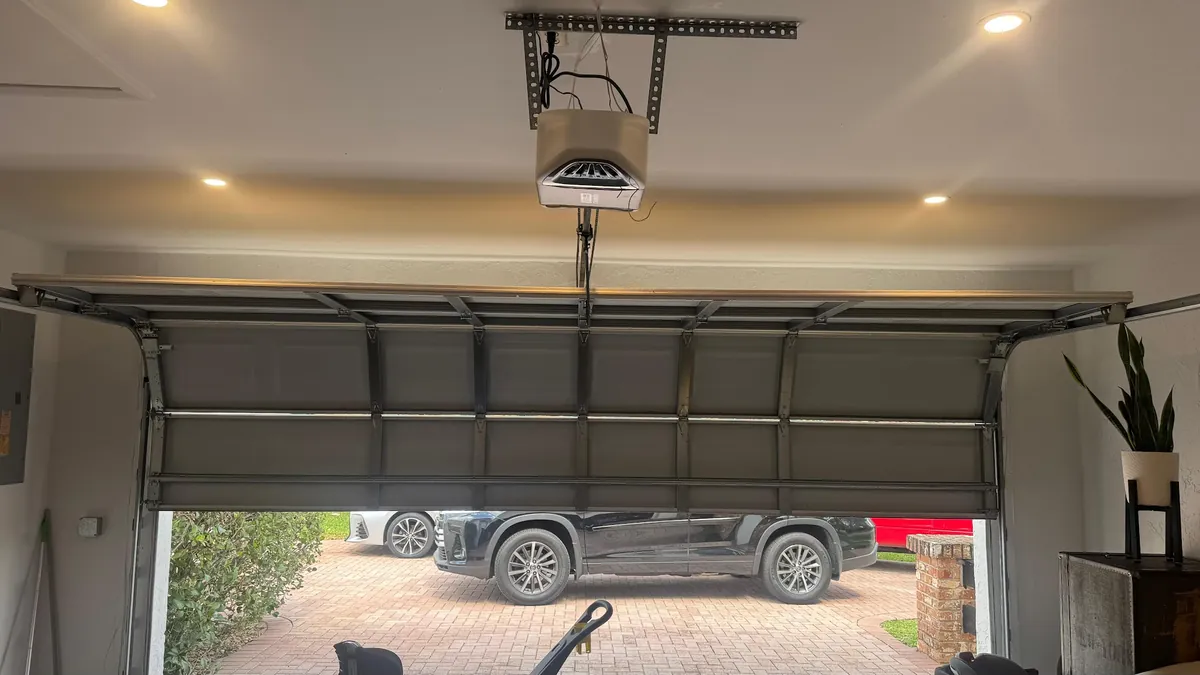
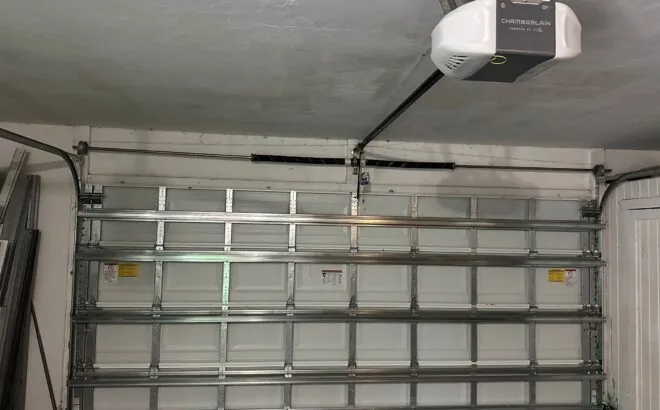
Where a ground-floor bay has a sectional door rather than a rolling one, the operator may be a ceiling-mounted unit with a rail, or a jackshaft operator mounted on the wall beside the torsion shaft. The faults are similar: worn drive gears, a stretched chain or belt, a tired trolley, sensors out of line. A sectional door also has the emergency release cord on the trolley, which lets the door be run by hand. Should the door drag like a dead weight after release, get the springs and cables inspected before the opener is used again.
Keeping an operator healthy
Some garage door opener repair in Chinatown could be put off for a long while with a little care, because a blocked sensor or a door left to strain wears an operator down. A few habits make operators last longer:
- Keep the sensor lenses clean and the beam clear.
- Do not stack goods against the door or in its path.
- Report a door that has started to slow, strain or shudder, rather than running it until it stops.
- Keep the hand chain hung clear so it cannot tangle in the operator.
Faults in the curtain, guides, panels or bottom bar belong with broader door repairs in Chinatown, and where both door and operator are worn out, see how a replacement door is fitted locally.
Booking an opener repair
Tell us what the operator does when the button is pressed, whether the door can be moved manually, which controls fail, and whether the opening is currently secure. For garage door opener repair in Chinatown, just call us or book online. If it cannot wait until morning, read about late-night call-outs in Chinatown. Openers right across Greater Boston are dealt with on our opener repair and replacement page, and the neighbourhood overview brings every nearby service together.
Questions from Chinatown
The operator is dead. How do we raise the shutter manually?
Most rolling door operators have a hand chain or crank that engages when the operator is disconnected, and most sectional door openers have a release cord on the trolley. If the released door will barely move, stop there; a spring has probably failed and the door is safest untouched.
Why does my door close from the wall station but not the remote?
That proves the operator itself is alive, so suspicion falls on the handset. Swap its battery; if it is still dead, it has probably dropped its pairing, or the receiver or aerial on the operator wants checking.
Can the safety sensors be removed if they keep stopping the door?
They should not be. On a door that closes beside a public sidewalk, the sensors and the reversing edge are what stop it coming down on someone. A sensor that keeps tripping is usually dirty, blocked or out of line, and that is a straightforward repair.
Do you work on LiftMaster openers?
They are among the openers we repair and swap out, alongside the various other operators found on local shutters and sectional doors.
Is garage door opener repair in Chinatown usually on commercial doors?
Usually, yes. Most doors here are commercial roll-ups or sectional doors at street level, and their operators, remotes, wall stations and sensors are all covered.