
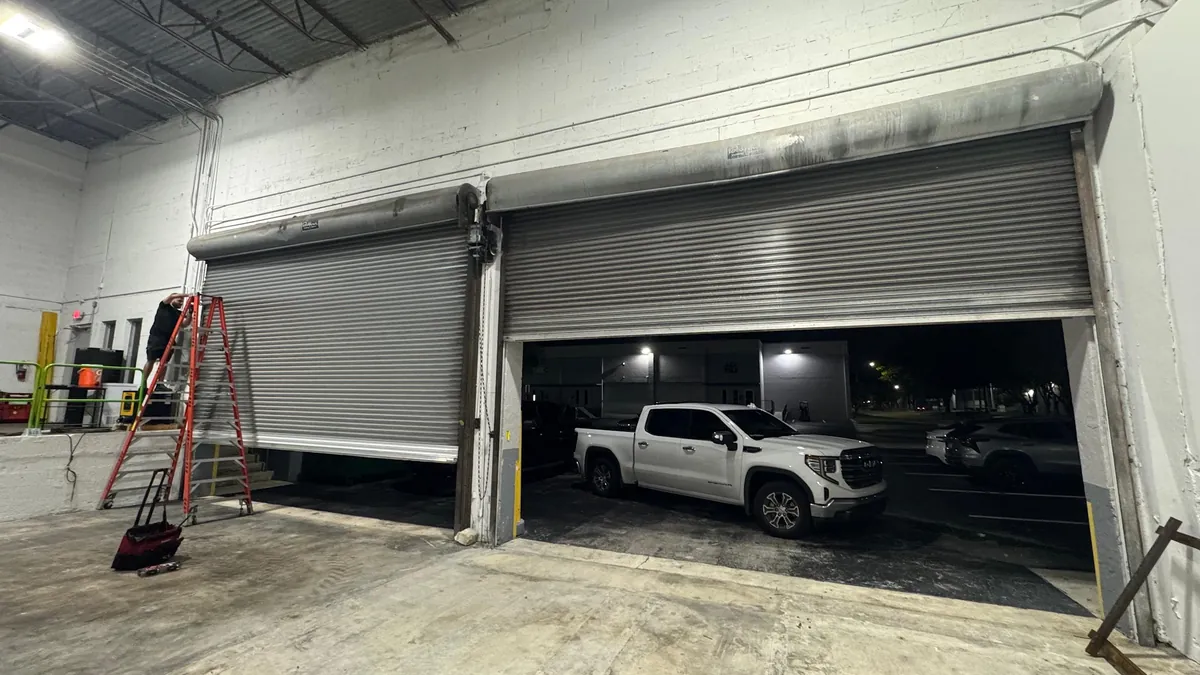
A garage door emergency in East Boston, at any hour
Garage doors do not break on a schedule. A spring lets go on an icy morning while the car is still in, a door sticks half open near midnight, or a car clips a door and knocks it off its track. Our emergency garage door repair in East Boston begins with a phone that someone answers whatever the hour or the day, so the trouble can be reported as soon as it starts. That goes for the little single bays out back of Eagle Hill and Orient Heights triple-deckers and for the built-in garages of the Jeffries Point townhouses.
In the first few minutes, three things matter more than anything else:
- Keep people, pets and the car out from under a door that is stuck open or hanging crooked.
- Pull the opener’s plug, so the button cannot be pressed by mistake.
- Note whether the door is open, closed or partway, and whether anything is visibly broken.
The calls that cannot wait
Stuck shut
Most often a snapped spring, now and then a dead opener. The car is trapped and the door far too heavy to raise.
Stuck open
A door jammed up leaves the garage, and often the house, unsecured overnight. Sensors, a jammed track or a failed opener are the common causes.
Snapped spring
A sharp crack from the garage, then a door that lifts a hand’s width and quits. The call that comes in more than any other.
Door off its track
A door hanging crooked with rollers out of the rail, often after a car has touched it or a cable has snapped. It can fall.
Deciding whether it is urgent
Plenty of garage door faults can wait for a convenient day, and part of the first phone call is sorting out which kind you have. A dead remote can wait when the wall button still runs the door. So can a door that is noisy but still opens and closes properly. Those are best booked for a convenient time.
Some situations are different, and those are where emergency garage door repair in East Boston earns its place:
- The door is stuck open and will not close. The garage and its contents are exposed, and in a garage built into the house, so is the way indoors.
- The car is shut in and you need it. A door with a broken spring cannot be opened safely by hand.
- The door is hanging off its track or at an angle. An off-track door is unstable and can drop or swing without warning.
- A cable has snapped and the door is lopsided. One side is carrying the door’s weight on its own and can let go.
- The door has been hit and will not move, or moves and makes alarming noises.
If any of those applies, call, whatever the hour.
What to do while you wait
Most of the safe steps are about keeping clear and stopping things from getting worse.
Door jammed open: resist dragging it down and stop pressing the button. Pull the opener’s plug. Keep the car and everyone out of the opening. If the door is level and the springs are intact, it may be possible to close it by hand after pulling the red emergency release cord on the opener’s trolley, but only if it moves easily and stays where it is put. If it feels heavy or wants to fall, leave it.
Door jammed shut: pull the plug on the opener and check the overhead spring from the floor. A gap in the coils means the spring has broken and the door should stay shut until the spring is replaced. Do not use a car, a jack or a pry bar to force it up.
If the door is off its track, leave the opener off and keep your hands away from the rollers. Keep well clear; the door may be held by one cable or one roller.
At night, take a torch out to a detached garage rather than working in the dark at the end of the driveway, and leave the garage lights on if there is power so you can see the door from a distance.
In every case, the springs, cables and lower brackets stay untouched. A torsion spring holds dangerous tension, shared by every part fastened to it. Releasing it without the proper tools and training can cause serious injury. It is not a DIY repair, at any hour.
Why doors near the harbour fail without warning
Most emergencies are the end of a slow process that nobody saw. Salt air off the harbour settles on every bare steel part of a door: the coils of the springs, the strands of the lift cables, the bearings in the rollers and the brackets at the bottom corners. Rust roughens springs and helps cracks start. Cables corrode inside their strands, where it cannot be seen, until one gives way under load. Seized rollers drag, and a binding door may stop dead midway.
Cold finishes the job. The first frosts of winter are when tired springs break, and the small detached garages behind the triple-deckers sit at outdoor temperature all season. That is why so much emergency garage door repair in East Boston comes in on cold mornings: the door was fine last night and will not move today.
Short driveways and knocked doors
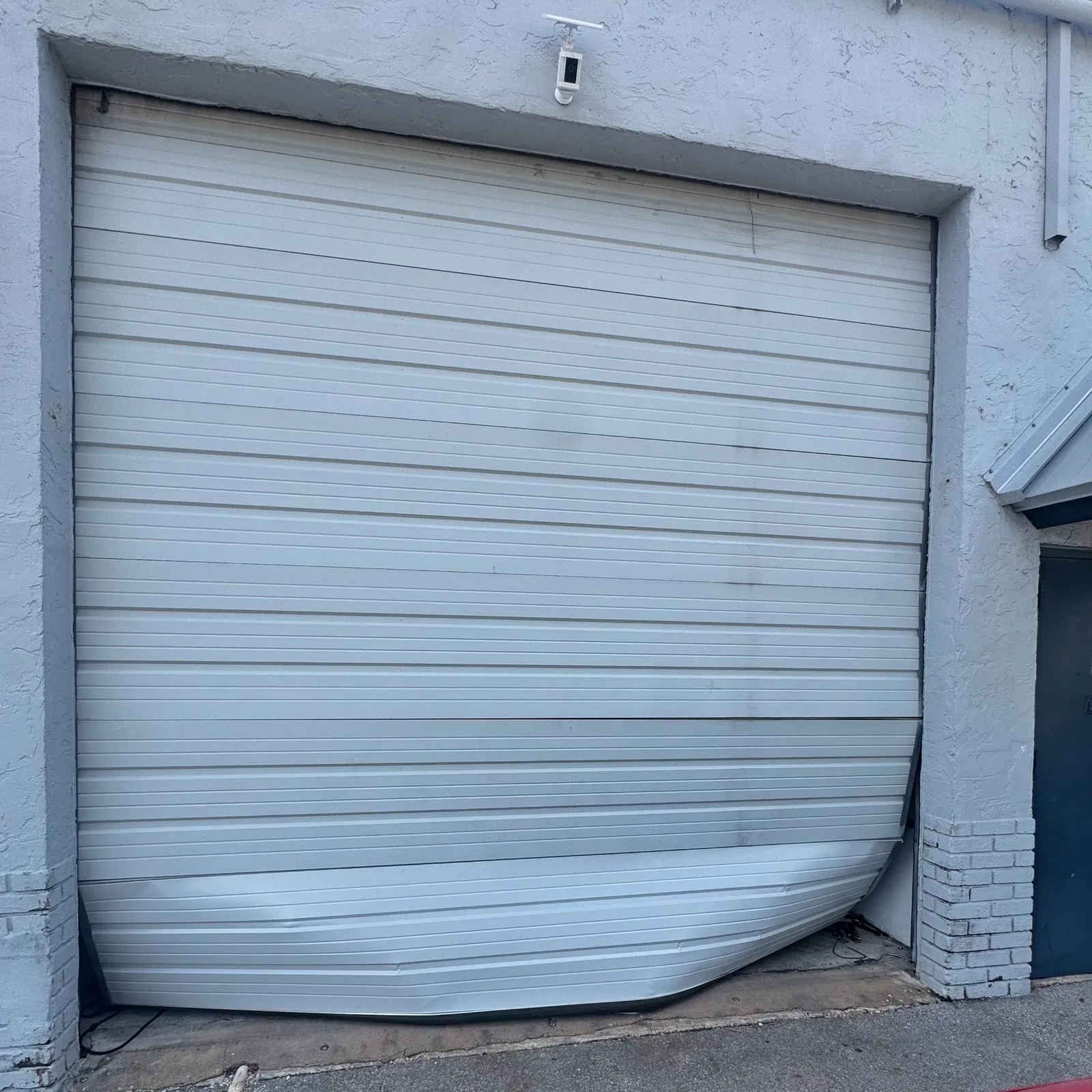
Up on Eagle Hill and across Orient Heights, the garage often sits at the end of a short driveway, close to the street. Short driveways mean tight turns and little room to stop, and a car that touches the door, even gently, can bend a section, kink a track or pop the rollers out of the rail on one side. A door hit like this may still look roughly closed, but it is no longer running true, and the next attempt to open it can pull it off the track altogether.
If a door has been hit, do not try it with the opener to see if it still works. Look at it from a distance. If a section is bowed, a track is bent, or a roller is sitting outside its rail, keep it shut and call.
Built-in garages at Jeffries Point
Jeffries Point’s newer townhouses mostly have the garage inside the building, with the opener as the only everyday way in and out. When the opener fails or the door jams, there may be no other door to the garage, and a door stuck open leaves a way into the house open too. These garages are also close to the water, so they see the same salt wear on springs, cables and tracks as the older garages up the hill.
A failed opener with the door closed can usually be dealt with by pulling the emergency release, as long as the springs are sound. A failed opener with the door open is more urgent, because the house cannot be secured until the door is down.
What an emergency visit involves
Once someone is with you, emergency garage door repair in East Boston runs through the same steps every time:
- Safety before anything. The opener is uncoupled and the door propped or clamped so it cannot shift during inspection.
- Finding the cause. Every spring, cable, drum, roller and track, plus the opener and sensors, is checked to find what failed and whether anything else was damaged when it did.
- You hear what is wrong and what can be done before any work starts. Sometimes the right answer is a full repair on the spot; sometimes it is making the door safe and secure and finishing the job on a later visit.
- The repair is made. A broken spring is replaced, a snapped cable renewed, a door put back on its track, or the opener put right.
- Balance and a final test. The door must rise evenly by hand, hover at halfway, and close and reverse properly under the opener before it is handed back.
Broken springs at night
Snapped springs head the list of urgent calls, and they are usually why a door refuses to open. Torsion springs on the bar above the door and extension springs beside the tracks both break, and both leave the door far too heavy to lift. The spring repair page for East Boston goes into the details of how springs are measured and replaced.
What matters in an emergency is that a broken spring is not something to work around. Pulling the release cord and heaving the door up puts its whole weight on you, and it can come down as soon as you let go. If you need the car out, call; do not lift.
Doors off their track
An off-track door is the most dangerous of the common emergencies, because the door is no longer properly held. It can happen when a car touches the door, when a cable snaps on one side, when a seized roller jumps the rail, or when the opener keeps driving a door that has jammed. Putting it right means carrying the door’s weight while the rollers are eased back, kinked rail is straightened or swapped, and the two cables are evened out. The main off-track garage door repair page has more.
Snapped cables and lopsided doors
A lift cable that breaks leaves the door held on one side only. The door drops at the broken corner and tilts in the opening, the rollers on that side can jam or jump the track, and the cable that is still intact is now carrying far more than it should. It is a situation that can turn into an off-track door or a falling door with very little encouragement.
Cables near the harbour often fail from the inside, where salt and damp have worked into the strands, so a cable can look sound the day before it parts. When one goes, the sound is usually a sharp crack followed by the door sagging. Do not try to run the door up or down to straighten it, and do not try to clamp or tie the loose cable. The other cable and the spring are still under tension, and the bottom bracket on the broken side may be bent.
The repair involves supporting the door, releasing the spring tension safely, fitting a matching pair of cables, checking the drums and bottom brackets, and balancing the door again.
Openers that fail at the wrong moment
Not every emergency is mechanical. An opener that stops working with the door closed shuts the car in; one that stops with the door open leaves the garage unsecured. In many cases the door itself is fine and only the opener has failed.
If the door is closed and the opener is dead, start with the power: plug, breaker, and whether the garage light comes on. In detached garages, power is often the culprit. If there is power and the opener still does nothing, the emergency release lets you lift the door by hand, but only when the springs are intact. Lift it slowly and see whether it stays put halfway; if it feels very heavy or wants to drop, close it and call.
If the door is open and the opener will not close it, look at the sensor lights first. A sensor knocked by a bin in the dark is one of the most common reasons a door will not close at night.
Securing the garage until the door is fixed
When a door cannot be closed, the priority shifts to keeping the garage and the house secure. Take valuables you can get at without risk out of the garage or out of sight, without walking under the door. In a garage built into the house, lock the internal door from the garage into the house. Bring bicycles and tools out of easy reach of the street. Leave an outside light on so the open garage is not sitting in the dark at the end of the driveway.
None of that involves touching the door itself. If the door is partly down and hanging unevenly, the safest place to be is well away from it until someone has taken its weight off and made it safe.
Doors damaged in storms
Wind off the harbour can catch a door that has been left partway open and push it hard against its tracks, bending sections and kinking rail. Heavy rain and melting snow run under worn bottom seals and freeze overnight, sometimes gluing the bottom of the door to the floor. Running the opener against a frozen-down door can tear the bottom seal, pull a cable off its drum or strip its own gears.
When a door stays put on an icy morning, stop pressing the button. Look at the bottom edge to see whether it is frozen to the floor. Gently breaking the ice along the seal with a plastic scraper, without prying at the door itself, is safe; forcing the door with the opener is not. If the door has been bent by wind, keep it closed if it is closed, and keep clear if it is open.
When the emergency points to a bigger job
Now and then an urgent call uncovers a door that is nearly worn out: sections rusted through at the bottom, several failing parts at once, or a door bent too badly to straighten. Then the priority is to make it safe and lock the garage, with the options explained afterwards. Replacement is explained under new doors for East Boston homes, openers under East Boston opener repairs, and the remainder of the door under everyday repairs in East Boston.
The wider picture across Greater Boston is on the main emergency garage door repair page, and the East Boston page brings every local service together.
Reporting an emergency
Someone answers at any hour of any day, nights included. Once through, explain where the door has stopped, whether a car is trapped, whether anything is hanging loose or visibly snapped, and whether the garage stands on its own or is part of the house. For emergency garage door repair in East Boston when it cannot wait, call us or book online.
Questions from East Boston
Is it really fine to phone in the small hours?
Yes. Calls are taken at any hour, on any day. Call as soon as you find the problem, and describe what the door is doing.
My door is stuck open and I cannot close it. What should I do now?
Unplug the opener and keep everyone and the car clear of the opening. If the springs are intact and the door moves easily, it may be possible to close it by hand after pulling the release cord. Should it feel heavy or begin dropping, release it, back away and call.
The car is shut in behind a door with a broken spring. Can I lift it by hand?
No. A springless door puts its full weight on the lifter and can come crashing down. Leave it closed and call to have the spring replaced.
A car touched the door in the driveway. Is it safe to open?
Do not test it with the opener. Look from a distance for a bowed section, a bent track or a roller sitting out of its rail. If you see any of those, keep the door shut and call.
Does a dead remote count as urgent?
Usually not, as long as the wall button still runs the door. Try a new battery in the remote. If the door will not open or close at all, though, call, whatever the time.