
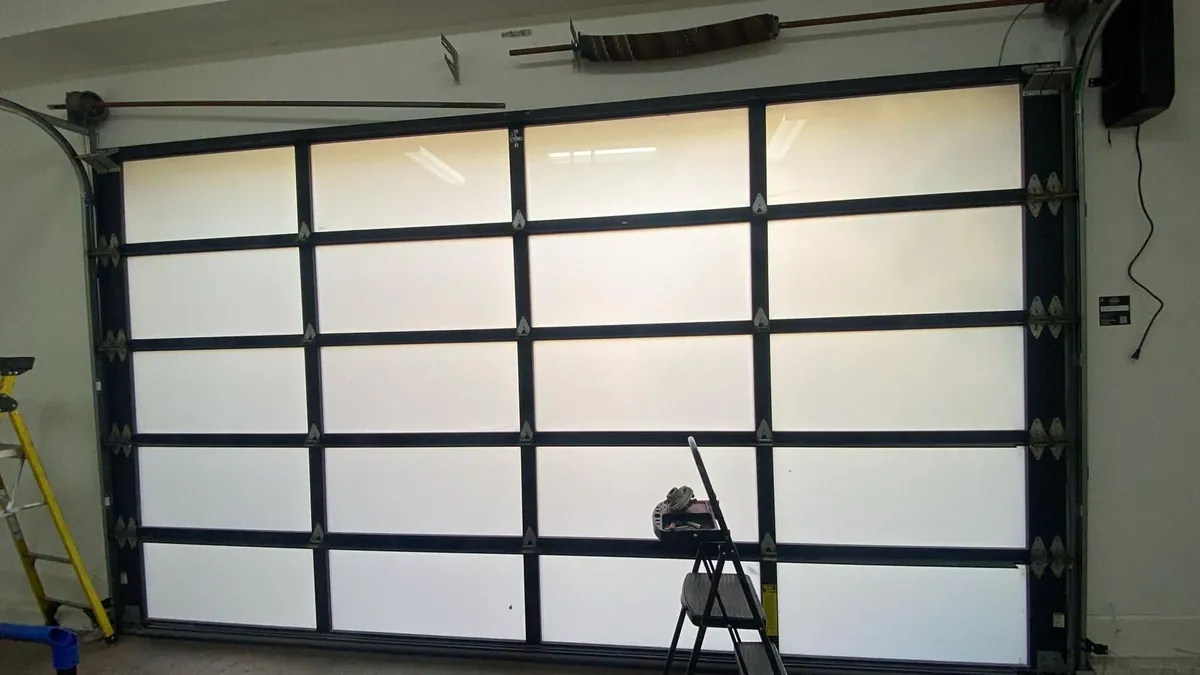
Why a new door for a Jamaica Plain rear garage needs careful fitting
Close to the Pond and on the side streets off Centre Street, the garage behind a Victorian or triple-decker is usually its own small building at the back of the lot, and on many properties the drive slopes steeply down to reach it. When owners look at new garage doors Jamaica Plain MA garages like these can take, the questions go beyond colour and style. The door has to suit an opening that may not be square, a floor that may not be level, and a slope that sends water, grit and snow toward its bottom edge.
There is one more point to weigh: a drive that dives toward the garage makes its springs work harder than level ground would. That matters when a new door is chosen, because its weight decides the springs it needs, and a lighter, well-sealed door on a correctly sized spring system copes far better at the foot of a drive than a heavy door that soaks up water.
Before a new door is priced up, three things about your garage shape the choice:
- The clear height left above the opening before you reach the ceiling boards or joists.
- Whether the floor across the opening is level, or drops toward one side.
- Whether water from the drive pools at the threshold after rain or a thaw.
What a new door project covers
Door supplied and installed
A complete new sectional door, chosen for the opening and the way the garage is used, delivered and installed with its tracks, rollers and hardware.
Old door taken down
The existing door is dismantled safely, starting with the release of its spring tension, which is the dangerous part of any removal.
Springs sized for the new door
Fresh springs are picked to suit the weight and height of the replacement door, so it hangs in balance from its first run.
Opener set up
An existing opener can be reconnected and set to the new door where it is sound; where it is not, a new one is fitted. See the Jamaica Plain opener repair page.
Seal and threshold
A bottom seal chosen to close against the floor you actually have, which matters at the low end of a sloping drive.
Matching the door to how the garage is used
Behind a triple-decker, one garage may serve more than one household, and the door may run many times a day. Behind a single-family Victorian, the same building may hold one car that leaves twice a day, or no car at all and a lot of stored belongings. Those are very different workloads, and they point to different doors.
A door that cycles often wants hardware chosen for the work: springs rated for a higher number of cycles, rollers that run quietly and wear slowly, and hinges heavy enough not to crack under constant use. A garage used mainly for storage puts more weight on security, sealing and insulation than on cycle life. If part of the building is used as a workshop, a door with windows along the top lets in daylight without leaving the bay open.
New garage doors Jamaica Plain MA properties of either kind receive are specified with that use in mind, so the questions on the first visit include who uses the garage, how often the door runs and what is kept inside. The answers shape the springs and hardware as much as the door itself.
Getting a new door down the drive
On a steep lot, every section, track length and spring travels down the drive by hand. Sections are long and awkward, and on a wet or icy slope they are carried with care. Clearing the drive of cars and bins on the day, and leaving a path to the opening, makes the installation smoother. If the garage can also be reached through a side door, mention it; it gives a second way in during the changeover.
The opening comes first
A catalogue door is built for a square opening on a level floor. Plenty of the outbuildings at the back of these older lots offer neither. Over the years, openings get reframed, jambs move, headers sag a little, and slabs poured on sloping lots settle unevenly. None of that rules out a new door, but it decides how the door is fitted.
Our tape goes across and up the opening in several places: the width high, low and halfway, the height on both sides, and the diagonals to check for square. The headroom above the opening, the room at each side for the vertical tracks, and the depth of the garage for the horizontal tracks are all recorded. Where the jambs or header have moved, they may need packing, trimming or new timber so the door has something true and solid to sit against.
The floor matters as much as the frame. If the slab across the opening drops to one side, the new door will close on one corner first unless that is allowed for. A bottom seal with enough depth to take up the difference, and tracks set plumb rather than parallel to a leaning jamb, give a door that meets the floor along its whole length.
Living at the bottom of a slope
On a lot where the drive falls toward the garage, the bottom of the door is in the firing line. Every downpour and every thaw sends water downhill to the threshold. Leaves and sand wash down with them. In winter, snow shovelled off the drive is often piled against the door, and the bottom seal can freeze to the concrete.
That affects several choices. A door whose sections resist water at the bottom edge will last longer than one that wicks it up. A bottom seal that is tall and flexible enough to close against an uneven, wet threshold keeps water and debris out of the garage. Weight matters too: a timber door that takes on water at the foot of the drive gets heavier through the wet months, and the steep approach is already asking more of the springs than a flat site would. A lighter door on springs sized correctly for it is easier on the springs, the cables and the opener over its whole life.
Talk this through when you call. New garage doors Jamaica Plain MA owners hang at the bottom of a drive are a different decision from the same door on a level suburban site, and the visit is the time to look at the drainage and threshold together with the door.
Choosing a door for an older house
The garage sits behind the house, but it is still part of the property’s look, and on a lot with a Victorian or a triple-decker the door is often visible from the street down the drive. Many owners want something that suits the age of the house rather than a plain modern slab, while others want the simplest, most durable door the opening can take.
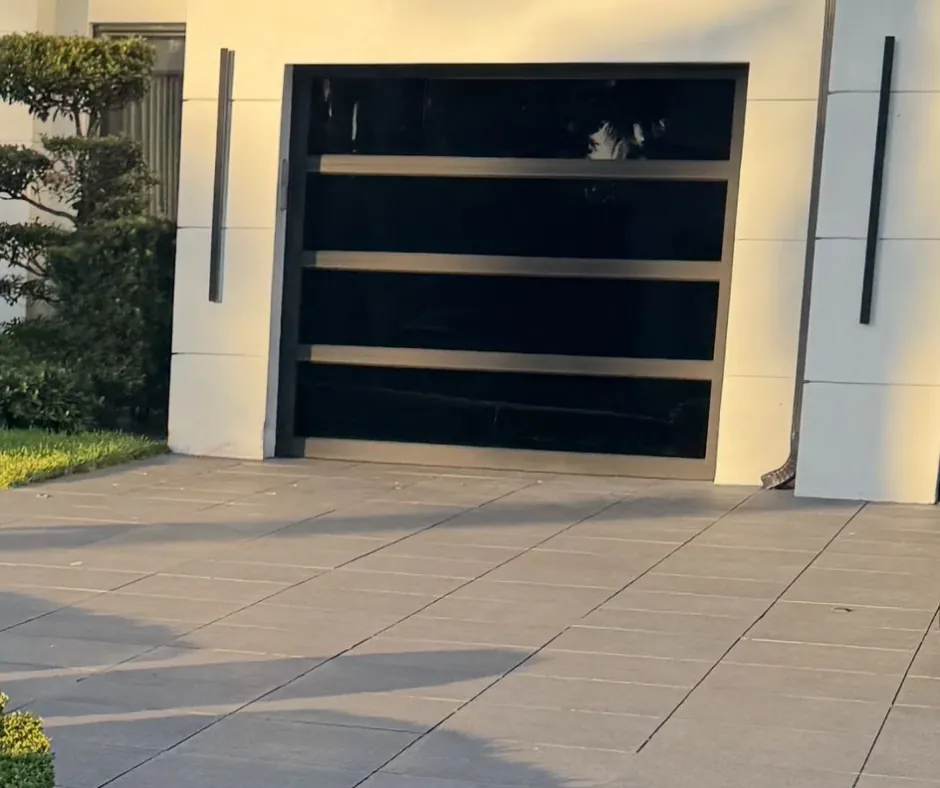
Sectional doors come in a range of panel styles, finishes and materials, with or without window sections along the top. Steel doors are generally lighter and stand up well to the damp; timber doors look the part on an older property but need more care and are heavier; insulated doors are worth considering where the building doubles as a hobby space or holds things that must not freeze. Aluminium frames with glass panels give a more contemporary look; see full view glass garage doors for that option.
The right choice balances looks against the realities of the garage: headroom, the slope, how often the door runs and how much maintenance you want to do. Those trade-offs are explained plainly when the options are discussed.
A few things are worth noting before the visit, because they shape what is ordered: whether the garage has power for an opener and where the outlet is, whether there is a side door, whether shelving, lights or hooks hang from the ceiling in the path the overhead rails will take, and whether the door is used by more than one household. Each of those can change the track layout, the opener choice or the spring specification.
Headroom and the space above the door
Many older detached garages have low ceilings. A standard sectional door needs a certain amount of clear space above the opening for the horizontal tracks to curve back and for the springs to sit. Where that space is short, tracks built for tight ceilings, or springs mounted somewhere other than the usual spot over the door, may be called for, and the opener has to be chosen to fit the same space.
Headroom is measured before anything is ordered. It decides not only how the door is hung but sometimes which door can be used, since a heavy door with a tall top section needs more room to turn into the horizontal track than a lighter one. Settle it while measuring and the new door glides in an old building instead of fighting it.
What the installation involves
An installation starts with taking the old door down safely. That begins with the springs: the old torsion or extension springs are de-tensioned in the correct order with the right tools before any section is unbolted. A torsion spring is wound to a dangerous tension, which rules it out as a DIY repair; taking an old door apart is where many of the worst garage injuries occur. Once the springs are slack, the cables, sections, tracks and old hardware come out.
Next comes the frame. Each jamb and the header are tested for soundness, packed or repaired where needed so the new tracks have solid fixings. The new sections are stacked and joined, the vertical and horizontal tracks are set plumb and level, the rollers and hinges are fitted, and springs sized for this door are mounted and tensioned until it balances. The cables are set to equal tension so the door rises evenly.
On a sloped lot, getting the parts to the garage is part of the job. Door sections, tracks and springs are carried down the drive, so it helps to have cars moved and a clear path to the opening on the day.
With the balance confirmed by hand, the opener goes on and is adjusted: travel limits, force and the safety reverse are all adjusted for the new door. The bottom seal is checked against the floor along its whole length, and before we leave, you get a walk-through of the door, the release cord included.
When replacing beats repairing
A door does not need replacing just because something on it has broken. Hardware that moves or seals is expected to wear out and be swapped, and sections in good shape can outlast several sets of it. If that is your situation, the Jamaica Plain garage door repair page is the better place to start.
A new door is the sensible choice when the door itself is failing. On garages at the foot of a sloping drive, the usual signs are steel skins eaten through by rust at the lowest section, timber rotted where puddles have sat against it, a door so heavy with absorbed water that it cannot be balanced, or a door folded across several sections by a car that came down the slope too fast. A door that has been patched repeatedly, or one with no proper safety reverse on its opener, is also a candidate.
New garage doors Jamaica Plain MA homeowners order through us start with an honest look at whether replacement is really needed. If a repair will do, you will be told.
Removing the old door safely
Taking an old door down is not a matter of unbolting the sections. The springs that balanced the old door still hold their tension, even on a door that has stopped working, and they must be released before anything else is loosened. Extension springs need their tension relieved with the door fully open and clamped; torsion springs need to be unwound with winding bars.
On older garages, the old door may have been modified over the years, with mixed hardware, extra brackets or springs that do not match. That is one more reason to leave removal to someone used to finding out how a particular door was put together before taking it apart.
In a standalone garage behind an older house, the old door may also have been fixed to framing that has been altered more than once. Brackets screwed into old holes, packing pieces wedged behind tracks and a header reinforced with odd lengths of timber are all common. Each is found and dealt with as the old door comes out, so that the new one is hung on sound wood.
Caring for a new door at the bottom of a drive
A new door lasts longest with a few simple habits. Keep the threshold clear of leaves and grit so the bottom seal can close properly. In winter, avoid piling shovelled snow against the bottom section, and clear ice along the seal before running the door on a cold morning. Wipe the photo-eye lenses when they get splashed. Watch and listen for changes: a door that starts to feel heavier, to drift when stopped halfway, or to scrape at one point is telling you something early.
Leave the springs, cables and bottom brackets alone. If any of them looks wrong, call; spring work is covered on the Jamaica Plain spring repair page.
Getting started
To talk about new garage doors Jamaica Plain MA garages behind older houses can take, jot down the rough width and height of the opening, the gap between its top and the ceiling, and a description of the drive and the threshold. Then call us or book online, and the opening can be measured properly on a visit. Our main new garage door installation page covers the service across the city, the Jamaica Plain page lists everything we do locally, and if your current door has failed suddenly, the Jamaica Plain emergency repair page covers the safe first steps.
Questions from Jamaica Plain
The opening is out of square. Will a new door work?
In most cases. We take measurements at several points and compare the diagonals, and the jambs or header are packed or repaired where needed so the new door has true, solid fixings. The tracks are then set plumb so the door runs straight.
The floor slopes across the opening. Will the new door seal?
A bottom seal with enough depth and flexibility can close against an uneven floor along its whole length, and the door is set so it does not land on one corner first. Mention the slope when you call so it is measured.
Does the steep driveway affect which door we should choose?
It can. Runoff, slush and drifted snow all end up against the lowest section when the garage sits below the street, so a door that resists water and a seal that closes well matter more. A lighter door on correctly sized springs is also easier on the hardware.
Can we keep our existing opener?
Yes, as long as it is healthy and powerful enough for the replacement door; it is rehung on the new door and its settings are redone. Where it is worn or its reversing safety has failed, swapping it during the same visit makes more sense.
Can I take the old door down myself to save time?
No. Whatever state the old door is in, its springs keep their stored energy, and releasing them wrongly can cause serious injury. Removal is part of the installation.