
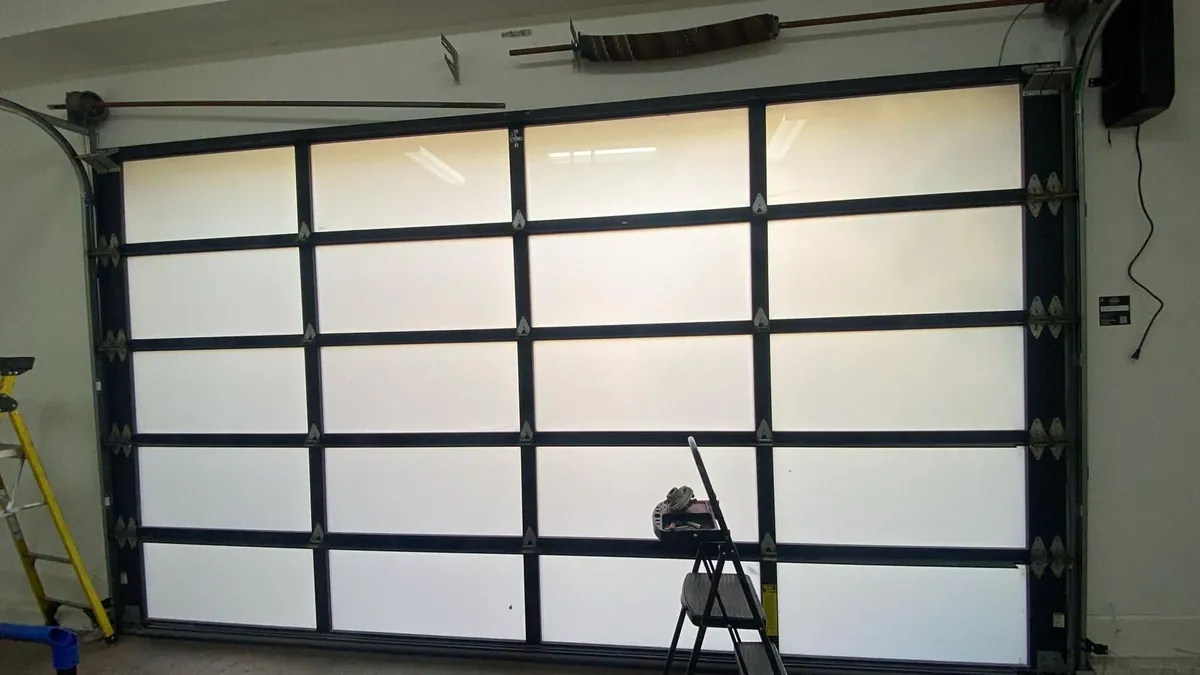
Why a new door for a North End opening has to be made to measure
In a district of very old, very tight streets, where private garages are almost unknown, the doors that eventually need replacing are roll-ups over ground-floor spaces and the service entries buildings use every day. New garage doors North End MA buildings ask us about are nearly always for one of those openings, and nearly always for an opening that was cut, altered or reframed long after the building first went up.
That history is why a replacement here is never a matter of ordering a standard size. Openings in old buildings are rarely square, the room above and beside them is often limited, and the wall itself may be masonry that needs the right fixings. Whatever goes in must match the opening it will really occupy, and it has to be brought in along streets where vehicle access is narrow and only allowed at certain times.
If you are wondering whether your door has reached the end, look for three things:
- Slats or panels rusted through, split or creased across much of the door.
- Guides, tracks or a barrel so bent that the door no longer runs square.
- A door repaired so many times that one fault follows straight after another.
What a new door here can involve
Roll-up doors
A coiling curtain of steel slats on a barrel above the opening, running in deep side guides. A common choice where there is little room behind the doorway.
Sectional doors
Hinged panels that run back under the ceiling on a pair of tracks. Suited to service entries with enough headroom and depth inside.
Replacing the old door
The worn-out door, its springs, its guides or tracks and its fixings are taken down safely before the new one goes in.
Fitting the opening as it is
Out-of-square jambs, uneven thresholds and limited headroom are measured and allowed for, not assumed away.
Openers to match
A new door may need a new opener or operator suited to its weight and use. The North End opener repair page has more.
Doors used all day
Service entries opened by every flat in a building need a door, spring and opener set up for heavy use.
When replacement makes more sense than repair
Most doors on these streets are repaired rather than replaced, and that is as it should be. Springs, cables, rollers, slats, hinges and openers are all made to be renewed. Replacement starts to earn its keep only once the body of the door, rather than the hardware that moves it, is spent.
On a roll-up that usually means a curtain with many slats rusted through at the bottom where water sits, slats creased from repeated knocks, or a barrel that has been bent. On a sectional door it means panels that are split or rotten, steel skins rusted through, or a door so heavy from layers of repair that it can no longer be balanced properly. Guides or tracks that have been straightened more than once, and still let the door wander, point the same way.
There is also the question of fit for purpose. A door installed decades ago for occasional use may now open for deliveries, refuse and residents throughout the day. A slow, heavy door, or one that is hard to secure, can be replaced with one that suits the way the doorway is used now. When a repair visit shows that a door has reached this point, you are told plainly, and the two options are laid side by side. For the repair route, read fixing doors in the North End.
Measuring an opening in an old building
The survey matters more than anything else in a replacement here. An old opening may have been cut into a wall that was built for something else entirely, then altered as the building changed use. The result can be jambs that lean, a head that is not level and a threshold that rises or falls across its width.
So the opening is measured, not assumed. We record the width high, halfway and low, and the height at each jamb and in the middle. The headroom above the opening is measured, because it decides whether a roll-up barrel or a sectional door’s springs and tracks will fit. The side room beside the opening is checked for guides, tracks and an operator. The depth inside the doorway is measured for a sectional door’s horizontal tracks. And the wall itself is looked at, because brackets on old masonry need sound material and the right anchors.
Anything that could cause trouble is noted at this stage: a pipe or beam in the way above the door, a threshold that needs packing, a jamb that needs a timber or steel lining before a guide can be fixed straight. Getting it right on paper is what lets the new door go in properly on the day.
Roll-up or sectional for a service entry
Both types are supplied and installed, and the choice usually comes down to the space.
A roll-up needs headroom above the opening for the coiled curtain and its barrel, and clearance either side for its guides, yet takes up next to no floor or ceiling behind the doorway. That makes it a natural fit for a ground-floor space where the room inside is full of stock, bins or bikes, or where the ceiling just inside the door is low or crowded with services. Roll-ups are robust, take frequent use well and close down to a solid face.
A sectional door needs headroom for its springs and the curve of its tracks, and clear depth inside for the panels to lie back under the ceiling. Where that space exists, a sectional door is often quieter and lighter in daily use, and it can look more like a traditional door from the street.
The survey shows which will fit. Where both would work, the decision comes down to how the doorway is used, how it looks from the street and how the space inside is laid out. Choosing new garage doors North End MA openings can actually take is a matter of fitting the door to those facts, not to a catalogue.
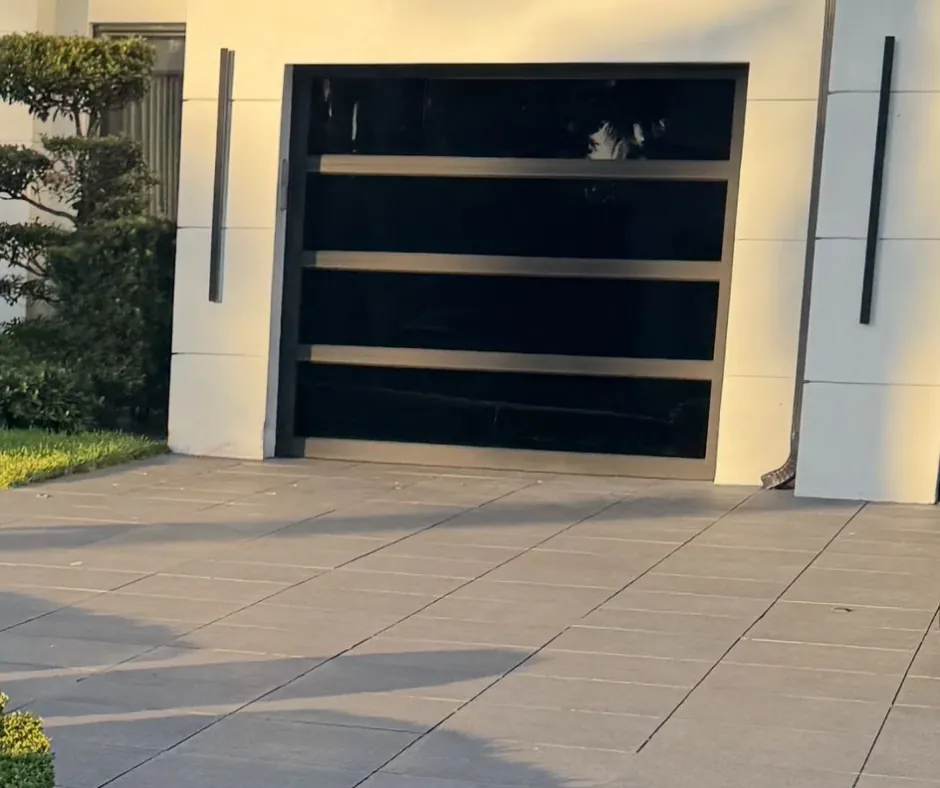
What fitting a new door involves
- A survey of the opening, the wall, the headroom, the side room and the space inside, along with how the doorway is used and how it is reached from the street.
- A recommendation for the type of door and how it will be fitted, including any lining, packing or bracket work the opening needs.
- Arranging a fitting day that works with the street access and the building’s own use of the doorway.
- Taking down the old door safely, with spring tension released under control, and removing the old guides, tracks and fixings.
- Preparing the opening: lining or packing jambs, levelling the threshold seal line, and fixing brackets to sound material.
- Installing the new door, its springs and its guides or tracks, then setting the balance so the door is light and stays where it is put.
- Fitting or connecting the opener, setting its limits and force, and testing the safety reverse and the sensors.
- Running the door through repeated cycles and showing whoever looks after it how it works, including the manual release.
Bringing a new door along a narrow, restricted street
Delivery is where these streets make the biggest difference to a replacement. Both Hanover Street and Salem Street are slim thoroughfares where vehicles are admitted only during set periods. A new door, a coiled curtain, a set of panels, tracks, a barrel and springs all have to reach the doorway, and the old door has to leave the same way.
That means the fitting day is planned around the street. The delivery may need to be timed to the access window, with the van stopping where it is allowed and the parts carried to the doorway. Long tracks and panels need space to be moved and assembled; on a narrow pavement, that may mean working from inside the building where possible and keeping the doorway screened while parts are carried in.
It helps to tell us at the survey stage about any set access times for the street or the building, any back entrance, and how long the doorway can be out of use. With that known, installing new garage doors North End MA streets will allow becomes a matter of good timing rather than a fight with traffic.
Keeping the building usable on the day
A service entry that is out of action for a day affects everyone who relies on it. Before the fitting day, it is worth agreeing where bins and deliveries will go while the doorway is open, and whether another entrance can take them. The old door is not taken down until the new one and its parts are on site, so the opening is not left empty while waiting for a delivery. Where the work runs on, the doorway is closed off safely at the end of the day rather than left open to the street, and you are told exactly what remains.
People above and beside the doorway also notice the work. Cutting, drilling into masonry and winding springs make noise, and the pavement outside needs to be kept clear while long parts are moved. Agreeing the hours with the building beforehand keeps the day straightforward for everyone.
Removing what is there now
The existing door must be stripped out first, and on a door with springs that is careful work in its own right. A roll-up’s spring inside the barrel and a sectional door’s torsion springs both hold dangerous tension, even after the door itself has stopped working, and they are not a DIY job. The tension is released under control, the curtain or panels are taken down, and the guides, tracks, barrel and brackets are removed from the wall.
What lies behind them often tells a story: old fixing holes, crumbling mortar, timber linings that have rotted. That is all dealt with before the new door is fitted, so the new brackets have sound material to hold.
Water, grit and the threshold
A doorway that opens straight onto a street collects whatever the street sends its way. Rain runs toward it, grit and leaves blow against it, and in winter slush and salt pile against the bottom of the door. On an old threshold that is seldom level, water finds the low corner and sits against the bottom slat or panel, which is exactly where old doors rust through first.
A replacement is the moment to deal with that properly. The threshold line is checked across its width, the bottom seal is chosen and set to meet the ground evenly, and where the ground falls away at one end, the gap is dealt with rather than left for the seal to stretch across. A new door that lands evenly on a sound threshold keeps water and debris out and lasts far longer at the bottom edge than one that has been fitted to a sloping, broken line.
A door for a doorway the whole building uses
Service entries in residential buildings here are not used the way a family garage is. Every flat may have a remote; deliveries, refuse and bikes go in and out through the day. A door that opens that often needs to be specified for it, from the springs that balance it to the opener that drives it.
At the survey, it helps to say roughly how often the door opens and who uses it. A busier doorway may suit a roll-up for its robustness, or a sectional door if quiet operation matters to the flats above. The springs are set up with the heavier use in mind, and the opener is chosen to suit both the weight of the door and how often it runs. Putting in new garage doors North End MA service entries depend on is about matching the whole installation to that pattern of use, not just the opening.
Living with a door that faces the street
A door that opens straight onto a public street has a few jobs a suburban garage door does not. It has to close down securely, because the doorway is the building’s back entrance. It has to stop and reverse reliably if anyone steps into its path, which is why the safety sensors and the opener’s force setting are set and tested on every installation. And it has to stand up to knocks from vans and handcarts turning close by.
The look matters too. A new door is part of the street front of an old building, and the choice of door type and finish can be talked through at the survey, so the new door sits well with the building around it.
Pairing the motor with the replacement
A replacement door frequently calls for a fresh opener or operator, or at least a check of the existing one. An opener that was matched to an old, light door may struggle with a heavier new one; an old operator may not suit a different barrel. If the motor already on the wall is healthy and strong enough for what replaces the old door, we hook it back up and recalibrate it. Where it is not, a replacement is fitted at the same visit, LiftMaster among the models we repair and replace.
Either way, the remotes in use are set up, the wall button is checked, and the safety sensors are fitted and aligned for the new door.
Getting started
Most replacements begin with a call about a repair, and a visit that shows the door has reached the end. If your door is still working but tired, a survey visit is a sensible start. The main new garage door installation page covers replacements across Greater Boston, our spring repair in the North End page explains springs on both door types, the North End emergency repair page covers urgent failures, and our North End hub collects every service offered on these streets.
If you are thinking about new garage doors North End MA buildings can rely on, tell us which street the doorway faces, whether the current door is a roll-up or sectional, and how often it is used. Then call us or book online, and a survey can be arranged around the street’s access times.
Questions from North End
The doorway is out of true. Will a replacement still sit right?
Yes. Few openings in buildings this old are perfectly square. We take measurements in several places, and jambs are lined or packed and the threshold allowed for so the new door runs straight and closes evenly.
Should we choose a roll-up or a sectional door for our service entry?
It depends on the space. A roll-up needs room above and beside the opening but almost none inside; a sectional door needs headroom and depth inside for the panels. The survey shows which will fit and which suits how the doorway is used.
How does a new door get to a building on a restricted street?
The fitting day is planned around the street’s access times. Where a vehicle cannot reach the doorway, the door and its parts are carried in from where a van can stop, and the old door leaves the same way.
Do you take the old door down?
Yes. The old door is taken down safely, including releasing the spring tension under control, and its guides, tracks and brackets are removed before the new door is fitted.
Could the motor we already have drive the replacement?
Sometimes. Provided it is in good order and matched to the weight and style of what we install, it can be reconnected and reset. If not, a suitable opener is fitted at the same time.